
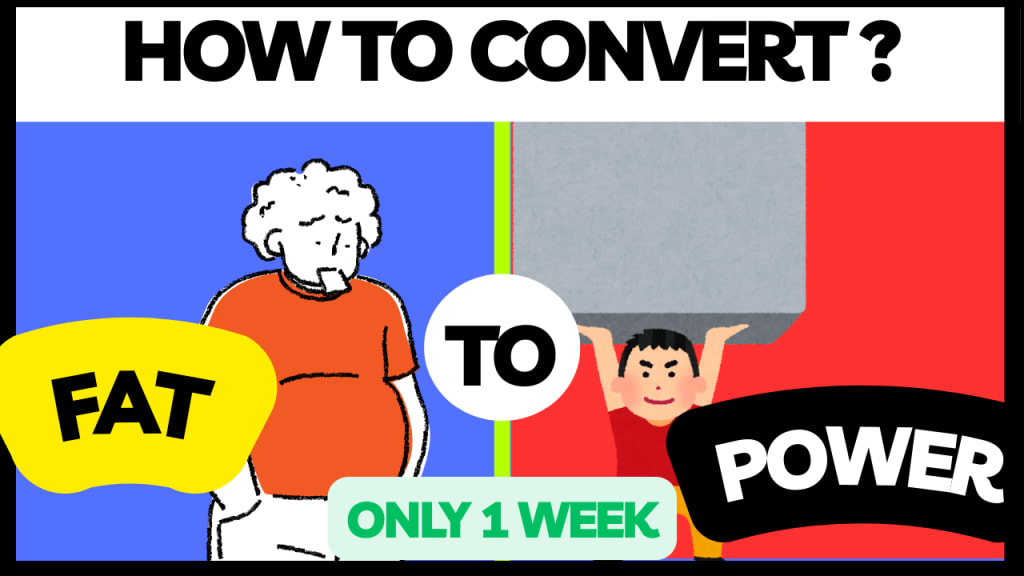
How can you convert your fat into power ?
You will be wondered knowing that it's easy !

May god bless you in your journey .
Many people are asking, "How can we easily convert fat into power?" in today's world, where fitness, health, and energy are hot topics. Whether your goal is to lose weight, build stamina, or simply feel more energized, understanding how to tap into your body’s fat stores is key.
Fat is frequently portrayed as a threat, despite the fact that it is one of our most effective energy sources. The real challenge is learning how to access and burn that fat effectively. In this article, we’ll explore how the body converts fat into energy—and how you can make this process easier and more efficient.
Understanding the Basics: How Fat Becomes Energy
Triglycerides are the fat that the body stores in fat cells. Hormones instruct these cells to release free fatty acids into the bloodstream when they require energy. Through a process known as beta-oxidation, these fatty acids are then transported to cells, particularly muscles, where they are broken down inside mitochondria, the cell's energy factories. This leads to the creation of ATP (adenosine triphosphate), the energy molecule that powers everything from thinking to walking. Fat burns slowly and provides energy for a long time, in contrast to carbohydrates, which burn quickly.
So, how can we convert fat to energy more easily?
To assist your body in more effectively utilizing its fat stores and converting them into usable power, here are seven scientifically supported strategies:
1. Exercise in the “Fat-Burning Zone.”
Fat is the primary fuel source during low- to moderate-intensity exercise. Your body burns more calories from fat when you do things like walking, light jogging, swimming, or steady cycling.
• Exercise for at least 30–45 minutes for optimal fat oxidation.
• Aim for 60–70% of your maximum heart rate.
Tip: Because glycogen (stored carbs) levels are lower after sleep, morning fasted cardio can increase fat burning.
2. Strength Training Builds Metabolic Muscle
Your resting metabolic rate (RMR) goes up when you have muscle, so you burn more calories, including those from fat, even when you don't move. Between workouts, strength training also encourages the body to rely more on fat.
• Train major muscle groups 2–3 times per week.
• Include compound movements like squats, lunges, and deadlifts.
3. Intermittent Fasting (IF)
Your body will switch from burning carbs to burning fat when you fast intermittently. When you fast, insulin levels drop, which encourages the release of fat from storage.
Popular methods include
• 16:8 (16-hour fast, 8-hour eating window)
• 5:2 (eat normally 5 days, restrict calories 2 days)
Warning: Start slowly and consult a doctor if you have health conditions.
4. Cut Down on Refined Carbs and Sugar
High sugar and refined carbohydrate intake keeps insulin levels high, which blocks fat-burning. The body may be encouraged to rely more on fat as a fuel source by switching to a diet high in whole foods, particularly proteins and healthy fats.
• Choose complex carbs (brown rice, oats, vegetables).
• Avoid sugary snacks, white bread, and soda.
5. Try a Low-Carb or Ketogenic Diet
The body is forced into ketosis, a metabolic state in which it burns fat rather than carbohydrates for energy, on a ketogenic diet, which is extremely low in carbs and high in fat.
• Keep carbs under 50 grams/day.
• Eat healthy fats (avocados, olive oil, nuts) and moderate protein.
Ketosis can be a powerful fat-burning tool, though it’s not ideal for everyone long-term.
6. Stay Active Throughout the Day
Daily movement encourages fat metabolism even outside of structured workouts. This is called NEAT (Non-Exercise Activity Thermogenesis).
Examples include:
• Walking during breaks
• Standing or stretching every hour
• Taking stairs instead of elevators
These small habits can help burn hundreds of extra calories a day.
7. Get Quality Sleep and Manage Stress
Cortisol levels rise when you don't get enough sleep and are under constant stress, which can cause your body to store fat, especially in your belly area. Additionally, they cause you to crave sugary or fatty foods and disrupt hunger hormones.
• Aim for 7–9 hours of sleep per night.
• Try stress-relief techniques like meditation, journaling, or yoga.
Bonus Tip: Stay Hydrated
Water is necessary for all metabolic processes, including fat oxidation. Even mild dehydration can slow your metabolism and reduce your body’s ability to burn fat effectively.
• Avoid sugary drinks and limit alcohol.
• Drink water before meals and during exercise.
Why This Matters
Weight loss is not the only benefit of learning how to convert fat into energy quickly. It's about training your body to use both carbs and fat efficiently depending on the situation—called metabolic flexibility. Stamina, mental focus, physical performance, and overall health all benefit from this. When your body gets better at burning fat, you won't need as many sugary snacks or caffeine to get through the day. You get your energy from a natural, constant source that is already in your body.
Conclusion
Fat-to-power transformation is not limited to elite athletes or dieters. Anyone can train their body to access fat stores more easily and convert them into long-lasting energy with the right habits—balanced eating, consistent movement, and strategic lifestyle choices. You can unlock your body's natural fuel source and enjoy more energy, better health, and greater control over your physical well-being by understanding how fat metabolism works and making a few key changes.
About the Creator
Naik Media
In this profile, we give the articles and news about the modern world. Here, we give the news and information of new updates of technology.We should know this . So subscribe me to be a great part of this modern world.
Enjoyed the story? Support the Creator.
Subscribe for free to receive all their stories in your feed.
Comments
There are no comments for this story
Be the first to respond and start the conversation.