
AI and Personalized Nutrition:Can an Algorithm Really Know What Your Body Need
The same AI reshaping skincare is now telling you what to eat

For most of human history, nutrition advice has worked the same way. Someone in authority, a doctor, a dietitian, a grandmother with strong opinions about soup, tells you what to eat based on general principles and their best guess about your situation. You follow the advice loosely, adjust based on how you feel, and hope the gap between general guidance and your actual biology isn't too wide.
AI-powered nutrition tools are trying to close that gap. Whether they're succeeding is a more complicated answer.
What These Tools Are Actually Doing
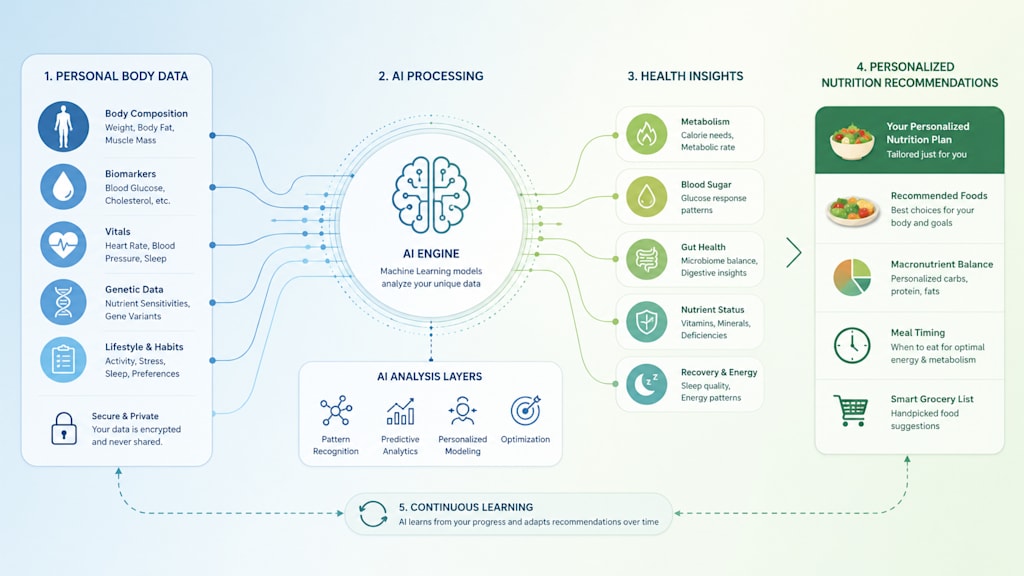
The better AI nutrition platforms work by pulling together multiple data streams at once. Your blood glucose response to different foods, tracked through continuous glucose monitors. Your gut microbiome composition from a stool sample analysis. Your activity levels, sleep patterns, and stress markers from wearable data. Sometimes genetic information about how your body processes certain nutrients.
The algorithm looks across all of that simultaneously and builds dietary recommendations based on your specific pattern of responses rather than population averages. That gap matters, because two people can eat identical foods and have completely different metabolic responses to them. Research from the Weizmann Institute found exactly this: blood sugar spikes after the same meal varied significantly from person to person, making blanket recommendations genuinely limited in their usefulness.
Where It Works
The clearest wins so far are in blood sugar management. People managing prediabetes or trying to understand their metabolic health are getting real, usable information from tools like Levels and Zoe that they simply couldn't get before without expensive clinical intervention.
Elimination diets are where these tools really earn their keep. Figuring out which foods trigger inflammation, digestive issues, or energy crashes used to involve months of guesswork and a very patient doctor. AI tools can process symptom logs against food intake data and surface patterns that would take a human clinician much longer to identify manually.
There's a practical side to this too. Consistent nutrition tracking is notoriously difficult to maintain. AI-powered apps that use image recognition to log meals from a photo, estimate macros and micronutrients automatically, and flag patterns over time remove most of the friction that makes manual tracking unsustainable after two weeks.
Where It Doesn't
Nutrition science itself is still genuinely unsettled in ways that no algorithm can paper over. Many foundational questions about optimal eating remain contested, and an AI is only as good as the science it's trained on. When the science is incomplete, confident-sounding algorithmic recommendations can mislead just as effectively as confident-sounding human ones.
There's also the context problem. Food is not just fuel. It's culture, memory, social connection, and emotional regulation. An algorithm optimizing for glucose stability and micronutrient density is not equipped to handle the fact that the meal that's technically suboptimal is also the one your family makes together every Sunday. No amount of training data fixes this.
Access is another real issue. Continuous glucose monitors, microbiome testing, and premium nutrition platforms cost money that most people don't have available for health optimization. The people who could benefit most from better nutritional guidance are often the least likely to have access to these tools.
A Useful Starting Point, Not a Final Answer
Think about AI nutrition tools the same way you'd think about AI skin analysis: as a starting point that's better than a generic guess, not as a replacement for professional judgment or personal context.
If you're managing a specific health condition, trying to understand a metabolic pattern that's been confusing you, or simply want more data than a standard checkup provides, these tools offer something genuinely useful. Used with realistic expectations, they're worth exploring. Used as a substitute for actual medical care or as a reason to ignore how you actually feel in your body, they're not.
The algorithm can read your glucose curve. It can't tell you why you reached for that food at ten at night, or whether fixing the pattern requires a dietary change or something else entirely. That part still belongs to you.
About the Creator
tuhin khan
Writing about AI, tech & automation. Visit: automationservice.shop
Enjoyed the story? Support the Creator.
Subscribe for free to receive all their stories in your feed.
Comments
There are no comments for this story
Be the first to respond and start the conversation.