garden
Lifehack your way to a green thumb; shortcuts, money savers and clever growing tricks to achieve a perfect garden.
The First Frost Is Coming. Here's How to Save Your Plants the Night It Hits. AI-Generated.
You check the forecast before bed and see it: a low of 31°F. Your tomatoes are still ripening, the mums on the porch look perfect, and the basil is going strong. Then you wake up to blackened, droopy leaves. Most of that damage is preventable with a little work the evening before.
By Mitsuru Satou7 days ago in Lifehack
How to Redesign a Backyard You've Given Up On (Without Hiring a Landscape Designer). AI-Generated.
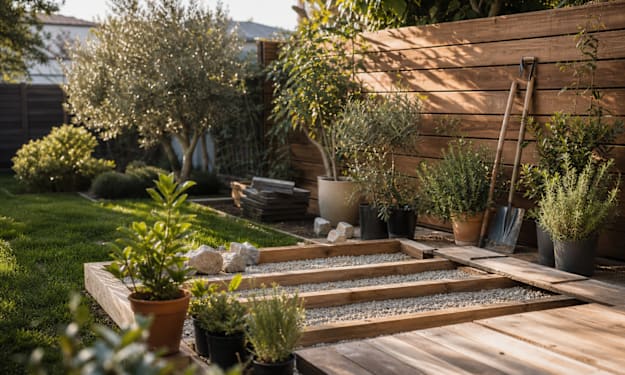
As we moved in, our backyard was one of those spaces described by realtors as "full of potential"—which, translated, means "a rectangle of tired grass, a fence slanting slightly under its own weight, and a patio slab poured at a slightly wrong angle back in 1994." I received two landscaping quotes; both exceeded $15,000 and were based on the assumption that I wanted what they were used to doing. I decided not to go ahead with hiring a landscaping company. Instead, I did the project myself, over several weekends. The end result cost less than a third of that first $15,000 quote, mostly because I switched from seeing it as one single project requiring one single decision to something that consists of smaller decisions made correctly. This is how it should be done: Start with the Bones, Not the Plants The immediate response to having the exciting possibility of landscaping the yard is to go buy some plants. Don't. Plants will be the cheapest, most easily changed part of any landscaping project—you can always move or replace a shrub for $20. What you can't easily change later is a patio slab poured in the wrong place, a path that floods or retaining walls you don't really need. Figure out the "bones" of your yard before you consider anything that has to be planted there: where hard surfaces go, where water needs to be drained, where structures (fencing, retaining walls, a pergola) need to be located. Everything soft will be layered in later. An easy test costing you nothing: wait until the next rains and walk through the yard, noticing where the water stands for more than a couple of minutes. If you can't wait for rain, running a hose slowly over the area for ten minutes tells you basically the same thing. Create a Map of Sun Exposure Before Buying Anything The single most frequent cause of death of a new landscaping job in the first summer isn't the bad luck—it's a purchase of plants unsuitable for the spot they're being placed in. "Full sun," "part shade" and "full shade" aren't market categories on the plant tags—these terms refer to the amount of hours of direct sunlight. Select two or three days and measure the sunlight exposure of your yard at 9am, noon, and 3pm. Create a map of three basic zones: places receiving 6+ hours of direct sun, places with just a couple of hours of sunlight (usually morning or afternoon sun) and places staying in shade most of the time. Everything you'll plant in your yard will correspond to this map, not to the plants that looked good at the garden center. The Budget Split Almost Nobody Gets Right If you remember one number from this entire post, make it this one: in a typical residential landscaping project, hardscaping (patios, paths, walls, fencing, drainage, lighting infrastructure) will use between 60 and 70% of the entire budget while planting and mulching will eat up only 20-30%. The mistake many first-time landscaping projects make is to spend their budget in the opposite order: all the excitement (and money) will go into plants first, and there won't be enough money for the patio and drainage fix that would make your yard actually usable. Determine your hardscape budget first, even roughly. The planting is what you do with the remaining funds and that's ok—this is genuinely the cheaper half of the project. Preview Your Designs Before You Spend (Or Dig) Here comes the part that used to be the hardest for me: I could plan drainage and sun exposure of my yard for an entire day but I had no idea whether the style I preferred (mediterranean with olive trees, maybe, or Japanese-influenced gravel-and-moss design, or the cottage garden mix) will actually look good against our particular fence, deck and house siding. Paint swatches and Pinterest images couldn't give me that information. Not could a landscaper mock-up, since that would take several weeks and lots of money before making an actual commitment. What finally worked for me is a tool called ArchyBase —an AI design platform which transforms a picture of your space into a rendered design concept. Specifically for the backyard, I used the landscape design tool : you upload a picture of your space, define the type of this space (backyard, patio, pool area, front yard—they have presets for all the common ones) and pick a style or leave it on the automatic, and it will transform your particular yard into the design concept in the selected style. You can also add a quick note like "keep the existing fence" or "install a small fire pit" and it will take that into account. It's not a substitute for planning drainage and sun exposure of the yard as above—a rendering made by an AI won't know your soil composition or your yard slope and won't suggest a retaining wall for you. What it will genuinely do is the thing I used to spend lots of money to find out—and to do incorrectly: will this style actually look right on this fence with this deck and in this particular light. I uploaded one picture and generated two or three designs based on it in the evening and it helped us resolve the dispute my partner and I were having for weeks in the time it took to brew some tea. A Simple Weekend Plan Want to run this in an actual weekend instead of thinking about it for six months? Here's the plan: Day 1, morning: map the sunlight exposure of the yard in three points of the day Day 1, after the next rain (or after the hose test): mark the spots where the water stands Day 1, evening: outline the zones on your paper—seating zone, planting beds, play zone Day 2: generate two or three design concepts based on the zone map so you're comparing actual options, not vague ideas Following week: get the quotes for hardscaping only—the bones—and plan to plant things yourself This yard is done now. It cost less than a third of that first $15,000 quote, mostly because the money went to the patio and drainage fix that required a professional, and the planting—the part I could do myself, on a weekend, once I knew where the sun was coming from—didn't require one at all.
By Maren Holt13 days ago in Lifehack
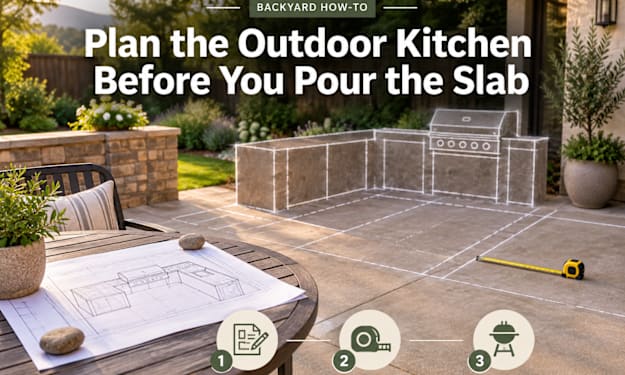
Plan the Outdoor Kitchen Before You Pour the Slab. AI-Generated.
My neighbours built an outdoor kitchen the summer before last. Stone island, built-in grill, a proper sink, the whole thing. It cost roughly what a small car costs. They use it about four times a year.
By Maren Holt13 days ago in Lifehack
The Man Who Kept Coming Back
At 7:15 every morning, an old man walked slowly through the gates of the small city park. He never carried much with him. Sometimes he had a newspaper folded beneath his arm. Sometimes he carried a small paper bag. But there was one thing he never forgot: a wooden bench near the oldest tree in the park.
By Behind the Curtainabout a month ago in Lifehack
How to Build a Raised Garden Bed
When I got back to my house from Tbilisi, I immediately started working in my garden. I love my garden, have fruit trees and berry bushes, as well as flowers I adore. Taking care of them is meditative, brings me joy, I talk to my plants and they give me peace of mind and happiness.
By Lana V Lynx4 months ago in Lifehack
Choosing Materials That Withstand Sydney’s Climate: A Practical Guide to Sustainable Landscape Builds
A fresh patio or retaining wall can transform a yard, but the wrong material choice may crack, fade or rot long before you have finished paying off the project. Sydney’s weather swings from blazing UV to torrential summer storms and the occasional salty nor’easter, so durability matters. Below, we unpack the main climate challenges and walk through smart, sustainable material options for new landscape-construction work.
By Marie Pintor4 months ago in Lifehack
Daisy Chain Fields 2026 Lineup: Every Confirmed Artist for Olivia Rodrigo’s All-Women Festival
Olivia Rodrigo has announced Daisy Chain Fields, a groundbreaking new music festival set for August 29, 2026, at Great Park in Irvine, California. This single-day event features an all-women and female-fronted lineup, with 100% of net proceeds supporting nonprofits dedicated to advancing and advocating for women and girls. Inspired by the spirit of Lilith Fair, the festival combines high-caliber performances, immersive experiences, and community impact.
By Victoria Debolt4 months ago in Lifehack
Asking an Italian chef for the special of the day
I grew up near Venice, in the Veneto, where dinner was never really about the menu. My grandmother did not read menus, she read people. When we sat down somewhere new, she would look up before anyone handed her anything and ask a single question. I must have heard it a thousand times before I understood that it was the most useful sentence in the entire Italian language.
By Andrea Zanon4 months ago in Lifehack