
Choosing Materials That Withstand Sydney’s Climate: A Practical Guide to Sustainable Landscape Builds
A quick-read guide to picking durable, eco-friendly surfaces for Sydney backyards.

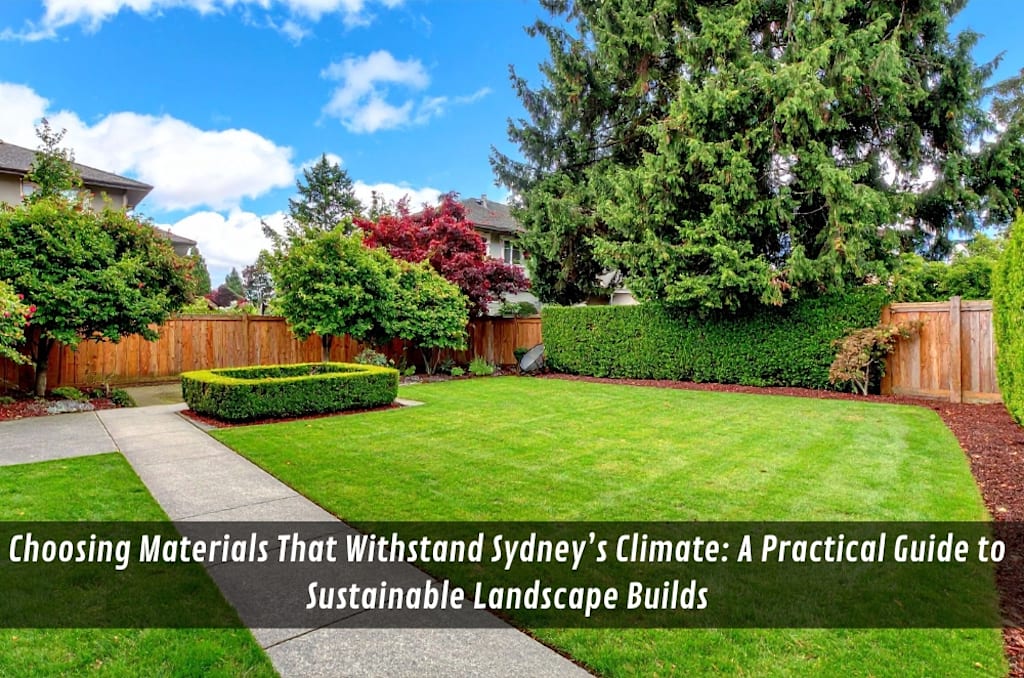
A fresh patio or retaining wall can transform a yard, but the wrong material choice may crack, fade or rot long before you have finished paying off the project. Sydney’s weather swings from blazing UV to torrential summer storms and the occasional salty nor’easter, so durability matters. Below, we unpack the main climate challenges and walk through smart, sustainable material options for new landscape-construction work.
How Sydney’s Climate Tests Outdoor Materials
Sydney sits in a temperate coastal zone, yet micro-climates vary dramatically between harbourside suburbs, inland foothills and the windswept Illawarra escarpment. Across the basin, most projects face at least three common pressures:
Intense UV exposure that bleaches timbers and plastics.
Rapid wet–dry cycles that expand, contract and fracture porous surfaces.
Air-borne salt (within roughly 5 km of the coast) that corrodes metal fixtures.
For bigger structures—pergolas, decks or block retaining walls—failing to account for these factors can trigger expensive re-work or safety hazards. The Australian Government’s Your Home design guide recommends evaluating embodied energy, long-term maintenance and end-of-life recyclability before signing off a build.
Why Sustainability and Durability Often Intersect
Low-maintenance, long-life materials reduce replacement cycles, landfill and chemical treatments. In many cases the “greener” option is also the wiser financial bet over a 10-year horizon.
Softscape Still Matters: Mulch, Soil and Plant Selection
Hardscape grabs the spotlight, yet softscape choices keep everything healthy. Readers weighing embodied energy might find it useful to explore why tree mulching matters for Sydney gardens before ordering truckloads of imported decorative rock. Good organic mulch moderates soil temperature, stores moisture and reduces the hard-surfaced footprint of a build.
Indigenous Plants and Water-Wise Irrigation
Pairing locally adapted species with drip systems can cut potable-water use by up to 60 % over spray irrigation. Greater Sydney’s WaterSmart Gardens & Homes program offers rebate information and planting guides.
Thinking Beyond Aesthetics: Hidden Fixings and Fasteners
Galvanised or marine-grade (316) stainless steel fixings outperform standard zinc-plated screws near the coast. Powder-coated aluminium framing is a lighter, rust-free alternative for pergolas or privacy screens. Skipping quality hardware to save a few dollars often leads to staining, structural wobble or early replacement.
When to Seek Professional Input
DIY patios and planter boxes are popular weekend projects, but larger earthworks, retaining walls over 600 mm, or any structure supporting a load typically require engineering and council approval. For structural integrity, drainage design and site-specific wind ratings, consider obtaining professional landscape construction advice before finalising material orders. A qualified contractor can also recommend suppliers offering certified sustainable products at trade pricing.
Red-Flag Scenarios That Warrant an Expert
- Clay-rich soils prone to movement after heavy rain.
- Sloping blocks needing tiered retaining solutions.
- Bushfire-prone zones where BAL ratings limit timber choices.
- Heritage overlays impacting hard-surface colour or texture.
Common Mistakes to Avoid
- Skipping sealers on porous stone: Water ingress accelerates freeze–thaw cracking in Blue Mountains micro-climates.
- Mixing metals: Aluminium framed screens and copper pipes can corrode at contact points.
- Under-specifying drainage: Water pooling behind a retaining wall can multiply lateral load by 50 % during storms.
- Over-concreting: Excess hardscape increases heat-island effect; balance with permeable gravel bands or turf zones.
Decision Framework: Which Material Fits Your Priorities?
Start with three simple questions:
- What performance life do you expect (10, 20, 30 years)?
- How much annual maintenance are you willing to undertake?
- Is the project close to the ocean or in a bushfire overlay?
Mapping answers to the comparison table quickly narrows options.
Final Thoughts
Sydney’s dramatic climate doesn’t have to shorten the life of your outdoor investment. By weighing UV resistance, moisture tolerance and sustainability side by side, homeowners can choose finishes that stay beautiful—and functional—long after the ribbon-cutting barbecue. Where the stakes or compliance hurdles rise, a short session with a licensed landscape contractor provides peace of mind and can uncover material combinations you may not have considered.
About the Creator
Marie Pintor
My passion lies in crafting engaging and informative content that inspires readers to connect with their outdoor spaces.
Enjoyed the story? Support the Creator.
Subscribe for free to receive all their stories in your feed.
Comments