
What Thoughtful Garden Lighting Does for Outdoor Spaces After the Sun Goes Down
garden lighting
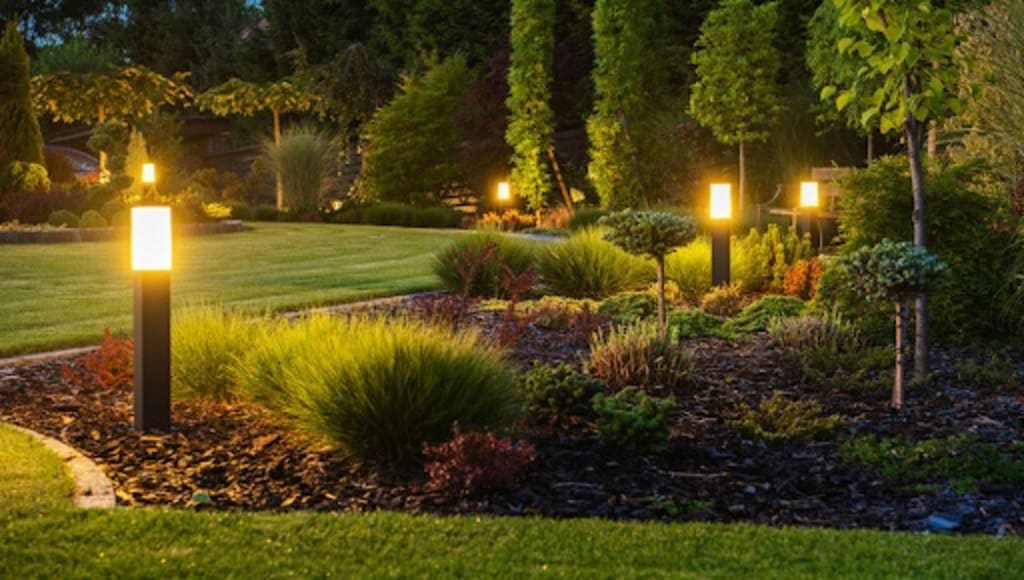
The majority of gardens are created with daylight in mind. Everything is taken into account in terms of how it appears and performs during the hours when natural light is available, including the planting selections, layout, and the interaction between hard and soft landscaping. When night falls, the garden almost vanishes, leaving just what can be seen via a window that lets in indoor light. For a large part of each day, the outside area that required a lot of time, energy, and money to develop just ceases to exist. Garden lighting profoundly alters that connection by generating a whole other version of the same place that functions according to its own rules after dark, rather than illuminating the garden as it appears during the day.
Lighting Creates a Second Garden
The garden that emerges under considered artificial lighting is genuinely different from its daytime counterpart, and that difference is not simply a matter of visibility. Darkness removes the boundaries and context that daylight provides — the fence line disappears, the neighbouring properties recede, and the illuminated elements of the garden exist against a dark backdrop that gives them a visual presence they never achieve in full daylight. A tree that reads as one element among many during the day becomes a dramatic focal point when uplighting picks out its canopy structure against the night sky. A pathway that is purely functional in daylight becomes a visual journey when low-level lighting marks its edges. The evening garden is not a diminished version of the daytime one — it is a different aesthetic experience entirely.
Layering Produces Depth
The most common mistake in garden lighting design is treating it as a single-layer problem — installing sufficient illumination for visibility and considering the task complete. Lighting that operates on a single level, at a consistent intensity throughout the space, produces flatness rather than atmosphere. Genuine depth in an outdoor lighting scheme comes from working across multiple levels simultaneously — ground-level path markers, mid-level accent lighting on planting and structures, and elevated uplighting or downlighting that addresses the canopy layer. Each layer contributes something different to the overall effect, and the interplay between them creates the kind of visual complexity that single-layer schemes never achieve, regardless of the quality of the individual fittings used.
Fixture Placement Matters More Than Quantity
The instinct when approaching garden lighting for the first time is to add more — more fittings, more coverage, more brightness. The gardens that achieve the most compelling results almost always work with restraint rather than abundance. Selective illumination of specific plants, structures, and focal points, combined with deliberate areas of shadow that create contrast and mystery, produce a more sophisticated result than comprehensive coverage that eliminates darkness. A fitting positioned to graze a textured wall surface at a low angle reveals the surface's character in a way that front-lit illumination never does. The placement decision is more important than the fitting specification in determining the quality of the outcome.
Colour Temperature Shapes Atmosphere
The colour temperature of light sources has a significant effect on how plants, surfaces, and materials read after dark — an effect that is poorly understood until it is experienced directly in a specific garden context. Warm white light sources bring out the warmth in timber, brick, and autumn foliage in ways that feel natural and inviting. Cooler white light sources emphasise the blue-green tones in foliage and render hard surfaces with a crispness suited to contemporary garden designs with significant hard landscaping. The relationship between colour temperature and the specific materials and planting in a garden is worth considering in advance, rather than discovering through expensive correction after installation.
Practical and Security Considerations
When garden lighting is created only for aesthetic purposes without taking the space's functional needs into account, the result is a system that looks lovely but performs badly. Failures that are not compensated for by a scheme's aesthetic ambition include pathway lighting that is inadequate for safe travel after dark, regions around stairs and level changes that are kept unlit, and entrance points that lack sufficient visibility for security reasons. Rather of considering practical utility and artistic aim as conflicting concerns, a well-thought-out outdoor lighting design incorporates both.
Conclusion
The garden that functions confidently after dark is not simply a better-lit version of its daytime self — it is a genuinely extended living space that delivers something the daylight hours cannot. Garden lighting designed with layering, restraint, considered placement, and appropriate colour temperature produces outdoor environments that are used more, enjoyed more, and experienced as a natural continuation of the home rather than a space that closes when the sun sets. That transformation, when it is achieved well, tends to surprise even the people who commissioned it.
About the Creator
Enjoyed the story? Support the Creator.
Subscribe for free to receive all their stories in your feed.
Comments
There are no comments for this story
Be the first to respond and start the conversation.