
The Face Everyone Is Mocking Is a Mirror
A viral image, a hundred jokes, and the quiet cost of performing for an audience that never stops watching.
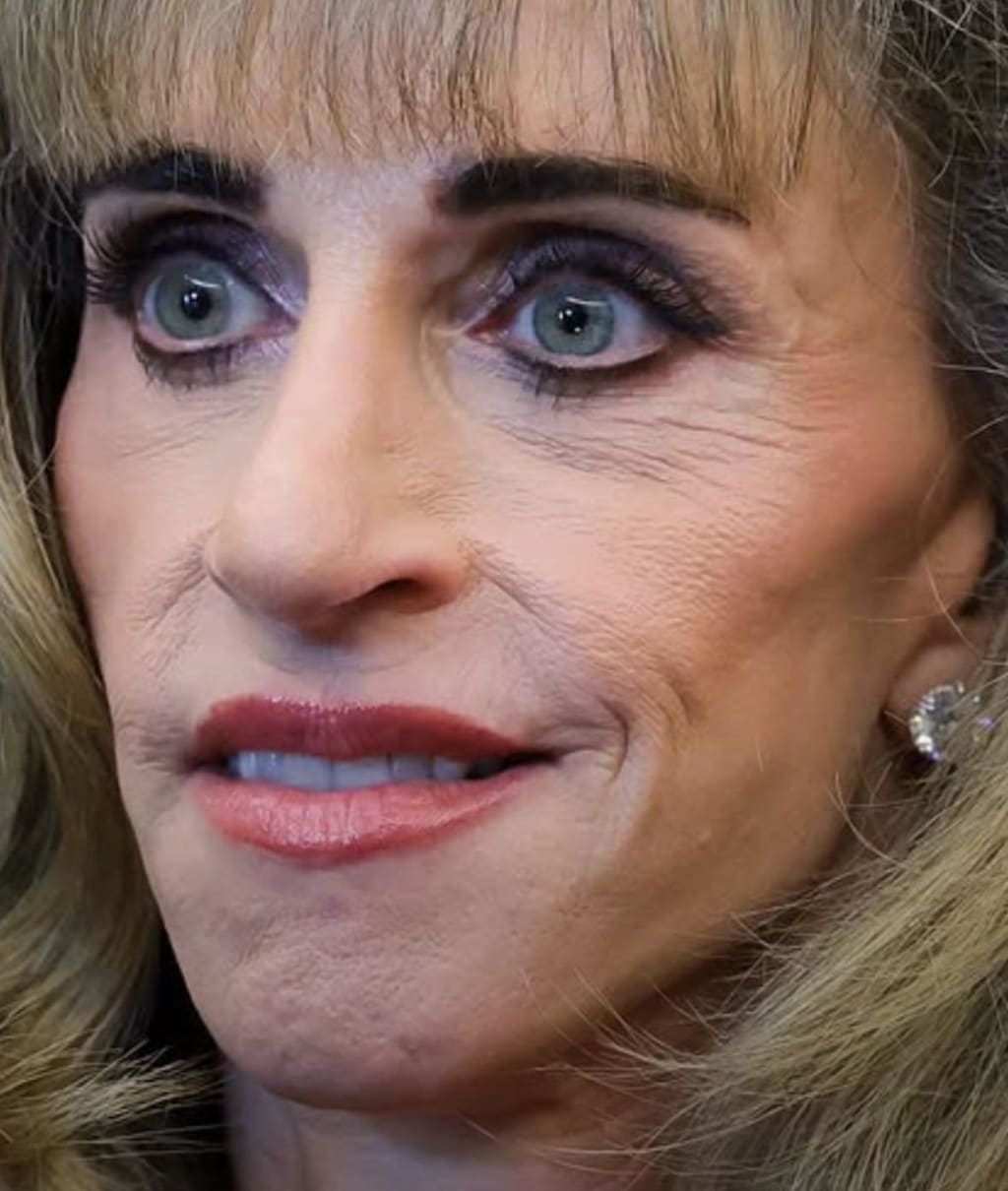
The screen holds a face cut into four pieces. Someone cropped the top half and labeled it alarm. The bottom half became disgust. The left side became anger. The right side became a kind of delighted derangement. The pieces sit in a grid. Each one has a vote count. The person in the photograph has disappeared. What remains is a tool for cropping.
That is how a face turns into a public text. It becomes a surface to read, enlarge, pause, and annotate. The eyebrows are too dark. The eyelids are pulled too wide. The cheekbones catch light in a way that suggests work. The teeth are too even, or not even enough. None of this is private. Every choice answers a gaze.
A face is never only a face. In an old portrait, it was a door into character. In public life, it is a billboard. Lipstick, brow shape, skin tone, filler, veneer, hair color. These are signs. They say: I belong here. I obey this. I am willing to pay for that. A person chooses a face to meet the world. The world has already chosen what it wants to see.
The body becomes a declaration. A flag on a truck. A hat on a head. A slogan on a shirt. Then the face becomes the loudest flag of all. There is a phrase for it: conspicuous compliance. I do not merely obey. I make sure you can see me obey. In a world that sorts people into camps, the body becomes the membership card. The more you alter yourself, the more you prove you are inside. Wealth does not free anyone from this. It buys better tools. A surgeon. A needle. A makeup artist. A mirror with softer light.
Politics is only one hand on the face. The other hand is older. A woman in public is not allowed to age. If she ages, she is discarded. If she resists, she is fake. She walks a wire between giving up and going too far. Under the wire is a drop. The drop is not hers alone. It belongs to everyone who has ever been watched. Youth is the only beauty. Tightness is the only dignity. So people line up for knives, needles, filters. They think they are chasing a better self. The better self was designed by someone else. The closer they get, the further they drift. The face stops belonging to the person. It belongs to the audience.
Mockery is easy. Mockery gives a quick lift: at least I am not that. But mockery is also a leash. It does not ask how the face was made. It only humiliates the face. It does not study power. It consumes ugliness. The one laughing stands safely on the shore while someone else struggles in the current. Look, she is ridiculous. That laughter is part of the same machine. We demand youth, polish, obedience. Then we laugh at those who obey too hard. We are the judge and the accomplice.
This face gathers so much feeling because it says what we will not admit. We all wear masks. We all trade the body for acceptance. We all fear aging, falling behind, being left outside. The face is an overexposed mirror. We point and say: not us. But it is us. It is the fear of being abandoned by the era.
Surgery and makeup are not evil in themselves. A body can be changed as play, as craft, as self-expression. The problem starts when change comes from fear. When it aims to please power. When it is less about becoming yourself and more about not being excluded. Then the body becomes a cage. The knife, the needle, the brush. Tools, or instruments of punishment. She is both the one acting and the one acted upon. She performs and is performed. The face becomes a battlefield. No one wins on a battlefield.
Writing this needs restraint. The subject is how monster-ness gets produced. The subject is the success ideology beneath the surgery. The subject is where desire comes from. Why would a person do this to her own face? Because she believes that only then will she be loved, seen, protected. That belief was written by family, school, media, market, politics, history. She stands at the center of the stage and plays the script to its end. We see the face. We do not see the hands behind it.
A face that speaks several emotions at once may be a face that can no longer speak one complete sentence. It is torn between loyalty and self, youth and age, wealth and emptiness, power and fear. It wants to please and refuse. It wants to belong and escape. Each emotion is real. None of them can take the center. The face becomes a ruin, and a person still stands in the ruin. She may have been beautiful. She may have been calm. She may have had the freedom of not being looked at. Now she is a public spectacle. She is a symbol now, a container for the mood of an age.
The coffee has a skin on it. The phone buzzes again. A thumb scrolls, pauses, screenshots, types a joke, deletes it, types again. The room is quiet. The screen is bright. Outside, a delivery truck brakes at the corner.
Stop asking why she became this. Ask why we watch, cut, laugh. If we see only ugliness and not structure, only the individual and not the era, only madness and not fear, then writing is just another hunt. What needs to be written is how the face becomes a mirror for a world that demands self-betrayal.
A face is the skin of its time. It records power. It leaks fear. It carries desire. It exposes emptiness. When a face expresses many emotions at once, the effect is division. It has divided into required selves and lost the center. We look. We laugh. We talk. We rarely notice that each emotion on that face has left a shadow on us.
The screen goes dark. In the black glass, a face appears. Mine, half-lit, waiting to be cropped.
About the Creator
Jin
Writer of reamstories
https://reamstories.com/jin
Enjoyed the story? Support the Creator.
Subscribe for free to receive all their stories in your feed. You could also become a paid subscriber, letting them know you appreciate their work.
Comments
There are no comments for this story
Be the first to respond and start the conversation.