
The Dinner Party Is Dead. Long Live the Dinner Party
The old dinner party was performative, exhausting, and died from perfectionism. The new one is smaller, looser, and might save your social life.

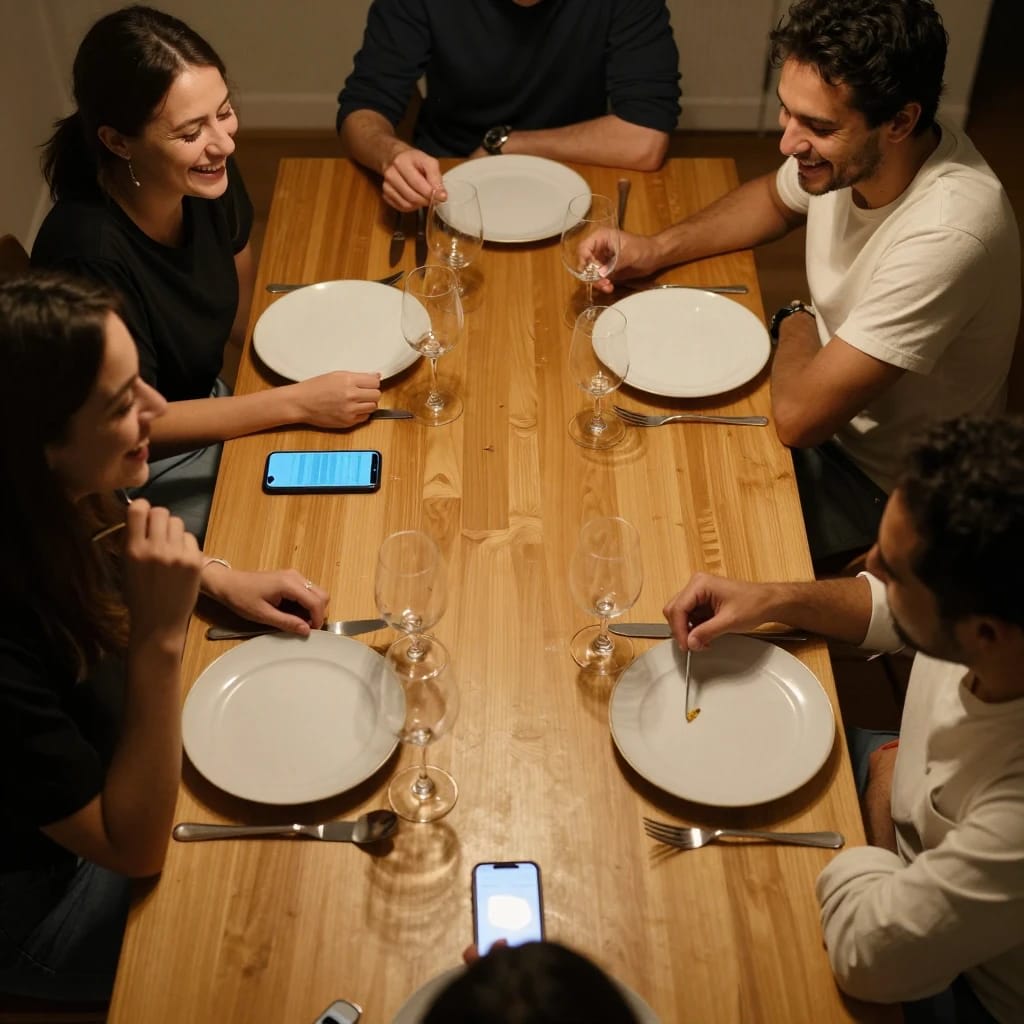
The Last Real Dinner Party
It was 2019. I remember because I still have the photo: a table set for twelve, candles burning down to nubs, wine glasses catching the light like crystal stars. I'd spent three days planning. Two days cooking. One day cleaning. I'd roasted a leg of lamb, made fresh bread, curated a playlist, and printed place cards in a font I thought was elegant but not trying too hard.
By 9 PM, three people had canceled with food poisoning or "something came up." By 10 PM, the remaining nine were split into two groups: the four by the fireplace talking about real estate, and the five at the table discussing a Netflix show I'd never seen. I spent the evening in the kitchen, washing dishes I'd already washed, pretending I didn't mind that nobody had asked me to sit down.
At 2 AM, the last guest left. I stood in the wreckage — wine-stained tablecloth, half-eaten lamb congealing on a platter, a sink full of glasses — and felt something I couldn't name. Not exhaustion. Not disappointment. Something emptier. I'd built a perfect evening and spent it alone in my own kitchen, performing hospitality for people who were having fun without me.
I didn't host again for three years. Not because of the pandemic, though that helped. Because I'd proved something to myself: the dinner party, as I'd been taught to do it, was a trap. It cost too much, required too much, and left the host with the least.
But I missed it. Not the performance. The gathering. The being-together. The thing that happens when people share food and time and nothing else is competing for their attention.
So I rebuilt it. Not from the Martha Stewart template. From the wreckage of what didn't work. And what I built is smaller, looser, and — unexpectedly — more alive than the perfect evenings ever were.
This is the new dinner party. It doesn't look like the old one. It doesn't feel like the old one. It might not even happen at dinner. But it does something the old version forgot to do: it actually connects people.
The Autopsy: Why the Old Dinner Party Died
To understand the new dinner party, you have to understand what killed the old one. And it wasn't the pandemic, or millennial burnout, or the death of cooking. It was three specific design flaws that made the traditional format unsustainable.
Flaw #1: The Performative Host
The old dinner party required a protagonist: the host as hero. The host cooked everything, knew everyone's dietary restrictions, decorated the space, curated the music, managed the flow of conversation, and — ideally — did it all while appearing effortless. The host was simultaneously chef, event planner, therapist, and background actor in their own life.
This performance created an invisible debt. Guests felt grateful but also slightly guilty, which made them perform gratitude in return. The entire evening became a mutual performance: the host performing perfection, the guests performing appreciation. Nobody was relaxed because everybody was acting.
The cost was borne almost entirely by the host. Financially (a twelve-person dinner easily runs 200-400), temporally (three days of prep for four hours of event), and emotionally (the post-party crash of realizing you spent the evening working while everyone else socialized). After two or three of these, most people stopped hosting. They couldn't afford the role.
Flaw #2: The Scale Problem
Twelve people was the standard. Sometimes sixteen. The logic was social efficiency: invite everyone, see more people, maximize the evening. But twelve people at a dinner table is a terrible format for actual connection. It's a stage, not a conversation.
At twelve, the table splits into sub-conversations. The host becomes a traffic cop, trying to keep energy unified. The introverts retreat to the edges. The extroverts dominate the center. The person who needs to leave early feels guilty. The person who wants to stay late feels awkward. The whole evening becomes a logistics problem dressed in candlelight.
Twelve is also the number where cancellation becomes inevitable. With twelve invites, three will drop out. With three dropouts, the table feels sparse. With a sparse table, the host feels rejected. The entire system is designed for disappointment.
Flaw #3: The Perfection Trap
The old dinner party had a hidden standard: everything should be beautiful. The table, the food, the lighting, the conversation. This standard came from magazines, from movies, from inherited expectations of what "a nice evening" looks like. And it killed the dinner party by making failure feel inevitable.
If the soufflé fell, the evening was ruined. If the conversation lagged, the host had failed. If someone didn't get along, it was a hosting error. The dinner party became a test — of taste, of skill, of social grace — and most people failed it silently by simply never trying again.
The perfection trap was the final killer. It turned a gathering of friends into an exam. And nobody wants to take an exam on a Friday night.
The New Dinner Party: Four Rules for the Post-Perfect Gathering
I didn't invent the new dinner party. I discovered it by accident, then refined it by necessity. It started in 2022, when a friend texted: "Come over. I'm ordering pizza. Bring nothing." Six of us sat on the floor of her living room, paper plates on our knees, and talked for four hours. No candles. No playlist. No host running back to the kitchen. Just people, food that required zero preparation, and time that wasn't being measured.
That evening had something the perfect dinner parties never did: ease. Nobody was performing. Nobody was working. Everyone was present. And I realized that presence — not perfection — was the point.
So I codified what I'd found. Four rules. Not for elegance. For connection.
Rule #1: Four to Six People, Maximum
This is the most important rule and the hardest to follow. We want to be inclusive. We want to see everyone. We worry about leaving people out. But the new dinner party isn't about efficiency. It's about depth. And depth requires intimacy, and intimacy requires a small room.
Four to six is the magic number because:
- One conversation is possible. At six, everyone can hear everyone. No sub-groups. No one left out of the thread.
- Cancellation is survivable. If one person drops, you still have three to five. The evening doesn't collapse.
- The host isn't a traffic cop. At six, conversation flows naturally. The host can participate, not manage.
- Commitment is higher. People say yes to small gatherings more reliably than large ones. A four-person dinner feels like an appointment. A twelve-person dinner feels like an event they can skip.
The hardest part of this rule is the exclusion. You will leave people out. You will rotate. You will explain to friends that "it's a small thing this time, but let's do something bigger soon." This is uncomfortable. It is also necessary. The alternative is the twelve-person table where nobody connects. Choose depth. Rotate generously. Trust that people understand.
Rule #2: No Host Pressure — Potluck, Ordered-In, or Simple
The new dinner party removes the host-as-hero model entirely. The host provides the space and the invitation. The food is collective or outsourced. The goal is zero time in the kitchen during the event.
Three formats work:
The Potluck: Everyone brings one thing. No coordination required beyond "bring something you'd want to eat." The host provides plates and drinks. The result is eclectic, imperfect, and strangely bonding — people talk about what they brought, why they chose it, where they found the recipe. The food becomes a conversation starter, not a performance.
The Ordered-In: Pizza, Thai, barbecue, whatever your group loves. The host orders, everyone splits the cost or brings wine. Paper plates. No dishes. The host spends the evening on the couch, not at the stove. This is not lesser than a cooked meal. It is freer than a cooked meal. And freedom is the resource the old dinner party never had.
The Simple: If someone genuinely wants to cook, they cook one thing. A big pot of soup. A roast chicken. A pasta dish. One thing, not a menu. The rest is bread, salad from a bag, ice cream from the store. The evening isn't about the food. The food is the excuse for the evening.
The key shift: the host is a participant, not a provider. They sit down. They eat with everyone else. They don't disappear. The dinner party is a shared experience, not a hosted performance.
Rule #3: One Anchor Activity
The old dinner party assumed conversation would carry the evening. It often didn't. The new dinner party doesn't leave connection to chance. It provides one anchor — a simple, low-stakes activity that gives the evening structure without rigidity.
Anchors that work:
The Card Game: Not poker (too competitive). Something collaborative or silly: Codenames, Exploding Kittens, The Mind, a simple trivia game. The game provides a reason to talk, laugh, and interact without the pressure of "good conversation." It breaks the ice for new groups and refreshes the energy for old ones.
The Playlist Collaboration: Everyone adds five songs to a shared playlist before they arrive. During dinner, the playlist plays. People explain their choices. Debates happen. Discoveries happen. The music becomes a window into each person's current mood, and the evening becomes a mixtape you made together.
The Debate Topic: The host proposes a question — not political, not divisive, but genuinely interesting. "What's a skill you wish you'd learned earlier?" "What's the best worst movie you've ever seen?" "If you had to live in a different decade, which one and why?" Everyone answers. The question provides structure, but the answers provide the real content. It's a conversation starter that actually starts conversations.
The Show-and-Tell: Everyone brings one thing — a book, a photo, an object, a story — and shares it for two minutes. It's elementary school nostalgia for adults. It's also surprisingly intimate. People share things they wouldn't mention in normal conversation. The evening becomes a cabinet of curiosities, and everyone is the curator.
The anchor isn't the point. The point is that the anchor removes the awkwardness of "what do we do now?" It gives permission to interact. It makes the evening feel designed without feeling controlled.
Rule #4: The Third Thursday Rule
This is the rule that transforms the dinner party from an event into a practice. The Third Thursday rule is simple: the dinner party happens on the third Thursday of every month. Same time, same loose format, different people or the same people. It becomes a rhythm, not a special occasion.
Why Thursday? Because Friday is for recovery, Saturday is for big plans, and Sunday is for dread. Thursday is the forgotten night — the night nothing usually happens. Which makes it perfect for something regular. A Thursday dinner party says: this is ordinary. This is just what we do. It's not a celebration. It's maintenance.
Why monthly? Because weekly is too frequent (people burn out, schedules conflict, it becomes a burden). Quarterly is too rare (people forget, momentum dies, it feels like an event again). Monthly is the sweet spot: frequent enough to build rhythm, rare enough to feel special.
The Third Thursday rule removes the endless scheduling negotiation. It removes the "we should get together soon" that never happens. It creates a standing invitation. People can plan around it. They can miss it without guilt (it's monthly, there will be another). They can bring friends without asking. The dinner party becomes infrastructure — a predictable social space in an unpredictable life.
And here's the unexpected benefit: recurring low-stakes gatherings beat one perfect event. Every single time. The perfect dinner party is a memory. The monthly dinner party is a practice. And practices build relationships in ways memories never can.
Why This Matters: The Antidote to Always Available, Never Present
We live in an age of infinite availability and zero presence. We can text anyone, anytime. We can see what everyone is doing, everywhere. We can join video calls from our beds and scroll through the lives of people we haven't spoken to in years. We are more connected than any humans in history, and more absent from our own lives than any humans should be.
The "always available, never present" condition is the defining social pathology of our time. We are physically in rooms and mentally in phones. We are present at events and absent from them. We are surrounded by people and alone in our attention. The technology that promised connection delivered distraction, and we accepted the trade without reading the terms.
The new dinner party is an antidote because it creates structured social time — time that is protected, bounded, and designed for presence. When you sit at a table with four other people, phones face-down, food in the center, an anchor activity in progress, you are doing something radical: you are being where you are. You are not available to anyone else. You are not performing for an audience. You are not documenting for later. You are simply present, with these people, in this room, right now.
This presence is increasingly rare. It is also increasingly valuable. The person who can create spaces of genuine presence — who can gather people and hold them there, undistracted, for three hours — is doing something that technology cannot replicate and busyness cannot replace. They are creating the conditions for human connection in a world designed to fragment it.
The new dinner party isn't nostalgia. It's resistance. It's a small, regular, intentional refusal to let social life become a feed. It's a claim that some things require bodies in rooms, voices in air, eyes meeting across a table. It's a bet that presence — boring, imperfect, unrecorded presence — is still the raw material of friendship.
And it's winning. Slowly, quietly, without headlines or hashtags, people are rebuilding their social infrastructure one small gathering at a time. They're not posting about it. They're not branding it. They're just doing it. Because they've discovered what I discovered: the dinner party never died. It just got too perfect to survive. Strip away the performance, shrink the scale, lower the stakes, and what remains is the thing we wanted all along — not a perfect evening, but a real one.
The First New Dinner Party: A Starter Guide
If you want to try this, here's exactly how to start. No philosophy. Just steps.
Two weeks before: Text four people. "Third Thursday, my place, 7 PM. I'm ordering Thai. Bring wine or nothing. We're doing a playlist thing — send me five songs by Wednesday." No explanation. No apology for the small invite. Just the invitation.
One week before: Order the food. Set a playlist of whatever you've received so far. Buy paper plates and ice cream. Clean the bathroom. That's it. No tablecloth. No candles unless you already have them. No stress.
Day of: Pick up the food. Put it on the counter. Open the wine. When people arrive, let them serve themselves. Sit down. Start the playlist. Ask about the songs. Let the evening move. If conversation lags, pull out a card game. If energy dips, serve ice cream. If someone needs to leave early, walk them to the door and come back. No performance. No pressure. Just presence.
After: Send a group text the next day. "That was fun. Next month, same time?" If people say yes, you've started a practice. If they don't, try different people. The format works. The people are the variable.
The Reframe: Gathering Is a Skill, Not a Talent
We treat hosting like a personality trait. "She's such a good host." "I'm not really a dinner party person." This is a mistake. Hosting is a skill. It can be learned, simplified, and adapted. And the new dinner party is the simplified version — the skill stripped of its unnecessary complexity.
You don't need a big house. You need a floor and some cushions. You don't need cooking skills. You need a phone and a delivery app. You don't need a sparkling personality. You need four people who want to be there and one anchor activity to give them permission to interact.
The dinner party isn't dead. The old version is. And good riddance. It was too expensive, too exhausting, too perfect to be sustainable. What replaces it is smaller, looser, and — if you let it be — more alive than the perfect evenings ever were.
So host one. Not a big one. Not a perfect one. A small, loose, present one. Four people. Ordered-in food. A playlist or a card game. The third Thursday of next month. And then the month after that. And the month after that.
Build the practice. Build the rhythm. Build the presence.
The dinner party is dead. Long live the dinner party.
About the Creator
Muhammad Sabeel
I write not for silence, but for the echo—where mystery lingers, hearts awaken, and every story dares to leave a mark
Enjoyed the story? Support the Creator.
Subscribe for free to receive all their stories in your feed.
Comments
There are no comments for this story
Be the first to respond and start the conversation.