
Remaining Human in a World That Never Slows Down
Rediscovering meaning, awareness, and human connection at every stage of life

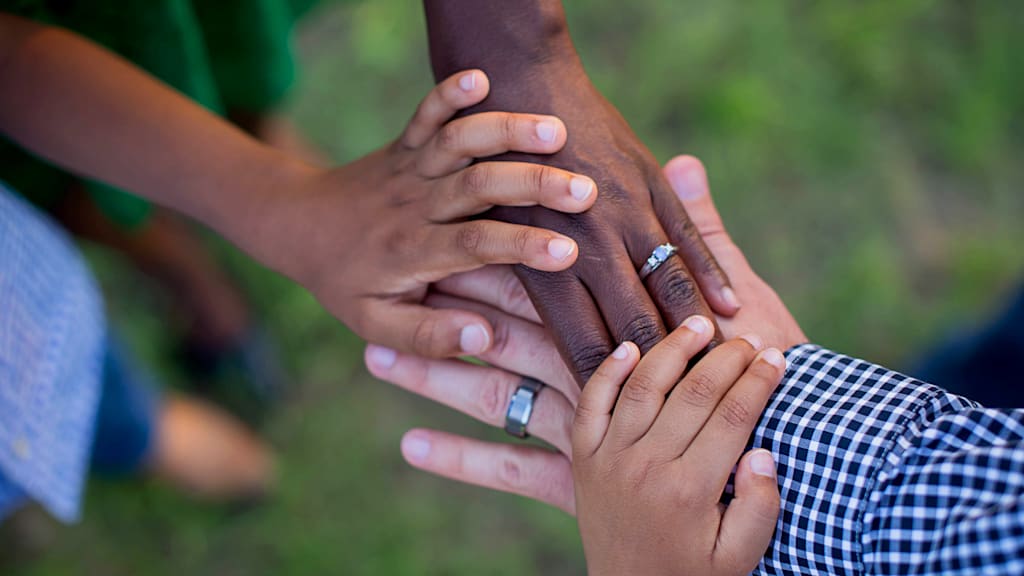
There is a quiet truth we rarely acknowledge: human beings are never truly finished.
People often imagine adulthood as a final destination, as though life suddenly becomes complete once a certain age is reached. Yet reality is far more complex. Human beings continue evolving for as long as they live. They learn, unlearn, break apart, rebuild themselves, and search for meaning again and again.
Childhood, adolescence, adulthood, and old age are not separate worlds. They are different expressions of the same inner journey.
And throughout that journey, one question continues to follow every generation:
How do we remain human in a world that moves faster every day?
Modern life has become an endless acceleration. Everything appears instantly, disappears instantly, and is replaced before we even have time to understand it. Opinions spread within seconds. Trends rise and collapse overnight. People are constantly connected, yet many have never felt more emotionally distant from one another.
Somewhere within this permanent noise, essential values slowly begin to fade.
Respect. Truth. Justice. Kindness.
These are not outdated ideals buried in old books. They remain the foundation of meaningful human existence. Without them, progress loses direction, and connection loses depth.
This reflection is not meant to impose a way of thinking. It is simply an invitation to pause for a moment. To step away from constant pressure and reconnect with something more sincere within ourselves.
Because growing older does not automatically mean growing wiser.
Some people spend their entire lives avoiding their own emotions, while others develop a deep understanding of life at a very young age. Most individuals exist somewhere in between, attempting to balance responsibility, survival, ambition, and the silent desire to feel fulfilled.
We work. We study. We perform roles expected by society.
And somewhere along the way, many people forget what it truly means to live.
Living is not merely surviving routines. It is becoming aware of what life is doing to us internally, and understanding what we are becoming in response to it.
One of the greatest contradictions of our era is this: technology has connected the world while emotionally fragmenting many individuals within it.
Young people search for identity through screens and endless comparisons. Adults struggle to maintain balance between responsibility and emotional exhaustion. Older generations observe a society changing so quickly that it sometimes feels unfamiliar.
Yet beneath these differences, the same silent fatigue continues to emerge across generations:
the feeling of losing connection with meaning itself.
In times like these, respect becomes more than politeness.
True respect means recognizing that every individual carries an invisible world within them, experiences, fears, memories, wounds, hopes, and perspectives we may never fully understand. To respect someone is not simply avoiding harm. It is learning to listen without dominating, understanding without judging, and speaking without diminishing another person’s humanity.
It is a quiet form of discipline that has become increasingly rare in a culture driven by speed, reactions, and constant exposure.
Justice, meanwhile, begins long before courts or institutions.
It lives inside everyday choices that no one else notices.
It appears in the way people treat vulnerability, difference, weakness, and silence. Real justice requires humility, the ability to accept that we may not always be right, and the courage to see situations beyond our own emotions or personal interests.
The loudest voice is not always the wisest one.
Truth itself has also become increasingly difficult to recognize.
Today, truth competes with appearances, algorithms, opinions, and carefully constructed identities. Many people feel pressured to perform versions of themselves rather than simply exist authentically.
But authenticity does not mean exposing every part of one’s life.
It means refusing to betray who you truly are simply to be accepted by others.
That kind of honesty is difficult. Yet it is also deeply liberating.
Kindness, perhaps more than anything else, is misunderstood in modern society.
Many mistake kindness for weakness because aggression is often confused with strength. In reality, genuine kindness requires emotional clarity and remarkable inner control. It means seeing the harshness of the world without allowing that harshness to transform you into someone cruel.
It means understanding pain without reproducing it.
It means choosing awareness over bitterness.
Every generation carries different struggles, yet everyone eventually encounters the same essential questions:
Who am I becoming?
What truly matters?
How do I live without losing myself?
The child explores. The teenager questions. The adult builds. The elderly reflect.
Yet beneath every stage of life exists the same silent search for meaning, balance, and inner peace.
People often believe the world changes only through major events, powerful leaders, or historic decisions. In reality, the world transforms quietly through ordinary actions repeated every day.
Through someone choosing empathy instead of anger.
Through someone refusing to repeat injustice.
Through someone speaking honestly when silence would feel safer.
Humanity survives because of these invisible decisions made daily by ordinary individuals.
And perhaps that is where hope still exists.
At the end of everything, growth never truly ends. Understanding is never complete. There is no final version of being human.
There is only the continuous effort to become more conscious, more balanced, and more sincere with ourselves and with others.
In a world increasingly obsessed with speed, performance, and appearances, remaining deeply human may be one of the rarest forms of success left.
And perhaps one of the most important.
About the Creator
Enjoyed the story? Support the Creator.
Subscribe for free to receive all their stories in your feed.
Comments
There are no comments for this story
Be the first to respond and start the conversation.