
The Impact of Woodrow Wilson's Fourteen Points
What Impact did Wilson's Fourteen Points Speech have on World War I?

In 1917, German U-boats began a campaign targeting British merchant shipping in the Atlantic. This U-boat campaign also put neutral American ships in the firing line. In addition, the decoded Zimmermann Telegram, in which Germany approached Mexico for an alliance, also convinced the United States to declare war on Germany. As a result, President Wilson declared war on the German Empire in 1917.
To clarify America's wartime objectives, Wilson made a speech to Congress on January 8, 1918. In this speech, he stated 14 points for peace in Europe, which outlined post-war objectives and conditions of victory for America and its allies. Among some of the more notable points were the following:
Open diplomacy as an alternative to secret treaties
An independent Polish state in Eastern Europe
The restoration of French territory
An association of nations was to be established (otherwise, the League of Nations)
Austria-Hungary to have the right to self-determination
Global armament reduction
Creation of a new Turkish state with free trade in the Dardanelles Strait
These were among some of the more notable points highlighted by Wilson. They were widely published, and their allies accepted the 14 points, which provided the foundations for forthcoming peace negotiations. Yet, they only did so based on numerous reservations, which Wilson accepted so long as Britain and France provided full support for the League of Nations.
The military situation worsened in Western Europe by late 1918, and they were ready to accept an armistice. They expected an armistice to be as the 14 Points had highlighted. In November, Germany accepted a ceasefire with the Entente, which ended the war.
In 1919, the British, Americans, and French met at the Paris Peace Conference to draft the post-war treaties for Europe. While the 14 points would provide the basis for these treaties, neither Britain nor France accepted all the points outlined in the treaty. The French demanded the restoration of French territory and German reparations. Britain also requested that provisions be made in relation to freedom of the seas, as outlined by Wilson. Reduction of armaments was not universal either, for neither Britain nor France was about to make drastic cuts to their militaries.
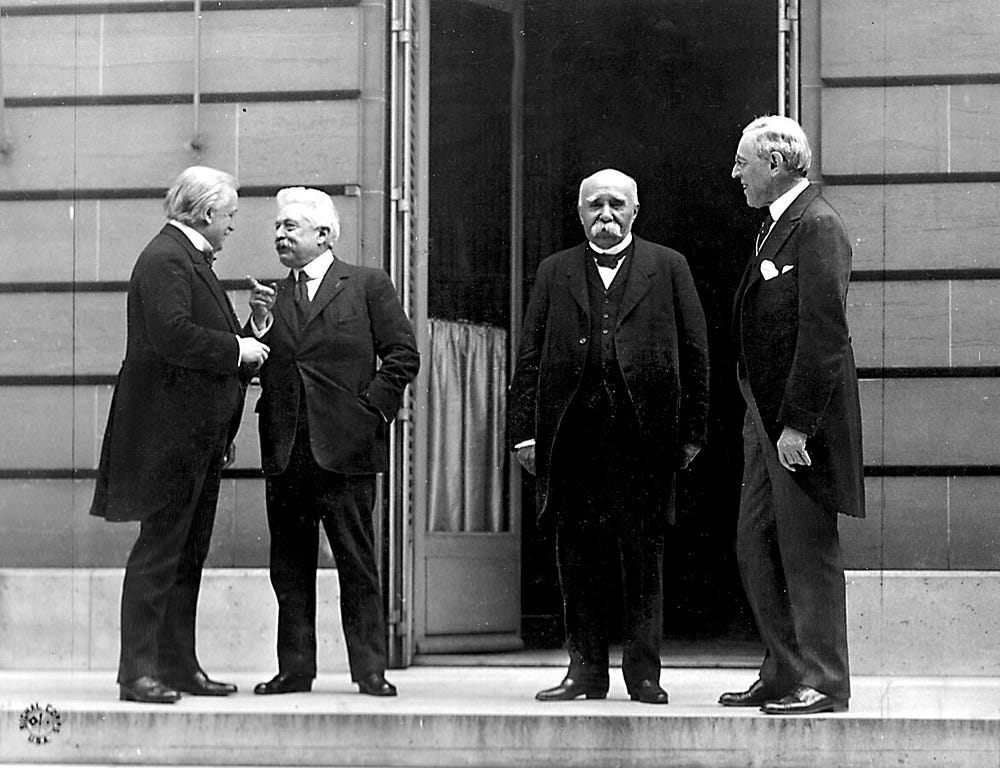
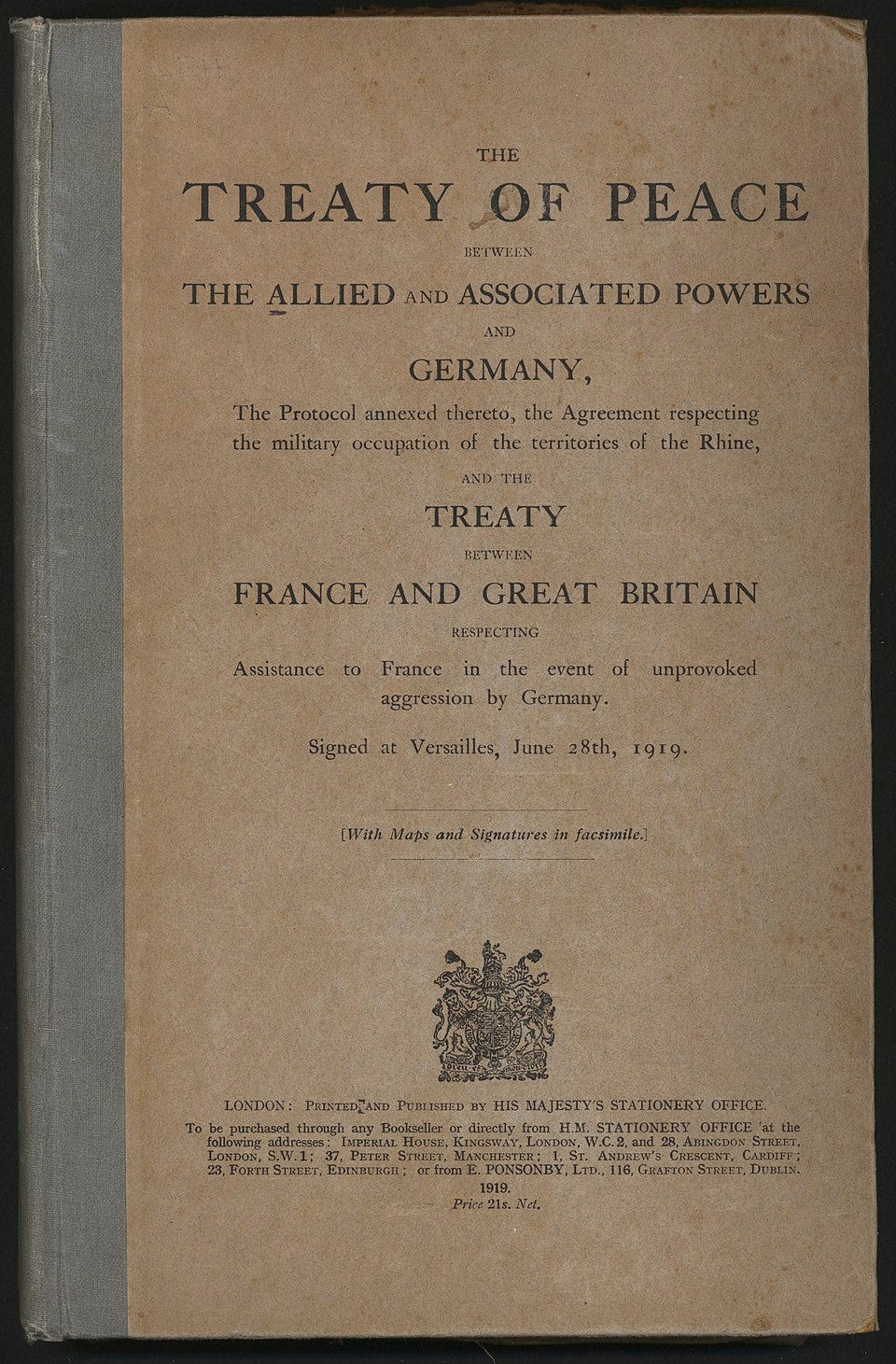
The Treaty of Versailles was signed at the Paris Peace Conference, which outlined peace terms for Germany. This remained controversial as Germany did not feel it was compatible with Wilson's 14 points. The Treaty of Versailles never won the approval of the US Senate, which ensured a period of American isolationism that would follow. Although the League of Nations was established, the Americans did not join it.
Not all of Wilson's 14 points were fulfilled at the Paris Peace Conference. A few were, such as an independent Poland in Eastern Europe and the restoration of French territory. As has been noted, the League of Nations was also established, which was a precursor to the United Nations. Countries still drafted secret treaties, such as the Treaty of Rapallo between the USSR and Germany.
Why is the 14 Points Speech Significant Today?
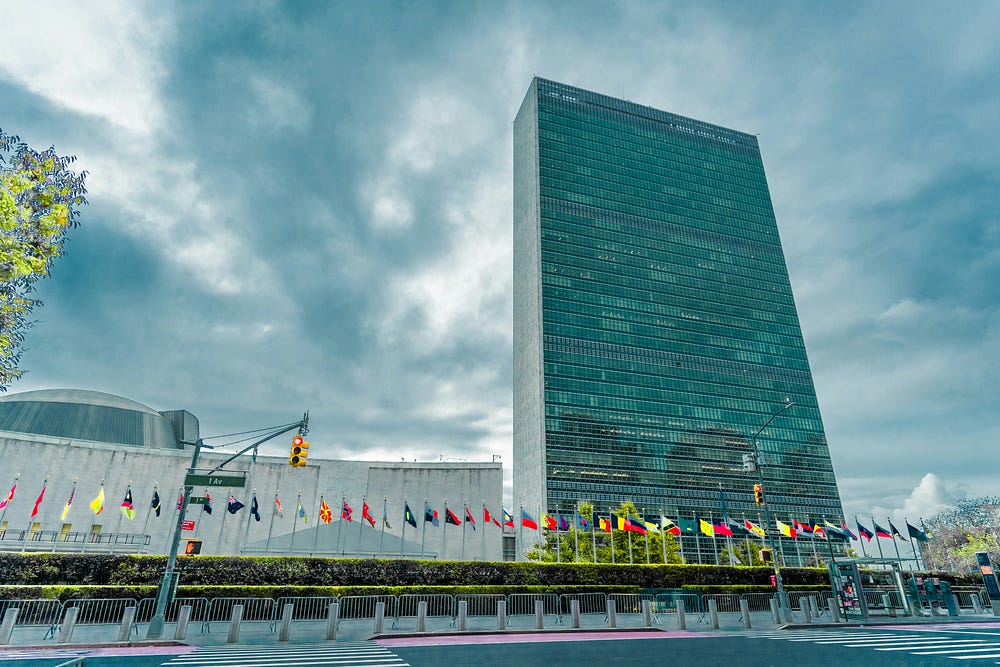
Wilson's 14 Points became a blueprint for international relations in today's modern world. The League of Nations was perhaps the most important of his points. That international organization laid the foundations for the UN of today, even though it effectively collapsed in the years before World War II. The League of Nations established the principles of international forums and collective security.
Self-determination also became a new buzzword in international politics, which had a more profound impact on 20th-century history. It was an idea that native people have the right to choose their own governments. Thus, the self-determination principle fueled decolonization throughout much of the 20th century.
The 14 Points also led to postwar settlements establishing the nation-states of Hungary, Turkey, Austria, and Poland in Europe. The points shaped a new map of Europe that we are more familiar with today. Germany and Russia were incensed by the establishment of Poland, a country they carved up with the Nazi-Soviet Pact in 1939. Austria also merged with Germany to become a part of the Third Reich. That merger seemed compatible with the self-determination principle, as a referendum was held, but it was a sham vote.
So, President Wilson tried to shape a better, more peaceful world by establishing new approaches to international politics, such as open diplomacy and the scrapping of secret treaties. European squabbles and imperial rivalries remained throughout the interwar period, leading to the outbreak of World War II. Wilson's vision, outlined in his 14 Points, laid the foundation for many of today's international laws, but not all countries pay careful attention to them.
This article of mine was originally submitted to Medium.com, where you can read it here.
Read more of my World War I articles on Vocal:
Remembering the Battle of the Marne: September 6 to 12, 1914
Remembering the Defeat of Russia in World War I
Germany's Victories and Defeats in World War I
Britain's Involvement in World War One
Timeline of the First World War: From Sarajevo to Versailles
About the Creator
Matthew A
Matthew is the author of Battles of the Pacific War 1941-1945. Battles of the Pacific War is available on Amazon and Lulu in e-book and paperback formats. Check out the book’s blog at battlesofthepacificwar.blogspot.co.uk.
Enjoyed the story? Support the Creator.
Subscribe for free to receive all their stories in your feed.
Comments
There are no comments for this story
Be the first to respond and start the conversation.