
Timeline of the First World War: From Sarajevo to Versailles
A Timeline Chronology of World War I

The First World War began in 1914 after the assassination of Archduke Ferdinand. It was a war that involved most of Europe, Russia, and the United States. This war ended in 1918 with the defeat of the German army in France, as well as the defeat of their allies, Austria-Hungary and Ottoman Turkey. This timeline highlights some of the key dates in the conflict.
June 28, 1914, to Aug 5, 1914
In late June, the Archduke Ferdinand was assassinated. A month later, Austria-Hungary declared war on Serbia, suspecting that the Serbians were behind it. Germany pledged full military support for their allies, Austria-Hungary, before Russia mobilized its army in the east. As such, in August, Germany declared war on both Russia and France, and after German troops advanced into Belgium, Britain also joined France in the war by August 4. The First World War had therefore begun.
August 26
After the Russian army moved into East Prussia, it met the German army at the Battle of Tannenberg. It was here that hundreds of thousands of Russian soldiers were lost in a defeat that left the Russians in disarray. In September, the remainder of the Russian army in East Prussia was also defeated at the Battle of Masurian Lakes, which ensured the withdrawal of the remaining Russian soldiers from East Prussia.
September 6
By September, the German army had advanced further into France and reached the Marne. Victory in France seemed to be close until the Battle of the Marne in early September. It was here that French and British troops halted the German advance towards Paris, and the German army retreated.
February 19, 1915 to December 19, 1915
After the Battle of the Marne, both sides had dug in. As such, Britain and France looked towards other potential fronts, and the Dardanelles (Gallipoli) Campaign began in February, which would last for much of the year. The Entente began the campaign by bombarding Turkish fortifications in the Dardanelles with its battleships. However, after the loss of battleships at sea, this was followed by a ground campaign, which was supposed to ensure the defeat of Ottoman Turkey. By the end of the year, the British and French began withdrawing their troops from Gallipoli. Ottoman Turkey remained undefeated until 1918.
February 21, 1916, to July 1, 1916
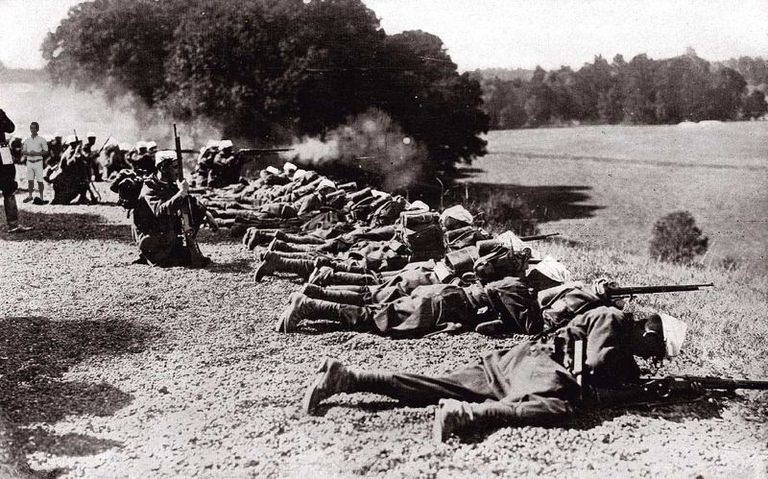
At both land and sea, there were some of the largest battles of the war during this period. In February, the Battle of Verdun began, which was the longest single battle of the war that lasted for a number of months, with hundreds of thousands lost in battle. This was also followed by the Battle of the Somme in July, which was another costly battle for both sides in France.
The largest naval battle of this war also emerged off the coast of Jutland in May. At the Battle of Jutland, the Royal Navy lost a number of battleships, a larger tonnage of ships than the Germans, but they were still able to retain their German economic blockade after the battle.
February 1, 1917, to April 6, 1917
In February of 1917, the Imperial German Navy began a new U-boat campaign that was supposed to defeat Britain by sinking its merchant ship supplies. The campaign was very effective to begin with, but Britain's increased convoy support for its merchant ships was enough to cut its losses. On April 6, the USA also declared war on the German Empire during the campaign. This gave both Britain and France considerable optimism that they could win the war.
October 1917 to December 5, 1917
The Tsar had abdicated the Russian throne in February, and the Bolsheviks returned to Russia soon after. The Russian monarchy had effectively been dissolved, and in October, the Bolsheviks seized the Winter Palace. Lenin had promised the Russians that the Bolsheviks would withdraw Russia from the war, and so after the October Revolution, they began peace negotiations with the Germans. By December 5, the Russians and Germans signed an armistice, which seemingly ended the war in Eastern Europe.
March 1918
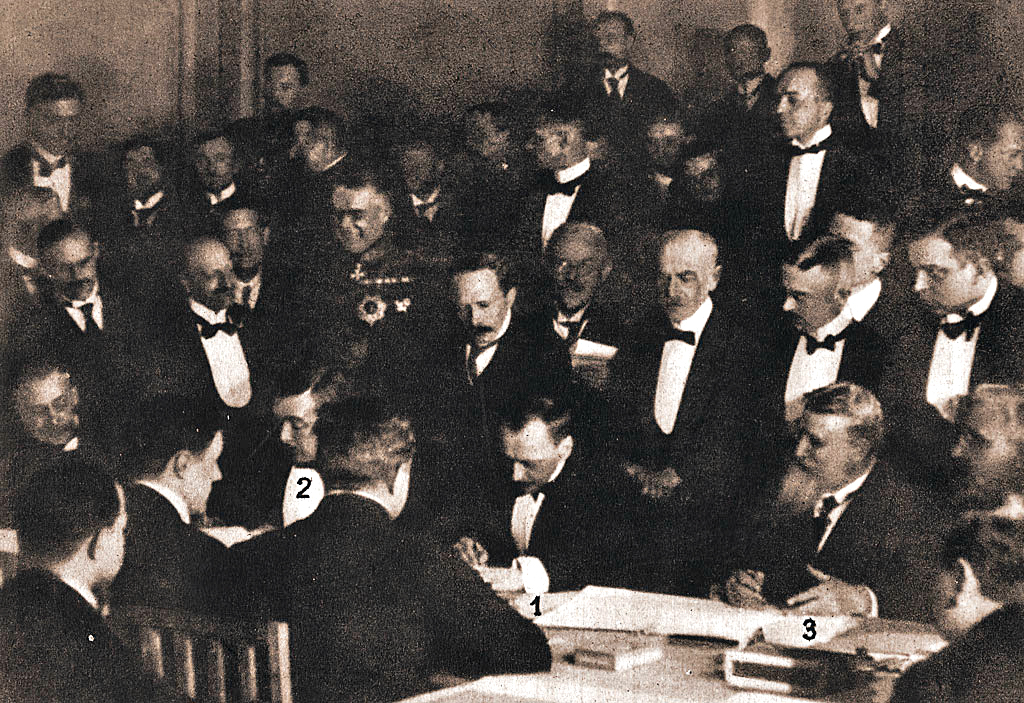
However, it was not until the Treaty of Brest-Litovsk was signed in March 1918 that the war in the east was entirely over. This treaty ceded lots of territory to Germany in Eastern Europe, and now Germany could begin to re-enforce their armies in Western Europe to defeat France. As such, a new German advance in France would begin in March that would continue until July as the French and British armies retreated to the River Marne.
July 15
The German advance was halted at the Second Battle of the Marne in July. This was the beginning of the end as the Germans withdrew. This was also one of the first battles of the war to involve the Americans, and with their reinforcements now at hand, the Entente began to plan their own advances.
August 8
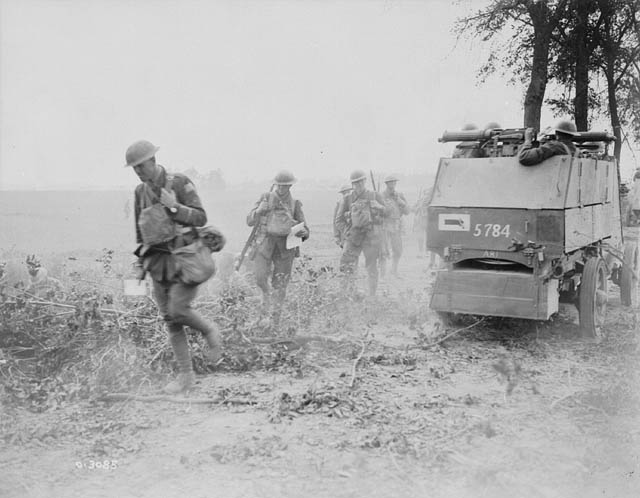
It was on August 8 that the Battle of Amiens began. It was at Amiens that the Entente struck at the German sector of Amiens with tanks, aircraft, and cavalry that provided support for their infantry. The Entente armies advanced quickly as the Germans fell back and surrendered in numbers. Thousands of German soldiers dropped their rifles and waved the white flag in a battle that ended any chances of German victory.
October 30
The war with Ottoman Turkey ended on October 30. A string of British victories in the Middle East from 1917 to 18 had left the Turkish army all but defeated. In late 1917, they had occupied Jerusalem, and in September 1918, the Turkish army was defeated at the Battle of Megiddo.
November 11
After their crushing defeat at Amiens, the German army was pushed back further in France. By November, the Entente armies had reached the Hindenburg Line. The Entente could now potentially advance into Germany, and so the German High Command began peace negotiations at Foch’s carriage in France. Kaiser Wilhelm 2nd abdicated on the 9th November, which was specifically requested by the Entente. The war ended with an armistice that came into effect on November 11, 1918.
The First World War had therefore ended in victory for France, Britain, and the United States. The demise of the German army also ensured the defeat of their allies in Eastern Europe and the Middle East. As such, after the war, the German Empire, Austro-Hungarian Empire, and Ottoman Empire were dissolved by postwar treaties.
About the Creator
Matthew A
Matthew is the author of Battles of the Pacific War 1941-1945. Battles of the Pacific War is available on Amazon and Lulu in e-book and paperback formats. Check out the book’s blog at battlesofthepacificwar.blogspot.co.uk.
Enjoyed the story? Support the Creator.
Subscribe for free to receive all their stories in your feed.
Comments
There are no comments for this story
Be the first to respond and start the conversation.