
Germany's Victories and Defeats in World War I
Remembering the Highs and Lows of World War I for Germany

The outbreak of war in 1914 was followed by some euphoria in Germany. Germany declared war on both France and Russia and expected a short war that would last for a matter of months. German military planners had drafted a plan (the Schlieffen Plan) that would quickly defeat France, and then, after this, the whole of the German army would defeat the Russians in the east. Although this plan failed, Germany had numerous victories and defeats, which ultimately led to their loss in the war.
Battle of Tannenberg
One of Germany's first and most notable victories came on the Eastern Front in 1914. As the Russians advanced into East Prussia, their advance was halted by the smaller German army. With the Russian armies cut off, the Russian Second Army was slaughtered by the Germans. This left the remaining Russian First Army little option but to retreat further eastwards. The battle was Germany's first victory in the east, and would not be their last, as the Russians were pushed further back into Eastern Europe. As such, in 1918, the Bolsheviks would sign a separate armistice with the Germans at Brest-Litovsk.
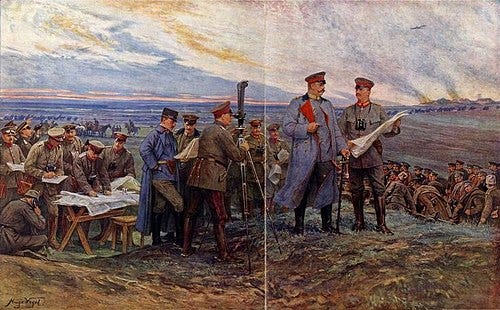
Months after the defeat of the Russian Second Army at Tannenberg, the Russian and German armies would meet again at the Masurian Lakes. This battle would finish off the Russian First Army, which had retreated from Tannenberg, and end the Russian advance in East Prussia. This time, the Russians were at a numerical disadvantage, and hundreds of thousands of their troops were lost. Rennkampff withdrew the remainder of his army from East Prussia. Following the German victory at Tannenberg, Ludendorff and Hindenburg were heroes in Germany.
Battle of Jutland
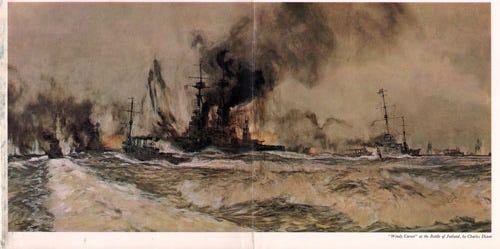
The Battle of Jutland was the largest naval battle of the war between the Royal Navy and the Imperial German Navy. In 1917, Admiral Scheer met Jellicoe's Grand Fleet in a battle where the IGN intended to wipe out most of the Grand Fleet and weaken the Royal Navy's German economic blockade. During the battle, the IGN sank a larger tonnage of Royal Navy ships, and so it was celebrated as a victory in Germany. However, the economic blockade continued, and Germany's surface fleet would remain in port for the remainder of the conflict. In this respect, the battle was more of a defeat.
German U-boat Campaign
After the Battle of Jutland, the Germans switched naval tactics to U-boats and unrestricted submarine warfare. The plan was to sink many British merchant ships and cut off their supplies, which was expected to then ensure their defeat in the war. While this could have potential political ramifications, the German High Command was prepared to take risks to defeat Britain, which would potentially win them the war.
As such, the U-boat campaign began in 1917, and British merchant shipping losses at first increased during Easter. Increased support for merchant ships was provided with destroyer escort convoys, and merchant shipping losses gradually fell. The U-boat campaign therefore failed, and the United States also declared war on Germany during the campaign.
Battle of Amiens
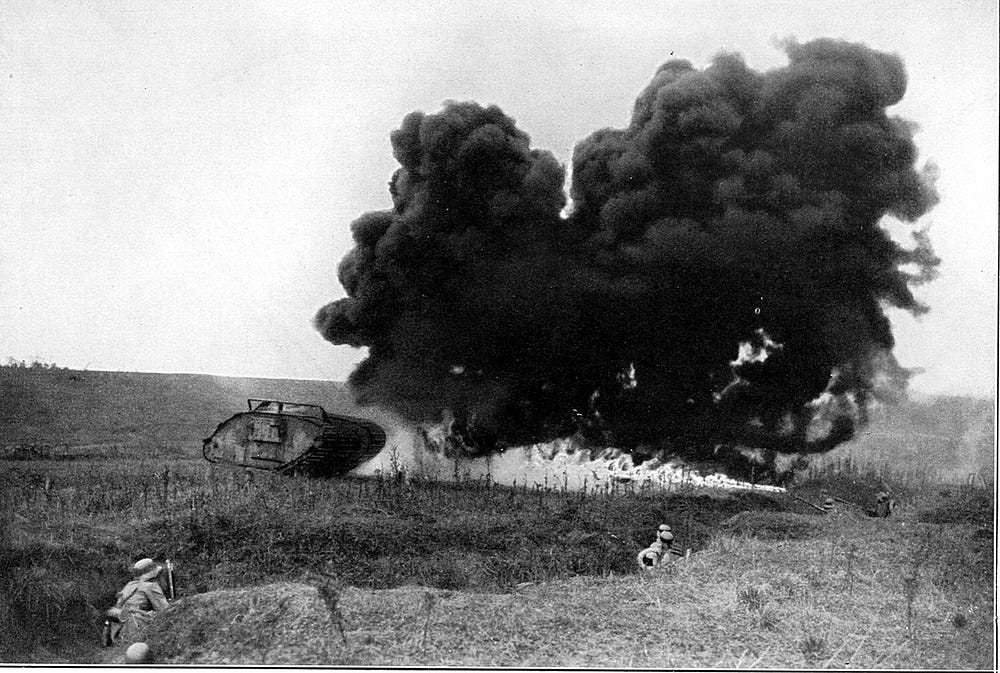
After the Treaty of Brest-Litovsk armistice in Eastern Europe and the success of the 100 Day offensive, it seemed that Germany was close to victory. With the Russians defeated, the Germans had hundreds of thousands of reinforcements for the Western Front that quickly advanced toward Paris. However, the Entente had plenty of expected reinforcements from the Americans, so they just had to hold the line until they could be deployed. As such, the German advance was halted, and the Battle of Amiens that followed was a decisive defeat for the German army. During the battle, Entente troops supported by tanks and aircraft pushed the Germans back. Thousands of German troops surrendered to the Entente during the battle, ending any hopes of a German victory. Months later, the November 11th armistice was signed.
These were a few of Germany's most notable victories and defeats during the war. German victories such as the Battle of Tannenberg and the Battle of the Masurian Lakes gave them the advantage on the eastern front, and such defeats may have been a factor in the abdication of the Tsar. However, their defeats in the west, such as the U-boat Campaign and the Battle of Amiens, ultimately cost them the war.
This article of mine was previously submitted to Medium.com, where you can read it here.
About the Creator
Matthew A
Matthew is the author of Battles of the Pacific War 1941-1945. Battles of the Pacific War is available on Amazon and Lulu in e-book and paperback formats. Check out the book’s blog at battlesofthepacificwar.blogspot.co.uk.
Enjoyed the story? Support the Creator.
Subscribe for free to receive all their stories in your feed.
Comments
There are no comments for this story
Be the first to respond and start the conversation.