Events
From Defense to War: The Symbolism Behind America’s Renaming Decision
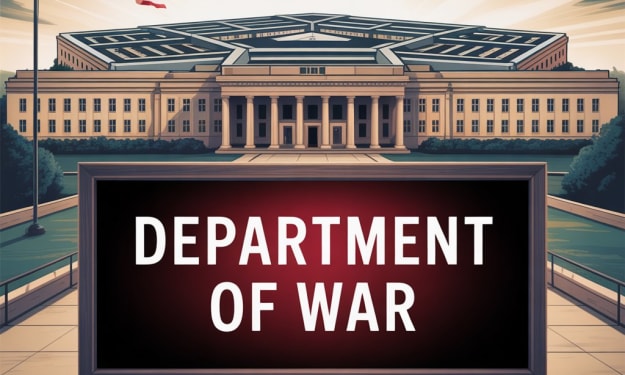
.In recent days, reports surfaced that former U.S. President Donald Trump approved a symbolic decision to rename the Department of Defense as the Department of War. While this change may appear to be a simple alteration of terminology, it carries profound implications for how America views its military role in the world and how global audiences perceive U.S. policy. The renaming has sparked debate about history, symbolism, and the future direction of U.S. defense strategy. A Historical Background The U.S. military establishment has not always been called the Department of Defense. In fact, from 1789 to 1947, the agency responsible for military affairs was officially named the Department of War. This term was widely used during America’s early history, covering conflicts such as the Civil War and both World Wars. It was only after World War II and the creation of new institutions like the National Security Council and the Central Intelligence Agency that the U.S. restructured its military leadership. In 1949, the Department of War was renamed the Department of Defense, reflecting a shift in language from offensive warfare to a focus on protection and deterrence. The word “defense” suggested that the United States would use its military power primarily to safeguard itself and its allies, not to pursue aggressive war. This rebranding was part of a broader attempt to present America as a global leader for peace in the post-war era. Why Rename It Back? President Trump’s reported decision to revert to “Department of War” seems to be more than a cosmetic change. There are several possible reasons behind this move: 1. Symbolic Honesty: Critics of the Department of Defense have long argued that despite its peaceful name, the U.S. military has been heavily engaged in offensive operations around the world, from Iraq to Afghanistan. Renaming it as the Department of War could be seen as a way of being more transparent about its true role. 2. Historical Tradition: By restoring the original name, Trump may have wanted to connect with America’s past identity, emphasizing strength and military dominance rather than soft diplomacy. 3. Political Messaging: The change could also serve as a political statement to rally nationalist sentiment, projecting the image of America as a strong, unapologetic power in a competitive global order. Implications of the Name Change Although the renaming is symbolic, symbolism in international relations can have significant consequences. 1. Domestic Perceptions For the American public, the shift from “Defense” to “War” sends a very different message. The term “war” implies aggression, conflict, and readiness to fight, whereas “defense” suggests protection and security. Such a change may alarm citizens who prefer to see their military as a protective force rather than an offensive one. 2. Global Perceptions Internationally, the decision could raise concerns among U.S. allies and rivals alike. Allies may feel uneasy about the United States presenting itself as more war-oriented, while adversaries could interpret the change as a sign of increased aggression. This shift in language could complicate diplomatic relations. 3. Strategic Messaging Language often shapes strategy. By adopting the word “war,” the U.S. government may unintentionally reinforce the idea that conflict is central to its global role. This could affect how military planning is approached, prioritizing force projection over diplomacy. 4. Psychological Impact The name change may serve as a reminder of the reality of global power struggles. At the same time, it risks framing international relations through the lens of permanent conflict rather than cooperation. Advantages and Risks Like any decision, renaming the Department of Defense carries both benefits and risks. Advantages: Greater honesty about the military’s global role. Revival of historical tradition. Stronger nationalistic appeal to certain groups. Risks: Negative reaction from citizens who value peace-oriented language. Strained relations with allies who prefer cooperative approaches. Heightened global tensions if rivals perceive the U.S. as preparing for more wars. A Broader Reflection on Power This decision highlights an important reality: nations often define themselves not only by their actions but also by the words they use. The shift from “Defense” to “War” represents more than just terminology—it reflects a worldview. If nations see themselves as locked in constant conflict, then policies will follow that perspective. Conversely, framing military power as defensive can encourage diplomacy and restraint. For a globalized world where cooperation is essential—whether in trade, climate change, or technology—presenting one’s military as primarily for “war” may undermine long-term trust. Conclusion The renaming of the U.S. Department of Defense back to the Department of War carries heavy symbolic weight. While some may view it as a bold return to historical roots or a more honest description of America’s military role, others see it as a dangerous signal of aggression in an already tense world. Ultimately, the words a nation uses to describe its institutions influence both domestic and international perceptions. Whether this change leads to greater transparency or fuels greater mistrust, only time will tell. What is certain is that the debate reminds us of the power of language in shaping not just politics, but the course of global affairs.
By Javed Khan about a year ago in History
World War II: The Global Conflict that Shaped the Modern World
Introduction World War II (1939–1945) remains the largest, deadliest, and most transformative conflict in human history. Spanning across Europe, Asia, Africa, and the Pacific, the war involved more than 30 nations and resulted in the deaths of over 70 million people, both soldiers and civilians. It was a war that reshaped international politics, redrew borders, led to the rise of the United States and the Soviet Union as global superpowers, and established the foundation of the modern world order.
By Hamza Muhammadabout a year ago in History
SHUKRACHARYA
Shukracharya is respected mentor and spiritual guide of the demons (the Asuras) as per the Hindu mythology, he is an iconic figure whose knowledge and wisdom are still significant today. As the teacher of the Asuras, he conveyed his teachings that were pragmatic, emphasizing diplomacy, ethics, administration and warfare. Also, He was an advocate of forgiveness and compassion. His legacy and teachings, is scripted in the ancient Hindu scriptures, notably "Shukra Niti", a treatise on governance, statecraft, and politics.
By Yuvraj AtharavRaj Singh Yadavabout a year ago in History
North Korea: 34 Rules That will Shock You . AI-Generated.
A child is born in North Korea. But as soon as the innocent child is born, he is declared a traitor. North Korea is known in the world for having the strictest laws, and some of them are so unbelievable that it is hard to even accept them. For example, here elections are held, but there is no option to choose. You can vote for only one person, and if you do not, you go straight to jail. On TV, there is only one channel, and there is no option to tune to another. North Korea may be the only country in the world where you do not go to jail for committing a crime, but even for thinking about one.
By Bilal khan about a year ago in History
Harriet Tubman’s Secret Road: The Underground Railroad’s Untold Stories
History remembers Harriet Tubman as a fearless leader who risked everything to help enslaved people escape into freedom. Her name has become synonymous with bravery, resistance, and unshakable faith. But behind her remarkable story lies a wider, hidden network of untold stories—ordinary people, secret codes, and dangerous journeys that made the Underground Railroad a lifeline to liberty.
By Echoes of Lifeabout a year ago in History
The Celestial Chronograph of Göbek: A 300-Million-Year-Old Cosmic Clock?
A 300-Million-Year-Old Cosmic Clock? 1. A Discovery That Defies Time Deep in the dusty plains south of Göbekli Tepe, in one of the world’s most ancient archaeological landscapes, researchers stumbled upon something that should not exist. Beneath layers of drifting sand lay a massive basalt disc, over a meter across, carved with spirals, rings, and geometric alignments. At first glance, it looked like an oversized calendar or compass. But when the dating results came back, the shock was overwhelming: the stone itself formed during a volcanic eruption nearly 300 million years ago.
By The Secret History Of The Worldabout a year ago in History
Vietnam's National Day Parade on September 2
Vietnam National Day, also known as Vietnamese Independence Day, is a momentous occasion celebrated annually on September 2nd. This day marks the historical declaration of Vietnam’s independence from French colonial rule in 1945.
By Sách Hay Mỗi Ngàyabout a year ago in History
Vietnam's struggle inspires many American activist
Vietnam’s struggle for independence has inspired many people, even those in the US, American social activist Juliet Ucelli said in an interview granted to Vietnam News Agency correspondents in New York on the occasion of the 80th anniversary of the August Revolution and National Day of Vietnam (September 2).
By Sách Hay Mỗi Ngàyabout a year ago in History
Zipho Memela: A Tale of Two Careers. Content Warning.
The name Zipho Memela is associated with two different public personas, each having made a mark in their respective fields. While one is a former hip-hop artist from Durban, the other is an entrepreneur and author.
By Kin Mancookabout a year ago in History
Great Men Who Mourned After Victory
We have read about the conquests of great men in our history classes. However, some people might not have noticed that emotional aftermaths followed those victories. History often celebrates the victories of great men—but rarely lingers on the silence that follows.
By Margaret Minnicksabout a year ago in History
The Giants of North America, Bones, Headlines, and a Century of Silence
Behind The Scenes The story begins in quiet places, fields along river bends, hills that rise gently over the Midwest, burial mounds shaped by hands far older than the United States itself. In the late nineteenth and early twentieth centuries, farmers cut into those mounds, road crews leveled them for progress, and local papers reported discoveries that should have changed the way we tell history. They described skeletons of unusual size, skulls with features that did not match the average measurements of the day, long bones that drew crowds and curiosity in county seats from Ohio to Wisconsin. Reporters wrote in brisk, matter-of-fact tones, as if describing a sports score or a harvest tally. Then, almost as quickly, the words faded from view, leaving behind a mystery.
By The Secret History Of The Worldabout a year ago in History