Events
The Art of War: Global Power Projection and Strategic Alliances. AI-Generated.
The history of nations and empires is, in many ways, the history of war and the mastery of strategic power projection. From the writings of Sun Tzu in The Art of War to the modern doctrines of military science, the core idea remains the same: victory is not merely about fighting battles but about shaping the world in ways that favor one’s long-term interests. Superpowers throughout history have understood that wars are not only fought on their own borders but are often projected thousands of miles away to establish dominance and deter adversaries. The United States and Russia exemplified this in the 20th century by bringing their power far beyond their homelands—whether through proxy wars, military bases, or political alliances—to maintain their global influence.
By INAM ULLAHabout a year ago in History
The Saudi–Pakistan Defense Deal: Strategic Implications and Its Impact on Global and Regional Politics. AI-Generated.
Defense cooperation between Pakistan and Saudi Arabia has long been a cornerstone of their bilateral relationship. The recent developments in their defense partnership—ranging from joint military exercises to strategic agreements on arms production, intelligence sharing, and security cooperation—have reignited global debates about its impact on regional politics. This evolving alliance carries deep implications for countries like Israel and India, both of which see Pakistan as a security concern and view Saudi Arabia as a potential player in shaping Middle Eastern geopolitics. At the same time, this defense deal holds promising opportunities for strengthening Muslim unity, advancing Pakistan’s defense industry, and revitalizing its struggling economy.
By INAM ULLAHabout a year ago in History
The Louisiana Purchase: America’s $15 Million Deal
In the early 1800s, America was a young country. Dreams were big but power was limited. Land stretched westward beyond the thirteen colonial states, but it was largely unexplored and uncertain. In 1803, a single decision changed the face of America forever. It was the Louisiana Purchase—a land deal that nearly doubled the country’s land area for just $15 million.
By Echoes of Lifeabout a year ago in History
Lewis and Clark: Mapping the Unknown West
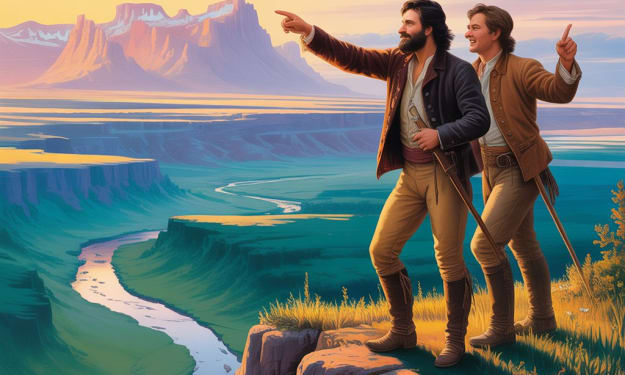
The year 1803 brought a new turn in American history. That year, the United States purchased a vast territory from France called the "Louisiana Purchase." This land covered almost half of the United States, but no one knew much about it. It was at this point that President Thomas Jefferson selected two brave explorers and adventurers to write a new chapter in the history of the fledgling nation. These two men were Merriweather Lewis and William Clark. Their goal was to map the unknown West, establish contact with the native tribes, and find out if there was a waterway that led to the Pacific Ocean.
By Echoes of Lifeabout a year ago in History
Dreams of Ellis Island: The Immigrants Who Made America
Ellis Island, located off the coast of New York, is the place where millions of immigrants first set foot on American soil. This small island is a testament to the dreams and prayers that people of different nations, languages, and religions cherished in their hearts. Some came to escape hunger and poverty, others to escape war and oppression, and still others to seek a better future for their children. Each story was different, but all had the same dream: “A new life in America.”
By Echoes of Lifeabout a year ago in History
The Day Lisbon Fell: A Story That Changed the World
Picture this: it’s a crisp November morning in 1755, and Lisbon’s streets are buzzing. Dock workers haul crates of spices and gold, priests polish their sermons, and the city’s readying itself for All Saints’ Day, a big deal for its Catholic heart. The air’s thick with anticipation-festivities are about to kick off. But then, in a heartbeat, the ground growls. A rumble turns into a roar, and the world as Lisbon knows it crumbles. By sunset, tens of thousands are gone, and a once-magnificent city lies in ruins. This isn’t just a story of destruction, though-it’s the story of how one day shook humanity to its core, sparking a revolution in how we see the world. Curious yet?
By KWAO LEARNER WINFREDabout a year ago in History
The Mysteries of Faith: Unraveling Belief in an Age of Skepticism
I, Stefano D'Angelo, found myself absorbed by a Netflix documentary series, a compelling exploration that boldly challenged conventional narratives, presenting what some might label as heresy, while others might see as profound truth. It delved into the very fabric of belief, juxtaposing the raw power of faith – often said to move mountains – against archaeological findings and scientific scrutiny. The series, much like our modern world, asked: what truly is real, and what is merely perceived?
By Stefano D'angelloabout a year ago in History
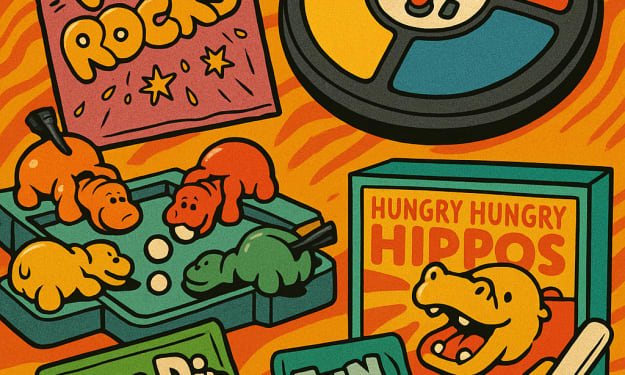
The Sweet and Sticky History of Fun, Part 2: The 1970s
Fog Horn Blast 🚨 Welcome to the 1970s... A decade of polyester leisure suits, lava lamps, and a suspicious number of products shaped like avocados. While adults were wrestling with the Vietnam War aftermath, an energy crisis, and Richard Nixon’s resignation, kids were too busy losing their minds over exploding candy and board games that either tested your brain or unleashed absolute plastic chaos on the dining room table.
By The Iron Lighthouseabout a year ago in History
Reichstag to MAGA: Unveiling the Alarming Parallels Between Nazi Germany and Trump's America
Introduction History serves as both a mirror and a warning. The rise of Nazi Germany in the early 20th century and the political landscape of Donald Trump's America in the 21st century offer strikingly similar narratives. While the contexts differ, the methods employed to consolidate power, manipulate public perception, and suppress dissent exhibit disturbing parallels. This article delves into a comparative analysis of key events and strategies from Nazi Germany and Trump's America, highlighting the unsettling similarities in their approaches to governance, propaganda, and societal control.
By No One’s Daughterabout a year ago in History