Events
The Sweet and Sticky History of Fun, Part I: The 1960s
Fog Horn Blast 🚨 The 1960s were a decade of civil rights marches, psychedelic rock, men in skinny ties debating nuclear war, and astronauts trying not to get incinerated on the launch pad. But for millions of kids sprawled out on shag carpet in wood-paneled basements, the real battle of the decade was between Chutes and Ladders and Candy Land. Forget the space race; this was the snack race, and it involved dice, spinners, and enough artificial sugar to power a Saturn V rocket.
By The Iron Lighthouseabout a year ago in History
House of Feigenblatt vs Von Feigenblatt A Historical Perspective. AI-Generated.
Introduction History is filled with the stories of noble families who left their marks on society through leadership culture and intellectual contributions Among these the House of Feigenblatt and the Von Feigenblatt family stand as two prominent names that carry rich traditions Both families have been remembered for their influence their values and their heritage Comparing them provides a deeper understanding of how noble lineages shaped history in different ways This historical perspective does not aim to judge one as greater than the other but rather to explore their similarities differences and lasting legacies
By Mian Abdulrahmanabout a year ago in History
Nepal’s Turning Point: Youth Protests, Political Collapse, and the Struggle for Reform
In recent weeks, Nepal has been facing one of the most intense political and social crises in its modern history. What started as a series of anti-corruption protests led mainly by young people has now grown into a nationwide movement that has shaken the country’s leadership and institutions. With the resignation of Prime Minister KP Sharma Oli and a rapidly rising death toll, Nepal stands at a critical turning point. Background of the Protests The protests began as a response to deep-rooted corruption, unemployment, and frustration over poor governance. Nepal’s younger generation, often referred to as Gen Z, has been particularly vocal in demanding accountability and transparency from their leaders. Many youths argued that the government failed to create opportunities for education and jobs, leaving them without a hopeful future. The movement quickly gathered momentum as thousands of students, activists, and ordinary citizens joined demonstrations across the country. Social media played a huge role in mobilizing support, despite government attempts to impose restrictions. Escalation and Violence As the protests spread, the government responded with heavy-handed measures, including curfews, internet blackouts, and the deployment of security forces. Reports from various media outlets confirmed that clashes between protesters and police turned violent. According to Al Jazeera and UN News, at least 51 people were killed in the unrest, while thousands of prisoners who had earlier escaped during the chaos remain unaccounted for. The rising death toll further inflamed public anger. Citizens accused the authorities of using excessive force instead of addressing the protesters’ demands. International organizations also raised concerns about human rights violations and called for dialogue rather than violence. Resignation of the Prime Minister Amid mounting pressure, Nepal’s Prime Minister KP Sharma Oli stepped down from office. His resignation marked a dramatic shift in the political landscape, as it came during the peak of the crisis. Critics argue that his government’s failure to respond effectively to public concerns about corruption and economic stagnation fueled the unrest. The resignation, however, did not immediately calm the situation. Protesters continued to demand structural reforms, accountability for deaths, and a new political vision that prioritizes the younger generation’s future. Role of the Army With increasing instability, the government called in the Nepalese Army to restore order. Soldiers were deployed to the capital Kathmandu and other major cities to secure government buildings and prevent further violence. While this move temporarily reduced large-scale clashes, it also raised fears that Nepal could slide into authoritarianism if civilian voices are suppressed. International Response The international community has been closely monitoring the crisis. The United Nations urged Nepal’s leadership to respect human rights and open channels of dialogue with citizens. Neighboring countries, particularly India and China, are watching closely since Nepal’s stability directly impacts the region. The United States and European Union also expressed concern and called for peaceful solutions. The Youth Movement One of the most significant aspects of this crisis is the central role of Nepal’s youth. This movement reflects a generational shift where young citizens are no longer willing to accept corruption and poor governance as a norm. Their activism highlights both frustration and hope — frustration with the past but hope for a better political future. Social media has given these young voices a platform to spread their message far beyond Nepal’s borders. Hashtags, videos, and live updates have ensured that the world is paying attention. Possible Consequences The immediate consequence of the crisis is political uncertainty. With the resignation of the Prime Minister, the country must now form a new government capable of addressing citizens’ concerns. Failure to do so may result in further unrest. Economically, the protests have disrupted trade, tourism, and daily life. Nepal, already struggling after the COVID-19 pandemic, faces challenges in stabilizing its markets and attracting foreign investment. Socially, the crisis has deepened divides between generations, political classes, and ordinary citizens. If reforms are not introduced, mistrust between the public and government could grow stronger. Looking Ahead Nepal now faces two possible paths: 1. Reform and Dialogue → The new leadership listens to citizens, implements anti-corruption measures, and creates opportunities for youth. 2. Continued Unrest → If demands are ignored, the protests may intensify, leading to more instability and potential international intervention. Conclusion Nepal’s protests are more than just an outburst of anger; they represent a struggle for accountability, dignity, and a better future. The youth-led movement has proven that even in a small country, the voices of ordinary people can challenge powerful leaders and force change. The coming months will be crucial in determining whether Nepal moves toward stability through reform or plunges deeper into turmoil.
By Javed Khan about a year ago in History
Unveiled Secrets of the Deep: The Hughes Glomar Explorer's Hidden Mission
Imagine you’re a sailor in 1974, standing on the deck of a colossal ship, the Hughes Glomar Explorer, staring out at the endless Pacific Ocean. The world thinks you’re mining manganese nodules-those potato-sized lumps of metal supposedly littering the ocean floor. But you know the truth. You’re part of a covert CIA operation so audacious it feels like something out of a spy novel. The real mission? To snatch a sunken Soviet submarine from 16,500 feet below the surface, right under the noses of the Russians. This, my friends, is the wild, almost unbelievable story of Project Azorian. Ready to dive in?
By KWAO LEARNER WINFREDabout a year ago in History
Conservative Activist Charlie Kirk Shot Dead in Utah, Nation Reels from Shock
Conservative activist and founder of Turning Point USA, Charlie Kirk, was shot and killed during a campus event at Utah Valley University on Wednesday evening. Authorities confirmed that the gunman was immediately taken into custody, but the motive behind the attack remains under investigation.
By Lynn Myersabout a year ago in History
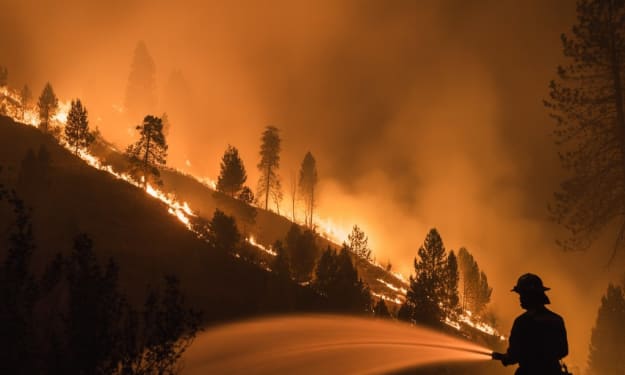
California Wildfires: Flames, Smoke, and Resilience
Every summer and fall, California braces for a familiar and terrifying enemy: wildfires. Fueled by dry heat, strong winds, and drought-stricken landscapes, these blazes sweep across the state, consuming forests, towns, and sometimes entire communities.
By Echoes of Lifeabout a year ago in History
The Gold Rush: Dreams, Fortune, and Broken Promises
In January 1848, a carpenter named James W. Marshall made a discovery that would forever change the history of the American West. While working at Sutter’s Mill in Coloma, California, Marshall spotted shiny flakes glimmering in the riverbed. Word spread quickly, and soon the cry of “Gold!” echoed across the country and beyond.
By Echoes of Lifeabout a year ago in History