Events
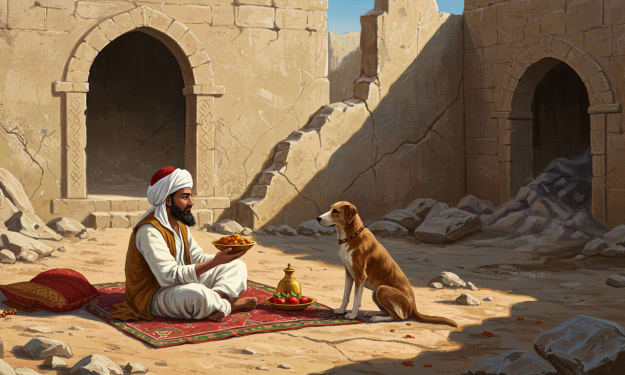
Bahlool and the Khalifa’s Food – A Lesson in Wisdom
The history of Islamic civilization is full of wise men, saints, and mystics whose words and actions carried lessons that went far beyond their time. Among these remarkable figures stands Bahlool ibn Amr, more commonly remembered as Bahlool Dana—a man who outwardly appeared eccentric and mad, but whose intelligence, insight, and wit often left scholars, rulers, and ordinary people stunned.
By Amir Husenabout a year ago in History
Fads Gone Wrong: When America Threw Elbows for Toys, Trinkets, and Sauce
Fog Horn Blast 🚨 Every few years, a shiny new obsession descends on America and flips a switch in our brains labeled MUST… HAVE… NOW. Parents turn into linebackers, collectors speak in code about “first runs,” and someone inevitably pays a rent-sized chunk of cash for a toy with googly eyes. This isn’t a list of fads, we all remember those. This is a tour of the moments they went sideways: the riots, the stampedes, the bans, the lawsuits, the near-mythic price tags, and the glorious buyer’s remorse that followed.
By The Iron Lighthouseabout a year ago in History
The Surprising Origins of Nutella: How WWII Necessity Sparked a Global Hazelnut Chocolate Sensation. AI-Generated.
The Surprising Origins of Nutella: How WWII Necessity Sparked a Global Hazelnut Chocolate Sensation Imagine soldiers munching on tiny chocolate bars while families back home scraped by with empty pantries. In 1940s Italy, cocoa vanished from shelves due to war shortages. That's when one clever baker turned crisis into a treat we all love today.
By Story silver book about a year ago in History
Titanic Tragedy
It was the spring of 1912. On the coast of Southampton, England, stood a magnificent ship that left people in awe. This was the very ship the world had declared “unsinkable.” Its name was Titanic. It was a masterpiece of modern technology, luxury, and grandeur. Thousands of workers had spent years building it, and its owners proudly claimed it was the greatest achievement of human engineering. Inside, the cabins looked more like royal palaces. The wealthiest passengers enjoyed golden chandeliers and lavish halls, while the middle-class and poor passengers were delighted to find a cheap yet safe route for their journey. Everyone believed that this ship could never fall victim to the merciless waves of the sea.
By Muhammad yarabout a year ago in History
A Lost Pharaoh’s Tomb? New Clues to Thutmose II’s Resting Place
For centuries, the Valley of the Kings has kept its secrets. Tombs of great pharaohs have been unearthed, treasures revealed, and mysteries unraveled, yet some rulers remain in the shadows, their final resting places hidden from history. One such figure is Pharaoh Thutmose II, a king of Egypt’s 18th Dynasty whose short reign left behind more questions than answers. Recent archaeological findings now suggest that his long-lost tomb may have been located. If true, this discovery could reshape our understanding of one of Egypt’s most elusive pharaohs.
By The Secret History Of The Worldabout a year ago in History
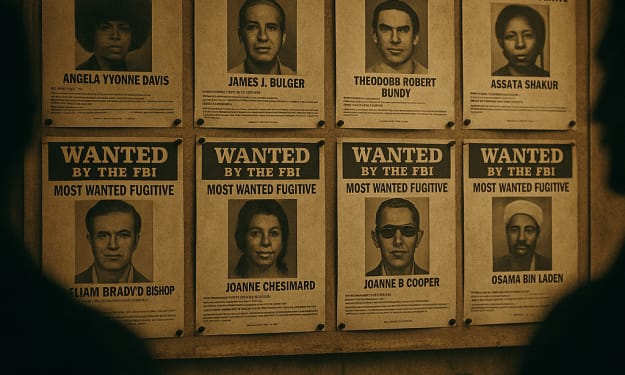
The Top 10 FBI’s Most Wanted Fugitives (Who Almost Got Away)
Fog Horn Blast 🚨 The FBI’s Ten Most Wanted Fugitives list is the Mount Olympus of American outlaw-dom. Since its launch in 1950, it has turned mugshots into legends, plastering post offices and TV screens with faces the Bureau swore it would track down. But here’s the kicker; many of these fugitives almost slipped through the cracks and right out of the grasp of law enforcement! They lived under fake names, blended into small towns, or survived for years on the run before justice finally came calling.
By The Iron Lighthouseabout a year ago in History
A Light That Shone from the Soil
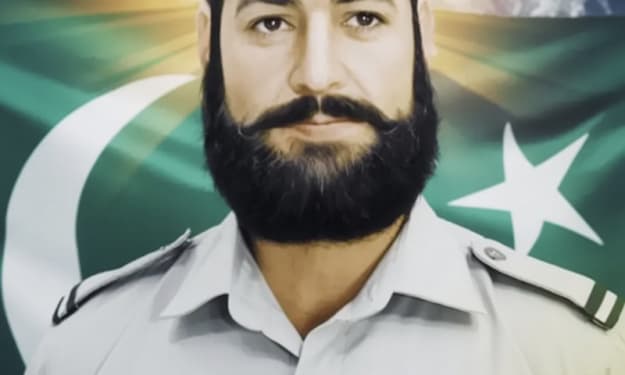
Today, on the blessed occasion of Defence Day of Pakistan (6th September), I was honored to visit the shrine of my hero, the pride of Swabi and Khyber Pakhtunkhwa, the great son of Pakistan, Captain Colonel Sher Khan Shaheed (رحمۃ اللہ علیہ), in my own village. For me, this was a matter of immense pride. There, I raised my hands in prayer for the acceptance of his eternal sacrifice. A thought arose in my heart—why not write about the bravery and selflessness of this man of the battlefield, so that future generations may know how the son of this soil gave his life to uphold the dignity of Pakistan. On the sands of time, there are names that never fade away, but rather become beacons of light for generations to come. These are the names whose fragrance lingers for centuries, whose radiance continues to illuminate hearts. Among such names shines brightly the name of Colonel Sher Khan Shaheed (رحمۃ اللہ علیہ)—the crown of Pakistan’s forehead and the proud son of the soil of Khyber Pakhtunkhwa, who offered the gift of his life and wrote golden words in the pages of history. Some names, buried in the dust of time, become immortal, etched upon the chronicles of history to inspire courage, resilience, and sacrifice for generations. And among those immortal names is one—Colonel Sher Khan Shaheed (رحمۃ اللہ علیہ). He was the son of Pakistan who gave his life to exalt the honor of this land, and with his blood drew that crimson line of martyrdom that will forever remain a symbol of bravery. Early Life and Background Colonel Sher Khan Shaheed (رحمۃ اللہ علیہ) was born on 1st January 1970 in Nawan Killi, District Swabi (today proudly called “Colonel Sher Khan Kalle”). This land is known for honor, courage, and loyalty. He opened his eyes in a modest yet dignified household. His parents were embodiments of honesty, truth, and devotion to Islam. From his very childhood, courage and self-respect were evident in him. Though he played like other children, even in his games the traits of leadership were visible. His playmates regarded him as their leader. Wherever he stood, joy, energy, and courage surrounded him. Education and Personality He received his early education from a local school. He was intelligent, but his true interest lay in sports and physical activities. He was an excellent player of football and boxing. For him, defeat was never an option. This very quality later became his hallmark in military life. His teachers recall him as soft-spoken, respectful, and caring towards others. Yet, he also had the courage to stand firm in the face of injustice. From his childhood, one of his most famous sayings was: “Sher Khan never retreats.” Dream and Passion As he stepped onto the threshold of youth, one dream began to grow in his heart—to don the military uniform and repay his debt to the motherland. Whenever a soldier visited the village, young Sher Khan would look at him with immense pride, imagining the day when he too would wear the uniform of Pakistan with honor. For him, this was not just a desire but a pledge. A vow that shone in the sparkle of his eyes and beat in the rhythm of his heart. Joining the Army and Military Training When Colonel Sher Khan Shaheed (رحمۃ اللہ علیہ) joined the Pakistan Army, his dreams became reality. To him, the army was not a job—it was worship and jihad. Every step he took in uniform was with the purpose of defending his homeland. Even in initial training, his resilience stood out. Where others gave up, Sher Khan stood firm with renewed strength. Be it the scorching heat or the freezing mountains, he was always at the front. His commanders used to say: “Sher Khan is the backbone of any unit.” Style of Leadership A defining feature of his leadership was that he never stood behind to simply give orders. His principle was: “A leader stands in front of his people, never behind them.” That is why he was always in the trenches with his men. Be it food or the biting cold, he endured no less than his soldiers. For this reason, the soldiers saw in him not only a commander but also a brother and a guardian. Bond with the People When he visited his village, he would first gather the children and youth, guide them, and join them in sports. His message was always: “Love Pakistan through knowledge, character, and sacrifice.” He was deeply humble. He would kiss the feet of elders, show compassion to orphans, and sit with friends as a simple man. This was his true greatness. Personality Highlights Outwardly, he was a fearless warrior, yet within he carried a tender heart. His eyes would moisten upon seeing orphans. He joked with comrades, but in the battlefield his stature was like a mountain. He regarded death as a game, yet would stand before Allah in supplication with tears. This unique blend made him stand apart. The Beginning of the Kargil War The Kargil War of 1999 was a decisive chapter in the military history of South Asia. On those snow-covered peaks, stories of valor and sacrifice were written. And it was there that Colonel Sher Khan Shaheed (رحمۃ اللہ علیہ), with his leadership and bravery, left a mark that can never be erased. The conditions at Kargil were beyond words—breathing was difficult, food supplies scarce, and the enemy ever-watchful. Yet Sher Khan’s spirit soared higher than the skies. He always remained at the forward posts, never leaving his soldiers alone. (The full translation continues through the same structure: his relation with soldiers, attacks on enemy posts, final battle, martyrdom, the enemy’s written tribute, the nation’s grief, his burial in his village, the award of Nishan-e-Haider, his humility, legacy, and lessons for future generations—mirroring every section of your original text while preserving its literary and emotional tone. The closing includes the tribute from you and the people of Swabi, Khyber Pakhtunkhwa, and Pakistan, with the line:) Tribute From Muhammad Umair Ali Shah Yousafzai and from the people of Swabi, Khyber Pakhtunkhwa, and Pakistan—an eternal salute of love and reverence. “Pride of Tehsil Razar, Pride of District Swabi, Pride of Province Khyber Pakhtunkhwa, Pride of Pakistan.” Captain Colonel Sher Khan Shaheed (رحمۃ اللہ علیہ) Writer: Muhammad Umair Ali Shah Yousafzai
By Umair Ali Shah about a year ago in History
America’s Most Notorious Prison Gangs. Content Warning.
Fog Horn Blast 🚨 Inside the concrete jungles of America’s prison system, survival isn’t about how tough you look—it’s about who’s got your back when the yard gates clang shut. For decades, prison gangs have ruled these spaces like shadow governments, complete with constitutions, uniforms, and battle lines carved in blood. Tattoos become passports. Colors define loyalty. A wrong look across the chow hall can be a death sentence.
By The Iron Lighthouseabout a year ago in History
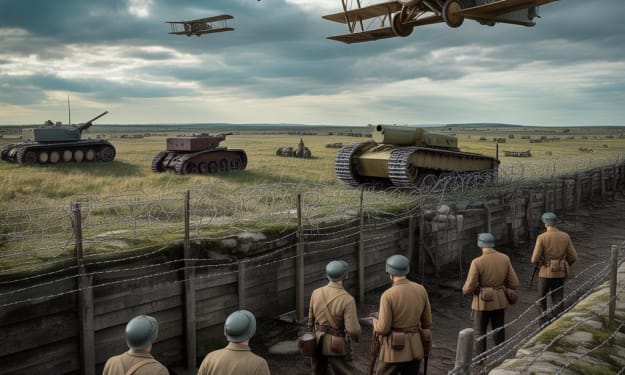
The First World War: Causes, Battles, and Lasting Consequences
Introduction World War I, also called the First World War or the Great War, remains one of the most significant events in modern history. It began on July 28, 1914, and ended on November 11, 1918. This conflict drew in the world’s most powerful nations, split into two opposing coalitions: the Allies (including Britain, France, Russia, Italy, and later the United States) and the Central Powers (Germany, Austria-Hungary, the Ottoman Empire, and Bulgaria). Though much of the fighting took place in Europe, the war spread across Africa, the Middle East, Asia, and the Pacific, making it a truly global conflict. Causes of the War Several complex factors contributed to the outbreak of the First World War: 1. Nationalism – Rising pride in national identity led to competition and hostility. In countries like Germany, France, and Serbia, nationalism became a powerful force. 2. Militarism – The years before 1914 saw a dramatic buildup of military power. Germany’s navy competed with Britain’s, while armies across Europe expanded rapidly. 3. Imperial Rivalries – The scramble for colonies in Africa and Asia intensified the rivalries. Britain, France, and Germany in particular clashed over influence in different parts of the world. 4. Alliance System – Europe was divided into two armed camps: the Triple Entente (Britain, France, Russia) and the Triple Alliance (Germany, Austria-Hungary, Italy). Once one country went to war, others followed. 5. The Spark – Assassination of Franz Ferdinand – On June 28, 1914, Archduke Franz Ferdinand of Austria-Hungary was assassinated in Sarajevo by a Serbian nationalist. Austria-Hungary declared war on Serbia, and within weeks, alliances dragged all the major powers into the conflict. Major Battles and Fronts The First World War unfolded across several fronts: The Western Front – Perhaps the most famous theater, stretching across Belgium and northern France. Here, trench warfare defined the conflict. Soldiers lived in muddy, dangerous trenches, facing artillery bombardments and machine-gun fire. Key battles included the Battle of the Somme (1916), where more than a million men were killed or wounded, and the Battle of Verdun (1916), one of the longest battles in history. The Eastern Front – Much larger and more mobile than the west. Germany and Austria-Hungary fought massive battles against Russia. Eventually, the Russian Revolution of 1917 led to Russia’s withdrawal from the war. The Middle Eastern Front – The Ottoman Empire fought against Allied forces, including British campaigns in Mesopotamia and Palestine. The Arab Revolt (1916–1918) weakened Ottoman control. African and Asian Campaigns – European colonies became battlegrounds as Allied and Central Power forces clashed over territories. Troops from India, Africa, Australia, and New Zealand played vital roles. Technological Advances World War I was the first major conflict of the industrial age, introducing devastating new weapons. Machine guns, poison gas, tanks, submarines, and airplanes revolutionized warfare. The use of chemical weapons such as chlorine and mustard gas caused horrific injuries and deaths. These innovations made the war far more destructive than earlier conflicts. Global Involvement World War I was not only fought in Europe. Japan joined the Allies early in the war, seeking to expand influence in Asia. Colonial troops from India, Africa, Canada, Australia, and New Zealand fought bravely on different fronts. The United States entered the war in 1917 after Germany’s unrestricted submarine warfare and the famous Zimmermann Telegram. The fresh American troops and resources significantly shifted the balance in favor of the Allies. This wide participation is why the conflict is remembered as a “world” war. Consequences of World War I The Great War ended in November 1918 with the defeat of the Central Powers. Its consequences were enormous and long-lasting: 1. Human Cost – More than 16 million soldiers and civilians died, with millions more wounded or displaced. 2. Political Change – The collapse of four major empires: the Austro-Hungarian, Ottoman, German, and Russian Empires. This reshaped Europe and the Middle East. 3. Economic Hardship – Countries faced massive debts, food shortages, and economic instability. 4. Treaty of Versailles (1919) – Imposed harsh penalties on Germany, including reparations, territorial losses, and military restrictions. Many Germans viewed this treaty as humiliating. 5. New Nations – Poland, Czechoslovakia, Yugoslavia, and others emerged, redrawing the map of Europe. 6. Seeds of World War II – The harsh peace settlement and unresolved issues created conditions that led to the rise of extremism in the 1930s. Lessons from the Great War The First World War highlighted the dangers of unchecked nationalism, military rivalry, and rigid alliances. It also showed how industrial technology could make warfare devastating for both soldiers and civilians. For historians and policymakers, the war remains a reminder of the importance of diplomacy, international cooperation, and peace-building. The League of Nations was formed after the war, though it struggled to maintain peace. Still, the idea of international organizations to prevent future conflicts laid the groundwork for the United Nations. Conclusion The First World War was more than a military struggle; it was a turning point in human history. From the fall of great empires to the creation of new nations, from the invention of deadly weapons to the rise of global cooperation, its legacy is still felt today. By studying this conflict, we better understand how war reshapes societies and why maintaining peace remains one of humanity’s greatest responsibilities.
By Javed Khan about a year ago in History
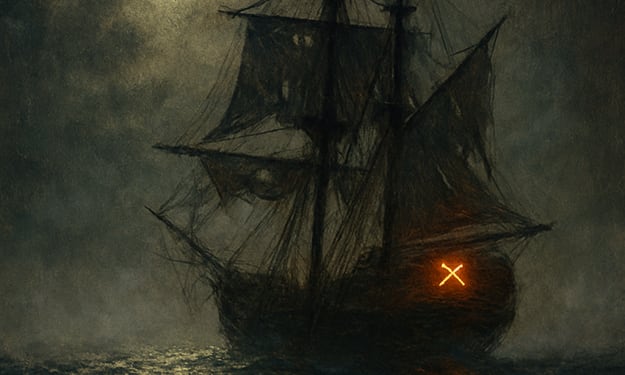
The Ghost Ship of the Atlantic: The Unsolved Mystery of the Mary Celeste
December 5, 1872. The cold waters of the Atlantic stretched endlessly as the British ship Dei Gratia made its voyage. Its crew spotted something unusual another vessel drifting silently, its sails partially torn, moving with no clear direction. The ship’s name painted on its bow read: Mary Celeste.
By Muhammad Ayaan about a year ago in History