Biographies
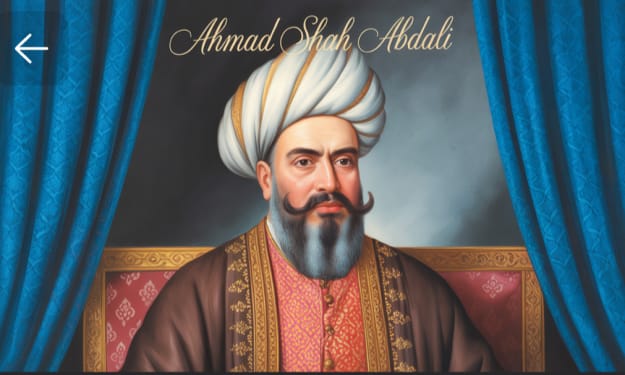
Ahmad Shah Abdali – The Founder of the Durrani Empire. AI-Generated.
Early Life and Background (c. 1722 – 1747) Ahmad Shah Abdali was born around 1722 in Herat, in present-day western Afghanistan. He belonged to the Sadozai clan of the Popalzai tribe, a subgroup of the Durrani (formerly Abdali) Pashtuns. His father, Muhammad Zaman Khan, was the governor of Herat under the Safavid Empire but died when Ahmad Shah was young. After his father's death, Ahmad and his brother Zulfikar Khan were taken hostage by the Hotaki dynasty of Kandahar, which had overthrown the Safavids in the region.
By Zain Ul Abidin Khanabout a year ago in History
Andalusia: The Forgotten Beacon of Civilization
The Forgotten Glory of Andalusia: A Legacy of Civilization, Now Overshadowed It is a historical fact that when the streets of Europe were overflowing with filth and plagued by disease—when people in many European cities were compelled to wear high wooden clogs just to avoid stepping in their own waste—Andalusia stood as a beacon of cleanliness, culture, and unparalleled development. In that golden era of Islamic Spain, not only did every Muslim household boast a private bath, but a well-structured sewage and drainage system also existed—an advanced infrastructure that was centuries ahead of its time and of anything found in Europe. Andalusia (Al-Andalus), under Muslim rule, was not merely a center of learning and arts; it was a symbol of a comprehensive civilizational and social transformation. While the rest of Europe was still entrenched in the Dark Ages—grappling with ignorance, superstition, epidemics, and backwardness—cities like Córdoba, Granada, and Seville shone brightly as centers of enlightenment, refinement, and scientific progress. The legacy of Al-Andalus is not limited to its majestic palaces or poetic gardens; it includes its libraries, universities, public baths, hospitals, and intricate urban planning. The city of Córdoba alone, in the 10th century, had over 70 libraries and 300 public baths, while most of Europe at that time had barely any public sanitation infrastructure. Streets were lit at night, water was supplied through aqueducts, and education was freely available to all segments of society—regardless of class, religion, or gender. Muslim Spain welcomed scholars of all backgrounds, promoting a culture of tolerance, dialogue, and intellectual curiosity. The knowledge preserved and produced there—ranging from medicine to astronomy, from architecture to philosophy—became the foundation upon which modern European renaissance was later built. It is not an exaggeration to say that the seeds of today’s Western progress were first planted in the soil of Al-Andalus. But today? Those very nations, which once lived in darkness and filth, now consider themselves the torchbearers of modern civilization. They now attempt to teach us the very principles of hygiene, discipline, urban planning, and civil society that we once taught them. This twist of history is not only ironic but deeply thought-provoking. It prompts us to reflect: How did a civilization that once led the world in every sphere of life fall so far behind? The answer lies not just in historical invasions or political failures. The real tragedy began when we forgot our own legacy. We ceased valuing knowledge, stopped nurturing critical thought, and turned away from our commitment to justice, excellence, and innovation. When a nation loses connection with its glorious past, it not only loses direction but also dignity. It is then forced to look up to others who were once its students. This loss of historical consciousness is more than just forgetfulness—it is a form of collective amnesia. Today’s generation often views Western achievements as independent developments, disconnected from the contributions of their ancestors. This ignorance leads to a dangerous inferiority complex, where we assume others are inherently superior and we are forever to play catch-up. However, history does not have to be a burden—it can be a guiding light. The example of Al-Andalus can inspire a revival. The Muslims of Spain were not superhumans; they were ordinary people with extraordinary commitment to values: the pursuit of knowledge, societal reform, cleanliness, justice, and the welfare of all. Their mosques were not just places of prayer but centers of education and public service. Their homes were not just private shelters but embodiments of beauty, order, and hygiene. What made their civilization great was not just what they built, but what they believed in. They believed in progress not for the sake of competition, but for the service of humanity. Their advancements in medicine were not designed to dominate but to heal. Their architecture was not built to intimidate but to inspire. Their governance was not aimed at control, but at delivering justice to the poor, the weak, and even the non-Muslim subjects under their rule. If we truly wish to rise again, we must reconnect with the values that made our ancestors worthy of admiration. We must learn to value knowledge not merely as a tool for earning a livelihood, but as a sacred trust for the betterment of society. We must take pride in cleanliness not just as a religious duty but as a public responsibility. We must understand that civilization is not about skyscrapers and machines alone, but about manners, ethics, and respect for all forms of life. Let us not lament the loss of Al-Andalus as a tale of the past, but let us take it as a call to rebuild. The rise of others is not a threat—it is a reminder of what is possible. But if we continue to forget our own history, we will forever be students of those who once learned from us. The lesson of Al-Andalus is clear: greatness is not inherited—it is earned, through consistent effort, vision, and unity. And those who forget their past are destined to live at the mercy of others’ futures.
By Ikram Ullahabout a year ago in History
The Overlooked Treasures of the Khmer Empire: Cambodia's Concealed Wealth
The Overlooked Treasures of the Khmer Empire: Cambodia's Concealed Wealth When discussing the world's most affluent ancient empires, names such as Rome, Persia, and Mali often take precedence. However, nestled deep within the jungles of Southeast Asia lies an unrecognized giant—the Khmer Empire, whose lavishness once matched the greatest empires globally. Spanning across present-day Cambodia, Thailand, Laos, and Vietnam, the Khmer Empire thrived between the 9th and 15th centuries, leaving behind treasures—both material and spiritual—that astonish contemporary observers. At the core of this empire was Angkor, the largest pre-industrial urban center globally, home to the magnificent temple of Angkor Wat, now recognized as a UNESCO World Heritage site. Yet Angkor was more than a spiritual and architectural wonder—it was also a bastion of wealth and authority. The Riches Beneath the Stone The Khmer Empire's affluence stemmed from a potent mix of agriculture, commerce, and expertise in hydraulic engineering. The empire flourished through rice cultivation, utilizing sophisticated irrigation systems that supported a vast populace. However, agriculture formed only the foundation. What genuinely enriched the Khmer elite was trade—especially in gold, gemstones, ivory, and forest resources. The empire occupied a pivotal position along the trade routes connecting the Indian Ocean and East Asia. Chinese, Indian, and Arab merchants frequently visited Khmer ports to barter silks, ceramics, and spices for Khmer gold, sandalwood, and exotic birds. Evidence of this wealth is dispersed throughout the temples. Inscriptions and bas-reliefs portray processions of royals and priests adorned in jewels, gold necklaces, and intricately designed crowns. Archaeological discoveries suggest that the Khmer elite possessed substantial quantities of sapphires, rubies, and emeralds—many of which came from the empire’s own mines and riverbeds. The Concealed Treasures of Angkor Despite centuries of looting, some Khmer treasures remain hidden. In 2008, during the excavation of a concealed chamber in Angkor Thom, archaeologists uncovered numerous gold artifacts, including rings, figurines, and ceremonial implements dating back to the 11th century. Many experts believe this is merely the beginning. Submerged crypts, underground reservoirs, and temples lost to history continue to conceal what could amount to millions of dollars in ancient relics. Looters have long targeted these locations, selling statues and jewelry on the black market; however, extensive areas of Angkor remain unexplored due to dense forest coverage and insufficient funding. In 2016, LIDAR (Light Identification and Ranging) technology unveiled previously unrecognized temple complexes, roadways, and urban structures beneath the forest surface—indicating that Angkor was part of a much broader network of cities, all of which may harbor untouched caches of wealth. Assessing the Empire’s Valuation Determining a monetary value for a long-lost empire is a complex endeavor, yet historians and economists have formulated rough assessments. When adjusted for contemporary values, the Khmer Empire’s assets in gold, land, and precious stones could have been valued at over $200 billion. This does not consider cultural capital—the significance of monuments such as Angkor Wat or misplaced artifacts currently residing in private collections. The immense scale of Angkor Wat alone, which necessitated 5 million tons of sandstone, illustrates the magnitude of resources the empire could assemble. In current terms, constructing such a edifice would entail billions—and this figure pertains to merely one of over 1,000 temples erected during the apex of the empire. The Decline and Heritage The Khmer Empire commenced its decline in the 13th century, attributed to a combination of factors: climatic shifts, overpopulation, internal discord, and assaults from neighboring realms such as the Ayutthaya of Thailand. As the capital cities deteriorated, numerous temples were forsaken, and their riches abandoned—some interred, some pilfered, and others simply overlooked. Nevertheless, the Khmer heritage endures. The Cambodian royal regalia still features symbols derived from the Khmer Empire, and the national pride associated with Angkor is substantial. Initiatives are currently underway to reclaim and conserve what remains of this concealed wealth, with museums and archaeologists collaborating closely with local communities. Final Thoughts Although the Khmer Empire may not garner the same prominence as Rome or Egypt, its affluence, creativity, and magnificence warrant acknowledgment. Beneath the towering trees and moss-laden stones of Cambodia lies a narrative of monarchs, deities, and gold—a narrative still being uncovered. As technology and international collaboration progress, we may yet rediscover more of this lost wealth and redefine the history of the world’s most affluent empires.
By Say the truth about a year ago in History
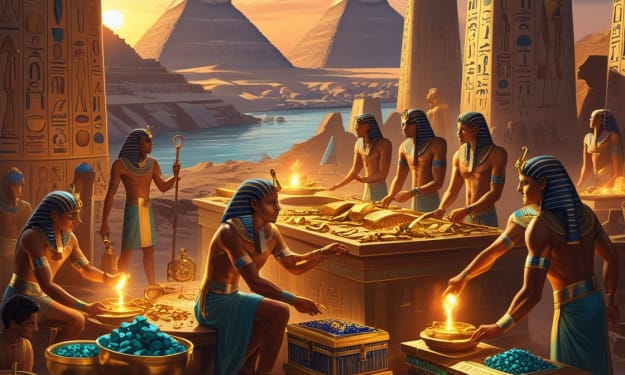
The Treasure Beneath the Nile: Egypt's Lost Gold Mines and Ancient Wealth. AI-Generated.
The Golden Legacy of the Nile The Nile River is justifiably regarded as the lifeblood of Ancient Egypt. Spanning over 6,600 kilometers, it not only facilitated agriculture in the arid desert but also functioned as a trade artery and spiritual thoroughfare. However, what rests beneath the deserts encircling the Nile has intrigued archaeologists and historians for centuries—gold. Gold represented more than a mere metal in Ancient Egypt. It symbolized divine power, eternal existence, and royal dominion. The pharaohs believed it constituted the flesh of the deities, particularly the sun god Ra. It adorned temples, accompanied kings in burial, and was crafted into objects of remarkable beauty and precision. But from whence did all this gold originate? The Lost Mines of Nubia The ancient territory of Nubia, situated south of Egypt (present-day Sudan), was abundant in gold mines. This region was so vital that the pharaohs referred to it as Ta-Seti (Land of the Bow) and often waged warfare or engaged in diplomacy to gain control. The gold of Nubia was sourced from quartz veins and alluvial deposits, subsequently smelted and refined in desert workshops. Evidence from inscriptions and archaeological excavations indicates that Egypt possessed a highly organized gold mining system as early as 2600 BCE. Laborers resided in isolated desert camps and utilized rudimentary tools to excavate shafts and tunnels deep into the rock. Despite the challenges and hazards, the allure of wealth motivated the empire's aspirations.
By Say the truth about a year ago in History
The Concealed Wealth of the Inca Empire: Forgotten Treasures of the Andes. AI-Generated.
The Concealed Wealth of the Inca Empire: Forgotten Treasures of the Andes Situated high in the Andes Mountains, the Inca Empire (1438–1533) was the most extensive pre-Columbian empire in the Americas. At its zenith, it spanned across Peru, Bolivia, Ecuador, and portions of Chile and Argentina, governing over more than 10 million individuals. However, beyond its expansive territory and sophisticated infrastructure, what astonished Spanish conquistadors most was the empire’s unfathomable wealth—particularly its vast reserves of gold and silver.
By Say the truth about a year ago in History
Echoes of a Broken Lyre
In the expansive and colorful landscape of 19th-century Brazilian literature, few voices echo with the same haunting beauty and emotional depth as that of Luís Nicolau Fagundes Varela. A poet of contrasts—both mystical and melancholic, patriotic and reflective—Varela's short yet brilliant career represented a pivotal moment in Brazil’s Romantic movement. Frequently eclipsed by his contemporaries such as Castro Alves and Álvares de Azevedo, Varela remains a profoundly human figure, whose poetry was influenced as much by personal sorrow as by the idealistic zeal of his era.
By A Históriaabout a year ago in History
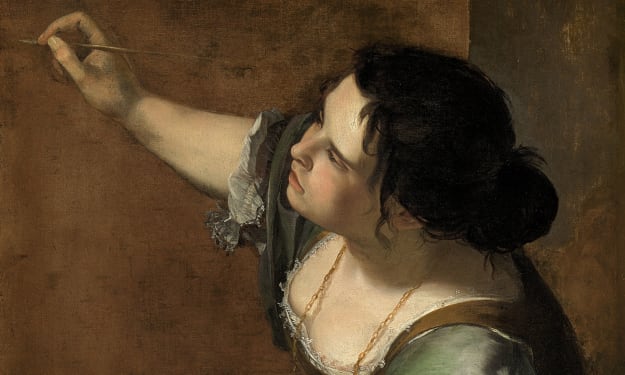
Painted in Blood: The Renaissance of Artemisia Gentileschi. . Content Warning.
History does not remember Artemisia Gentileschi with the reverence she deserves. Her name was omitted from textbooks for centuries. When it was mentioned, it was often tethered to scandal rather than skill. But behind the layers of oil paint and baroque shadow lies the story of a woman who dared to wield her brush as a weapon against violence, patriarchy, and artistic obscurity.
By Strategy Hubabout a year ago in History
Between a (Banaban) Rock and a Hard Place
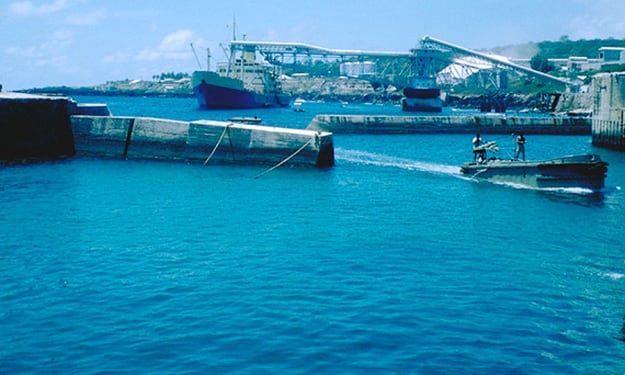
What began as a friendly inter-island rugby game between Banaban and Fijian youths in the early 1980s unexpectedly turned sour, forcing the peace-loving Banabans to confront the precarious nature of life on their new island home, Rabi. As Banaban elders instructed women and children to remain behind locked doors, boatloads of Fijian youths arrived, seeking to settle scores from matches held earlier that day.
By Stacey Kingabout a year ago in History
Casimiro de Abreu
Casimiro José Marques de Abreu (1839–1860) was a brilliant yet tragically brief figure in Brazilian literature. A poet of deep sensitivity, he emerged as one of the most iconic voices of Brazil’s Ultra-Romantic movement, leaving a legacy of melancholic beauty despite his premature death at the age of 21. His poetry, marked by nostalgia, youthful yearning, and an almost childlike innocence, continues to resonate with readers, especially through his renowned work As Primaveras (1859) and the timeless poem Meus Oito Anos ("My Eight Years").
By A Históriaabout a year ago in History
Beneath the Golden Tides: Revealing the Concealed Mineral Wealth of China's Yellow River. AI-Generated.
A River Shaping Through Epochs and Stone The Yellow River traverses a multitude of landscapes: towering mountains, fertile plains, loess plateaus, and desert basins. This journey has enabled it to carve into rock strata rich in minerals, revealing deposits that ancient civilizations soon learned to utilize. As early as the Shang Dynasty (c. 1600–1046 BCE), bronze metallurgy thrived along the river, with copper, tin, and lead extracted locally and crafted into weapons, ceremonial items, and tools. By the Han Dynasty (206 BCE – 220 CE), systematic mining had become prevalent in the Yellow River provinces, particularly in present-day Shaanxi, Shanxi, Henan, and Gansu. These regions evolved into hubs of iron production, mercury extraction, and gold panning. Inscriptions, historical documents, and artifacts indicate that mining was not only a skilled profession but also a foundation of regional economies. Wealth Beneath the Surface: Principal Minerals of the Yellow River The Yellow River basin is a mineralogical tapestry, showcasing a wide array of resources: Gold Gold-laden sands and rock veins are particularly abundant in Qinghai and Gansu, along the upper stretches of the river. In antiquity, gold was extracted from riverbeds; today, it is obtained through both surface and subterranean mining. Silver Silver is frequently discovered alongside gold or lead-zinc ores, particularly in the central basin. Historical accounts suggest that silver coins and artifacts were fabricated from locally sourced metal during the Tang and Song Dynasties. Coal Shanxi Province, located along the central Yellow River, stands as one of China’s most prosperous coal regions. With reserves amounting to hundreds of billions of tons, this area has been pivotal to China’s energy sector for over a century. Iron and Manganese Historically utilized for tools, weapons, and subsequently railways and factories, iron ore is significantly concentrated in Shanxi and Henan. Manganese, crucial in steel production, is also mined in adjacent regions. Copper, Lead, and Zinc These base metals have been extracted for centuries in Shaanxi and Gansu, powering early bronze industries and now underpinning contemporary electronics and manufacturing. Rare Earth Elements (REEs) While more prominent in southern China, northern Gansu and certain areas of Inner Mongolia along the river have been explored for REEs vital to electronics, magnets, and batteries. Salt and Potash The lower Yellow River delta has historically served as a source of salt, essential for food preservation, and potash, crucial for agriculture. Economic Assessment of the Yellow River’s Mineral Resources Determining the overall economic value of the Yellow River’s mineral resources is intricate, due to variable market rates, unidentified reserves, and ecological restrictions. Nonetheless, based on existing geological and industrial information: Gold: Estimated at 1,200 tons at approximately $70,000/kg = $84 billion USD Silver: Estimated at 20,000 tons at about $850/kg = $17 billion USD Coal: Over 260 billion tons in Shanxi, with recoverable coal valued at $200+ billion USD Iron Ore: Estimated reserves appraised at $100 billion USD Copper/Lead/Zinc: Cumulative estimates = $60 billion USD Rare Earths: Emerging deposits could be worth as much as $10 billion USD Total projected value: Approximately $471 billion USD These are conservative valuations and do not account for future discoveries or increasing values due to technological demand, particularly for rare earths and green energy metals.
By Say the truth about a year ago in History