Biographies
Alexander the Great: Hero or Tyrant?
Introduction Few historical figures are as polarizing as Alexander the Great. Born in 356 BCE in Macedonia, he created one of the largest empires in the ancient world before dying at just 32 years old. Lauded by some as a military genius and visionary leader who spread Hellenistic culture, and condemned by others as a ruthless conqueror who left chaos and death in his wake, Alexander’s legacy is a complex mosaic of heroism and tyranny. This article critically examines both aspects to determine whether Alexander deserves the title of “Great” — or something else entirely. --- The Heroic Narrative: Visionary Leader and Cultural Pioneer To his admirers, Alexander is the embodiment of a heroic ideal. Taught by Aristotle, he was not only a skilled warrior but also an intellectual. He led his troops from Greece through Asia Minor, Egypt, Persia, and into India, often participating directly in battles and inspiring fierce loyalty from his soldiers. One of Alexander’s most celebrated achievements was the spread of Hellenistic culture across three continents. By founding over 20 cities (most famously Alexandria in Egypt), he helped blend Greek, Persian, Egyptian, and Indian traditions. This cultural fusion led to advances in art, science, and philosophy, laying the groundwork for centuries of intellectual development. Additionally, Alexander often adopted elements of local customs and religions rather than imposing his own. In Persia, for instance, he began wearing Persian dress and married Roxana, a Bactrian princess, to legitimize his rule and unify different cultures under one empire. This behavior has been interpreted by some as visionary — an early attempt at global integration. --- The Tyrant’s Case: Conqueror, Not Liberator However, not everyone sees Alexander as a hero. Many historians argue that his conquests were driven less by idealism and more by personal ambition and thirst for glory. His military campaigns resulted in widespread death and destruction. The city of Tyre was besieged and destroyed after resisting his army; men were slaughtered, and women and children enslaved. Similarly, in India, his brutal campaign against the Mallians led to mass casualties and showed little regard for native populations. Alexander’s behavior also became increasingly erratic and tyrannical as his power grew. After the death of his close companion Hephaestion, he reportedly executed several people he blamed for the tragedy. He also murdered his friend and general, Cleitus the Black, in a drunken rage — an act that horrified even his most loyal followers. Moreover, Alexander’s policy of forcibly integrating peoples through military conquest and intermarriage has been criticized as a form of imperialistic domination. While he promoted cultural exchange, it was under the shadow of warfare and subjugation. --- Legacy: Greatness at What Cost? The question of whether Alexander was a hero or a tyrant is not easily answered. His military genius is undeniable; he never lost a battle and revolutionized warfare. The Battle of Gaugamela is still studied in military academies for its brilliant use of tactics and terrain. Yet, greatness in conquest does not necessarily equate to moral greatness. While he built an empire, it did not survive long after his death, fracturing into competing kingdoms ruled by his generals — the Diadochi. His sudden death in 323 BCE, possibly due to fever, poison, or overindulgence, left a power vacuum that plunged much of the known world into chaos. --- Conclusion Alexander the Great’s life and legacy defy easy categorization. He was a brilliant military leader and a unifier of cultures, yet also a ruthless conqueror whose ambition caused immense suffering. Whether one views him as a hero or a tyrant often depends on perspective: Was he a pioneer of globalization, or simply another imperial warlord? Perhaps the most honest answer is that Alexander was both — a visionary whose achievements shaped the world, and a despot whose methods came at a terrible cost. History remembers him as "Great," but with that greatness came complexity, contradiction, and consequence.
By Haris khanabout a year ago in History
Alexander the Great and the Indian Subcontinent
In 327 BCE, Alexander the Great, already a legend across the known world, gazed eastward toward a land few Greeks had ever seen—India. Having conquered Persia and stood victorious over mighty kings, Alexander sought new horizons. His ambition was as vast as his empire, and beyond the towering Hindu Kush mountains lay the fabled riches of the Indian subcontinent.
By Muhammad Saeedabout a year ago in History
Where is the Actor Who Played D.A.R.Y.L in the 1980s Hit Movie Now?
For many who grew up in the 1980s, the name D.A.R.Y.L. immediately conjures images of a wide-eyed, exceptionally intelligent boy navigating a world that barely understood him. The 1985 sci-fi adventure film captivated audiences with its blend of heartwarming humanity and futuristic intrigue. At its core was the unforgettable performance of Barret Oliver, the young actor who breathed life into the "Data-Analyzing Robot Youth Lifeform." His portrayal was so convincing, so nuanced, that it left a lasting impression, prompting many to wonder: what became of this talented child star after his impactful, albeit brief, journey through the Hollywood spotlight?
By Edina Jackson-Yussif --personal growth about a year ago in History
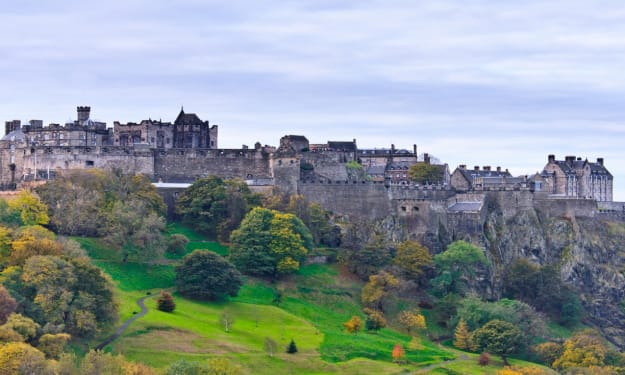
The World’s Most Beautiful Bucket-List Castles, Ranked ...
The World’s Most Beautiful Bucket-List Castles, Ranked 1. Germany's Neuschwanstein Castle Perched high in the Bavarian Alps, Neuschwanstein Castle looks like something straight out of a fairy tale—because it literally inspired Disney’s Sleeping Beauty Castle. Built by the reclusive King Ludwig II in the 19th century, its soaring turrets and dramatic cliffs make it the most photographed castle in the world.
By parves mosharafabout a year ago in History
HE LIVED TO BE 83 AND NEVER SAW A WOMAN: His Mother Died at Birth, and Here's Why He Never Encountered the Opposite Sex
In a world flooded with images, information, and instant communication, the idea of a man who lived his entire life without ever seeing a woman sounds almost unimaginable. And yet, such a life truly existed.
By Beyond Knownabout a year ago in History
Beyond the Binary: Katharine Hepburn’s Queerness
She rebelled against Hollywood's idea of what a woman should be.Katharine Hepburn hated being a woman, or rather, she hated the box that society forced around her for being a woman. She despised the expectations, the constraints, the performative femininity she was expected to don every day. Hepburn was famously quoted as saying,
By C.M.Dallasabout a year ago in History
"The Rise and Fall of the Ottoman Caliphate"
History of Khilafat-e-Usmania (Ottoman Caliphate) The Khilafat-e-Usmania, or the Ottoman Caliphate, was the last widely recognized Islamic Caliphate and one of the most enduring empires in world history. Established at the dawn of the 14th century, it lasted over 600 years, exerting tremendous influence across Europe, Asia, and Africa. It began as a small principality in Anatolia under Osman I, and by the 16th century, it had evolved into a global empire and the political center of the Muslim world. Origins and Rise (1299–1453) The Ottoman Empire was founded in 1299 by Osman I, a leader of the Turkic Kayi tribe in northwestern Anatolia. Osman’s principality grew in power as the Byzantine Empire weakened. The early Ottomans were known for their military prowess and strategic alliances, and their expansion was marked by continuous victories against both Christian and Muslim rivals. One of the most significant milestones in the early Ottoman expansion was the conquest of Constantinople in 1453 by Sultan Mehmed II, also known as Mehmed the Conqueror. This victory marked the end of the Byzantine Empire and the transformation of Constantinople into Istanbul, the new capital of the Ottoman Empire. It also cemented the Ottomans' role as a major Islamic power. Emergence as the Islamic Caliphate (1517) While the Ottomans were recognized as powerful Muslim rulers, they did not initially claim the title of Caliph. This changed under Sultan Selim I, who defeated the Mamluk Sultanate of Egypt in 1517, gaining control of the Islamic holy cities Mecca, Medina, and Jerusalem. After this victory, Selim I formally adopted the title of Caliph, thus incorporating the spiritual leadership of the Muslim world into the Ottoman political structure. This moment is widely regarded as the beginning of the Ottoman Caliphate, also called Khilafat-e-Usmania, which was seen as the legitimate continuation of the earlier Rashidun, Umayyad, and Abbasid caliphates. The Golden Age (16th–17th Century) The Ottoman Empire reached its zenith during the reign of Sultan Suleiman the Magnificent (1520–1566), under whom the empire became a dominant global power. The empire stretched from Central Europe to North Africa, and from the Persian Gulf to Algeria, encompassing a vast and diverse population. Suleiman not only expanded the empire's borders but also reformed its legal and administrative systems. Islamic jurisprudence (Sharia) was codified alongside customary law, and the empire became a center for Islamic learning, arts, architecture, and science. The Ottomans also maintained a sophisticated bureaucratic system, supported by an elite military force known as the Janissaries. The Ottoman Caliphate during this era was both a religious and political authority. The sultans were seen as protectors of Islam, defenders of the Haramayn (holy sanctuaries), and leaders of the global Muslim community (Ummah). Decline and Challenges (18th–19th Century) By the 18th century, the Ottoman Empire began to face significant internal and external challenges. Corruption, succession disputes, and administrative inefficiency weakened the central authority. Meanwhile, European powers such as Britain, France, and Russia were growing in strength, encroaching on Ottoman territories and influence. The empire was dubbed the "Sick Man of Europe" as it struggled to modernize and maintain its territories. During the 19th century, nationalist movements emerged within the empire’s diverse population, leading to uprisings and the gradual loss of provinces such as Greece, Egypt, and the Balkans. At the same time, Islamic reform movements emerged in response to Western imperialism and internal decay. These movements, such as Pan-Islamism, sought to revive the idea of a unified Islamic Caliphate, with the Ottoman Sultan-Caliph at its head. World War I and the Fall of the Caliphate (1914–1924) The final blow to the Ottoman Caliphate came with World War I. The Ottomans joined the Central Powers (Germany and Austria-Hungary) and suffered a crushing defeat. After the war, the empire was dismantled under the terms of the Treaty of Sèvres (1920), with much of its territory partitioned by the Allied powers. In response to the occupation of Istanbul and the dismemberment of the empire, a Turkish nationalist movement led by Mustafa Kemal Atatürk emerged. This movement rejected the authority of the Sultan and established the Republic of Turkey in 1923. In a bold move to secularize and modernize the country, Atatürk abolished the Ottoman Sultanate in 1922 and then the Caliphate itself on March 3, 1924. Legacy The abolition of the Khilafat-e-Usmania marked the end of the Islamic Caliphate, a political and religious institution that had existed in various forms since the death of Prophet Muhammad (PBUH) in 632 CE. The loss of the Caliphate deeply affected Muslims around the world, particularly in British India, where the Khilafat Movement was launched in an attempt to pressure the British to preserve the Caliphate. Although the Ottoman Caliphate no longer exists, its legacy continues to influence Muslim thought, politics, and identity. Calls for the restoration of a Caliphate persist among some Muslim groups, while historians and scholars continue to study the Ottoman model of governance, its cultural contributions, and its role in Islamic civilization.
By Haris khanabout a year ago in History