Biographies
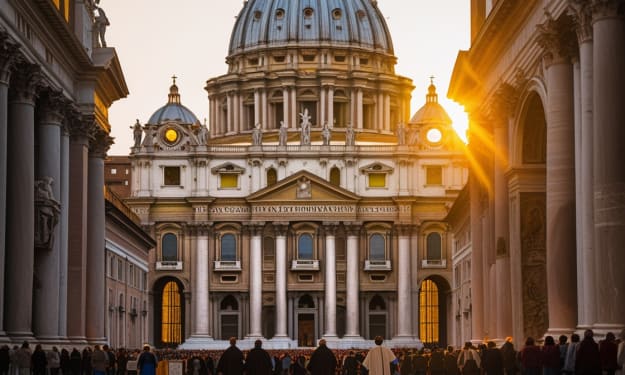
The Wealthiest Cathedral in Christianity: A Chronicle of St. Peter’s Basilica. Content Warning. AI-Generated.
The Origins: A Tomb Transformed into a Basilica The narrative commences in the 1st century CE. According to Christian doctrine, St. Peter, one of Jesus Christ's twelve disciples and viewed as the first Pope, was martyred in Rome during Emperor Nero's rule. He was crucified upside-down and interred in a burial site on Vatican Hill. Over his resting place, Emperor Constantine, the first Roman emperor to embrace Christianity, commissioned a basilica circa 319 CE. This initial basilica endured for over a millennium. However, due to its advancing deterioration, Pope Julius II mandated the erection of a new church in the early 16th century. This initiated a significant endeavor that would extend beyond 120 years and engage some of the most renowned artists and architects throughout history. The Renaissance Renovation: A Testament to Authority and Belief The construction of the contemporary St. Peter’s Basilica commenced in 1506 and reached completion in 1626. Numerous master architects, including Donato Bramante, Michelangelo, Carlo Maderno, and Gian Lorenzo Bernini, played vital roles in the design and construction of the basilica. This architectural wonder was envisioned not merely as a site of worship, but also as a proclamation of the Catholic Church’s dominance during the Renaissance and the Counter-Reformation.
By Say the truth about a year ago in History
The Pioneer of Muslim Printing and Journalism in the Indian Subcontinent: The Legacy of Maulvi Muhammad Baqir Dehlvi
The First Muslim to Print the Quran in the Indian Subcontinent – The Remarkable Story of Maulvi Muhammad Baqir Dehlvi The history of the Indian subcontinent is filled with significant events that have deeply influenced the intellectual, religious, and political future of its people, especially the Muslim community. Among these historic milestones, one extraordinary event stands out — the first-ever printing of the Holy Quran in the subcontinent. This monumental achievement is credited to a courageous and visionary Muslim scholar, Maulvi Muhammad Baqir Dehlvi. Not only was he the first Muslim journalist of the region, but he was also a fearless freedom fighter who sacrificed his life to illuminate the path of knowledge and truth. The Context of the 19th Century: Colonial Suppression and Religious Challenges At the dawn of the 19th century, British colonialism had firmly entrenched itself across the Indian subcontinent. With their expanding control, the British and their missionary organizations aggressively promoted Christianity, printing and distributing thousands of Bibles to convert the local population. Meanwhile, access to the Quran remained limited for Muslims. The Quran was available only in handwritten copies, which were rare, expensive, and difficult to obtain for many. Printing technology was still in its early stages in the region, and few dared to envision the Quran being printed on a press. In this environment, Maulvi Muhammad Baqir Dehlvi emerged as a revolutionary figure. Understanding the vital importance of making the Quran more accessible to ordinary Muslims, he decided to use the power of the printing press to break the barriers that had kept the Quran confined to handwritten manuscripts. The First Muslim Printing Press in the Subcontinent In 1835, Maulvi Muhammad Baqir Dehlvi established the first Muslim-owned printing press in Delhi. This press was more than just a business—it was a symbol of empowerment for Muslims struggling under colonial rule. His vision extended beyond printing newspapers and books; he was determined to publish the Quran for the masses. Two years later, in 1837, the first printed edition of the Quran came off his press. This was a groundbreaking achievement, as it democratized access to the Holy Book and allowed Muslims from all walks of life to engage with their faith in a way that had not been possible before. The printed Quran was a catalyst for religious education and revival across the subcontinent, inspiring generations to come. Opposition from British Authorities However, this revolutionary act did not go unnoticed or unchallenged. The British authorities, wary of any movement that might strengthen Muslim identity and unity, were deeply uncomfortable with this newfound religious awakening. They feared that increased access to religious texts could fuel dissent against their rule. The colonial government pressured Maulvi Muhammad Baqir Dehlvi to shut down his press. Despite the threats and intimidation, he remained steadfast, refusing to bow down to colonial censorship. His resilience was a testament to his commitment to preserving Muslim heritage and knowledge. The Birth of the First Muslim Newspaper The press later became the birthplace of another historic milestone: the establishment of the first Muslim newspaper in the Indian subcontinent. In 1836, Maulvi Muhammad Baqir Dehlvi launched the Delhi Urdu Akhbar. This newspaper quickly became the voice of the Muslim community, boldly criticizing British policies and advocating for justice and rights. Through his writings and editorials, Maulvi Muhammad Baqir Dehlvi raised public awareness, mobilized opinion against colonial oppression, and encouraged unity among Muslims. The Delhi Urdu Akhbar served as a platform for intellectual discourse, political activism, and social reform during a turbulent period in Indian history. Role in the 1857 War of Independence and Martyrdom When the Indian Rebellion of 1857—also known as the War of Independence—erupted, Maulvi Muhammad Baqir Dehlvi openly supported the freedom fighters. His newspaper played a significant role in inspiring resistance and challenging the British narrative. Unfortunately, the rebellion was crushed, and the British retaliated harshly. Maulvi Muhammad Baqir Dehlvi was arrested for his revolutionary activities. On September 16, 1857, he was executed by a firing squad in Delhi. His martyrdom marked a profound sacrifice—he was the first journalist in the subcontinent to give his life fighting for freedom and truth. Legacy and Recognition The contributions of Maulvi Muhammad Baqir Dehlvi hold a unique place in the annals of history. He was the first person to make the Quran widely accessible through print in the Indian subcontinent. He pioneered Muslim journalism by founding the first Muslim press and newspaper. Above all, he demonstrated immense courage in the face of colonial tyranny, ultimately sacrificing his life for the cause of justice. Today, when printed Qurans are available in countless homes and newspapers freely circulate, we owe a debt of gratitude to such visionaries. Their dedication paved the way for religious literacy, political awareness, and social progress among Muslims in South Asia. Maulvi Muhammad Baqir Dehlvi’s life is a powerful reminder of the impact one individual can have by combining knowledge, courage, and commitment to truth.
By Ikram Ullahabout a year ago in History
Metamorfosis
In a realm suspended between starlight and silence, there floated a garden unlike any other—an island of luminous moss and singing orchids, adrift in the infinite black. Above it arched violet trees that shimmered with memory, their roots tangled in sky and time. From the heart of this sacred cradle, a young woman in a lavender robe tended the blossoms with hands of trembling calm.
By ihsandanishabout a year ago in History
Álvares de Azevedo
In the history of Brazilian literature, few individuals shine as brightly—and as briefly—as Manuel Antônio Álvares de Azevedo (1831–1852). A prodigy of the Ultra-Romantic movement, Azevedo’s existence was a fleeting comet of poetic brilliance, characterized by melancholy, morbidity, and a fixation on love and death. His works, released posthumously, became cult classics, shaping the influence of generations of Gothic and Romantic authors. This article delves into his tumultuous life, his literary impact, and the tragic fate that secured his status as Brazil’s equivalent to Lord Byron.
By A Históriaabout a year ago in History
The Titanic
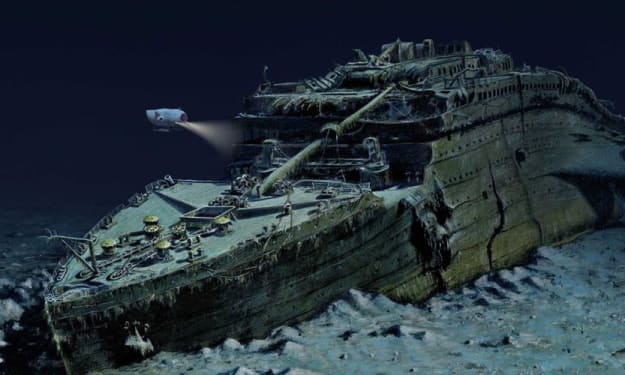
The RMS Titanic remains one of history’s most iconic maritime disasters, a symbol of human ambition, technological pride, and tragic hubris. Launched in 1912 as the largest and most luxurious passenger liner of its time, its sinking on its maiden voyage shocked the world and left an indelible mark on maritime safety regulations. This article explores the Titanic’s construction, its opulent accommodations, the fateful night of its sinking, and the lasting legacy of the disaster.
By Saad Sunainabout a year ago in History
Extremely Rare Statue of Ancient Ruler Unearthed: A 3,000 Year Old Discovery
Extremely Rare Statue of Ancient Ruler Unearthed: A 3,000 Year Old Discovery In the dust laden silence of an ancient excavation site deep in a once-forgotten valley archaeologists have unearthed a discovery that has sent ripples across the global historical community a remarkably well preserved and extremely rare statue of an ancient ruler believed to date back over 3,000 years. This isn't just a discovery of stone and sculpture; it’s a bridge to a world long buried beneath time wars and silence. It is moments like these that remind us how little we know about the rich tapestries of civilizations that thrived long before modern memory.
By Adnan Rasheedabout a year ago in History
Why the Past 10 Years of American Life Have Been Uniquely Stupid
The past decade in America has been marked by a peculiar kind of chaos—one that feels both unprecedented and self-inflicted. From political dysfunction to social media-fueled outrage, from the erosion of public trust to the glorification of ignorance, the 2010s and early 2020s have often seemed like an experiment in mass irrationality. But why has American life felt so uniquely stupid in recent years? The answer lies in a combination of technological disruption, political polarization, economic anxiety, and cultural decay. These forces have converged to create an era where bad ideas spread faster than good ones, where institutions crumble under the weight of distrust, and where public discourse often feels like a race to the bottom.
By Silas Blackwoodabout a year ago in History
The female horror film audience : viewing pleasures and fan practices. Part: 03
front a) mixed sex groups (usually) b) couples (often) c) female groups (sometimes) d) male groups (rare) middle a) couples b) groups (mixed sex?) rear a) couples b) female pairs or groups c) lone males (old)5 d) lone males (young) Even assuming that women make up only a small proportion of the mixed sex groups (these may well be dominated by males), anywhere between 25 and 50 per cent of Twitchell's audience could well be female. Clover's breakdown of the audience (p. 6) offers a slightly different picture: At theatre screenings ... the constituencies typically breakdown, in order of size, as follows: young men, frequently in groups but also solo; male-female couples of various ages (though mostly young); solo 'rogue males' (older men of ominous appearance andlor reactions); and adolescent girls in groups. Clover did not collect any data or make any personal observations of the cinema audience, instead relying on data reported by Austin (1983). She did, however, conduct a small scale survey of video rentals (p. 6-7), but these were from a very small sample of video stores and should not be taken as statistically significant. Clover collected rental figures for two rape-revenge films from three rental outlets in the San Francisco area for four weeks. Results showed that between 80 and 90 per cent of renters were male and renters of both sexes were mostly in their early twenties. However, these figures are unlikely to give any indication of who viewed the film once it had left the store. The mixed-sex group is notably absent from Clover's cinema audience. She also maintains that young men in single sex groups make up most of the audience, whereas Twitchell rarely or never saw such groups. Clover ranks all female groups as the lowest proportion of the audience, yet Twitchell's observations seem to contradict this. It may be that Clover and Twitchell are reporting on audiences from different geographical or class backgrounds, or different generic or historic audiences; it may also be possible that, while the adolescent male remains the majority viewer of the 80s slasher film, Clover.
By Silas Blackwoodabout a year ago in History
The Dragon King's Palace: Revealing the Subaquatic Treasure City of Japanese Mythology. AI-Generated.
The Mythical Origins of Ryūgū-jō Within the expansive realm of Japanese mythology, few narratives resonate with such awe as the chronicle of Ryūgū-jō (竜宮城), the Dragon Palace located beneath the ocean. Alleged to be the sphere of Ryūjin (龍神), the Dragon Deity of the sea, Ryūgū-jō is a splendid underwater palace crafted from coral, crystal, and precious metals. Its mythological foundations originate from early Shinto convictions and were further developed by Buddhist influences, folklore, and oral traditions transmitted through generations.
By Say the truth about a year ago in History