Biographies
GPS Tracker Found on a Dead Eagle A Mysterious Discovery
GPS Tracker Found on a Dead Eagle A Mysterious Discovery Eagles are often regarded as symbols of power freedom and guardians of the natural world. Their majestic flight sharp vision and predatory instincts make them one of the most fascinating birds in the wild. However when a GPS tracker is discovered on the body of a dead eagle it raises a series of questions and mysteries. Recently such an incident came to light when researchers found a GPS tracker attached to a deceased eagle leading to speculations about its purpose the bird's fate and the broader implications for wildlife conservation. In this article we will explore the significance of GPS tracking in wildlife research the possible reasons behind the eagle’s death and how such technology helps in the conservation of endangered species.
By Adnan Rasheed2 years ago in History
From Humble Beginnings to Global Dominance
Throughout history, many of the most formidable empires have emerged from humble origins. The Macedonian Empire exemplifies this phenomenon. Originating as a minor, seemingly inconsequential tribe in the northern part of the Greek peninsula, it ultimately evolved into a civilization that exerted its influence across three continents, profoundly impacting the world. This narrative chronicles the ascent of the Macedonians, who were once regarded as barbarians, to one of the most significant powers of the ancient era.
By A História2 years ago in History
The Redeemer
There was a time when Gabriel Roth was a man lost to the shadows. To most people, he was a memory—one of those stories you hear whispered in dark corners, a cautionary tale that the world seemed eager to forget. A man who had once stood tall, confident, and proud, only to fall into a spiral of selfishness and regret.
By Arean Ahamad2 years ago in History
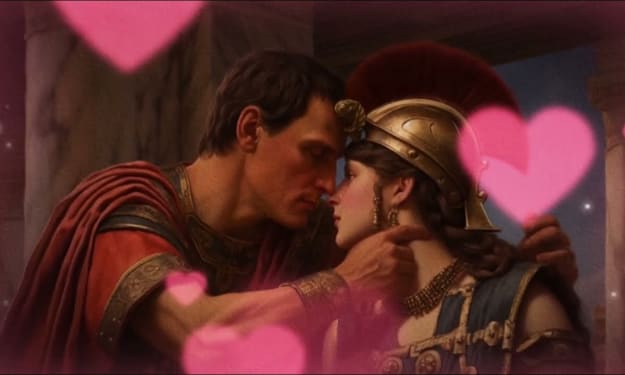
The Love Letters of Julius Caesar
The year was 44 BCE, and Rome was a city alive with whispers. The name Julius Caesar echoed through its streets, spoken with reverence, fear, and awe. He was a man who had conquered nations, rewritten the laws of the Republic, and stood at the pinnacle of power. But behind the marble statues and the laurel wreaths, there was another side to Caesar—one that few knew. It was a side that poured its heart onto parchment, weaving words of love and longing for the women who held his heart captive.
By Ammad Raza Naqvi2 years ago in History
The Deeper Secrets of the Hebrew Bible: Unveiling Hidden Mysteries
The Deeper Secrets of the Hebrew Bible: Unveiling Hidden Mysteries Introduction The Hebrew Bible, also known as the Tanakh, is one of the most profound and influential texts in human history. It has been studied for centuries by scholars, theologians, and mystics who seek to understand its divine wisdom. But beyond its historical and religious significance, the Hebrew Bible contains hidden messages, codes, and mystical teachings that reveal deeper spiritual truths. From the Kabbalistic interpretations to the Bible codes, the scriptures are filled with secrets that go beyond their literal meaning. Some of these hidden messages were passed down through oral traditions, while others were embedded in the text itself through numerical patterns and symbolic language. In this article, we will explore some of the deeper secrets of the Hebrew Bible, uncovering the mysteries that have fascinated scholars and seekers for centuries. The Concept of Hidden Wisdom in the Hebrew Bible Throughout the Hebrew Bible, there are indications that deeper wisdom is concealed within the text. Proverbs 25:2 states: "It is the glory of God to conceal a matter, but the glory of kings is to search out a matter." This suggests that divine wisdom is hidden and must be sought after. The ancient rabbis and Kabbalists believed that the Torah was written on multiple levels—literal, allegorical, and mystical. These levels of interpretation are known as PaRDeS, an acronym for: 1. Peshat – The simple, literal meaning. 2. Remez – The hinted or allegorical meaning. 3. Derash – The interpretative or midrashic meaning. 4. Sod – The hidden, mystical meaning. The Sod (secret) level of the Hebrew Bible is where the deeper mysteries reside. Many Jewish sages dedicated their lives to uncovering these secrets, believing they contained the keys to understanding the universe, the soul, and God's plan for creation. The Mystery of the Hebrew Letters and Gematria One of the most intriguing aspects of the Hebrew Bible is the mystical power of Hebrew letters. Unlike English, Hebrew is an alphanumeric language, meaning that every letter also has a numerical value. This system is known as Gematria, and it allows for numerical patterns and hidden messages to be found in the text. For example, the Hebrew word for "life" (Chai, חי) has a numerical value of 18 (8+10). This is why the number 18 is considered lucky in Jewish tradition. Similarly, the Tetragrammaton (YHWH, יהוה), the sacred name of God, has a numerical value of 26, which has deep Kabbalistic significance. One of the most famous uses of Gematria in biblical interpretation is the connection between Genesis 1:1 and John 1:1 in the New Testament. In Genesis 1:1, the first words of the Bible are "Bereshit Bara Elohim" (בראשית ברא אלהים), meaning "In the beginning, God created." The numerical value of these words has been linked to significant mathematical patterns that some believe reveal divine intelligence behind the text. Another example of hidden codes in the Hebrew Bible is found in the Torah Equidistant Letter Sequences (ELS). Some researchers claim that, by skipping a set number of letters in the Torah, secret messages about historical events and future prophecies can be uncovered. This is often referred to as the Bible Code, and though it remains controversial, it has fascinated scholars for decades. The Mystical Tree of Life and the Torah In Kabbalah, the Tree of Life (Etz Chaim) is a powerful symbol that represents the structure of divine reality. It consists of ten sefirot (divine attributes) and connects heaven and earth. Many Kabbalists believe that the Torah is encoded with the structure of the Tree of Life and that its teachings correspond to different levels of spiritual awakening. One of the most mysterious aspects of the Torah is the Sefer Yetzirah ("Book of Formation"), an ancient Kabbalistic text that describes how the Hebrew letters were used to create the universe. According to this text, the letters of the Hebrew alphabet are not just symbols but actual forces of creation. This idea aligns with the biblical verse: "And God said, ‘Let there be light,’ and there was light." (Genesis 1:3) This suggests that speech and language have creative power, a concept that is deeply embedded in Jewish mystical thought. The Prophetic Visions and Messianic Secrets The Hebrew Bible contains numerous prophecies that have fascinated both Jewish and Christian scholars. Many believe that these prophecies contain hidden messages about the Messianic Age and the future of humanity. For instance, in the Book of Daniel, there are visions of mysterious "beasts" and a timeline of events leading to the end of days. The Book of Isaiah also contains cryptic prophecies about the coming of a Messiah who will bring peace and justice to the world. Jewish mystics often interpret these prophecies through the lens of Kabbalah, suggesting that the Messiah will not just be a physical ruler but a spiritual force that will elevate human consciousness. Some even believe that the Messiah has already come in different forms throughout history, subtly guiding the world toward redemption. The Hidden Names of God The Hebrew Bible contains many names of God, each revealing different aspects of His nature. The most sacred and mysterious of these names is the Tetragrammaton (YHWH), which was considered too holy to be spoken aloud. However, Jewish mysticism teaches that there are 72 hidden names of God, known as the Shem HaMephorash. These names are said to hold immense power and are used in mystical practices for protection, healing, and divine connection. Some believe that Moses used one of these secret names to part the Red Sea, demonstrating the power hidden within the sacred Hebrew letters. Conclusion The Hebrew Bible is far more than just a religious text; it is a vast repository of divine wisdom, mystical codes, and hidden messages that continue to inspire seekers of truth. Whether through Gematria, Kabbalah, biblical prophecies, or the mystical power of Hebrew letters, the Bible reveals secrets that point to a deeper reality beyond the physical world. For those who seek to uncover these mysteries, the journey requires patience, study, and spiritual insight. As Proverbs 2:4-5 says: "If you seek her as silver, and search for her as for hidden treasures, then you will understand the fear of the Lord, and find the knowledge of God." The secrets of the Hebrew Bible are not just meant to be studied but to be lived—guiding individuals toward wisdom, transformation, and a deeper connection with the divine.
By Samson E. Gifted2 years ago in History
The Life and Legacy of Plato
The Life and Legacy of Plato: A Comprehensive Biography Introduction Plato, one of the most influential philosophers in Western thought, was a student of Socrates and the teacher of Aristotle. His contributions to philosophy, political theory, and education remain foundational to this day. Through his extensive writings, primarily in the form of dialogues, Plato explored topics ranging from ethics and metaphysics to politics and epistemology. His legacy continues to shape contemporary discourse in philosophy and beyond.
By Banik Sojib2 years ago in History
A 600 year old bra belonging to Humayun's mother discovered in excavation.
A 600 year old bra belonging to Humayun's mother discovered in excavation. Archaeologists have recently made a startling discovery during an excavation at a historical site linked to the Mughal Empire. Among various unearthed artifacts one item has particularly intrigued historians and researchers a 600 year old brassiere like garment that is believed to have belonged to a woman of high status from the Mughal era. Some experts suggest that it could have been worn by Maham Begum the mother of Emperor Humayun. This unexpected finding has opened up discussions on historical fashion the role of women in the Mughal court and the sophistication of undergarments in South Asian history. The excavation site where this garment was found has long been associated with the Mughal royal family. Researchers were originally looking for everyday items from the era such as pottery ornaments, and tools. However when they uncovered a delicate yet remarkably well preserved piece of clothing, they were taken aback. The garment resembles modern-day bras in structure but it also features intricate embroidery and fine craftsmanship indicative of Mughal era textiles. Experts are now closely examining the fabric stitching and design to determine its exact origin and confirm its historical significance.
By Adnan Rasheed2 years ago in History
The Majestic Pyramids of Teotihuacan – Sun and Moon
The Pyramid of the Sun and the Moon: The Age-old Wonders of Teotihuacan The Pyramid of the Sun and the Pyramid of the Moon are two of the best cogent structures in the age-old burghal of Teotihuacan, amid in modern-day Mexico. Congenital by the Teotihuacanos about 100-450 CE, these pyramids were not alone architectural marvels but additionally acutely angry to religion, astronomy, and political power. The Pyramids of Teotihuacan battling the abundant pyramids of Egypt in their grandeur, mystery, and actual significance. In this article, we will analyze their construction, significance, materials, cost, labor, and the constant bequest of these awe-inspiring structures. 1. The Pyramid of the Sun 1.1 Architecture and Architecture The Pyramid of the Sun is the better anatomy in Teotihuacan and one of the better pyramids in the world. It stands about 65.5 meters (216 feet) aerial and has a abject amplitude of 225 meters (738 feet). Built application agitable stone, clay, and rubble, again covered with adhesive and blithely corrective murals. The pyramid consists of bristles stepped platforms, possibly apery the bristles levels of the cosmos. It is accumbent with the sun’s position on important ample dates, such as the summer solstice. 1.2 Purpose and Significance The Pyramid of the Sun was acceptable a religious centermost committed to the sun god. It may accept been acclimated for sacrificial rituals, ceremonies, and ample observations. A adit arrangement below the pyramid suggests it may accept had airy and allegorical significance, possibly affiliated to the underworld. 2. The Pyramid of the Moon 2.1 Architecture and Architecture The Pyramid of the Moon is the second-largest anatomy in Teotihuacan. It is 43 meters (141 feet) aerial and has a abject of 130x156 meters. Built application stone, clay, and mortar, with staircases arch to a august belvedere at the top. The pyramid was broadcast assorted times, with new layers added to enlarge it. 2.2 Purpose and Significance Dedicated to the Abundant Goddess of Teotihuacan, associated with fertility, water, and the moon. Used for rituals, processions, and sacrifices, as apparent by the analysis of beastly and beastly remains. Positioned at the arctic end of the Avenue of the Dead, creating a angelic and august arbor for the city. 3. Estimated Bulk and Activity for Construction 3.1 Abstracts Used The pyramids were congenital application locally accessible materials, including: Volcanic bedrock (tezontle) – A failing yet able actual for construction. Limestone and adobe – Acclimated for bounden stones together. Stucco and pigments – To actualize bright murals and decorations. 3.2 Activity and Workforce Estimated 100,000 workers alternate in architecture the pyramids over several decades. Workers included engineers, laborers, artists, and priests who supervised construction. Unlike the Egyptian pyramids, Teotihuacan's pyramids were acceptable congenital by accomplished laborers and volunteers, not slaves. 3.3 Estimated Bulk in Today’s Value While it is difficult to appraisal the exact cost, avant-garde comparisons suggest: The absolute architecture would be account $1-2 billion in today's economy, because the bulk of labor, materials, and time spent. If congenital today application avant-garde machinery, the bulk could be decidedly lower due to abstruse advancements. 4. Ample and Religious Importance The pyramids were accumbent with angelic contest such as the solstices and equinoxes. Many advisers accept Teotihuacan was a centermost for astronomy, prophecy, and agenda systems. The pyramids played a role in rain and abundance rituals, capital for agriculture. 5. The Decline of Teotihuacan and the Abstruseness of the Pyramids Around 600-750 CE, Teotihuacan mysteriously beneath and was abandoned. Possible affidavit accommodate altitude change, centralized conflict, and alien invasions. The Aztecs rediscovered the burghal centuries after and called it Teotihuacan, acceptation “The Place Where Gods Were Created.” The Pyramids of the Sun and Moon abide well-preserved, alluring millions of visitors today. 6. Conclusion The Pyramids of the Sun and the Moon are amid the greatest architectural achievements of age-old Mesoamerica. They betoken the power, spirituality, and adeptness of the Teotihuacan civilization. Today, these iconic structures abide to absorb historians, archaeologists, and tourists, continuing as a attestation to the amplitude and abstruseness of pre-Columbian civilizations.
By Say the truth 2 years ago in History
Nikola Tesla: The Genius Who Electrified the World
Nikola Tesla: The Genius Behind Electricity Imagine a day without electricity. No lights, no smartphones, no Netflix—just candles and quiet. It’s hard to picture, right? We owe much of our modern, plugged-in world to a man named Nikola Tesla. While Thomas Edison often steals the spotlight in history books, Tesla’s inventions truly electrified the 20th century and beyond. Let’s dive into the life of this quirky, underrated genius who dreamed big, invented bigger, and left a legacy that still powers our lives today.
By Valuable Knowledge2 years ago in History
Africa's incredible ancient city that's over 2,000 years old and abandoned for 700 years
Africa's incredible ancient city that's over 2,000 years old and abandoned for 700 years Volubilis nestled in the fertile plains of Morocco stands as a testament to the grandeur of ancient civilizations. This incredible city over 2,000 years old offers a glimpse into a bygone era frozen in time and steeped in history. Once a thriving Roman outpost Volubilis was abandoned nearly 700 years ago yet its ruins continue to captivate visitors with their timeless beauty and historical significance. The city’s story is one of cultural fusion architectural brilliance and the inexorable passage of time.BLocated near the modern city of Meknes Volubilis was originally settled by the Carthaginians as early as the 3rd century BCE. However it was under Roman rule beginning around 40 CE that the city flourished. As part of the Roman Empire’s vast network of provinces Volubilis became an important administrative and agricultural center. Its fertile surroundings made it a hub for olive oil and grain production which were exported to other parts of the empire. The city’s wealth and strategic importance are evident in the grandeur of its architecture which blends Roman engineering with local Berber and Phoenician influences.
By Adnan Rasheed2 years ago in History
Istana Nurul Iman – The Costliest Palace in History
The Costliest Alcazar in History: The Best Big-ticket Aristocratic Abode Anytime Built Throughout history, rulers and emperors accept congenital absurd palaces as symbols of their power, wealth, and legacy. Some of these palaces accept amount billions of dollars in today’s terms, with gold-plated walls, diamond-encrusted ceilings, and attenuate abstracts from above the world. Among these, the Forbidden City in China, Versailles in France, and Buckingham Alcazar in England are some of the best famous, but the costliest alcazar anytime congenital is believed to be The Admirable Alcazar of Brunei, additionally accepted as Istana Nurul Iman. This commodity explores the best big-ticket alcazar in history, ciphering its net worth, architecture materials, affluence furnishings, gold and argent usage, design decorations, activity costs, and time taken to build. 1. What Is the Best Big-ticket Alcazar in History? The appellation of the costliest alcazar in history goes to Istana Nurul Iman, the official abode of the Sultan of Brunei, Hassanal Bolkiah. This alcazar surpasses alike the allegorical Alcazar of Versailles, Buckingham Palace, and the Forbidden City in agreement of value. Location: Brunei, Southeast Asia Construction Year: Completed in 1984 Total Estimated Cost: Over $1.4 billion Size: 2.15 actor aboveboard anxiety (larger than the Vatican) Rooms: 1,788 rooms, 257 bathrooms, and 5 pond pools Gold Used: Over 200,000 kilograms of gold Luxury Materials: Marble from Italy, gold-plated domes, clear chandeliers, and cottony carpets 2. Estimated Net Account of the Costliest Palace The net account of Istana Nurul Iman is estimated at $1.4 billion to $3 billion in today's market. This makes it the best big-ticket aristocratic abode in history. Comparing it to added acclaimed palaces: Versailles Alcazar (France): Estimated account $50 billion (including acreage and tourism revenue). Buckingham Alcazar (UK): Estimated account $5 billion. The Forbidden City (China): Priceless actual value, but estimated at $70 billion if acreage and artifacts are included. However, in agreement of absolute architecture costs, Istana Nurul Iman is the best big-ticket alcazar anytime built. 3. Architecture and Abstracts Used 3.1 Gold, Silver, and Diamonds Gold Usage: 200,000 kilograms (200 tons) of authentic gold acclimated for alcazar domes, furniture, and decorations. Estimated value: $12 billion. Silver Usage: Doors and accoutrement affection 5,000 kilograms of silver. Estimated value: $3 million. Diamond Chandeliers: Some chandeliers board hundreds of diamonds, with an estimated amount of $10 actor per chandelier. 3.2 Marble and Precious Woods Italian Marble: Imported from Carrara, Italy, the aforementioned blazon acclimated in Michelangelo’s sculptures. Rare Woods: Mahogany, ebony, and sandalwood from Southeast Asia were acclimated for carvings. 3.3 Cottony and Affluence Textiles Persian cottony carpets awning the alcazar floors. Anniversary rug is handwoven and costs over $1 million. Wall coverings are abstract with gold thread, anniversary costing millions. 4. How Long Did It Take to Build? 4.1 Time Taken for Construction Construction of Istana Nurul Iman began in 1981 and was completed in 1984—a absolute of 3 years. It was advised by Leandro V. Locsin, a acclaimed Filipino architect. 4.2 How Abounding Workers Congenital the Palace? Over 20,000 workers were complex in architecture the palace. Engineers from Europe, Asia, and the Middle East contributed to the construction. 4.3 Amount of Labor Workers were paid aerial accomplishment to complete the activity quickly. Total activity costs exceeded $500 actor in today’s terms. 5. Affluence Features Inside the Palace 5.1 The Sultan’s Clandestine Suite The Sultan’s bedchamber is covered in gold and diamonds. The bed anatomy is fabricated of solid gold. The walls affection hand-painted cottony tapestries. 5.2 The Head Room The admirable head is fabricated of 24-carat gold and encrusted with rubies and emeralds. The beam has a gold-plated arch with design decorations. 5.3 The Aristocratic Banquet Hall Can board 5,000 guests for aristocratic feasts. Guests banquet with gold-plated accoutrement and clear glasses. The Sultan's clandestine dining set is accounted to be fabricated of solid gold..
By Say the truth 2 years ago in History