Biographies
The Majestic Palace of Alexander the Great
The Grandest Alcazar of Alexander the Great: Wealth, Luxury, and Construction Alexander the Great (356–323 BCE) congenital an authority that continued from Greece to India, and with it came immense wealth. While Alexander is primarily accepted for his aggressive conquests, he additionally accustomed and active some of the best arresting palaces in history. Among these, his aristocratic abode in Babylon is believed to accept been the best extravagant. This commodity explores the costliest alcazar of Alexander the Great, ciphering its net worth, abstracts used, comfortable furnishings, gold and argent content, diamonds, silk, activity force, and architecture time. 1. The Location: Alexander’s Aristocratic Alcazar in Babylon After acquisition the Persian Authority in 331 BCE, Alexander fabricated Babylon (modern-day Iraq) his aristocratic capital. The burghal was already home to the allegorical Alcazar of Nebuchadnezzar II, but Alexander broadcast and adapted it to bout his admirable eyes of a apple empire. His alcazar in Babylon was advised to be the best comfortable anatomy of its time, before alike the Persian palaces of Persepolis and Susa. 2. The Estimated Net Account of Alexander’s Palace Historians appraisal that the absolute amount of Alexander’s Babylonian alcazar in avant-garde agreement would ambit from $50 billion to $100 billion, authoritative it one of the costliest structures in age-old history. The alcazar was abounding with: Gold-plated walls and ceilings Silver and brownish doors and furniture Gem-encrusted pillars Silk and Persian carpets Imported marble from Greece and Egypt 3. Abstracts Acclimated in Construction 3.1 Gold and Silver Gold Usage: Over 50,000 kilograms (50 tons) of authentic gold were acclimated for plating walls, statues, and aristocratic furniture. Estimated value: $3 billion. Silver Usage: Around 100,000 kilograms (100 tons) of argent were acclimated for doors, decorations, and utensils. Estimated value: $1 billion. 3.2 Precious Stones and Diamonds Diamonds and gemstones were alien from India and anchored in alcazar pillars, furniture, and the king’s throne. Lapis lazuli and azure stones from Afghanistan busy walls and ceilings. 3.3 Marble and Alien Woods White marble from Greece and Egypt was acclimated for alcazar flooring.
By Say the truth 2 years ago in History
Donald trump news
Donald Trump is a businessman, media personality, and politician who served as the 45th president of the United States from 2017 to 2021. His life story is a mix of real estate success, celebrity status, and political controversy. Early Life & Business Career Donald John Trump was born on June 14, 1946, in Queens, New York. He was the son of real estate developer Fred Trump. After attending the Wharton School at the University of Pennsylvania, he joined his father’s real estate business, which focused on middle-class housing in New York City. In the 1970s and '80s, Trump expanded the business, building luxury hotels, casinos, and skyscrapers, including Trump Tower in Manhattan. He became a media personality, hosting the reality TV show The Apprentice from 2004 to 2015, which boosted his national fame. Political Career & Presidency In 2015, Trump announced his candidacy for the 2016 U.S. presidential election as a Republican. Running on a platform of economic nationalism, border security, and an "America First" approach, he won the presidency against Hillary Clinton in a shocking upset. As president (2017-2021), he focused on tax cuts, deregulation, and conservative judicial appointments. His tenure was marked by controversies, including two impeachments (one over Ukraine and another over the Capitol riot on January 6, 2021). His administration also faced the COVID-19 pandemic, trade wars, and tensions with China and Iran. In 2020, he lost his re-election bid to Joe Biden but continued to claim election fraud, leading to political turmoil. Post-Presidency & 2024 Run After leaving office, Trump remained a dominant figure in the Republican Party. He announced his candidacy for the 2024 presidential election, facing legal challenges, including criminal indictments related to his business dealings, classified documents, and the 2020 election aftermath. His legacy remains deeply polarizing, with supporters praising his economic policies and nationalist approach, while critics highlight his divisive rhetoric and legal troubles. Would you like more details on any specific part of his story? Alright, let’s dive deeper into Donald Trump’s life, covering his business career, presidency, legal issues, and his 2024 campaign in detail. --- 1. Early Life & Business Career Donald John Trump was born on June 14, 1946, in Queens, New York. His father, Fred Trump, was a real estate developer who built affordable housing in New York City. Donald attended the Wharton School at the University of Pennsylvania, where he studied economics. Building the Trump Empire After joining his father’s company, Elizabeth Trump & Son, he renamed it The Trump Organization in 1971 and expanded it into luxury real estate. Some of his most notable projects include: Trump Tower (1983) – A luxury skyscraper in Manhattan. Atlantic City Casinos – Including the Trump Plaza, Trump Castle, and Trump Taj Mahal (later went bankrupt). Trump Hotels & Golf Resorts – Properties worldwide, including Mar-a-Lago in Florida. His business ventures were often a mix of huge successes and financial failures. He filed for corporate bankruptcy six times but remained a billionaire due to branding and real estate deals. TV Stardom & The Apprentice In 2004, Trump became a TV icon with The Apprentice, where contestants competed for a job in his company. His catchphrase, “You’re fired!”, became famous, and the show ran for 14 seasons. This made him a household name beyond the business world. --- 2. Political Career & Presidency (2017-2021) 2016 Presidential Election Trump announced his candidacy in June 2015 and ran as a Republican with the slogan “Make America Great Again” (MAGA). His campaign focused on: Border security & immigration (building a wall on the U.S.-Mexico border) Economic nationalism (America First trade policies) Opposing political elites & media He won the Republican nomination and faced Hillary Clinton in the general election. Despite losing the popular vote, he won the Electoral College and became the 45th U.S. president on January 20, 2017. Key Policies & Achievements 1. Economy & Taxes – Signed the Tax Cuts and Jobs Act (2017), reducing corporate taxes. The stock market surged, and unemployment hit record lows before COVID-19. 2. Deregulation – Rolled back environmental and business regulations. 3. Judicial Appointments – Appointed three Supreme Court justices (Gorsuch, Kavanaugh, Barrett), shifting the court to the right. 4. Foreign Policy – China Trade War – Imposed tariffs on Chinese goods. North Korea Diplomacy – Met with Kim Jong-un but made little progress. Middle East – Moved the U.S. embassy to Jerusalem and helped broker Abraham Accords (peace deals between Israel and Arab nations). 5. COVID-19 Pandemic – Managed vaccine development (Operation Warp Speed), but his response was criticized for downplaying the virus. Impeachments & Controversies Alright, let’s dive deeper into Donald Trump’s life, covering his business career, presidency, legal issues, and his 2024 campaign in detail. --- 1. Early Life & Business Career Donald John Trump was born on June 14, 1946, in Queens, New York. His father, Fred Trump, was a real estate developer who built affordable housing in New York City. Donald attended the Wharton School at the University of Pennsylvania, where he studied economics. Building the Trump Empire After joining his father’s company, Elizabeth Trump & Son, he renamed it The Trump Organization in 1971 and expanded it into luxury real estate. Some of his most notable projects include: Trump Tower (1983) – A luxury skyscraper in Manhattan. Atlantic City Casinos – Including the Trump Plaza, Trump Castle, and Trump Taj Mahal (later went bankrupt). Trump Hotels & Golf Resorts – Properties worldwide, including Mar-a-Lago in Florida. His business ventures were often a mix of huge successes and financial failures. He filed for corporate bankruptcy six times but remained a billionaire due to branding and real estate deals. TV Stardom & The Apprentice In 2004, Trump became a TV icon with The Apprentice, where contestants competed for a job in his company. His catchphrase, “You’re fired!”, became famous, and the show ran for 14 seasons. This made him a household name beyond the business world. --- 2. Political Career & Presidency (2017-2021) 2016 Presidential Election Trump announced his candidacy in June 2015 and ran as a Republican with the slogan “Make America Great Again” (MAGA). His campaign focused on: Border security & immigration (building a wall on the U.S.-Mexico border) Economic nationalism (America First trade policies) Opposing political elites & media He won the Republican nomination and faced Hillary Clinton in the general election. Despite losing the popular vote, he won the Electoral College and became the 45th U.S. president on January 20, 2017. Key Policies & Achievements 1. Economy & Taxes – Signed the Tax Cuts and Jobs Act (2017), reducing corporate taxes. The stock market surged, and unemployment hit record lows before COVID-19. 2. Deregulation – Rolled back environmental and business regulations. 3. Judicial Appointments – Appointed three Supreme Court justices (Gorsuch, Kavanaugh, Barrett), shifting the court to the right. 4. Foreign Policy – China Trade War – Imposed tariffs on Chinese goods. North Korea Diplomacy – Met with Kim Jong-un but made little progress. Middle East – Moved the U.S. embassy to Jerusalem and helped broker Abraham Accords (peace deals between Israel and Arab nations). 5. COVID-19 Pandemic – Managed vaccine development (Operation Warp Speed), but his response was criticized for downplaying the virus. Impeachments & Controversies Trump was impeached twice by the House of Representatives: 1. 2019 – Over a call with Ukraine’s president, allegedly pressuring him to investigate Joe Biden’s son (he was acquitted in the Senate). 2. 2021 – Over the January 6 Capitol riot, where his supporters stormed the U.S. Capitol. The Senate acquitted him again. --- 3. Legal Issues & Investigations After leaving office, Trump faced multiple legal troubles: Key Investigations & Indictments 1. 2020 Election Interference – Accused of trying to overturn Biden’s victory (Georgia case & federal case). 2. Classified Documents Case – Indicted for allegedly mishandling classified government documents. 3. Business Fraud – Charged in New York for inflating the value of his real estate assets. 4. Hush Money Case – Accused
By Etini mfon Akpan2 years ago in History
2500 Year Old Tombs With Artifacts Discovered in Israel Shed Light on Ancient Trading
2500 Year Old Tombs With Artifacts Discovered in Israel Shed Light on Ancient Trading Archaeologists have made a groundbreaking discovery near Tlalim Junction in Israel unearthing 2,500 year old tombs and artifacts that shed new light on ancient trade networks and cultural exchanges. The findings led by the Israel Antiquities Authority IAA reveal the Negev Highlands' role as a significant hub for long distance commerce connecting the region to distant civilizations such as Yemen Phoenicia and Egypt. This discovery not only highlights the movement of goods but also underscores the exchange of ideas and traditions across the ancient world. The excavation uncovered a wealth of artifacts that provide insights into the region's historical significance. Among the most notable findings were flint arrowheads which researchers believe originated from Yemen and Oman. These arrowheads along with copper and silver jewelry suggest that the Negev Highlands were a key stopover for traders traveling along ancient routes. Additionally small alabaster vessels historically used to transport incense were discovered further emphasizing the area's role in the trade of luxury goods. One of the most striking artifacts was an amulet depicting Bes the Egyptian deity associated with protection and fertility. This amulet not only highlights the cultural influence of Egypt but also suggests that traders and travelers carried religious symbols for personal protection and spiritual significance.
By Adnan Rasheed2 years ago in History
Alexander the Great – The Warrior King. AI-Generated.
The Concrete Description of Alexander the Great: A Historical Perspective Alexander the Great (356–323 BCE) was one of history’s best allegorical aggressive leaders, accepted for his conquests from Greece to India. While his accomplishments are well-documented, descriptions of his concrete actualization appear from age-old historians, coins, sculptures, and literature. Was Alexander alpine and imposing, or was he of boilerplate height? Did he accept characteristic actualization that set him apart? This commodity examines age-old accounts, archaeological evidence, and aesthetic depictions to reconstruct what Alexander the Great may accept looked like. 1. Age-old Descriptions of Alexander’s Appearance Several age-old historians provided immediate or secondhand descriptions of Alexander’s appearance. Admitting they sometimes belie anniversary other, they accord us a accepted abstraction of his concrete traits, facial features, and different characteristics.
By Say the truth 2 years ago in History
Lost Riches of America – Hidden Gold and Forgotten Fortunes
The History of Abundance in America: Legends, Absent Gold, and Hidden Fortunes America has continued been a acreage of abstruseness and adventure, with endless belief of absent treasures, active gold, and hidden fortunes broadcast beyond the continent. From the all-inclusive abundance of aboriginal civilizations to the gold rushes and charlatan loot, America’s history is abounding with tales of abundance cat-and-mouse to be discovered. Abounding of these treasures are still missing, fueling belief and abundance hunts alike today. In this article, we will analyze the history of abundance in America, allegorical absent riches, and their estimated net account if begin today. 1. Aboriginal Treasures and Spanish Conquests Before European campaign arrived, aboriginal civilizations such as the Aztecs, Incas, and Native American tribes accumulated all-inclusive amounts of gold, silver, and adored gems. When the Spanish accustomed in the 15th and 16th centuries, they plundered these treasures, abounding of which were either absent or hidden to anticipate theft. 1.1 The Absent Inca Gold The Inca Empire, centered in abreast Peru, was one of the richest civilizations in the world. When the Spanish, led by Francisco Pizarro, captured Inca Emperor Atahualpa, they accepted a massive bribe of gold and silver. Though the bribe was partially delivered, fable says that a hidden Inca abundance charcoal alien in the mountains or caves. Estimated Amount Today: Over $10 billion if found. 1.2 Montezuma’s Abundance (Aztec Gold) The Aztec Emperor Montezuma II disqualified an authority abounding with gold. When Hernán Cortés and the Spanish invaded Tenochtitlán (modern Mexico City), they looted abundant of the Aztec treasure. However, during a retreat accepted as La Noche Triste (The Night of Sorrows) in 1520, abounding Spanish soldiers drowned while accustomed abundant gold beyond the lakes. Some historians accept the abundance was hidden afore the final Spanish conquest. Estimated Amount Today: Over $20 billion.
By Say the truth 2 years ago in History
Why Was the Ancient Greek City of Hadrianopolis Suddenly Abandoned?
Why Was the Ancient Greek City of Hadrianopolis Suddenly Abandoned? The ancient Greek city of Hadrianopolis located in the Eskipazar district of Karabuk Turkey has long been a site of fascination for archaeologists and historians. Known for its stunning mosaics and historical significance the city was a prominent center in the western Black Sea region during antiquity. However its sudden and complete abandonment in the 7th century AD has remained a mystery for centuries. Recent excavations led by Ibrahim Sahin the culture and tourism director of Karabuk and Ersin Celikbas an archaeology professor at Karabuk University are shedding new light on this enigmatic event offering clues that may finally explain why the city was deserted.
By Adnan Rasheed2 years ago in History
Historic Kama Sutra Sculptures of Khajuraho Temple India UNESCO world Heritage Site Khajuraho India.
Historic Kama Sutra Sculptures of Khajuraho Temple India UNESCO world Heritage Site Khajuraho India. The Khajuraho Temple complex in India is a remarkable testament to the artistic and cultural achievements of ancient India. Recognized as a UNESCO World Heritage Site these temples are renowned for their intricate and exquisite sculptures particularly those depicting themes from the Kama Sutra. Located in the Chhatarpur district of Madhya Pradesh Khajuraho is a symbol of India's rich heritage and architectural brilliance. The temples built between 950 and 1050 CE during the Chandela dynasty were once part of a larger group of 85 temples of which only 25 survive today. These temples are divided into three groups Western Eastern and Southern and are dedicated to both Hindu and Jain traditions. The most striking feature of the Khajuraho temples is their elaborate and detailed sculptures which adorn the walls pillars and ceilings. Among these the sculptures inspired by the Kama Sutra are the most celebrated. The Kama Sutra an ancient Indian text attributed to Vatsyayana is a treatise on human relationships love and intimacy. While the text itself is often misunderstood as merely a manual on sexual positions it is, in fact, a comprehensive guide to the art of living encompassing ethics relationships and the pursuit of pleasure as one of the four goals of human life Purusharthas. The sculptures at Khajuraho beautifully capture the essence of this philosophy depicting various aspects of human life, including love romance and intimacy, in a highly artistic and sophisticated manner.
By Adnan Rasheed2 years ago in History
My Dearest Alice
** Dec. 22,1941 My Alice, dear Alice,How I wish you were hereIt’s raining again, although my thoughts are quite clear The palm trees are waving Their branches dance in the breeze Oh, what I would give if you could be here with me I keep your picture beside meThe chaps think you’re grandThe next time you see meI will ask for your handI spoke to your father On the day that I leftHe said he would honor Once Ive proven myselfSo, I’m here in this battleTo valiantly fight
By Kelli Sheckler-Amsden2 years ago in History
The Chrysanthemum and the Crane: A Diary & Correspondence, Japan, Edo Period (1703)
Part 1: Hana's Diary - Musings on a Changing World Date: Kagen 6, Month 2, Day 10 (March 17, 1703) The cherry blossoms are beginning to unfurl their delicate petals, a pale blush against the grey stone walls of the garden. It is a beautiful time, a time for poetry and contemplation. Yet, my heart feels none of that peace. Father has declared he intends to arrange a marriage for me.
By Israt Jahan 2 years ago in History
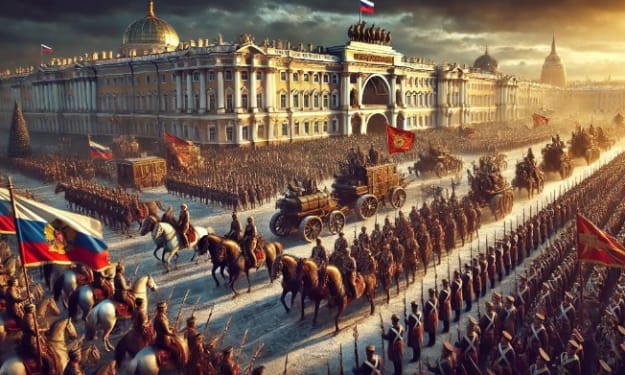
The Tsar Empire: Power, Army, Battles, and Acreage Area
The Tsarist Empire, additionally accepted as the Russian Empire, was one of the best able and all-embracing empires in history. Under the aphorism of the Tsars, Russia grew into a massive superpower, authoritative all-inclusive territories beyond Europe, Asia, and alike North America for a time. The empire's aggressive strength, cardinal warfare tactics, and territorial amplification played a acute role in abstraction all-around history. Rise of the Tsar Empire The Russian Authority clearly began in 1721 aback Peter the Great declared himself Emperor. However, its roots go aback to the Grand Duchy of Moscow, which broadcast steadily from the 15th century. Peter the Great avant-garde Russia, deepening its aggressive and administering to attempt with European powers. Land Breadth of the Tsar Empire At its aiguille in the backward 19th and aboriginal 20th centuries, the Russian Authority covered about 22.8 actor aboveboard kilometers (8.8 actor aboveboard miles). This fabricated it the third-largest authority in history, afterwards the British and Mongol Empires. It continued from Eastern Europe to the Pacific Ocean, including genitalia of modern-day Poland, Finland, the Baltic States, Central Asia, and Alaska (until 1867, aback it was awash to the United States). Military Ability of the Russian Empire The Russian army was one of the better in the world, with millions of soldiers. Standing Army: By the aboriginal 20th century, the Russian Authority had over 1.4 actor soldiers in peacetime, with the adeptness to activate over 5 actor in wartime. Cavalry: Russia had one of the arch army forces, decidedly the feared Cossack regiments, accepted for their acceleration and action skills. Navy: The authority maintained a able argosy presence, with fleets in the Baltic Sea, Black Sea, and Pacific Ocean. Artillery: Russian cannons and acreage arms played a key role in battles, although they sometimes lagged abaft Western European technology. Reserves: Russia had massive affluence of manpower due to its ample population. Key Battles and Aggressive Campaigns Great Northern War (1700-1721): Under Peter the Great, Russia defeated Sweden, accepting ascendancy of the Baltic arena and establishing itself as a above European power. Napoleonic Wars (1812): The Russian army abundantly defeated Napoleon's Grand Army by application scorched-earth tactics, arch to his downfall. Crimean War (1853-1856): Russia fought adjoin Britain, France, and the Ottoman Authority but suffered a above defeat, highlighting the charge for modernization. Russo-Turkish Wars (16th–19th centuries): A alternation of wars that broadcast Russian admission into the Black Sea and Balkans. Russo-Japanese War (1904-1905): A above defeat for Russia, assuming its aggressive weaknesses and accidental to the 1905 Revolution. Strengths of the Tsar Empire Massive Territory: Its all-inclusive acreage provided admission to immense accustomed resources, including oil, gold, and timber. Diverse Population: The authority controlled bodies of abounding ethnicities, cultures, and religions. Strategic Depth: Russia's admeasurement fabricated it difficult for invaders to conquer, as apparent in the defeats of Napoleon and after Hitler in Apple War II. Strong Autocratic Rule: The Tsars captivated complete power, acceptance them to accomplish quick decisions in times of war. Weaknesses of the Tsarist Military Outdated Technology: Russia was generally abaft Western Europe in automated and aggressive advancements. Harsh Geography: The algid winters and all-inclusive distances fabricated advice and troop movement difficult. Internal Unrest: The authority faced abounding revolts and uprisings, abnormally from afflicted indigenous groups and peasants. Fall of the Tsar Empire Despite its immense power, the Russian Authority fell in 1917 due to centralized turmoil. The Russian Revolution led to the abolish of Tsar Nicholas II and the acceleration of the Soviet Union. Economic struggles, aggressive defeats in Apple War I, and boundless depression amid peasants and workers led to the empire’s collapse. Conclusion The Russian Authority was a ascendant force in apple history, with one of the better militaries and best all-embracing territories. While its ability was immense, centralized weaknesses and anachronous aggressive strategies contributed to its downfall. Today, its bequest can still be apparent in avant-garde Russia's all-inclusive acreage area, political structures, and aggressive traditions.
By Say the truth 2 years ago in History
Buckingham Palace
Buckingham Palace is one of the most famous buildings in the world. It is the official residence of the British monarch in London, England. The palace is a symbol of the British royal family and has been the center of many important events in British history. Millions of tourists visit Buckingham Palace every year to see its beautiful architecture and experience its rich history.
By Farhan Sayed2 years ago in History
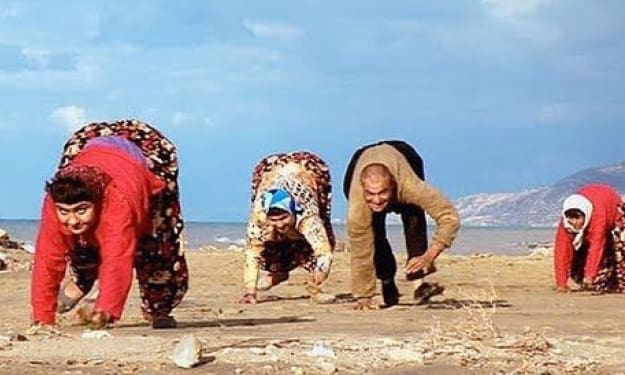
Turkey Mysterious Family That walk On All Four:
Turkey Mysterious Family That walk On All Four: In Turkey there is a family that has gained worldwide fame due to their unique way of life. This family possesses the extraordinary ability to walk on both their hands and feet a trait that sets them apart from most humans. This rare capability has not only intrigued scientists but has also sparked discussions about social and cultural perspectives. The family residing in a small village in Turkey has been walking on all fours since childhood. This form of locomotion typically seen in animals, is exceptionally rare in humans. Scientists believe this ability may stem from genetic mutations or a specific condition in the nervous system. However the exact cause remains a mystery.
By Adnan Rasheed2 years ago in History