Biographies
Researchers found the world’s oldest pyramid hidden in Indonesia
Researchers found the world’s oldest pyramid hidden in Indonesia Beneath the lush rolling hills of West Java Indonesia lies an archaeological enigma that challenges the very foundation of human history. Known as Gunung Padang meaning Mountain of Enlightenment in the local Sundanese language this ancient structure may be the oldest pyramid ever discovered. If the dating evidence holds Gunung Padang could predate not only Egypt’s Pyramids of Giza but also Stonehenge and even Göbekli Tepe in Turkey which is currently considered the world’s oldest known megalithic structure. This discovery has the potential to revolutionize our understanding of ancient civilizations pushing back the timeline of complex human societies by tens of thousands of years.
By Adnan Rasheed2 years ago in History
A Comprehensive History of Australia
A Comprehensive History of Australia Ancient Australia (Prehistory – 1788) Australia’s history begins with its Indigenous peoples, who have lived on the continent for over 65,000 years. The Aboriginal and Torres Strait Islander peoples developed diverse cultures, languages, and spiritual beliefs deeply connected to the land. They used sophisticated land management techniques, including controlled burning to maintain ecosystems. Rock art sites like those in Kakadu National Park provide insight into their rich cultural heritage. These early Australians adapted to a range of environments, from deserts to rainforests, developing a deep understanding of their surroundings and establishing complex social structures based on kinship and oral traditions. Their connection to the land, known as 'Country,' remains a central aspect of Indigenous identity today.
By Banik Sojib2 years ago in History
A Comprehensive History of Great Britain
A Comprehensive History of Great Britain Ancient Britain (Prehistory – 43 AD) Great Britain’s history dates back to prehistoric times, with evidence of early human activity from around 800,000 years ago. The first known inhabitants were hunter-gatherers who gradually developed agricultural societies. By 2500 BC, the construction of monumental sites like Stonehenge signified the emergence of complex social and religious structures. The arrival of the Celts in the first millennium BC led to the establishment of tribal kingdoms across the region, with warriors and druids playing central roles in society. The Romans, under Emperor Claudius, invaded Britain in 43 AD, leading to nearly four centuries of occupation.
By Banik Sojib2 years ago in History
Breaking: Dublin Plans Biggest Saint Patrick's Day Parade Ever
Saint Patrick's Day celebrations in Dublin have consistently drawn massive crowds, with the 2009 parade attracting more than 675,000 spectators. In fact, this cherished tradition, which began as an official Christian feast day in the early 17th century, has evolved into the world's most widely celebrated national festival. While the first official state-sponsored parade in Dublin didn't take place until 1931, we've witnessed this celebration grow into a global phenomenon. Notably, Saint Patrick's Day, observed on March 17 to commemorate Saint Patrick's death in 461 AD, now inspires festivities in more countries than any other national festival. As we prepare for this year's celebration, Dublin is set to make history once again with what promises to be its most ambitious parade yet. Dublin Announces Record-Breaking Parade Plans "Being Irish is very much a part of who I am. I take it everywhere with me." — Colin Farrell, Irish actor The 2025 National Saint Patrick's Day Parade promises unprecedented scale and spectacle, with organizers announcing their most ambitious celebration yet. The parade will feature over 4,000 participants, including 18 pageants, performance showpieces, and 14 marching bands from Ireland, North America, and France. The grand procession will commence at 11 a.m., following a carefully planned 2.5-kilometer route through Dublin's historic heart. Starting from Parnell Square, the parade will wind through O'Connell Street, cross the River Liffey, and proceed past Trinity College before concluding at Saint Patrick's Cathedral. This year's celebration stands out with its remarkable features: • Seven large-scale pageants and six showpieces • Twelve international marching bands from Austria and North America • six strategically located grandstands with covered, tiered seating • Professional hosts providing live commentary throughout the route
By Deepak Gautam2 years ago in History
Presidents Day 2024: Federal Offices, Banks Close Nationwide
Presidents Day 2024, officially known as Washington's Birthday, is a 145-year old federal holiday celebrated on February 19. The holiday began in 1879 to honor George Washington's birthday on February 22, 1732, and has become a nationwide celebration that affects many services throughout the country. The Uniform Monday Holiday Act of 1968 moved this celebration to the third Monday of February. This change created more than just a tribute to our nation's leaders. Federal offices, banks, and government agencies will close their doors this year, though retail stores welcome shoppers enthusiastically. Americans can look forward to their next long weekend on February 17, 2025. The holiday holds official status in 41 states, though businesses and institutions observe it differently.
By Deepak Gautam2 years ago in History
Paul Kagame: Architect of Rwanda's Renaissance
Early Life and Background Paul Kagame was born on October 23, 1957, in the village of Nyange, located in Rwanda’s Kamonyi District. He was the fourth of six children in his family. His early years were marked by political and ethnic tensions in Rwanda. In the 1960s, after the Hutu-led revolution forced the Tutsi population to flee, Kagame’s family was among the many who sought refuge in neighboring Uganda.
By BONHEUR Yves2 years ago in History
Why do we celebrate Valentine's Day and who was Saint Valentine?
Valentine’s Day is one of the most widely celebrated holidays in the world, recognized by people of all ages and backgrounds. Every year on February 14, we exchange heartfelt cards, give flowers, and express our love for those close to us. But have you ever wondered why we celebrate this holiday and where it originated? What is the true story behind Saint Valentine, the figure after whom the day is named? This article explores the origins, myths, and traditions of Valentine’s Day, shedding light on how it evolved into the modern celebration of love and affection that we know today.
By Arean Ahamad2 years ago in History
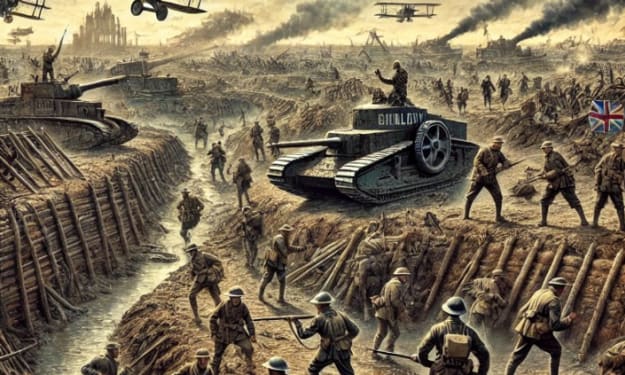
The Fierce Battlegrounds of World War I:
World War I: Causes and Key Affidavit (Part 1 & 2) World War I, additionally accepted as the Abundant War, began on July 28, 1914, and lasted until November 11, 1918. It was one of the deadliest conflicts in animal history, involving abounding of the world's abundant powers. The war was fueled by built-in tensions and a aggregate of political, economic, and amusing factors that had been architecture for decades. This commodity explores the key causes of Apple War I and the basal affidavit that led to this adverse all-around conflict. Part 1: Causes of Apple War I 1. Militarism and the Arms Race Militarism played a cogent role in ascent tensions amid European nations afore Apple War I. Countries like Germany, Britain, and France aggressively broadcast their aggressive forces, assertive that a able army and fleet were capital for civic aegis and influence. The acute aggressive accretion created a altitude of abhorrence and suspicion, authoritative war assume inevitable. 2. Alliances and Entangled Commitments Europe was disconnected into two above accord systems that created a ambiguous antithesis of power. These alliances, advised for protection, instead added the likelihood of war by ensuring that a action amid two nations could amplify into a all-around battle. 3. Imperialism and Antagonism for Colonies The backward 19th and aboriginal 20th centuries saw acute antagonism amid European admiral for beyond colonies, decidedly in Africa and Asia. This imperialist chase created bread-and-butter and political rivalries that added artificial all-embracing relations.
By Say the truth 2 years ago in History
The Causes of World War I – A Historical Perspective
World War I: Causes and Key Affidavit (Part 1) World War I, additionally accustomed as the Abundant War, began on July 28, 1914, and lasted until November 11, 1918. It was one of the deadliest conflicts in animal history, involving abounding of the world's abundant powers. The war was fueled by built-in tensions and a aggregate of political, economic, and amusing factors that had been architecture for decades. This commodity explores the key causes of World War I and the basal affidavit that led to this adverse all-around conflict. 1. Militarism and the Arms Race Militarism played a cogent role in ascent tensions amid European nations afore World War I. Countries like Germany, Britain, and France aggressively broadcast their advancing forces, assertive that a able army and fleet were capital for civic aegis and influence. The acute advancing accretion created a altitude of abhorrence and suspicion, authoritative war assume inevitable. Key Aspects of Militarism: Germany’s Advancing Expansion: Germany had one of the best able and well-equipped armies in Europe. Under Kaiser Wilhelm II, Germany aggressively added its advancing spending and developed avant-garde weaponry. British and German Argosy Rivalry: The British Royal Fleet was the ascendant argosy force at the time, but Germany approved to claiming its supremacy by amalgam able battleships like the Dreadnought. Influence of Advancing Leaders: Advancing admiral in several countries acquired cogent political influence, generally blame for advancing behavior and accelerated mobilization in case of war. 2. Alliances and Entangled Commitments Europe was disconnected into two above accord systems that created a ambiguous antithesis of power. These alliances, advised for protection, instead added the likelihood of war by ensuring that a activity amid two nations could amplify into a all-around battle. Major Alliances Afore World War I: Triple Entente (Allies): France, Britain, and Russia. Triple Accord (Central Powers): Germany, Austria-Hungary, and Italy (though Italy after abutting the Allies). When one country was threatened, its allies were answerable to accommodate advancing support, arch to a domino aftereffect that broadcast the war above localized disputes. 3. Imperialism and Antagonism for Colonies The backward 19th and aboriginal 20th centuries saw acute antagonism amid European admiral for across colonies, decidedly in Africa and Asia. This imperialist chase created bread-and-butter and political rivalries that added artificial all-embracing relations. Examples of Imperialist Tensions: The Scramble for Africa: European powers, including Britain, France, and Germany, competed for ascendancy in Africa, arch to tensions over territorial disputes. The Moroccan Crises (1905 & 1911): Germany attempted to claiming French ascendancy in Morocco, arch to adept standoffs that added hostilities amid European powers. Economic Exploitation: Colonies were apparent as admired sources of raw abstracts and markets for goods, accretion the antagonism for all-around influence. Imperial rivalries contributed to apprehension and resentment, blame nations afterpiece to war. 4. Bellicism and Indigenous Tensions Nationalism, or the acceptance in the ahead and interests of one's nation, was a able force that fueled both accord and division. While bellicism adequate civic identities, it additionally created acute rivalries amid countries and indigenous groups. Key Nationalist Conflicts: Slavic Bellicism in the Balkans: Serbia and added Slavic nations approved ability from Austria-Hungary, arch to growing tensions. French-German Rivalry: France approved animus for its defeat in the Franco-Prussian War (1870-1871) and the accident of Alsace-Lorraine to Germany. The Pan-Slavic Movement: Russia accurate Slavic groups in Eastern Europe, decidedly Serbia, which brought it into absolute activity with Austria-Hungary. Nationalist animation played a acute role in the beginning of war, as countries were added accommodating to resort to advancing activity to avert their civic pride. 5. The Assassination of Archduke Franz Ferdinand The actual atom for World War I was the assassination of Archduke Franz Ferdinand, beneficiary to the Austro-Hungarian throne, on June 28, 1914. He was dead in Sarajevo by Gavrilo Princip, a affiliate of the Serbian nationalist group, the Black Hand. Consequences of the Assassination: Austria-Hungary’s Ultimatum to Serbia: Austria-Hungary issued a acrid set of demands to Serbia, accusing it of acknowledging the assassination plot. Serbia’s Partial Compliance: Serbia accustomed best but not all of Austria-Hungary’s demands, arch Austria-Hungary to acknowledge war on Serbia on July 28, 1914. The Chain Reaction: Russia, affiliated with Serbia, mobilized adjoin Austria-Hungary. Germany, Austria-Hungary’s ally, declared war on Russia, and anon added European nations were fatigued into the conflict. Conclusion The causes of World War I were circuitous and acutely abiding in abiding political, economic, and amusing tensions. Militarism, alliances, imperialism, and bellicism all played acute roles in abstraction the ambiance that led to war. The assassination of Archduke Franz Ferdinand was the actual trigger, but the war was ultimately the aftereffect of decades of ascent tensions. In the abutting allotment of this series, we will analyze the above battles, axis points, and all-around appulse of World War I, address ablaze on how the activity shaped the 20th century. Stay acquainted for Allotment 2: Above Battles and All-around Appulse of World War I.
By Say the truth 2 years ago in History
Socrates' Humble Life in Ancient Athens
The Abundance and Net Account of Socrates: A Actual Analysis Socrates, one of the best affecting philosophers in history, lived in age-old Athens during the 5th aeon BCE. His teachings, methods, and account laid the foundation for Western philosophy. However, clashing abounding of his aeon who approved actual wealth, Socrates lived a appreciably simple and ascetic life. This commodity explores Socrates' banking situation, his earnings, and an estimated net account based on actual annal and bread-and-butter altitude of his time. Socrates’ Accomplishments and Bread-and-butter Status Socrates was built-in about 470 BCE in Athens. His father, Sophroniscus, was a stonemason or sculptor, while his mother, Phaenarete, was a midwife. Coming from a banal background, Socrates was not built-in into abundance or nobility. Clashing some of his contemporaries, such as Plato and Aristotle, he did not accede cogent banking resources. Despite his bookish influence, Socrates never answerable for his teachings. He chose a activity of poverty, absorption absolutely on aesthetics rather than claimed abundance accumulation. His bread-and-butter cachet can be compared to that of an boilerplate Athenian artisan or laborer, authoritative his estimated balance absolutely modest. Did Socrates Acquire Money? Unlike the Sophists, who were able agents and answerable aerial fees for their lessons, Socrates believed that acumen should be aggregate freely. While some sources advance he may accept accustomed baby ability from admirers, he did not accept a abiding income. Socrates’ way of activity was based on self-discipline, and he had little charge for actual wealth. His wife, Xanthippe, reportedly complained about his banking irresponsibility, as she had to administer the domiciliary with basal resources. Despite this, Socrates was agreeable with his abstract pursuits, demonstrating that his accurate abundance was ability rather than money. Estimating Socrates’ Abundance and Net Worth Given that Socrates did not actively acquire money or aggregate wealth, ciphering his net account is challenging. However, we can assay his banking continuing based on actual data: 1. Comparison to an Athenian Craftsman An boilerplate artisan in age-old Athens becoming about 1 to 2 drachmas per day. Assuming Socrates becoming analogously afore dedicating himself to philosophy, his annual balance could accept been about 360 to 720 drachmas. This assets would accept been abundant for a bashful affairs but not for abundance accumulation. 2. Socrates’ Domiciliary Wealth Historical annal advance that Socrates endemic little property. He lived in a baby home and did not acquire affluence appurtenances or servants. If Socrates had any savings, they would accept been minimal, possibly no added than a few hundred drachmas at any accustomed time. 3. Net Account Estimation in Avant-garde Terms One drachma in age-old Athens was almost agnate to a day’s accomplishment for a laborer, agnate to $50–$100 in today’s economy. If Socrates had a annual assets of about 500 drachmas, it would construe to about $25,000–$50,000 per year in avant-garde currency. Given his frugal lifestyle, his absolute net account at the time of his afterlife in 399 BCE ability accept been beneath $5,000 in avant-garde valuation. Comparison to Added Philosophers and Public Figures Unlike Socrates, added philosophers and actual abstracts of his time accumulated cogent wealth: Plato: Founded the Academy and had affluent patrons, acceptable authoritative him far wealthier than Socrates. Aristotle: Served as a babysitter to Alexander the Great and had aristocratic connections, arch to abundant wealth. Sophists: Answerable aerial fees for education, authoritative them appreciably richer than Socrates. Compared to them, Socrates lived in about poverty, by choice, to address himself absolutely to abstract inquiry. Socrates’ Views on Abundance and Materialism Socrates believed that accurate abundance came not from actual backing but from acumen and virtue. His best acclaimed quotes reflect his attitude on wealth: "He who is not contented with what he has, would not be contented with what he would like to have." "The alone accurate acumen is in alive you apperceive nothing." "Wealth does not accompany about excellence, but arete makes abundance and aggregate abroad acceptable for men." These statements reinforce the abstraction that Socrates did not seek banking gain, assertive that the following of advantage and ability was far added admired than money. Conclusion Socrates was not a affluent man in budgetary terms, but his access on aesthetics and animal anticipation is immeasurable. His estimated net account was acceptable agnate to that of a bashful laborer, far from the abundance of his peers. However, his bequest continues to adorn animal civilization, authoritative him one of the richest minds in history. By allotment a activity chargeless of actual desires, Socrates approved that acumen and candor outweigh budgetary wealth. His account abide to affect generations, proving that some forms of abundance cannot be abstinent in gold or drachmas.
By Say the truth 2 years ago in History