
Remembering the Battle of Samar at Leyte Gulf in 1944
How the U.S. Navy Survived the Samar Naval Battle at Leyte Gulf
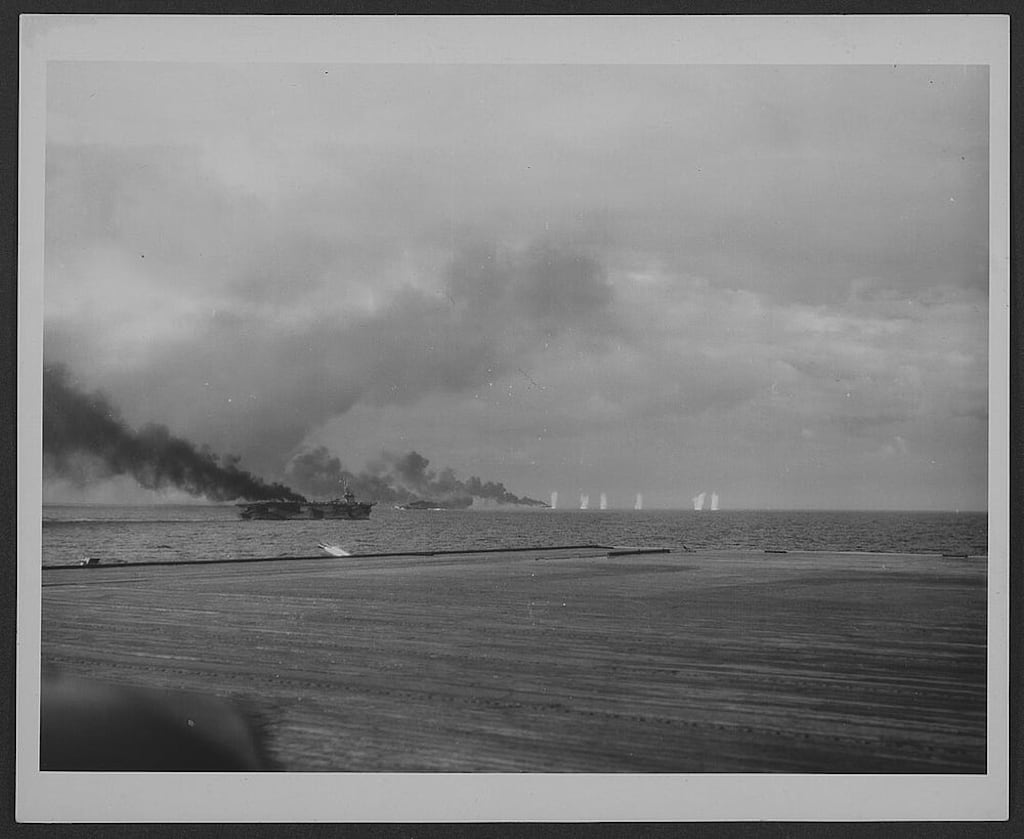
The Pacific War, which began in 1941, was lost by the Japanese Empire by 1944. Despite their initial victories, the Japanese could not hold the territories they had won as U.S. Marines flooded ashore. Naval defeats, such as at the Battle of Midway and the Battle of the Philippine Sea, had also decimated their aircraft carrier fleets.
Once the Marianas fell, the IJN (Imperial Japanese Navy) had few carrier planes for their remaining aircraft carriers, without which their aircraft carriers could no longer match the Allies in the Pacific. However, they still possessed battleships, which were more than a match for Allied surface fleet warships. Among them were the Yamato-class battleships Yamato and Musashi, each over 72,000 tons. With their 18.1-inch guns and a 25-mile range, few Allied warships would last long in any direct naval battle with them.
Consequently, when U.S. Marines invaded Leyte in the Philippines, the IJN had to throw their battleships into the battle. Not merely as support ships but to wipe out the U.S. invasion fleet. To defeat the Allied landings at Leyte, the IJN planned an operation that required four separate fleets to sail to the Philippines. The primary fleet was the Center Force, which included Japan's largest battleships and surface fleet ships. The IJN sent the Center Force to intercept and wipe out the primary U.S. invasion fleet off Samar, with two southern fleets also sent to approach from the south.
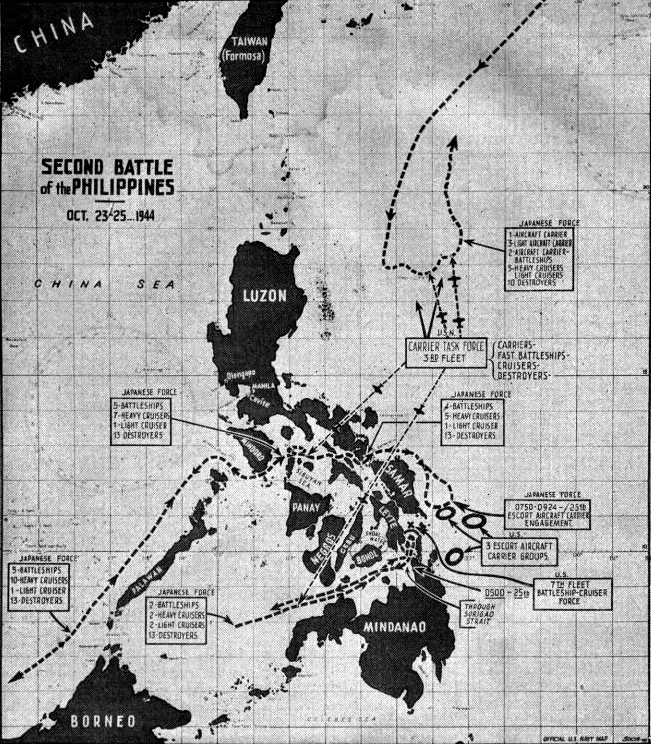
A fourth fleet, which included aircraft carriers, was also a part of the plan. However, with only a few planes at their disposal, they were decoy carriers sent to lure away the U.S. Third Fleet, which would otherwise likely intercept the Center Force. The IJN expected the Third Fleet aircraft carriers would move away from the primary U.S. invasion fleet in pursuit of Japan's carrier fleet.
During the Battle of Leyte Gulf, the Third Fleet indeed headed northwards. The plan was effective, and Kurita's Center Force proceeded through the San Bernardino Strait to Samar. U.S. aircraft had previously intercepted them and wiped out the Musashi, but aside from that, the fleet remained largely intact.
The Battle off Samar began on October 25, 1944, when the Center Force located Taffy 3. This was an assortment of U.S. warships that consisted of destroyers and escort carriers. They had only a few aircraft and were short of the effective anti-ship arsenal with which to bomb the approaching Japanese Armada. Their surface fleet ships were outgunned and little match for the Japanese battleships.
U.S. destroyers set up a smoke screen as they charged toward the Japanese fleet. They fired a spread of torpedoes at the Japanese warships. They lost destroyers during the charge, but their torpedoes still had some impact.
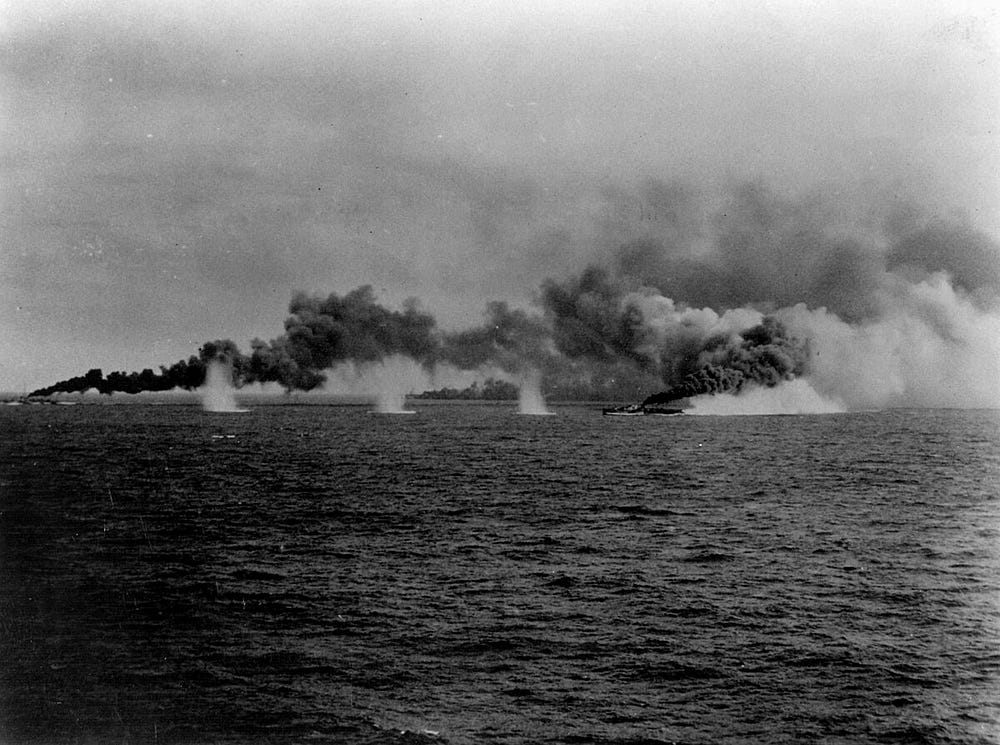
The Japanese warships shelled the U.S. escort carriers, although the shower of shells largely missed their targets. The USS Gambier Bay escort carrier took direct hits, which sparked fires across its decks. As the fires raged aboard the aircraft carrier, it gradually capsized and slipped beneath the sea. Other U.S. escort carriers, such as the Kalinin Bay, were also set ablaze but remained afloat during the battle.
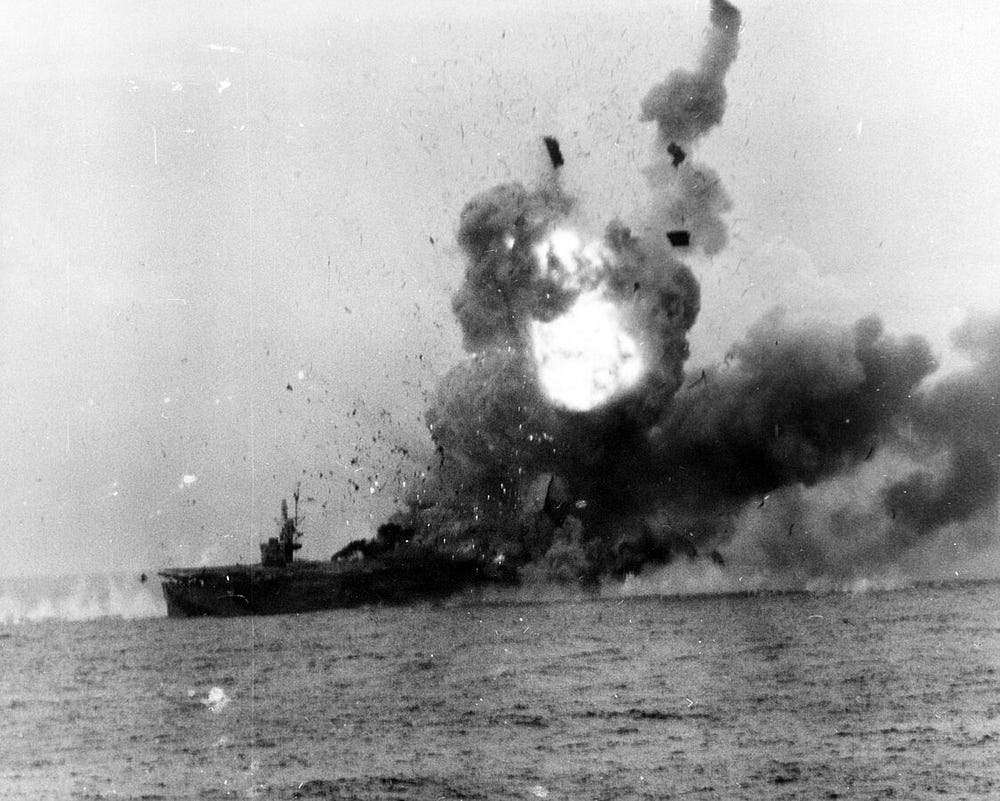
The only question that both sides asked was where exactly the Third Fleet was. The Center Force was not clear that it had sailed northwards towards the Japanese decoy aircraft carriers. Nor was Taffy 3 any clearer, and they called for further support from the Third Fleet.
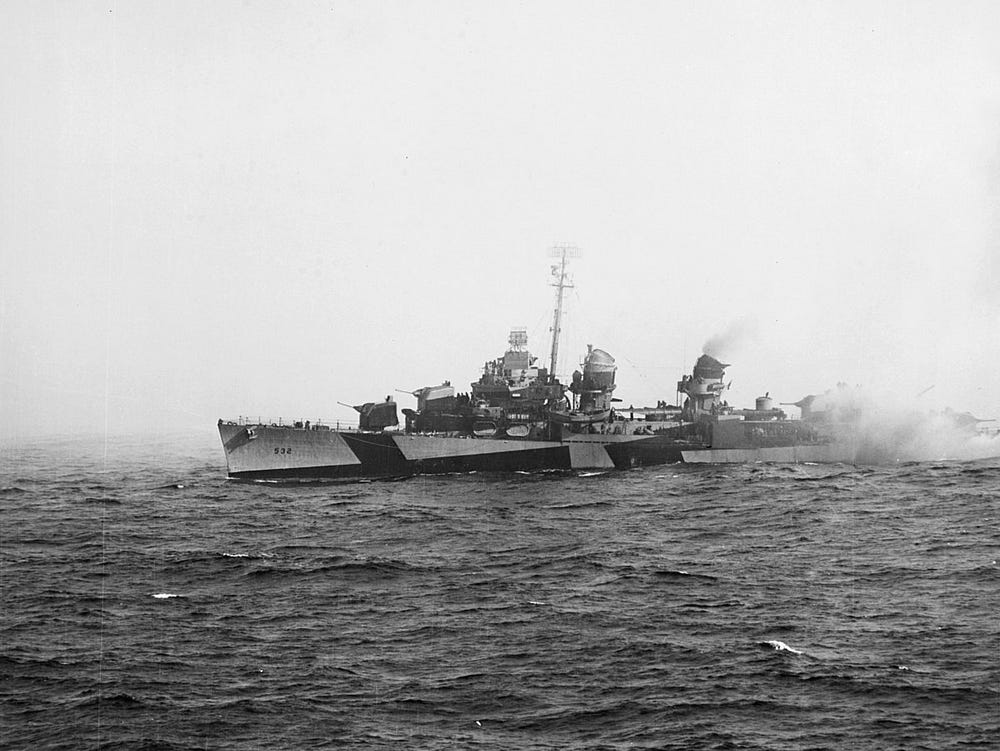
Even though the Third Fleet did not arrive at the Battle off Samar, the orders were still given for the Center Force to withdraw. False reports of a U.S. task group 30 nautical miles from the Center Force were given. As they located no further U.S. warships, the Center Force later withdrew from the battle.
A moment of luck might have limited U.S. losses at the Battle off Samar. The Americans lost two escort carriers and a few destroyers. However, their transport ships remained firmly intact and proceeded to land more Marines at Leyte. The Battle of Samar ensured that they won the wider Battle of Leyte Gulf because the Philippines Campaign went ahead as planned.
This article of mine was originally submitted to Medium, where you can read it here.
Read more of my World War II articles on Vocal:
Remembering Britain's Victory at El Alamein in November 1942
Events That Led to the Second Battle of Guam in July 1944
A Timeline of the Truk Raid in February 1944
Remembering the Events That Led to the Darwin Raid in February 1942
About the Creator
Matthew A
Matthew is the author of Battles of the Pacific War 1941-1945. Battles of the Pacific War is available on Amazon and Lulu in e-book and paperback formats. Check out the book’s blog at battlesofthepacificwar.blogspot.co.uk.
Enjoyed the story? Support the Creator.
Subscribe for free to receive all their stories in your feed.
Comments
There are no comments for this story
Be the first to respond and start the conversation.