
Remembering the Battle of Tarawa in November 1943
How the US Marines and Army Conquered Tarawa During World War II

The Battle of Tarawa was fought from November 20 to 23, 1943. It was only the second US offensive in the Pacific War since Guadalcanal and involved 35,000 US troops. It proved to be a bloody and costly battle.
Following the victories of Midway and Guadalcanal, the USA was gaining the upper hand in the Pacific. They needed to take the Mariana Islands to sustain the momentum, enabling them to launch offensives into the Philippines and onto the Japanese mainland. The battles had to start at the far eastern side on Tarawa to launch an offensive on the Marianas due to the proximity of Japanese garrisons to the Marshall Islands.
The Japanese, for their part, recognized the strategic importance of the islands. Considerable efforts were made to fortify Tarawa. The Japanese had a special landing force of elite infantry units, approximately 2,600, stationed in Tarawa. With coastal defense guns and pillboxes used to fortify Tarawa, taking the island would not be an easy task.
The USA launched its amphibious assault on the Tarawa Atoll on November 20, 1943. It comprised 17 carriers, 12 battleships, eight heavy and four light cruisers, in addition to 66 light destroyers. Two infantry divisions were used, amounting to 35,000 US Marines and soldiers.
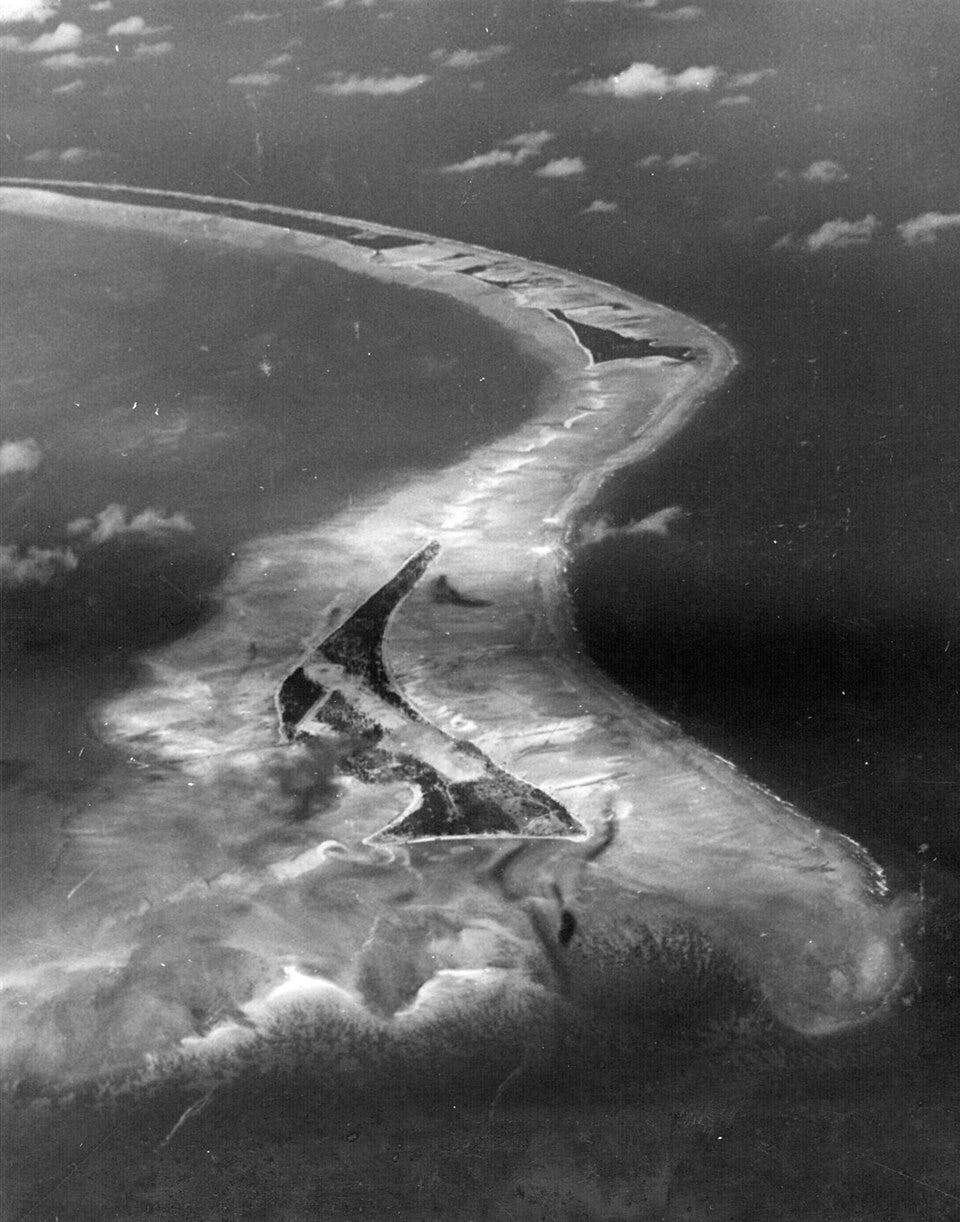
The battle began with the naval ships bombarding the island's defences. In addition to dive-bombers, most of the larger guns were knocked out during the bombardment.
The Marines soon landed on the Tarawa beaches at about 9:00 and came under heavy machine gun fire. As the naval fire had stopped, Japanese troops fired upon US troops disembarking from the transport ships. The first wave could only land a handful of men.
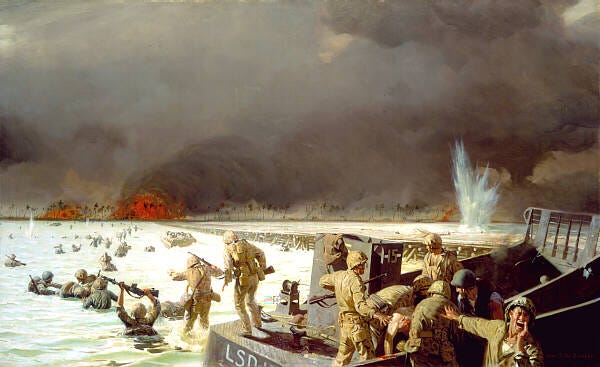
By noon, the Marines had taken the beach as far as the first line of Japanese defenders. By night, the line had crossed about half the island.
On November 21, the Marines turned their attention to cutting the Japanese forces in two. Stiff resistance made it difficult, and they turned to naval support to take out machine gun posts. By the end of the day, the US troops had taken the western end of the island. With two US groups, they seemed to be gaining the upper hand in the battle. The Japanese Admiral Keiji Shibazaki had also been killed, limiting Japanese command.
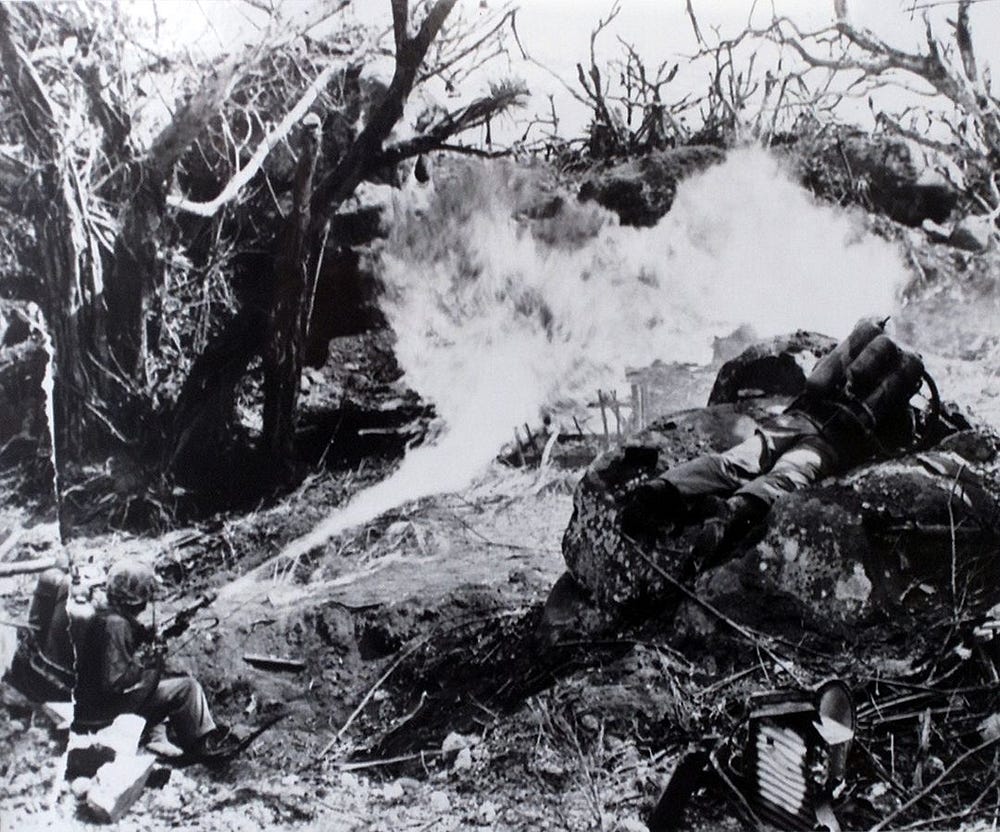
The third day of the battle saw the US consolidate its lines with backup equipment. The Sixth Marines began to attack Japanese forces in the south. They formed a continuous line, and the Americans squeezed the remaining Japanese forces into an eastern sector of the island. Artillery fire stopped Japanese attempts at counter-offensives.
On the final day, the expected assault finished off the remaining Japanese troops. With few remaining to defend the Tarawa Atoll, the US was victorious.
A bloody battle was brought to an end on November 23 as US troops cleaned up. Only about 17 of the 5,000 Japanese remained, while the US sustained losses of 1,687. Despite having a force several times larger than the defenders, it was hard to penetrate the heavy fortifications and Japanese resistance. Eventually, the Americans did - but at some cost.
Why is the Battle of Tarawa Significant Today?
Although a victory, the Battle of Tarawa was one of the most costly land battles in the Pacific War for the USA. The Republic of Kiribati, where the Tarawa battle was fought, holds regular anniversaries commemorating the battle from November 20 to 23. Marie Damour, the US Ambassador to Kiribati, attended the 80th anniversary ceremony of that battle in 2023 alongside US Pacific Marines.
Although there is no official Battle of Tarawa museum, Betio, Tarawa Atoll, is like a living museum. Visitors to Betio can see many wartime relics from the battle, such as a Sherman tank, pillboxes, sunken landing craft remains (at low tide), bunkers, and a Vickers coastal defense gun. Guided Tarawa war tours take visitors to Kiribati around some of the best wartime relics, along with prominent, poignant memorials for the battle.
So, the Battle of Tarawa turned Betio into a location for regular World War II pilgrimage and remembrance today. It is a site of battlefield tourism and preservation that visitors walk through to see the numerous World War II relics left by the battle. It was a battle that taught the Americans some punishing, yet valuable, lessons in amphibious warfare for further landings.
This article of mine was also submitted to Medium.com, where you can read it here.
About the Creator
Matthew A
Matthew is the author of Battles of the Pacific War 1941-1945. Battles of the Pacific War is available on Amazon and Lulu in e-book and paperback formats. Check out the book’s blog at battlesofthepacificwar.blogspot.co.uk.
Enjoyed the story? Support the Creator.
Subscribe for free to receive all their stories in your feed.
Comments
There are no comments for this story
Be the first to respond and start the conversation.