
Events That Led to the Second Battle of Guam in July 1944
Remembering How Guam Became a Part of America
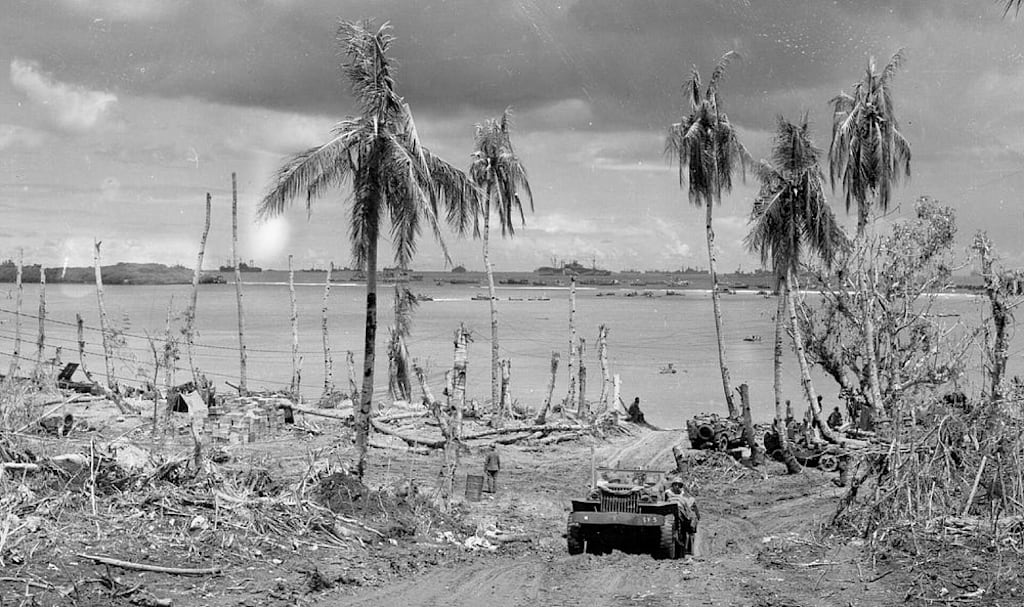
After the Japanese airstrike at Pearl Harbor, the Pacific War began. The Allies had little time to reinforce their positions at destinations that were among the first targets for the Japanese army. Among the first were Wake Island and Guam. Guam, in the Marianas, was garrisoned by just a few hundred Marines. When they came up against multiple thousands of Japanese troops in 1941, they duly surrendered.
The loss of Guam was just one of a series of Allied defeats in 1941 and 1942. When the Philippines fell, the Japanese had taken Malaya, Singapore, the Dutch East Indies (otherwise Indonesia), Wake, and Hong Kong. The Japanese Empire seized vast oil supplies, as well as other raw materials the military needed.
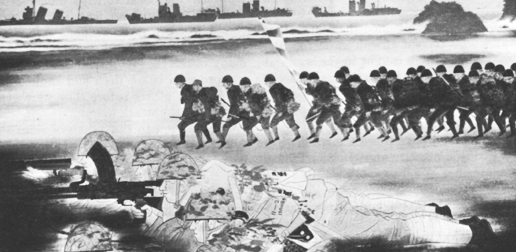
But all was not lost in the Pacific. At sea, the Allies checked the Japanese advance, first at the Battle of the Coral Sea and then at Midway. By 1944, they were steadily advancing on land as they took the Marshall Islands. After the fall of the Marshall Islands, Allied military planners pinned the bull's eye on the Marianas as the next destination for amphibious landings.
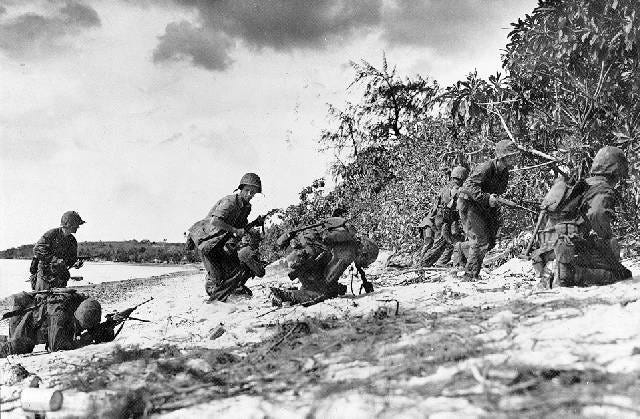
In June 1944, the first Marines arrived at Saipan. Thousands swarmed the beaches on the south-western side of the island. There, the Battle of Saipan began, which was the first of the Marianas campaign.
Soon after the arrival of the first Marines, the Imperial Japanese Navy (IJN) sent a sizeable carrier fleet to intercept the Allied ships around the Marianas. With a larger number of land-based aircraft in support, alongside carrier-based planes, they expected to wipe out the Allied naval presence from the skies.
By the 19th, the Battle of the Philippine Sea began. The Japanese planes had little impact as hundreds were shot out of the skies by the F6F aircraft. Expected land-based aircraft support did not materialize as planes at nearby airfields had been wiped out by earlier Allied aerial bombardments. U.S. submarines intercepted two Japanese carriers, which were torpedoed out of the water. A third was later discovered and wiped out by U.S. aircraft.
As Japan's operation fell apart, what was left of their fleet withdrew from the region. As such, their troops at Saipan could not be resupplied either by sea or air, which largely ensured an Allied victory in the Mariana Campaign. When Saipan fell in July, the first of the Mariana Islands was occupied by Allied troops. Japanese garrisons at smaller islands, such as Tinian, were also defeated.
This left the largest of the Mariana Islands, Guam. Now the Marines could retake this island, which had been lost earlier in the Pacific War. However, their landings were delayed by the earlier battles of the Mariana Campaign. Thus, an extended preliminary bombardment from the U.S. Navy wiped out Japanese coastal batteries and intra-island radios located at Guam. The capital of the island, Agana, was levelled during the combined air and naval strikes.
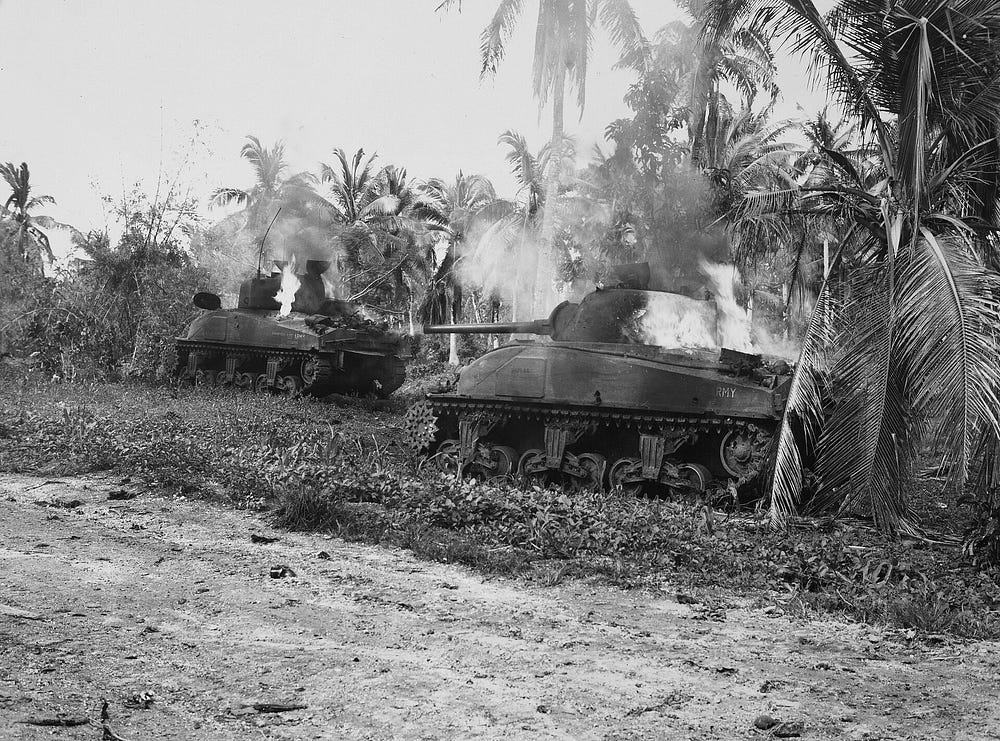
Then the U.S. Marines landed for the Second Battle of Guam on northwestern beaches on July 21, 1944. It was somewhat larger than the first battle, and it took 19 days to win. By August, the Marines had wiped out most of the Japanese troops located there as Guam was effectively secured. After the fall of Guam, the Allies occupied all of the Marianas, and the previous Japanese airfields were soon fixed up for U.S. planes.
Why is the Second Battle of Guam Significant Today?
The Second Battle of Guam remains significant today because July 21 is a Liberation Day commemoration in Guam. The Liberation Day remembrance date is one of Guam's biggest annual celebrations. In 2026, Guam Liberation Day will include fireworks, artisans, and other cultural entertainment.
The general manager of the Guam Visitors Bureau summed up the significance as follows: "Guam's Liberation story is one of courage, sacrifice, and resilience… This year's theme, 'Para I Onra, Para I Gloria,' reminds us that we honor those who fought for our freedom by continuing to come together as one community."
It's also worth noting that Guam is today a territory of the USA because of the Second Battle of Guam. Although not a U.S. state, Guam is an unincorporated territory of the United States. Guam natives are counted as Americans who can vote in U.S. presidential elections. So, Guam is like an extension of the USA.
The Second Battle of Guam and the general victory against Japan made that territory American. If Japan had somehow emerged victorious in World War II, Guam would have become Japanese overseas territory. The Guam natives have always remained grateful for the American triumph at the Second Battle of Guam.
This article of mine was previously submitted to Medium, where you can read it here.
Read more of my World War II articles on Vocal:
Remembering Operation Husky-July 1943
Remembering the Events That Led to the Darwin Raid in February 1942
Remembering Japan’s Most Significant Victories and Defeats in World War II
About the Creator
Matthew A
Matthew is the author of Battles of the Pacific War 1941-1945. Battles of the Pacific War is available on Amazon and Lulu in e-book and paperback formats. Check out the book’s blog at battlesofthepacificwar.blogspot.co.uk.
Enjoyed the story? Support the Creator.
Subscribe for free to receive all their stories in your feed.
Comments
There are no comments for this story
Be the first to respond and start the conversation.