
Mercury and the Chinese Imperial Kings: Power, Immortality, and a Deadly Obsession
Mercury has held a unique and paradoxical place in Chinese imperial history. Revered as a substance of immortality and cosmic balance, yet feared for its poisonous effects, mercury shaped the beliefs, rituals, medical practices, and even the deaths of several Chinese emperors. From Daoist alchemy to grand imperial tombs, mercury became deeply intertwined with the ideology of kingship and eternal rule in China.

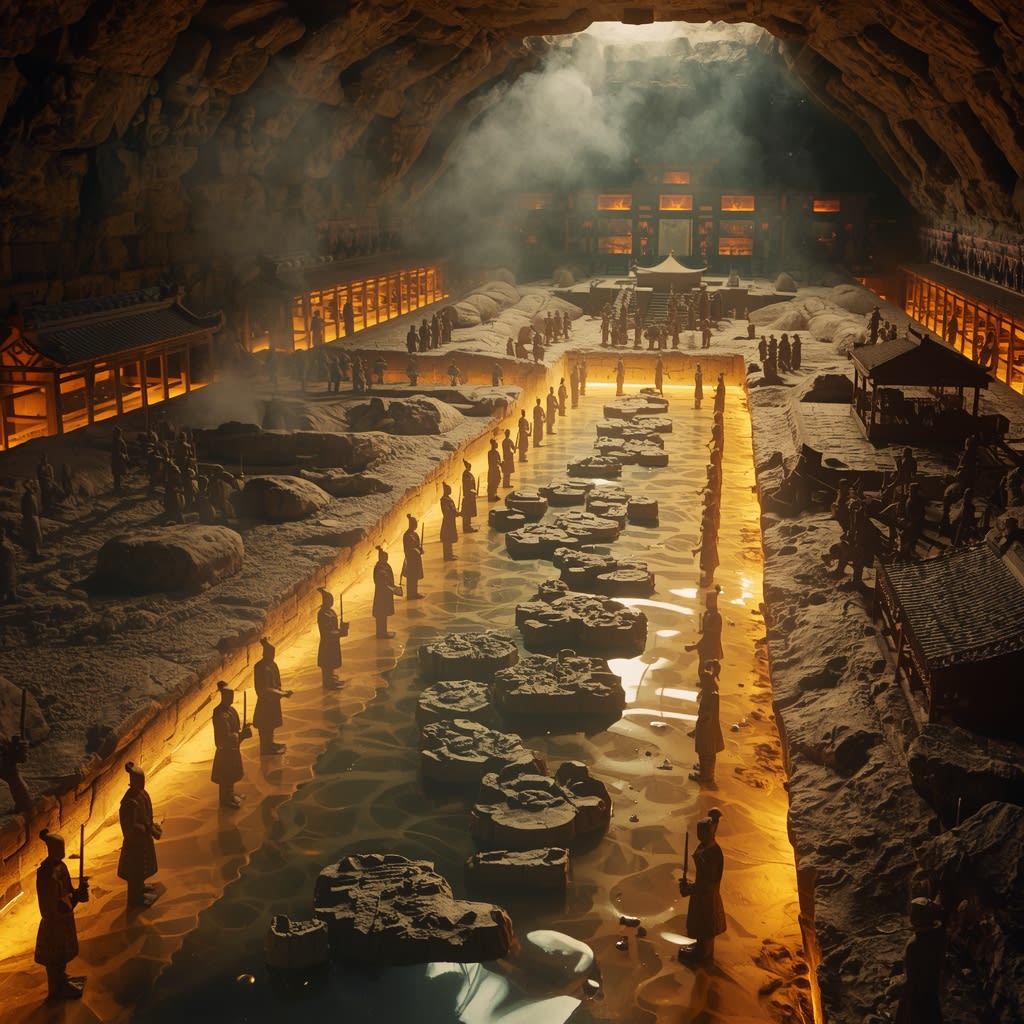
This article explores why Chinese imperial kings valued mercury, how it was used in medicine, alchemy, governance, and burial practices, and the profound consequences of this fascination. Mercury in Ancient Chinese Thought In ancient China, mercury was known as “quicksilver” and closely associated with yin–yang philosophy and the Five Elements (Wu Xing) system. Mercury’s fluid nature and ability to transform between liquid and solid states made it appear mysterious and powerful. Daoist thinkers believed mercury: Represented transformation and rebirth Could stabilize the body’s internal energies Was a bridge between the material and spiritual worlds This belief system laid the foundation for mercury’s central role in imperial practices. Daoist Alchemy and the Quest for Immortality One of the strongest motivations behind mercury use was the imperial quest for immortality. Daoist alchemists believed that consuming specially prepared elixirs could grant: Eternal life Youth Superhuman wisdom Divine legitimacy to rule forever Mercury, often combined with sulfur and other minerals, was considered a core ingredient in these elixirs. External Alchemy (Waidan) External alchemy focused on creating physical elixirs. Mercury was heated, purified, and mixed with other substances to form pills believed to: Strengthen the body Prevent aging Protect against disease Unfortunately, these elixirs were highly toxic. Emperor Qin Shi Huang and Mercury Rivers The most famous association between mercury and Chinese imperial power comes from Qin Shi Huang (259–210 BCE), the first emperor to unify China. According to historical records, especially Sima Qian’s “Records of the Grand Historian”, Qin Shi Huang: Consumed mercury-based elixirs to gain immortality Ordered vast mercury deposits to be used in his tomb Believed mercury symbolized eternal cosmic order His underground mausoleum was said to contain: Artificial rivers and seas of flowing mercury Representations of China’s geography A microcosm of his empire meant to last forever Modern scientific tests around the tomb site have confirmed abnormally high mercury levels, supporting ancient descriptions. Ironically, historians widely believe that mercury poisoning contributed to Qin Shi Huang’s death, turning his quest for eternal life into a fatal mistake. Mercury in Imperial Medicine Beyond alchemy, mercury was also used in traditional Chinese medicine (TCM) during imperial times. Mercury compounds were prescribed to: Treat skin diseases Kill parasites Calm the spirit Address severe infections Court physicians believed that in small, controlled doses, mercury could balance internal energies. However, long-term use often led to: Neurological damage Organ failure Mental instability Many emperors likely suffered unknowingly from chronic mercury poisoning. Tang and Song Dynasty Emperors Mercury use continued long after Qin Shi Huang. During the Tang Dynasty, Daoist influence at court was strong. Several emperors: Patronized alchemists Consumed mercury-based elixirs Died prematurely Historical records suggest that at least six Tang emperors may have been poisoned by elixirs meant to prolong life. In the Song Dynasty, skepticism began to grow, but mercury still appeared in medicines and rituals, though with increasing caution. Mercury, Kingship, and Divine Authority Mercury was not only a substance—it was a symbol of imperial legitimacy. Emperors believed: Immortality equaled eternal mandate from Heaven Mastery over mercury meant mastery over nature Transformation of mercury mirrored transformation of the empire This symbolism reinforced the emperor’s role as the Son of Heaven, ruling between heaven and earth. Mercury in Imperial Tombs Beyond Qin Shi Huang, mercury was used in many imperial burials. Purposes included: Preserving the body Preventing decay Protecting tombs from robbers (mercury vapors are toxic) Symbolizing eternal flow of life Mercury sealed the boundary between the living and the dead, ensuring the emperor’s continued authority in the afterlife. The Human and Environmental Cost The imperial obsession with mercury came at a terrible price: Court alchemists and servants died from exposure Miners suffered long-term poisoning Entire regions were contaminated Workers extracting mercury were often prisoners or forced laborers, sacrificed for imperial ambition. Decline of Mercury Use By the Ming and Qing Dynasties, understanding of mercury’s dangers improved: Confucian scholars criticized alchemy Internal alchemy (meditation and breathing) replaced external elixirs Mercury use declined in imperial medicine Nevertheless, traces of mercury symbolism remained in ritual and art. Modern Scientific Understanding Today, mercury is recognized as a powerful neurotoxin. Archaeological studies of imperial remains and tombs have revealed: High mercury concentrations in soil and bones Evidence supporting historical accounts of poisoning What was once thought to grant immortality is now known to shorten life dramatically. Conclusion Mercury’s role in Chinese imperial history is a story of ambition, belief, and tragedy. For centuries, emperors saw mercury as the key to eternal rule and cosmic harmony. It shaped medical practices, burial traditions, and political ideology. Yet, the very substance meant to grant immortality often caused premature death, making mercury one of the greatest ironies of imperial China. The legacy of mercury in Chinese kingship reminds us that the pursuit of power without understanding can turn hope into destruction.
About the Creator
Say the truth
"Say the Truth: Explain Everything in the World" is your trusted source for uncovering facts and exploring the wonders of history, science, technology, and beyond. We simplify complex ideas and reveal truths to inspire curiosity .
Enjoyed the story? Support the Creator.
Subscribe for free to receive all their stories in your feed.
Comments
There are no comments for this story
Be the first to respond and start the conversation.