
Marshall McLuhan 👁⚡👁
My Series on Prophets, Prognosticators, & Visionaries


⚡"All media exist to invest our lives with artificial perceptions and arbitrary values."
―Marshall McLuhan
⚡____________⚡
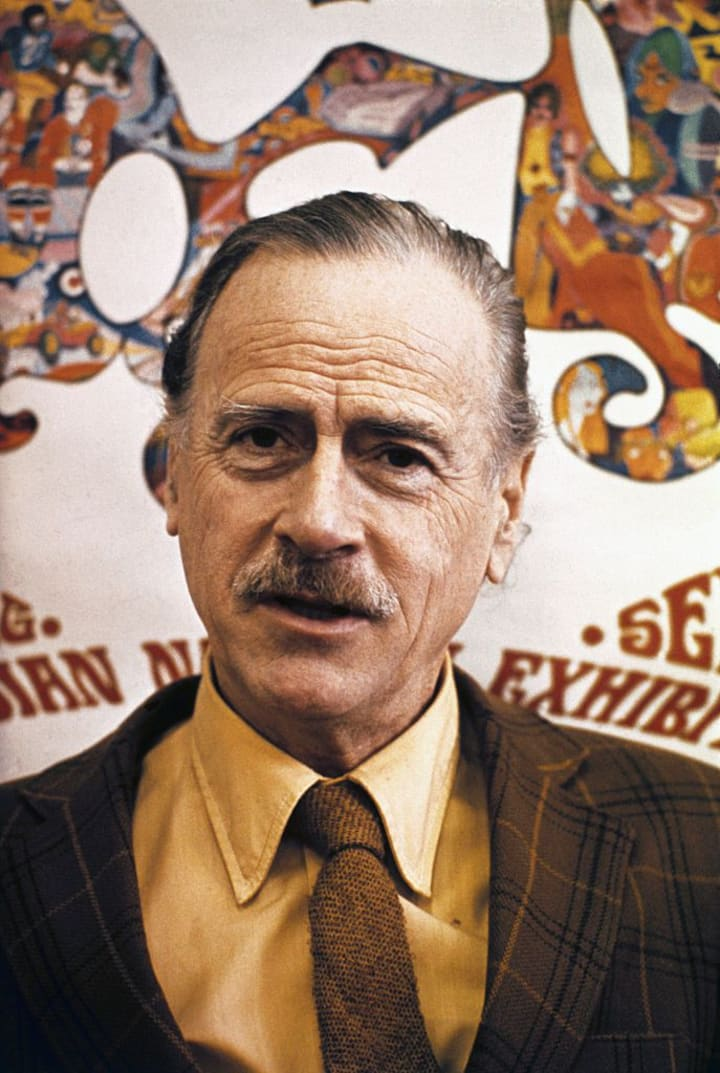
Episode #10-
Marshall McLuhan—
1911-1980
⚡
This professor of English literature presented himself in the 1950s as a kind of oracle who could foretell the future effects of the electronic media.
He famously questioned,
“What have you noticed lately?”
At the end of World War II, in 1945, Americans were still enthralled by the news and entertainment they received from the relatively new invention: radio.
A year later, television sets became available for purchase, a device that amazed Americans by allowing them to both listen and watch events.
By 1955, TVs were selling at an astonishing rate of five million black-and-white boob tubes a year. History was indelibly changed by mass media. By the 1990s, people were watching their televisions one out of every four hours they were awake.
Marshall McLuhan was born in Canada in 1911, an odd, quiet boy who grew up to become an odd, quiet professor. He wore mismatched socks, hats too small for his big head, and alternated between an ill-fitted brown tweed suit and gaudy Hawaiian shirts. He began his professional career teaching at the University of Wisconsin, which is also where he became interested in studying American society.
He later remarked,
“I was confronted with young Americans I was incapable of understanding. I felt an urgent need to study their popular culture in order to get through.”
Observant in a way only an outsider can be, McLuhan analyzed his students… and he began to worry.
Marshall McLuhan was not a psychic conveying messages from divine sources. McLuhan had examined the new electronic age so thoroughly, he believed he could see where things were headed.
He warned that people were becoming numb— “like tulips,” he said.
Human beings had a blank acceptance of their surroundings. McLuhan saw it as his crusade to shock ⚡ us awake.
He had a lot to say on this subject. He wrote thirteen books, over six hundred articles, and seventy-five thousand letters. He recorded hundreds of hours of audio and videotape.
He was admittedly eccentric, somewhat bristly in private.
The public saw him as All Knowing. He seemed to articulate many people’s deepest fears. Some of Marshall's expressions became legendary. He wrote of “the global village.” And he famously said…
The medium is the message.
What he meant by that 📺☝ was: the means by which people communicated was rapidly becoming more important than the content of the communications.
He observed that watching television had broken up the normally straightforward ways that people used to think. He said the very act of watching immersed the watcher in events. Over time, McLuhan lectured, new media would totally reshape human existence.
He cautioned it would be the media that would cause the fragmentation of American unity. 🤔
There would be an erosion of our institutions. Ultimately, there would be violence in the streets.
McLuhan believed children would be the most adversely affected among us by this information overload.
It was all a kind of mental poison, to one degree or another, everything from movies to video games.
New technology was undoubtedly transforming the human nervous system. Children's brains were physically altered because of the speed at which they received information. "Several lifetimes” could be experienced before the average teenager finished school.
Children knew things about sex, war, prejudice, violence, addiction, all manners of vice and corruption, things previously only known to adults.
Attention spans were getting shorter. The younger generation quickly became impatient with “linear” activities, like reading books. They craved “nonlinear” adventures, like video games.
Much of what McLuhan envisioned is now commonplace in the 21st century. Can you imagine your life without electronic media? How are you reading these words right now— on what device? It was Marshall MuLuhan who (dramatically) warned,
“If you don’t study the effects of technology, you’ll become its slave.”
McLuhan died in 1980, the same year that CNN was born. Since his death, the number of television sets in the world has tripled. MTV debuted a year later, in 1981, offering videos intended specifically for people with short attention spans. It was like MTV had taken McLuhan to his literal extreme; he had once described TV as, “music for the eye.”
Twelve years after MuLuhan’s death, the Internet launched exactly what he’d envisioned: the simultaneous sharing of electronic data.
By 1995, enough information had been contributed to fill thirty million books of seven hundred pages each.
Creating a community without borders where users can live anywhere on earth, the Internet is the fastest-growing form of communication in human history.
McLuhan foresaw a day when cities would no longer be needed as work centers and when every person could be their own publisher. He was talking more along the lines of copy machines, but personalized Web sites expand on his original concepts.
McLuhan believed that media would eventually surpass, “any possible influence Mom and Dad can now bring to bear.” Another first in human history: children have the ability to access information without adult restrictions, to find their own voice, to form relationships that were impossible in the past, and to examine previously off-limits topics.
Other of McLuhan's fears relating to children focused on schools, which he believed were likely to become irrelevant, basically prisons without bars. Old-fashioned reading methods weren’t suited to this fast-paced age of information. There was simply too much that needed to be taught and simplistic educational systems that relied primarily on antiquated textbooks weren’t fit for the task.
Marshall believed children would become increasingly less involved, less stimulated, less likely to ask questions (which he believed was infinitely more important than acquiring answers.) He foretold that society would see more dropouts and a lot more chaos if classrooms weren’t completely updated/upgraded with modern technology.
A computer magazine called Wired labeled the worried Canadian as “Saint Marshall” because of his capacity to foresee the dangers of technology.
The ‘information superhighway’ is intoxicating, potentially isolating and addictive... not to mention a serious waste of time. McLuhan warned of a coming conflict between the individual’s “claim to privacy and the community’s need to know.”
Certainly, like all the other visionaries in my series, Marshall McLuhan was far from perfect. And many of his ideas haven’t aged well.
He thought women were “constitutionally docile, uncritical, and routine-loving.” But he also thought women would eventually take over the government and support a class of male loafers and warriors.
He foretold that books would soon become obsolete. And check this👉: he once patented a spray that eliminated the smell of urine from underwear! For some reason, 🤷🏻♂️ he couldn’t get any company to manufacture it! 🤯
He loved bad quips, annoying everyone with them. He scribbled puns on scraps of paper, kept his pockets stuffed with them, and started virtually every conversation with some new groan-producing joke.
He could talk for hours. He called friends at all hours of the night.
One student kept track of McLuhan’s contradictions and pointed out he’d made twenty-eight of them in a single half-hour speech. Marshall confessed he was incapable of understanding his six children.
If someone criticized him, he would snap back, “You don’t like those ideas? I got others!” 😂
He sometimes talked about how the future held great risk for war, violence, pain, even mass terror. But despite everything, he also generally exhibited great optimism about human resiliency. He believed the entire world would one day be full of art and creativity. He said…
“To be born in this age is a precious gift, and I regret the prospect of my own death only because I will leave so many pages of man’s destiny tantalizingly unread.”
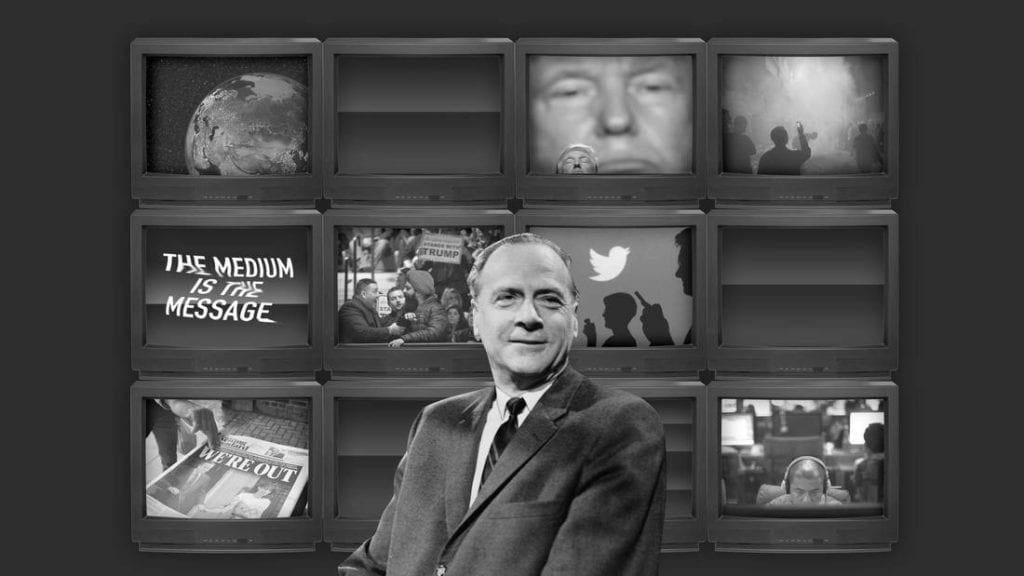
A devout Catholic who began each morning reading the Bible in one of five different languages, Marshall McLuhan didn’t like being viewed as the bearer of bad news about humanity's future. He was a man of many contradictions. But he was particularly fond of the Biblical quote that he had engraved on his tombstone…
The truth shall make you free.
~↯~
_________________Bolt⚡
About the Creator
Lightning Bolt ⚡
Bolt ⚡ aka Bill↬bizarre bisexual bipolar alliterative epileptic sexy ♒Aquarian retired superhero. Author of humor, poetry, sci fi & horror.
✔️ A Taco Bell, A Shakespearian Robot, A Slut, Prophets, A Bed, A Dreamer, & A Historic Mismatch.
Enjoyed the story? Support the Creator.
Subscribe for free to receive all their stories in your feed. You could also become a paid subscriber, letting them know you appreciate their work.
Comments
There are no comments for this story
Be the first to respond and start the conversation.