Latest Stories
Most recently published stories in History.
The Vulture Stone of Göbekli Tepe Associated with Trypillia Culture in Europe
A recent investigation has revealed remarkable similarities between the ritual imagery of the Trypillia culture in Eastern Europe and the carved symbolism of Göbekli Tepe's well-known Vulture Stone. According to the research, these early farming communities may have had a deep cosmology language about time, death, sacred space, and celestial movements while being separated by millennia and great distances. This fascinating link suggests that the emergence of agriculture in Europe may have coincided with the transmission of fundamental astronomical and theological ideas from the Near East.
By Francis Dami3 months ago in History
Ice Age Lighting Techniques Uncovered by 14,400-Year-Old Footprints in an Italian Cave
A remarkable discovery made in the dark, deep passageways of Bàsura Cave in northwest Italy has illuminated our prehistoric ancestors' inventiveness. Nearly 14,400 years ago, a small group of five Epigravettian hunter-gatherers, along with a canid, journeyed deep underground utilising little pine twigs as their primary source of illumination, according to a recent study published in Quaternary International. This intriguing discovery casts doubt on preconceived notions of Palaeolithic cave exploration and offers a clear window into Ice Age human daily life.
By Francis Dami3 months ago in History
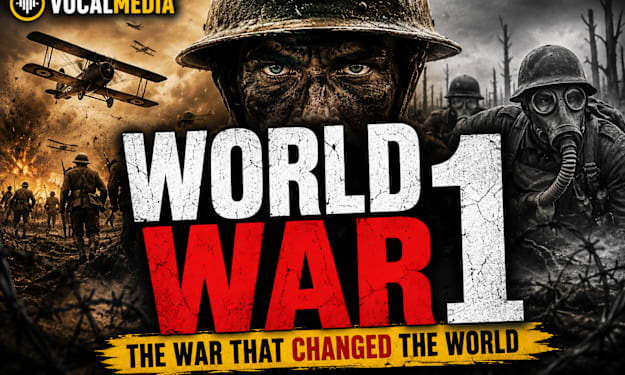
World War I: The Great Turning Point
1. Introduction: A War That Changed Everything World War I was one of the most important events in modern history. It started in 1914 and ended in 1918, but its effects lasted for many years. This war involved many powerful countries and caused great destruction. It changed how nations interacted with each other and created a new global system. Because of its huge impact, it is called a “great turning point” in world history.
By Muhammad Zeeshan3 months ago in History
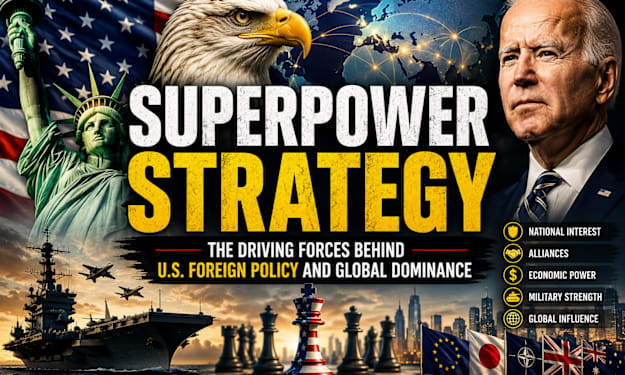
Superpower Strategy
1. Introduction: The Power of a Superpower The United States is one of the most powerful countries in the world. It has strong influence over global politics, economy, and security. Its foreign policy is not random; it is carefully planned to protect its interests and keep its power strong. Every action, whether it is making alliances or taking part in conflicts, follows a strategy. This strategy helps the U.S. stay ahead and shape the world according to its goals.
By Muhammad Zeeshan3 months ago in History
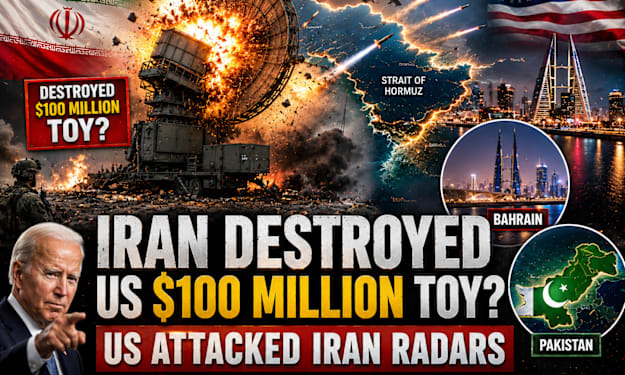
Iran Destroyed a "$100 Million Toy"?
Iran Destroyed a "$100 Million Toy"? US Attacks Iranian Radars – Bahrain & Pakistan in Focus Tensions in the Gulf region have once again captured global attention as the United States and Iran continue to exchange military actions and political warnings. Recent reports indicate that U.S. forces conducted strikes against Iranian radar and surveillance facilities, while Iran responded with missile and drone attacks targeting locations associated with U.S. military operations in the Gulf. These developments have raised concerns about regional stability and the possibility of further escalation.
By Wings of Time 3 months ago in History
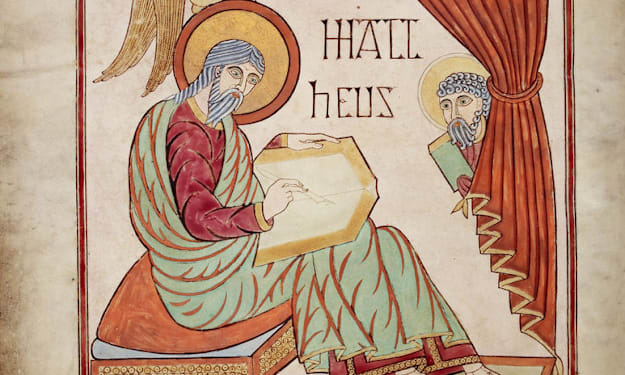
Cultural Mirrors of the Lindisfarne Gospels
Medieval manuscripts hold a rightfully valued place in history, in part because of the contradictions in their creation. They were lavishly decorated signifiers of wealth, but they were made by monks under vows of poverty. They were sacred for the knowledge contained within them, but in regular use during a time when literacy was unfathomably low by today’s standards. But it is in these contradictions that there is also much to be learned. Both from the texts themselves and in how they reflect the cultures that created them. And it is through this that we can see how these cultures are in conversation with each other.
By Alex Brown3 months ago in History
Portrayals of Exodus
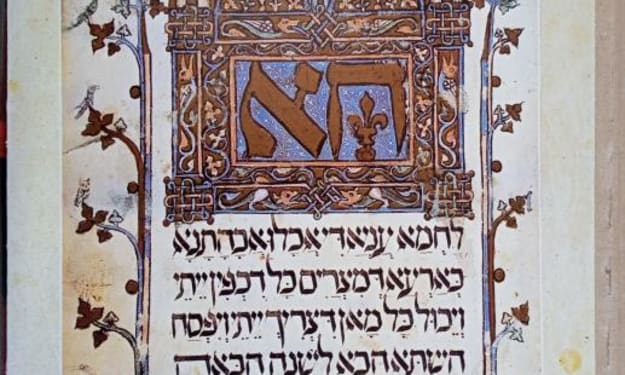
The story of Moses is one of the most renowned stories in the Abrahamic religions. The parable of the adopted son of a Pharaoh’s daughter returning to his people, the Hebrews, and acting as a messenger for both the wrath and salvation of God is of an epic quality that to this day has a hold on the creative minds of people of these faiths. Many pieces of art have been created depicting the Ten Plagues of Egypt, which feature prominently in this story. Today, we will be looking at the depictions of these events, in particular the 4th, 7th, and 10th plagues, as they are illustrated in the religious text, the Sarajevo Haggadah.
By Alex Brown3 months ago in History
Gwydion and Gilfaethwy: The Men Who Became Each Other
In the Fourth Branch of the Mabinogion, one of the foundational texts of Welsh literature, there is a passage so strange and so startling that it tends to make modern readers stop cold and read it again. Two brothers — Gwydion and Gilfaethwy, nephews of the great king Math — have done something terrible. Gilfaethwy has assaulted Goewin, the woman who serves as Math's foot-holder, a sacred role in the court. Gwydion helped him, manufacturing a war as a distraction. When Math discovers what has happened, he does not simply imprison them or exile them. He transforms them.
By The Celtic Spirit- A modern Guide to Celtic Belief and Practice3 months ago in History
The Viking Age: Interesting Viking Traditions
Modern day Norse society has been shaped by Viking customs and traditions. In medieval Scandinavia, the Vikings were known for their warriors, large ships, horned helmets, and violent raids: but this image is not entirely accurate. Viking traditions reinforced social bonds, upheld honour and loyalty, and connected communities to their mythological heritage. Here are some Viking traditions and rituals you might not have heard of:
By choreomanias3 months ago in History
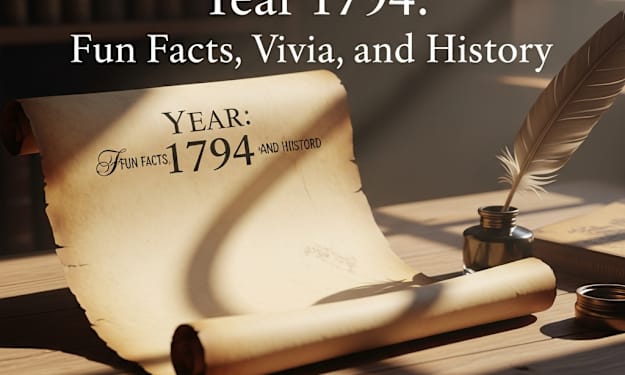
Year 1794: Fun Facts, Trivia, and History
This quick read presents a mix of fun facts, trivia, and history events from the year 1794. Discover the year’s top news stories, most influential people, historic firsts, U.S. economic data, entertainment trivia, and much more.
By Gregory DeVictor3 months ago in History
Page 74 of the Voynich Manuscript
Humans, though they have reason to be wary of things they do not understand, are still drawn to the unknown. At some indeterminate point in the 14th century, driven by curiosity and a deeply felt desire to know the world and our place in it, a book began to form, a record of a quest for understanding of the world that was familiar, but bent to the will of forces unknown and unknowable to its authors. Authors who, in their time, would have been seen by many as immoral heretics. And so, this book needed to be hidden and became an unknown and unknowable artifact. Encoded and allegorical in its illustrations, this book would move through the centuries as a great mystery, even as the world grew more at ease with the studies its authors undertook.
By Alex Brown3 months ago in History