tech
Curious tech and technology from the realm of science and science fiction.
The Death of Traditional SEO: What Google’s AI Overviews Mean for Writers. AI-Generated.
For years, the relationship between writers and Google was relatively simple. You created useful content, optimized it around relevant keywords, earned backlinks, and hoped your article would rank high enough to attract clicks. The system was never perfect, but the basic rules were widely understood.
By Future Lens5 months ago in Futurism
Why AI Feels Smarter in 2026 Than It Did Just One Year Ago. AI-Generated.
A year ago, many people treated AI like an advanced search engine. You asked a question, received an answer, and moved on. The experience was impressive, but it often felt limited. Responses could be generic, context was easily lost, and complex tasks required constant guidance from the user.
By Future Lens5 months ago in Futurism
Common Challenges in Ambient AI Scribe Adoption
Introduction Physicians spend more time documenting than they do with patients. That single reality is what made ambient AI scribe technology one of the most discussed tools in healthcare over the last two years. It listens to a patient encounter, understands the conversation, and generates a clinical note automatically. The promise is real. But so are the problems that show up once organizations move from pilot to full deployment. Getting it into daily clinical workflows is harder than the demos suggest. Here are the challenges that consistently slow things down.
By Kira Wilson5 months ago in Futurism
Why the Cargo Handling Equipment Market Is Quietly Electrifying. AI-Generated.
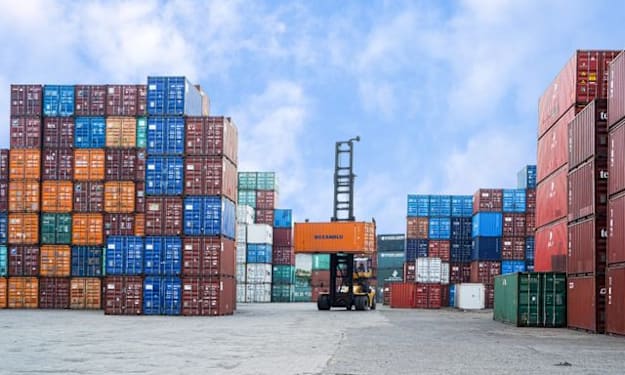
Every container that moves from a ship to a truck passes through some piece of machinery most people never think about, and that invisible layer of equipment is exactly what the cargo handling equipment market is built on. Valued at around 23.3 billion dollars in 2025, the market is projected to reach roughly 37.5 billion dollars by 2035, growing at a steady 4.9 percent annually. That growth rate reflects something specific: terminal operators replacing legacy fleets at a measured pace tied directly to port modernization budgets and e-commerce fulfillment expansion, not speculative spending.
By Kathryn J. Lemos5 months ago in Futurism
Why the Tilt Sensor Market Is Quietly Climbing Toward $685B. AI-Generated.
Most people have never heard of a tilt sensor, yet they're riding in one every time a car's stability control kicks in or a crane operator gets an automatic warning before a load shifts too far. The tilt sensor market is valued at around $283.6 billion in 2025, and it's projected to reach $684.9 billion by 2035, growing at a 9.2% compound annual rate. That kind of expansion isn't being driven by one flashy application, it's happening because multiple industries, from automotive to renewable energy, are upgrading how they measure angle and inclination all at once.
By Elena parker5 months ago in Futurism
Why Global Trade Depends on Strong Supply Chain Networks
Modern businesses rely on fast, organised supply chains to keep products moving efficiently across local and global markets. Managing sourcing, transportation, warehousing, and delivery separately can create delays, rising costs, and communication gaps. End-to-end supply chain solutions connect these operations into one coordinated system, helping businesses improve visibility, efficiency, and flexibility.
By Aurora Gianna5 months ago in Futurism
Why the Magnetic Separator Market Keeps Pulling In Billions. AI-Generated.
Magnets aren't usually thought of as cutting-edge technology, but in mining, recycling, and food production, that's exactly what they've become. The magnetic separator market is valued at roughly $1.08 billion in 2025 and is projected to climb to $1.84 billion by 2035, a 5.5% compound annual growth rate. The reason isn't flashy, it's practical: as industries face stricter purity and safety standards, the old assumption that "good enough" separation will pass inspection is no longer holding up.
By Elena parker5 months ago in Futurism
Why the Level Transmitter Market Keeps Quietly Expanding. AI-Generated.
Most people will never think about how factories know exactly how much liquid is sitting inside a storage tank, but that invisible problem is exactly what's driving the level transmitter market forward. Valued at around 3.6 billion dollars in 2025, the market is projected to reach roughly 4.7 billion dollars by 2035, growing at a steady 2.7 percent annually. Level transmitters are precision instruments that measure liquids, solids, or slurries inside industrial tanks and pipelines, converting that physical measurement into an electrical signal that feeds directly into a plant's control systems. It's unglamorous infrastructure, but it's the kind that industrial safety increasingly depends on.
By Kathryn J. Lemos5 months ago in Futurism
Hydraulic Cylinder Market Set for Steady Climb Through 2035. AI-Generated.
Most people never think about hydraulic cylinders until a crane stalls mid-lift or a tractor's loader arm won't budge. Yet these unassuming components sit at the center of how heavy machinery moves, lifts, and steers. The Hydraulic Cylinder Market has grown alongside global construction and farming output for decades, and recent data shows that pattern continuing rather than slowing. The market was valued at roughly USD 17.3 billion in 2025 and is projected to reach USD 28.0 billion by 2035, growing at an annual rate of 4.9%.
By Hazel Williams5 months ago in Futurism