religion
Posts about religion, skepticism, and how it fits into the scientific world.
Silenced Faith: The Persecution of Christians in North Korea
Christianity is a clear counterpoint to the doctrine that demands total allegiance to the government in North Korea, a nation where the state elevates the Kim family as gods. For Christians living in the hermit kingdom, faith is an act of defiance rather than only a question of personal conviction. The North Korean government sees religious belief—especially Christianity—as a challenge to its tightly regulated society. Christians are compelled to practice their faith in secret under the repressive government; they frequently suffer terrible consequences should they be found. Affecting not just individuals but whole families, communities, and churches, the persecution is methodically pervasive. Notwithstanding these great difficulties, the Christian community in North Korea is resilient; believers keep on worshiping in secret and hold fast to their faith against great hardship.
By Miranda Spears2 years ago in Futurism
Repeated Failure
A New Dawn: From Failure to Triumph Iftikhar's process was not a direct one. It was set apart by incalculable miseries and frustrations. However, through faithful assurance and the help of his friends and family, he rose successful. His example of overcoming adversity is a demonstration of the force of flexibility and the human soul.
By Iftikhar Akram2 years ago in Futurism
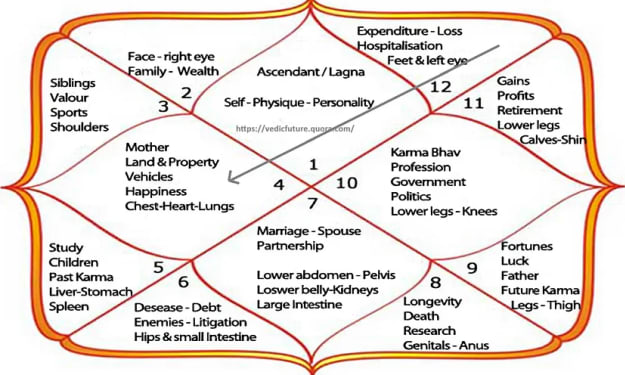
What does it mean to have 12th house lord in 4th house?
Understanding the 12th House Lord in the 4th House In Vedic Astrology, the placement of the 12th house lord in the 4th house creates a unique blend of energies. The 12th house, or Vyay Bhava, represents losses, expenses, isolation, spirituality, foreign connections, and subconscious depths. On the other hand, the 4th house signifies home, comfort, mother, emotional stability, peace of mind, and land-related matters. This placement indicates a connection between these two domains, shaping the native's life in profound ways.
By Saartha Bhandari2 years ago in Futurism
Project Unity
In a small, bustling town in Kenya, a new health initiative was quietly making a difference. Known as Project Unity, this initiative began with a simple yet revolutionary idea: rather than focusing on one disease at a time, they would train local health workers to address a range of health concerns together. The goal was to bridge the healthcare gap in rural communities by creating a network of multi-skilled healthcare providers, equipped to handle everything from maternal health to malaria, and even mental health support. The program had its roots in a realization made by Dr. Amina Kibera, a dedicated public health professional who had spent most of her career moving between different parts of East Africa. She’d seen countless health initiatives come and go, often well-funded but highly specialized, focusing only on one disease, like HIV, polio, or malaria. But in her heart, she knew that people’s lives were not as neatly segmented. A mother might come in seeking help for a malnourished child, only to reveal that she, too, was suffering from chronic pain, and that her husband was struggling with untreated mental health issues. Addressing only one of these issues left the others festering, often worsening over time. Determined to make a change, Dr. Kibera rallied a team of local nurses, doctors, and health volunteers. She called the project Unity because she wanted the community to feel like they were truly part of the solution, rather than passive recipients of foreign aid. They transformed an old, unused schoolhouse into a modest clinic, with faded paint on the walls and hand-painted signs, but a warmth that instantly made people feel welcome. At first, the challenges seemed insurmountable. Funding was limited, and the clinic’s resources stretched thin. Yet, as the clinic opened its doors to the community, the response was overwhelming. Women, men, and children lined up in droves, sharing their stories with doctors and nurses who not only listened but treated them with dignity and respect. They weren’t just handing out medication; they were empowering people with knowledge about their health and well-being. The clinic's star was a young nurse named Mercy, who had grown up in the same village and was well-known to almost everyone. Mercy had a gift for making people feel comfortable, and her gentle way of explaining things was like a balm to anxious mothers and elderly patients alike. The people trusted her, and it made a world of difference in their willingness to share sensitive health issues. One day, Mercy met Mary, a single mother of three who worked long hours as a farmer. Mary had brought her youngest daughter, Fatima, to the clinic because of a persistent cough and weight loss. Mercy took her time with Mary, asking questions not just about Fatima but about Mary’s own health, her workload, and her life at home. Mary admitted that she often skipped meals to make sure her children could eat and that she hadn’t slept well in months, worrying about how she would provide for her family. Over the next few weeks, Mercy worked closely with Mary. She taught her about the importance of self-care and guided her toward resources that could help supplement her family’s food supply. She also introduced Mary to a new women’s support group, part of the Unity initiative, where mothers could gather, share, and support one another. Through this support network, Mary received not only advice but practical help, like childcare during clinic visits and even job leads that suited her schedule better. One of the clinic’s proudest moments came when they held a town health fair in collaboration with the local school. Under a large, colorful tent, the Unity team set up booths that addressed various aspects of health: maternal care, nutrition, hygiene, mental health, and infectious disease prevention. Every visitor received a personal health booklet where they could track everything from their weight to their goals for staying healthy, along with simple tips and illustrations that even children could understand. Dr. Kibera watched with pride as mothers lined up for blood pressure screenings and fathers received demonstrations on safe water practices. Children gathered in small circles around Mercy, who was leading a session on hand washing with lively songs and laughter. The fair had a joyous energy, and by the end of the day, everyone who attended had received personalized guidance, creating a ripple of awareness and care that the clinic hoped would continue to spread. As the sun set, Dr. Kibera felt a deep sense of hope. She knew that Project Unity was only one small effort in a vast world, but here, in this community, it was changing lives. She saw it in the face of Mary, who had brought her entire family to the health fair, proudly sharing the health tips she’d learned. She saw it in the way neighbors began checking in on each other’s well-being, and in the growing team of volunteers who wanted to be part of something bigger than themselves. With time, Project Unity began to attract attention from larger organizations that were impressed by its holistic approach. Instead of focusing on one disease or a single demographic, Unity treated people as a whole, recognizing that health is interconnected and community-driven. Funding slowly began to trickle in, and with it, more resources to expand the clinic’s reach, hire more staff, and offer specialized training to address emerging issues, like mental health and adolescent care. The ripple effect continued. Other communities began reaching out, hoping to replicate the model of Project Unity in their own towns and villages. For Dr. Kibera, it was a dream come true, a testament to the power of empathy, resilience, and community-centered care. Mercy, too, had dreams of her own now—to further her education and return as a qualified doctor, ready to give back to the people who had trusted her with their lives and stories. Years later, when Mercy had indeed returned as Dr. Mercy, she found Mary waiting in the clinic, not as a patient this time but as a volunteer. Together, they laughed, recalling those early days when the clinic was just a small room with a leaky roof and a big heart. They had come so far, and yet the mission remained the same: health was about unity, about a community coming together, each person’s well-being uplifted by their neighbor’s care. In every patient who left with a smile, every child who washed their hands with pride, and every family that came back healthier and happier, Project Unity lived on. It was proof that equity in healthcare wasn’t just about resources—it was about belief, trust, and the shared commitment to care for one another. And in this small, vibrant town, that commitment had built something that felt a lot like family.
By Blessing oyem 2 years ago in Futurism
Embracing the Future: Next Gen Vision and the Era of Futurism
As we step further into the 21st century, the concept of futurism has evolved into a dynamic framework for understanding the world of tomorrow. "Next Gen Vision" encapsulates a forward-looking perspective that embraces technology, creativity, and sustainability, painting an optimistic picture of what lies ahead. This article delves into the various dimensions of next-gen futurism, exploring innovations that promise to redefine our existence, enhance our experiences, and reshape our society.
By Marius Lungu2 years ago in Futurism
Gemini Horoscope 2025
In 2025, Gemini Horoscope will embark on a path of self-reflection and planning, with Jupiter's influence helping to secure professional success and financial improvement, especially after May. Joyful moments with family are expected, though there may be some concerns regarding the health of parents. Let me explain it more in details
By Jyotishgher Astrology2 years ago in Futurism
Taurus Horoscope for 2025
As Taurus Horoscope 2025, the focus shifts towards embracing authenticity and freely expressing emotions, signaling a return to your true self. This newfound openness invites personal retreats and adventurous opportunities, striking a balance between the comfort of home and the excitement of the outside world. According to Taurus Horoscope 2024, this year is going to be average for the people of Taurus. Where challenges can be faced in terms of career and health. However, on the economic front, there is a possibility of getting some relief this year. The year is good for the people of Taurus from the point of view of health, and also good for the students. There will be marriage yoga for the unmarried and there will be happiness and peace in the marriage. Keep restraint on behavior and speech.
By Jyotishgher Astrology2 years ago in Futurism