
Why Zongzi Start Fights and Mooncakes Do Not
The sweet-savory war comes down to one question: is it a meal or a snack?
Meal or snack: why zongzi fight over sweet and savory, and mooncakes do not
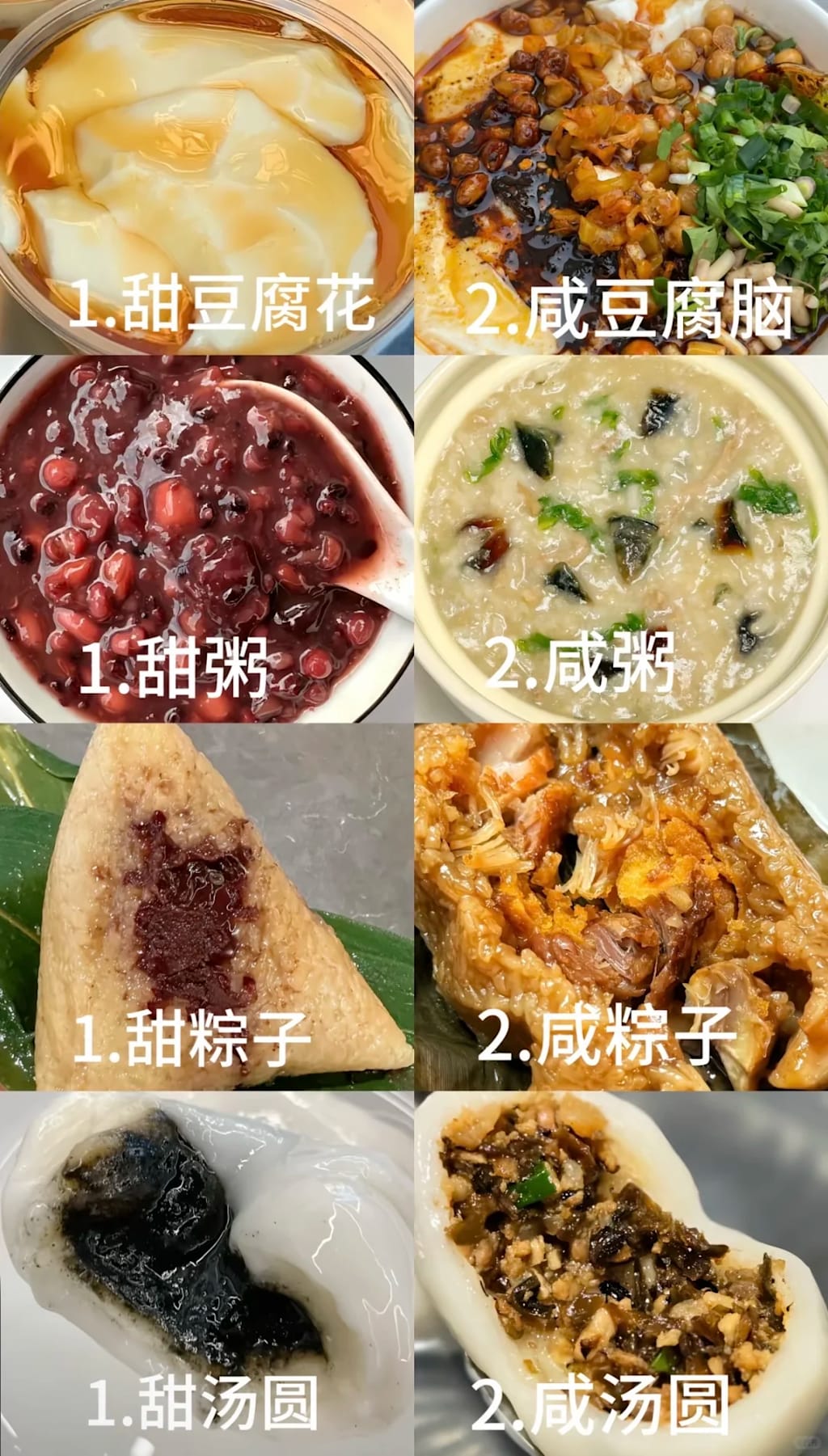
A week before the Dragon Boat Festival, a pressure cooker appears at the door of breakfast shops in southern cities. When the lid lifts, the oily aroma of pork zongzi and reed leaves rises. Pork-and-egg-yolk zongzi, chestnut pork zongzi, sausage zongzi sit within reach. Buyers do not wait for the festival. They treat them as breakfast. One zongzi with soy milk, or with a small bowl of wontons. Glutinous rice is the staple, pork is the dish, salted egg yolk helps the rice go down. The reed leaves are packaging.
At the same time, in freezer cases of northern supermarkets, zongzi sit next to frozen flour snacks. Candied-date zongzi, red bean paste zongzi, eight-treasure zongzi, small, tied tight with string. Take them home, steam for ten minutes, sprinkle white sugar. They appear after a meal, or in the afternoon. Northerners often treat zongzi as a snack. Snacks should be sweet. Sweet makes it feel like a festival.
Here the identity of zongzi splits. Many southern places treat it as a meal. Many northern places treat it as a snack. A meal should be savory. A snack should be sweet. The argument starts here.
1. In the South, zongzi is a meal
Southern China uses rice as its staple. Glutinous rice is the stickiest, most fragrant, and best at wrapping oil among rice varieties. Soak it, wrap it with pork belly, salted egg yolk, shiitake mushrooms, chestnuts, sausage, steam it through, and it is a complete meal. Jiaxing pork zongzi, Quanzhou braised pork zongzi, Guangdong guozheng zongzi follow this logic. They are filling main meals.
In some southern places, zongzi can be breakfast, lunch, or food carried on the road. Workers at construction sites eat zongzi without finding it strange. Students rushing to morning class grab a pork zongzi at a convenience store without finding it strange. Once zongzi enters the daily food ledger, it has to carry the responsibility of a meal. A meal cannot be only sweet. A meal must be savory, rich, and make you feel energized after eating.
So when southerners hear “How can zongzi be savory?” they find it baffling. Pork zongzi is a meal. Of course a meal is savory.
2. In the North, zongzi is a snack
Northern China uses wheat as its staple. Steamed buns, noodles, dumplings, flatbreads occupy the place of daily staple food. Glutinous rice output is low, and zongzi can hardly become an everyday staple. It appears more at the Dragon Boat Festival, as seasonal food, as a snack for the occasion. Since it is a snack, sweet flavor becomes the first choice.
The North produces many dates. Candied dates, red dates, small dates can all go into zongzi. Glutinous rice with candied dates steams into something soft, sticky, and sweet. Sprinkle white sugar, and it feels more like a festival. Northerners often eat zongzi after a meal, or as a sweet bite in the afternoon. It does not need to fill the stomach. It only needs to provide the sweetness of the festival.
Sugar was scarce for much of history, especially in the North. Using precious sugar in festival snacks was a way of respecting the festival. Candied-date zongzi and red bean paste zongzi are flavors and the rare sweetness of the season.
3. Mooncakes were born as snacks
Mooncakes are different from zongzi. From the beginning, their identity was stable. They are the seasonal snack of the Mid-Autumn Festival, an offering for worshiping the moon, a symbol of reunion, a gift.
At Mid-Autumn, mooncakes sit on the offering table. The moon is round, the mooncake is round. Sweetness symbolizes completeness, sweetness, reunion. Cantonese lotus seed paste, Beijing zilaihong, Suzhou red bean paste, five-kernel mooncakes all start from sweetness. Mooncakes never face the question zongzi face: “Are you a meal or not?” They were never a meal. They do not need to prove they can fill the stomach with savory flavor.
Mooncakes are sweet by default.
4. Why savory mooncakes did not form a North-South opposition
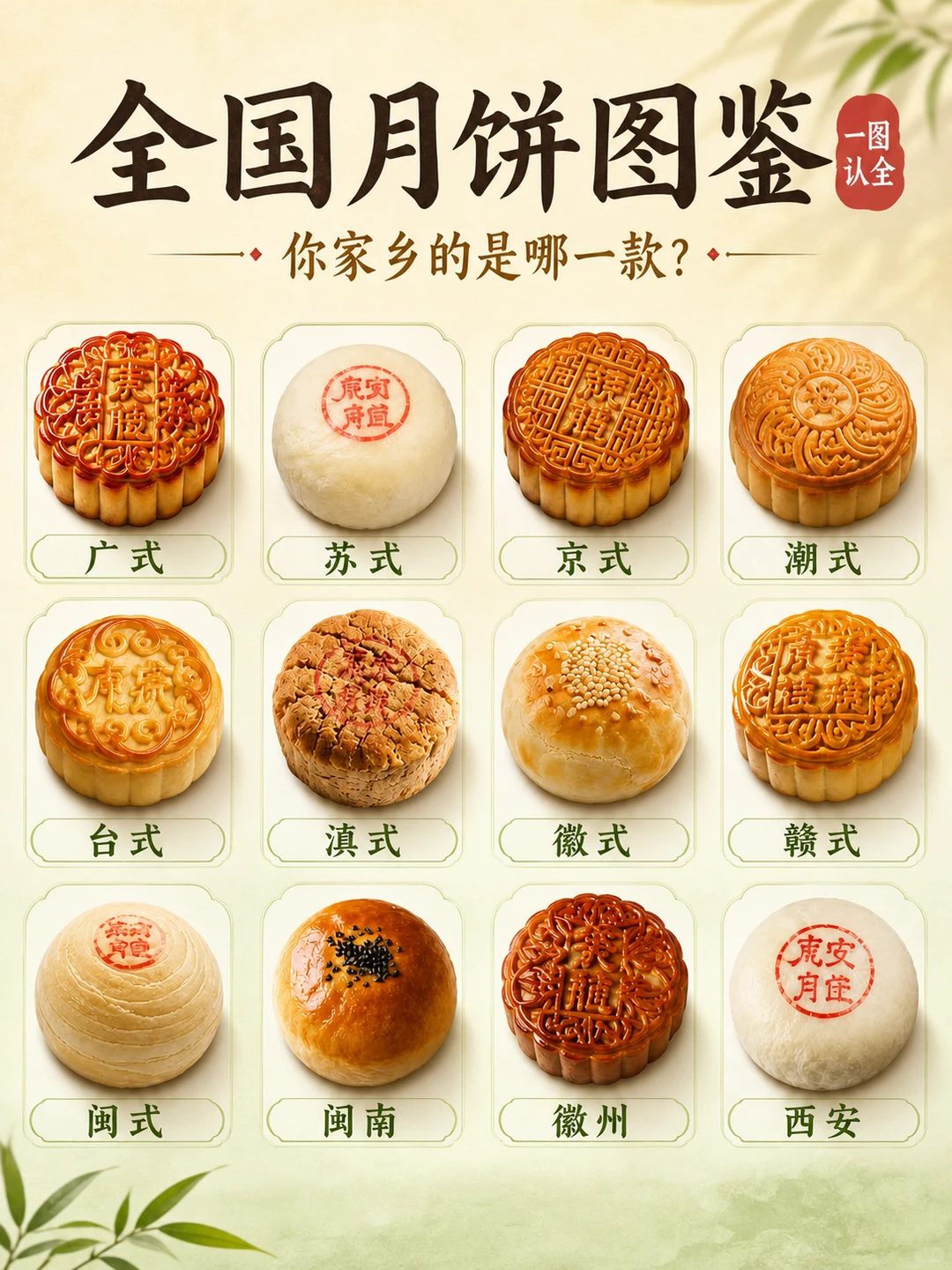
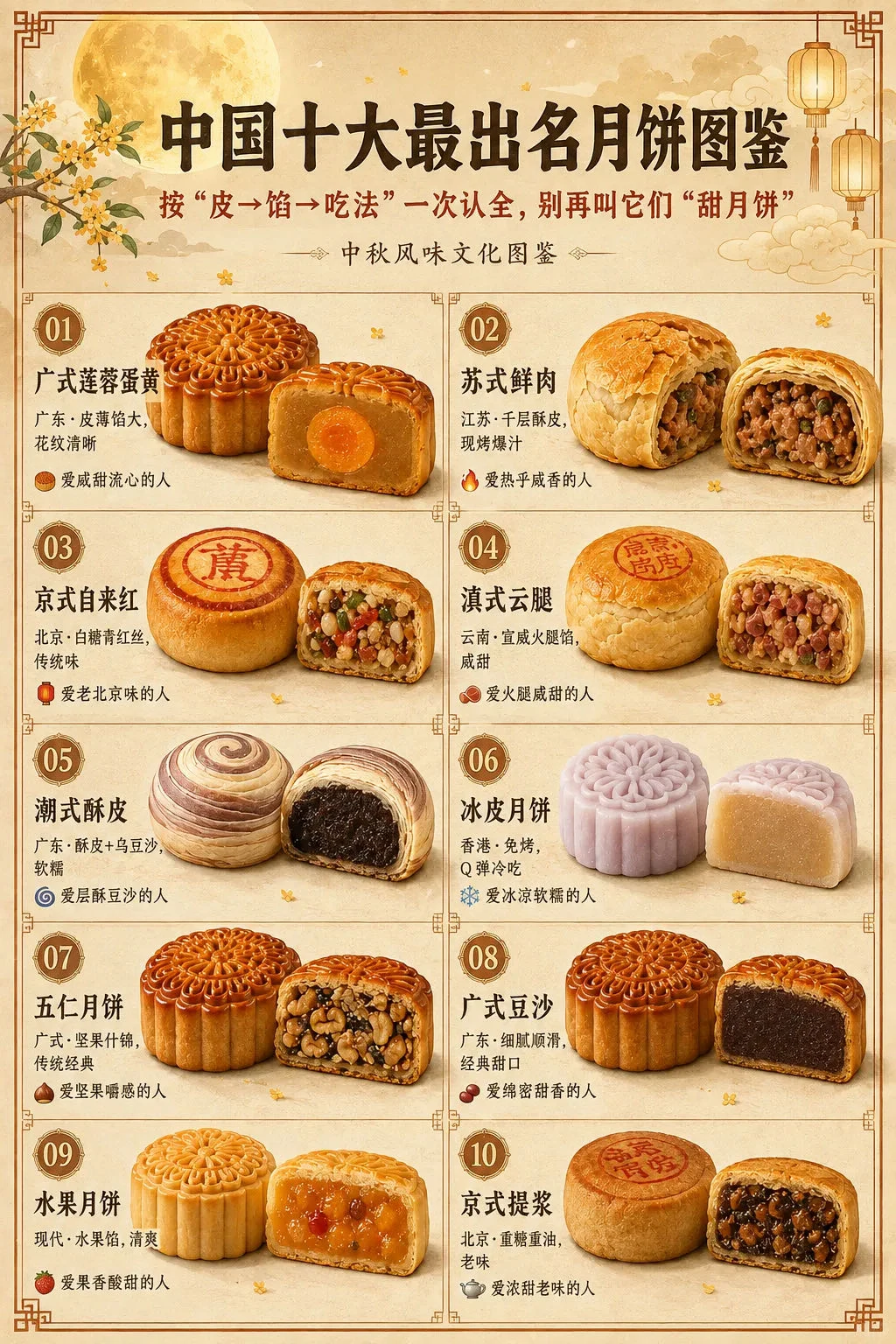
Mooncakes include savory versions. Fresh pork mooncakes from Suzhou and Shanghai, Yunnan ham mooncakes, Cantonese roast pork mooncakes, ham-and-five-kernel mooncakes are all savory or sweet-savory. But they rarely form a “purely savory” camp. They are more often a mix of savory and sweet.
Yunnan ham mooncakes are typical. Xuanwei ham itself is savory and fragrant, but when making the filling, honey or sugar is often added. Savory aroma and sweet moistness pull against each other. Ham mooncakes work the same way: salt is the opening, sweetness is the base. Fresh pork mooncakes have savory filling, but the flaky crust is made with lard and maltose, so the texture still carries the flaky sweetness of a snack. They are meant to be freshly baked and eaten on the spot. Bite through the crust, and hot meat juices wrapped in pork aroma rush out. This freshness is a pursuit in Jiangnan food. It works as a refined savory snack.
So the savory of mooncakes does not negate the sweet. It has not formed a situation of standing hostile to sweet mooncakes. Everyone is within the framework of “snack.” A snack can be sweet, or sweet-savory, but it is hard to completely escape the sweet base.
5. Guangdong and Jiangsu: differences within the South
Guangdong and Jiangsu are both in the South, yet their mooncakes are one sweet, one savory. Cantonese-style mooncakes represented by lotus seed paste are sweet with complete confidence. This is related to Guangdong’s long history of sugarcane cultivation and sugar production. Sugar is an ordinary thing there. Using sugar to make sweet snacks is very natural. Lotus seed paste is fine, oily, fragrant, and sweet. With egg yolk, with five kernels, it is a classic expression of Cantonese mooncakes.
Suzhou-style mooncakes in Jiangsu, especially fresh pork mooncakes, take another path. Their savoriness comes from Jiangnan’s extreme pursuit of freshness. Fresh pork mooncakes are meant to be freshly baked and eaten. The flaky crust is layer upon layer, the meat filling tender and juicy. They are snack-shop food, meant to be eaten soon after baking. They are bought in lines on streets and alleys around Mid-Autumn.
Within the large framework of “snack,” different regions can develop completely different flavor schools. Guangdong’s sweet and Jiangsu’s savory are differences between local schools. They have not formed an orthodox dispute over whether mooncakes should be sweet or savory.
6. Commercialization and gift boxes made mooncakes sweeter
There is also a practical reason mooncakes have not formed an obvious North-South sweet-savory opposition: commercialization and gift-boxing.
Cantonese-style mooncakes, especially lotus seed paste, red bean paste, and lotus seed paste with egg yolk, through modern food industry and nationwide gift-box circulation, became the most widely recognized image of mooncakes. At Mid-Autumn, when people give mooncakes, most give sweet gift boxes. Sweet mooncakes keep well, ship easily, package well, and fit the gift meaning of reunion and sweetness. So in public perception, mooncakes are sweet by default.
Fresh pork mooncakes, by contrast, are hard to nationalize. They must be freshly baked, eaten hot, the flaky crust breaks easily, and the meat juices spoil easily. They are not suited to long-distance transport and long storage. They stay a local snack. Although fresh pork mooncakes are extremely popular in Jiangsu and Shanghai, in the national mooncake map they remain a local school and cannot shake the default position of sweet mooncakes.
Zongzi are different. Zongzi can be vacuum-packed, frozen, freshly steamed at breakfast shops, or made at home. They are more everyday and closer to the staple-food scene. Both savory and sweet zongzi can find a place in daily life. Their opposition is easier to perceive, discuss, and magnify.
7. The hierarchy of meal and snack
Zongzi sweet-savory arguments are arguments about identity. Southerners say it is a meal, so savory is justified. Northerners say it is a snack, so sweet is only natural. Both sides argue over what zongzi actually is.
Mooncake sweet-savory differences are differences between local schools. Sweet is the base. Savory is a variation that adds the icing on the cake. Fresh pork mooncakes, Yunnan ham mooncakes, roast pork mooncakes are all explorations of local flavor. They do not challenge the fundamental nature of mooncakes, so they have not formed the North-South opposition that zongzi have.
The Dragon Boat Festival zongzi are still in the pot. The Mid-Autumn mooncake has already been cut. One is meant to fill the stomach. One is meant to be given away. One sits on the breakfast table. One sits in a gift box. Whether sweet and savory fight depends on which table it is placed on.
About the Creator
Jin
Writer of reamstories
https://reamstories.com/jin
Enjoyed the story? Support the Creator.
Subscribe for free to receive all their stories in your feed. You could also become a paid subscriber, letting them know you appreciate their work.
Comments
There are no comments for this story
Be the first to respond and start the conversation.