
The 2.6 Millimeters Between My Phone and My Hand
What I learned about grip, gravity, and small fixes after my phone landed face-down in a bowl of soup.
It happened on a Tuesday, or maybe a Wednesday. I was eating lunch at my desk, watching something on my phone that I have already forgotten. The phone was propped against a tissue box, and it stayed there for maybe three minutes before it slid forward and landed face-down in a bowl of soup. I picked it up, grabbed two tissues, wiped the screen, and kept watching. That is the part I think about now: I kept watching. The soup dried into a thin orange film on the phone case for another week before I cleaned it properly.
That was the fourth time in two months. I tried a phone ring once, one of those adhesive circles with a loop on the back, and it lasted about a week before the adhesive gave up. I tried a pop socket, but it made my phone too thick to sit flat on a table, and the whole thing wobbled like a seesaw whenever I put it down. I gave up for a while. The phone slid, I picked it up, and I moved on.
What kept bothering me was not the sliding. It was my hand.
I hold my phone with my palm at the bottom edge and my pinky finger curled under the frame. It is a bad habit, but it is the only way I can reach the top half of the screen one-handed. After about twenty minutes of scrolling or replying to messages, the side of my pinky develops a dent. It is not painful exactly, but it is a low, persistent ache that follows me for an hour after I put the phone down. On the subway, standing up, holding a bag in one hand and the phone in the other, my wrist would start to complain. The phone is not heavy. But it is heavy enough when you hold it at arm’s length for a long time.
I started looking for something that could help, and I found the PopSockets Low Pro. I want to be careful here: I am not recommending this to anyone. I am telling you what happened when I tried it, and what it changed for me. The only thing that matters to you is whether your hand feels like mine does.
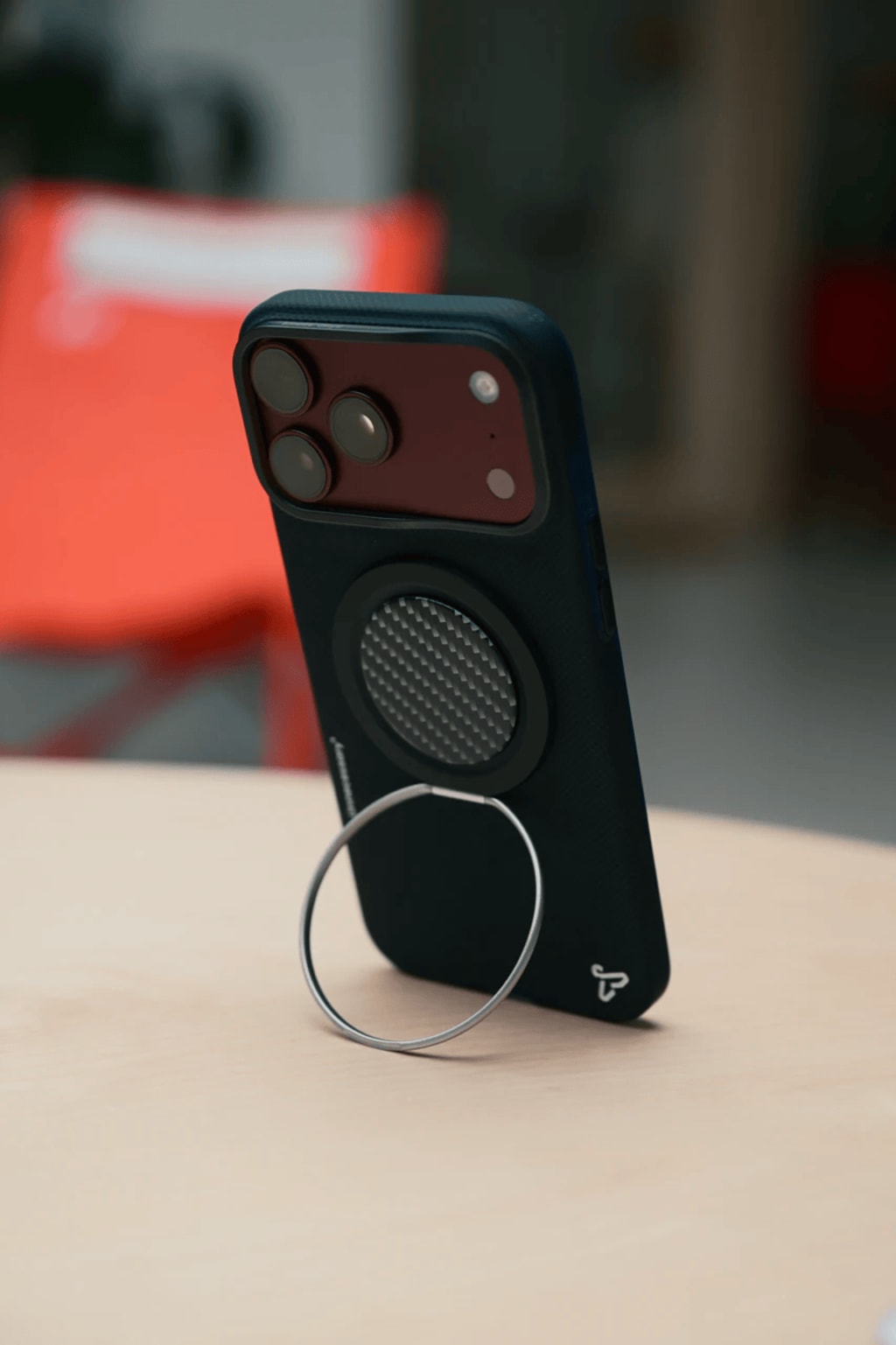
The Low Pro folds down to about 2.6 millimeters. I measured it against the edge of a credit card, and it was thinner. When I stuck it on the back of my phone case, I expected to feel it every time I picked up the phone. I did, for about two days. After that, my fingers adjusted. I put the phone in my pocket, and the stand was not a lump I had to push around. I put the phone face-down on the table, and the phone did not rock back and forth.
The first time I opened it, on the subway, I realized what I had been missing. I was replying to a message with one hand, the train was shaking slightly, and my pinky was pressing into the bottom of the phone. I flipped the stand open with my index finger, and my pinky slid up to rest on the top edge of the stand instead of digging into the frame. My grip changed without my thinking about it. I held the phone a little more loosely. My wrist stopped complaining somewhere around the third stop.
The part I did not expect was what happened when I put the phone on the table. I opened the stand, set the phone upright, and suddenly I was looking at the screen instead of hunching over it. At lunch, I watched videos without propping the phone against a cup. On a video call, I could adjust the angle and actually look at the person I was talking to, because the phone was not leaning back at a forty-five-degree angle like it was about to fall asleep. It sounds small. It is small. It is one of those things that you only notice after you stop noticing the old problem.
I still slide my phone. Gravity did not disappear. But now, when I put the phone down, I open the stand first, and the phone stays where I put it. When I pick it up, I close the stand, and the phone goes back in my pocket. It is one extra motion, and I do it without thinking, the same way I check my back pocket for my wallet when I leave the house.
There is one thing I want to be honest about. If you have never used a stand or a grip before, it will feel strange at first. The back of your phone is no longer flat. Your index finger will find the edge of the stand and push against it. You will wonder whether it is worth it. I did. Then I realized that the alternative was a pinky dent and a sore wrist every evening. I made my choice. You get to make yours.
The stand is not a solution to everything. It does not make your phone lighter. It does not replace a tripod if you do serious photography. It does not hold your phone at every angle on every surface. On a rough picnic table, the stand wobbles. In a pocket that is already crowded with keys and a wallet, the phone feels the same as it always did. It is a small fix for a small problem.
But small problems have a way of accumulating. The pinky dent, the wrist ache, the phone sliding into soup, the moment of irritation when the phone falls over while you are trying to read a recipe in the kitchen. These things happen every day, and they cost you something, even if it is just a tiny fraction of your patience. I did not realize how much I was spending on this until I stopped spending it.
I still eat lunch at my desk. My phone still sits next to me, and sometimes I still watch something while I eat. But now, when I put the phone down, it stays where I put it. And when I pick it up, my hand feels a little less tired than it used to. That is all. That is the whole story.
This piece reflects my personal experience using a phone stand. It is not a product review or a recommendation. If you are considering a similar accessory, check whether your phone case is compatible with adhesive mounts and whether it affects wireless charging.
About the Creator
Jin
Writer of reamstories
https://reamstories.com/jin
Enjoyed the story? Support the Creator.
Subscribe for free to receive all their stories in your feed. You could also become a paid subscriber, letting them know you appreciate their work.
Comments
There are no comments for this story
Be the first to respond and start the conversation.