
Karelian pies: A Finnish food certified and protected by the EU
What can Karelian pies teach us about Finland's history?

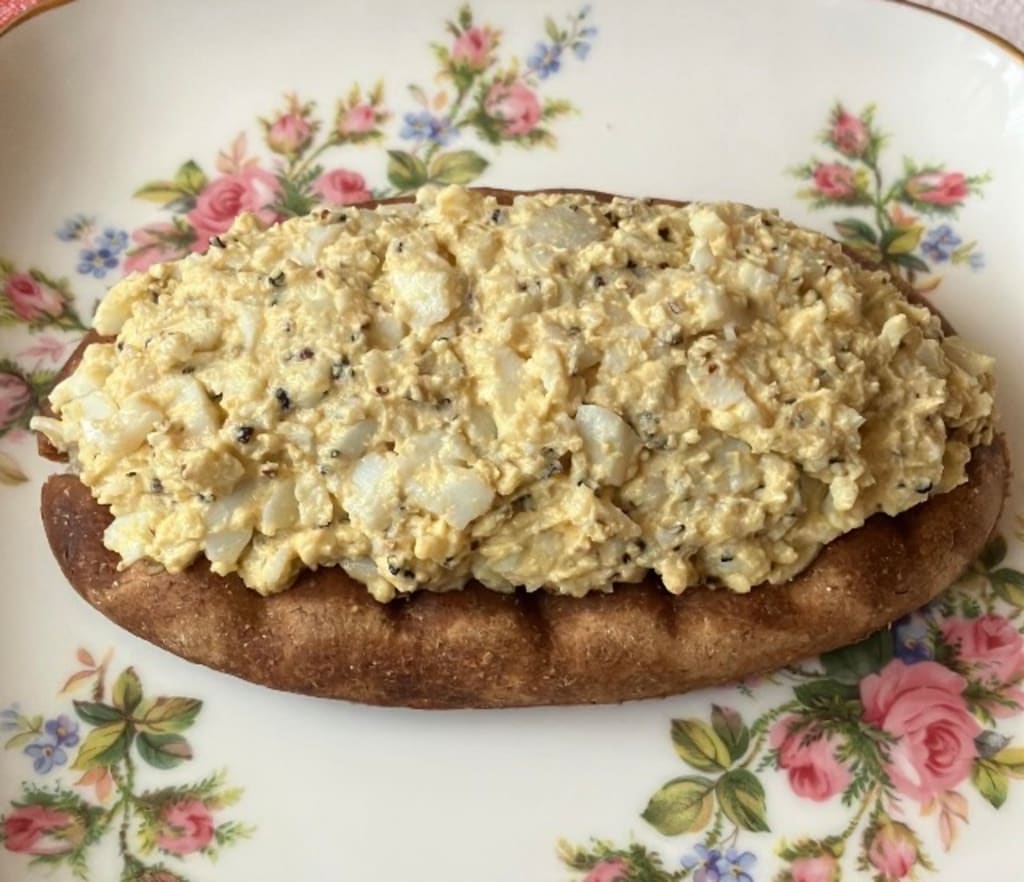
Happy Saturday! Today, we’ll focus on one of Finland’s most iconic and beloved foods: Karelian pies, or in Finnish: Karjalanpiirakka. I have never met a Finn who doesn’t like Karelian pies. Everyone simply loves them and for good reason: they are delicious, simple, and comforting. They can be enjoyed on their own, cold or slightly warmed up. They are so versatile you can simply have them any way you want.
What is a Karelian pie?
It’s a small, open, crispy rye crust filled with creamy rice porridge savory pastry, oval-shaped, between 7 to 20 cm long. They are sold everywhere from supermarkets to bakeries and cafés, and are traditionally topped with a spread of chopped hard-boiled eggs and butter (called munavoi, in Finnish: muna = egg + voi = butter). Or, as my friend Vaula would insist, you can also have them on their own.
Of course, you can bake your own Karelian pies. I did that once when I was visiting another friend and she insisted on teaching me how to make Karelian pies. It was a great experience. We enjoyed them fresh with coffee, and they were far more delicious than any Karelian pies I have bought in supermarkets.
Because we are here to understand Finland, we need to go back in time to the origins of Karelian pies and how they became part of Finland’s cuisine and culture in the present day. So, the next time you eat a Karelian pie, you’ll have something to think about, or perhaps a story to tell who doesn’t know its history. That would be a great conversation starter in a nation where small talk is not practised or welcomed —and I totally love that! That’s a story for some other time, though.
Brief history of the Karelian pie
Karelian pies’ history goes back to the region of Karelia, east of Finland, during the 17th century.
Because rice was not accessible in early Finland, original filling included barley, roasted grain flour, and later, potatoes and buckwheat. They were initially baked over hot stones or open fires. Karelian pies were first mentioned in writing in 1686.
As rice became more available in the 19th and 20th centuries, creamy rice porridge became the preferred filling and this became standard.
Following the Winter War between Finland and the Union of Socialist and Soviet Republic (USSR) in 1939-1940 and WWII (1939-1945), approximately 420,000 Karelians were forced to evacuate their homeland to mainland Finland.
Under the 1944 Moscow armistice and the 1947 Paris peace treaty, Finland was obliged to surrender Finnish Karelia and some islands in the Gulf of Finland and the Petsamo region in the far north, losing over 12% of its pre-war territory whilst Norway acquired a common border with the USSR (today’s Russia).
Therefore when Karelians left their land, they brought their culture and culinary heritage with them, quickly spreading the pie across Finland. Today, Karelian pies continue to be a beloved national dish enjoyed throughout Finland by locals and tourists alike.
The Karelian pie holds EU “Traditional Speciality Guaranteed” (TSG) status; this protection and certification recognises the traditional recipe and production method. The next time you eat a Karelian pie remember you are eating a small part of Finnish history and a pastry made from a recipe that has existed for centuries.
Karelian pies recipe
Prep time: 30 minutes
Cook time: 55 minutes
Total time: 1 hour 25 minutes of great fun
Ingredients:
2 cups of water
1 cup of uncooked white rice
2 cups of milk
salt to taste
½ cup of water
1 teaspoon of salt
1 cup of rye flour
¼ cup of all-purpose flour, or as needed
3 tablespoons of butter, melted
Directions
Combine rice and water in a saucepan over medium heat. Bring to a boil, then reduce heat, cover, and simmer for 20 minutes, or until water is absorbed. Stir in milk, cover, and cook until milk is absorbed by the rice, about 20 minutes. Season with salt to taste.
Preheat the oven to 220 degrees C or 450 degrees F.
In a medium bowl, stir together salt and rye flour. Stir in water. Mix in all-purpose flour one tablespoon at a time until the dough is just past the sticky stage. Divide the dough into 16 equal portions.
On a lightly floured surface, roll each piece of dough out into a thin circle, 6 inches in diameter. The dough should be as thin as possible. Place about 3 tablespoons of the rice mixture in the center of each circle. Spread the mixture out to within 1 inch of the edges. Fold the edges of the dough upward, and crimp the edges so as to allow the pastries to hold their shape. Pinch the sides at each end to form a little boat. Place the pastries about 3 inches apart on an ungreased baking sheet, and brush the tops with butter.
Bake for 10 to 15 minutes in the preheated oven, until the dough is firm, and the rice porridge is slightly browned on the top. Serve warm.
For the egg butter, boil as many eggs as you want for your topping (it depends on how much you want to put on top of each pie), use a fork to mix them with room temperature butter, add some black pepper if you wish. Top the pies with the egg butter. Enjoy! For a lazy option: butter the pies, cut the boiled eggs in halves, place a half on each pie. Enjoy! (this is my preferred lazy option, it tastes the same) :)
About the Creator
Susan Fourtané
Susan Fourtané is a Science and Technology Journalist, a professional writer with over 18 years experience writing for global media and industry publications. She's a member of the ABSW, WFSJ, Society of Authors, and London Press Club.
Enjoyed the story? Support the Creator.
Subscribe for free to receive all their stories in your feed.
Comments
There are no comments for this story
Be the first to respond and start the conversation.