
Huckleberries And Blueberries Are Not the Same
Even though huckleberries and blueberries are similar, there are some key differences.

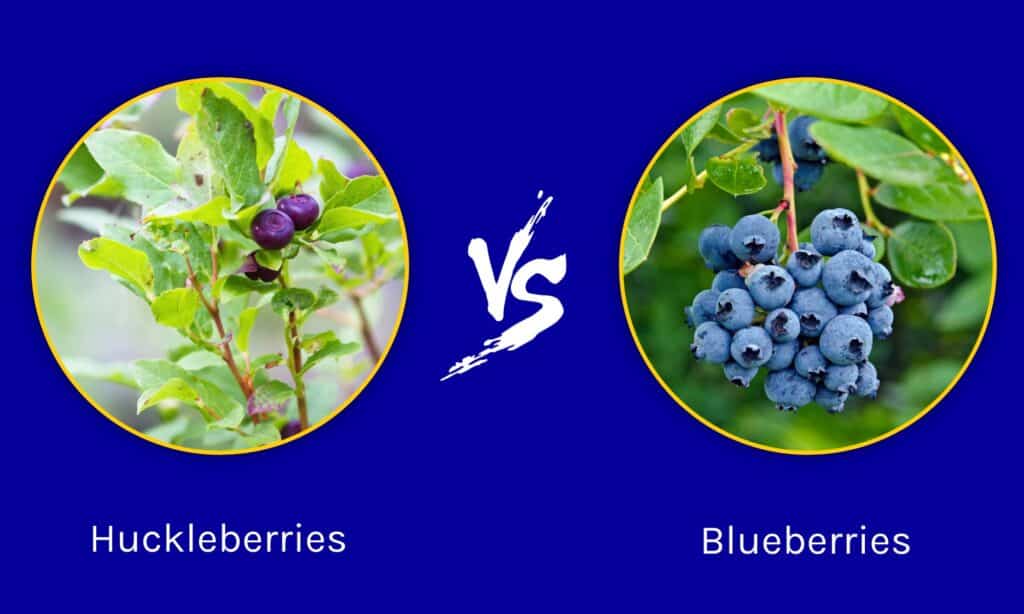
Huckleberries and blueberries are frequently mistaken for one another due to their similar size and bluish-purple hues. However, they differ in several key ways:
Huckleberries grow as single berries with distinct, hard seeds and deep purple flesh.
Blueberries grow in clusters with soft seeds and light green flesh.
Huckleberries vs. Blueberries
Every summer, foragers and foodies head into the great outdoors with buckets in hand, eager to harvest some of nature's sweetest treasures. Often, they return with a haul of what they think are blueberries, only to realize that their baskets contain the much more elusive huckleberry.
Huckleberries and blueberries are in the same family. There are botanical cousins belonging to the Ericaceae family, but they are not exactly alike. Huckleberries and blueberries don't grow the same way. They are not found in the same place. They have different colors. Their skins are different. A good clue is that they don't taste the same.
1. Where to Find Them
Perhaps the most practical difference you will encounter is where to find these berries.
Huckleberries notoriously resist domestication. If you want to eat huckleberries, you generally have to forage for them yourself. They grow wild in mountainous, subalpine regions—particularly in the Pacific Northwest and Alaska—and are wildly popular among hikers and grizzly bears.
Blueberries, on the other hand, are highly commercialized. Whether you are grabbing a pint at your local grocery store or taking a trip to a local u-pick farm, blueberries are readily accessible year-round. They thrive in both the wild and under agricultural conditions.
2. Plant Growth and Yield
Huckleberry bushes do not grow in clusters. Instead, individual huckleberries grow singularly where the leaves join the stem. Because of this, the overall yield from a single huckleberry plant is usually much smaller than that of a blueberry bush of a similar size.

Blueberry bushes produce their fruit in tight bunches. A single healthy blueberry bush can yield a bountiful harvest because the fruit grows densely together on the plant.

3. Appearance and Interior Anatomy
At a glance in your bucket, the two berries can look nearly identical. But a closer inspection reveals significant structural and visual discrepancies.
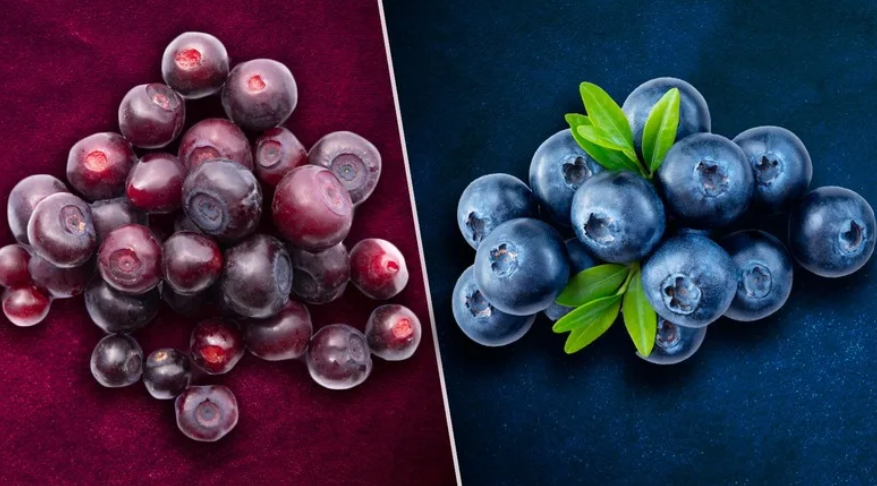
The "Crown": Huckleberries have a crown, but it is typically much less defined and star-shaped. Blueberries feature a prominent, five-pointed, star-shaped crown at the bottom tip, which is the remains of the flower's calyx.
Interior Color: When you slice them open, you will find a stark contrast. Huckleberries boast deep blue or purple flesh all the way through to the core. Blueberries have pale green or white flesh.
Skin Texture and Color: Huckleberries tend to have slightly shinier, tougher skins and range from deep red to dark, almost black, blue. Blueberries offer a more uniform true-blue color and feature a powdery, matte "bloom" on the outside.
4. Seeds and Texture
How a berry feels when you bite into it is perhaps the most reliable "blind taste test" for distinguishing the two.
Huckleberries provide a distinct crunch. Inside every huckleberry are about 10 hard, noticeable seeds. While some find this crunch satisfying, others note that the seeds can taste slightly bitter if chewed individually.
Blueberries are soft and juicy. They contain numerous, incredibly tiny seeds that are so soft they are virtually unnoticeable.
5. Flavor Profiles
Both berries are incredibly delectable in baked goods, but their flavors are quite different.
Huckleberries have a richer, more complex flavor. Often described as woodsy, tart, and tangy, huckleberries pack a more aggressive punch of flavor than their sweeter cousins. The exact flavor varies by color. Red huckleberries tend to be quite tart, while darker purple and blue huckleberries are sweeter.
Blueberries have a generally sweet, mild, and distinctly floral taste. Cultivated blueberries are very sugary, while wild blueberries are a bit more concentrated and intense.
Culinary Uses: Can You Swap Them?
When it comes to cooking the berries, you can usually substitute huckleberries for blueberries (and vice versa) in many of your favorite recipes. Because huckleberries are a bit more tart and have larger seeds, many traditional recipes use them in jams, jellies, syrups, and thick pastries like cobblers and buckles. The sturdy skin of the huckleberry also holds up beautifully in scones and pies.
If you are cooking with blueberries, their softer, juicier nature makes them perfect for fluffy pancakes, muffins, and light sauces.
Summary
Whether you are foraging wild huckleberries in the mountains or picking up a carton of blueberries at your local market, you are in for a treat.
Huckleberries provide a rugged, complex, and tart forest experience. Blueberries offer a sweet, convenient, and reliably sugary bite. Knowing the differences will only enhance your appreciation for these incredible woodland and agricultural fruits.
Which is Which?
Now that you know about huckleberries and blueberries, can you identify which is which in the photo below?
About the Creator
Margaret Minnicks
Margaret Minnicks has a bachelor's degree in English. She is an ordained minister with two master's degrees in theology and Christian education. Thanks for reading and sending TIPS her way.
Enjoyed the story? Support the Creator.
Subscribe for free to receive all their stories in your feed. You could also become a paid subscriber, letting them know you appreciate their work.
Comments
There are no comments for this story
Be the first to respond and start the conversation.