short story
🌍 World Enters Relax Mode After Rising War Tensions
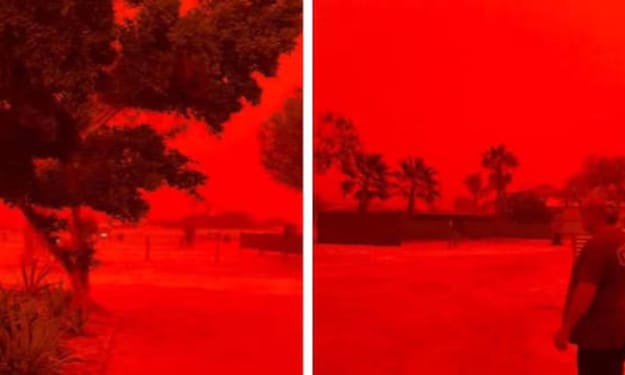
🌍 World Enters Relax Mode After Rising War Tensions After months of rising tensions, military alerts, and global uncertainty, the world is finally entering what many experts are calling a “Relax Mode” from war fears. Diplomatic talks, ceasefire agreements, and renewed cooperation among nations are helping reduce anxiety and bring hope back to millions of people around the globe.
By Wings of Time 5 months ago in Earth
The Imposible Landing
On July 19, 1989, United Airlines Flight 232 departed Denver for Chicago, carrying 296 people across a clear Iowa sky. The DC-10 was a massive three-engine aircraft, a workhorse of the era, manned by a highly experienced crew. One hour into the flight, a violent jolt rocked the cabin as the rear engine, mounted on the tail fin, suffered a catastrophic failure.
By Edge Words5 months ago in Earth
The Gendered Expectations of “Graceful” vs. “Aggressive” Play. AI-Generated.
In the world of sports, the language used to describe athletes is rarely neutral. Words such as “graceful,” “elegant,” “explosive,” and “aggressive” carry implicit value judgments that shape how performances are perceived. These descriptors are not applied evenly; rather, they are deeply entangled with gendered expectations that influence commentary, coaching, media narratives, and even athlete self-perception.
By Gus Woltmann5 months ago in Earth
The Bittersweet Story of Chocolate – From Sacred Rituals in Mesoamerica to a Global Indulgence
Chocolate feels familiar today wrapped, sweetened, easily available. It’s part of celebrations, comfort, gifting, and everyday indulgence. But its story begins far from modern shelves. Long before it became a dessert, chocolate was a ritual, a currency, a symbol of power, and a deeply valued cultural element.
By The Origin6 months ago in Earth
⭐ East-West Line
Saudi Arabia East- West Petroline The Middle East has long been the center of global energy politics, with its vast oil and gas reserves shaping not only regional dynamics but also the priorities of major world powers. However, in recent years, a critical question has emerged: should the world continue relying on a few strategic maritime chokepoints for energy transportation, or is it time to develop alternative routes?
By Wings of Time 6 months ago in Earth
Israel-Iran War: Environmental Risks Overview
Nearly a month into the Israeli-US war against Iran, it is clear that the environmental costs for Iran and the wider region have been substantial and are continuing to mount. The primary environmental threat during this stage of the war is conflict-linked pollution, which has the potential to impact public health, as well as terrestrial and marine ecosystems, and natural resources such as soils and aquifers. Contamination of water bodies is of particular concern for Iran, where drought and mismanagement have depleted water resources.
By Ibrahim Shah 6 months ago in Earth
Pakistan is Now the World’s “Guru”
Pakistan is Now the World’s “Guru” In recent years, Pakistan has quietly transformed its global image. Once viewed mainly through the lens of regional conflicts and economic challenges, Pakistan is now increasingly seen as a country offering diplomatic balance, strategic wisdom, and peace-focused leadership. This shift has led many analysts and observers to describe Pakistan as becoming a "world’s guru" — a nation offering guidance in an increasingly unstable global environment.
By Wings of Time 6 months ago in Earth
How the Ukulele Came from Portugal to Hawaii
A Small Instrument with a Big Journey The ukulele may look like a simple and cheerful instrument, but its story is full of travel, culture, and transformation. It did not begin in Hawaii, even though many people think it did.
By Backlinks Cart6 months ago in Earth
Recent Infrastructure Issues Affecting Urban Areas in the UK
Urban infrastructure plays a critical role in supporting daily life across the United Kingdom. From water supply systems and road networks to public transport and energy distribution, cities rely heavily on well-maintained infrastructure to function smoothly. However, in recent years, many UK urban areas have faced increasing infrastructure challenges that have affected both residents and local economies.
By Backlinks Cart6 months ago in Earth
The Day the River Stopped Singing
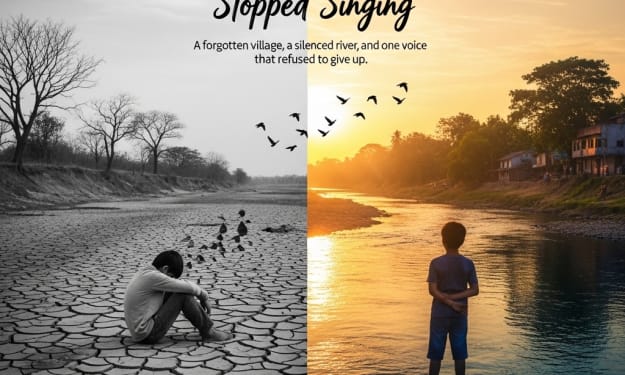
The village of Sundarpur was known for one thing—the river. It flowed gently along the edge of the village, shimmering under the sunlight, whispering secrets to the wind. The villagers believed the river was alive. Not just water, but a silent witness to their joys, their sorrows, and their lives. And among all who loved the river, no one loved it more than Aarav. Aarav was a quiet boy, the kind who preferred listening over speaking. While other children played in the dusty streets, chasing kites or wrestling under banyan trees, Aarav sat by the riverbank. He would watch the water for hours. Sometimes, he spoke to it. “Do you ever get tired?” he once asked, dipping his fingers into the cool current. The river flowed on, as if smiling. His mother used to laugh. “You and that river… one day you’ll forget the world and become part of it.” But Aarav didn’t mind. The river understood him in ways people didn’t. It knew his fears. It knew his dreams. And most importantly, it knew his pain. --- Aarav’s father, Dev, was once a strong and cheerful man. He worked in the fields from sunrise to sunset, his laughter echoing across the land. But over time, something changed. The rains began to fail. The crops withered. Debts grew like weeds. And slowly, Dev’s laughter disappeared. At night, Aarav would hear hushed arguments between his parents. “We can’t survive like this,” his mother would whisper. “I’m trying,” his father would reply, his voice heavy. But trying wasn’t enough anymore. One evening, Dev sat beside Aarav at the riverbank. It was rare—he hadn’t come there in years. The sky was painted in fading gold, and the river shimmered softly. “Do you like this place?” Dev asked. Aarav nodded. “It listens to me.” Dev smiled faintly. “That’s a good thing. The world doesn’t always listen.” They sat in silence for a while. Then Dev said something strange. “If I ever go away… will you take care of your mother?” Aarav frowned. “Where would you go?” Dev didn’t answer. He just stared at the river, as if searching for something within it. --- The next morning, Dev was gone. At first, they thought he had gone to the fields early. But he didn’t return. Not by noon. Not by evening. Not the next day. The village searched everywhere—the fields, the roads, nearby towns. But Dev had vanished. As if the earth had swallowed him whole. Aarav’s mother stopped speaking much after that. Her eyes were always tired, her voice always distant. But Aarav didn’t cry. Instead, he went to the river. “Where is he?” he asked, his voice trembling. The river flowed on, unchanged. For the first time, it felt… silent. --- Years passed. Aarav grew taller, stronger—but quieter. He worked in the fields now, doing the work his father once did. Life had hardened him, but it hadn’t broken him. Every evening, he still went to the river. But he no longer spoke. Not because he didn’t want to. But because he was afraid of the silence. The river didn’t feel the same anymore. It no longer “sang.” --- One summer, the heat became unbearable. The sun burned the land mercilessly. The soil cracked. Wells began to dry. And then, something unthinkable happened. The river started shrinking. At first, it was barely noticeable. But day by day, the water level dropped. The gentle current slowed. The shimmering surface dulled. The river was… dying. Panic spread through Sundarpur. “If the river dries, we’re finished,” the villagers said. Meetings were held. Prayers were offered. But nothing changed. Aarav stood at the riverbank, staring at what remained. “This can’t happen,” he whispered. For the first time in years, he spoke to the river again. “Please… don’t leave.” But the river gave no answer. --- Determined, Aarav decided to find the source of the river. “If I can understand why it’s drying, maybe I can save it,” he thought. No one had ever tried before. The river had always been there. Endless. Eternal. Or so they believed. With a small bag of food and a heart full of hope, Aarav began his journey upstream. The path was difficult. Rocky hills, dense forests, and long, silent stretches of land. Days passed. The river grew narrower. Weaker. Like a fading heartbeat. And then, one evening, Aarav found something that made his heart stop. A dam. A massive wall of stone and concrete, blocking the river’s flow. Behind it, water had collected into a vast, still reservoir. But beyond it… Nothing flowed. The river that once gave life to Sundarpur had been cut off. --- Aarav approached the structure, his fists clenched. A group of workers stood nearby. “Who built this?” Aarav demanded. One man shrugged. “A company from the city. They said it’s for development.” “Development?” Aarav’s voice shook. “You’re killing our village!” The men looked away. “It’s not our decision,” another said quietly. Aarav felt anger rise within him—but beneath it was something deeper. Helplessness. --- That night, he sat beside the still water behind the dam. For the first time in years, he cried. Not just for the river. Not just for the village. But for everything he had lost. His father. His childhood. His belief that the world was fair. “Why does everything leave?” he whispered. The silence felt unbearable. But then… A memory surfaced. His father’s voice. “The world doesn’t always listen.” Aarav wiped his tears. “Maybe the world doesn’t listen,” he said slowly. “But that doesn’t mean I should stop speaking.” --- The next morning, Aarav made a decision. He would fight. Not with anger. But with courage. --- He traveled to the city—a place he had only heard about. Tall buildings. Endless noise. People who never looked at each other. It felt nothing like Sundarpur. Aarav struggled at first. No one cared about a boy from a small village. No one listened. But he didn’t give up. He spoke to officials. He wrote letters. He told anyone who would listen about the river. Most ignored him. Some mocked him. But a few… listened. A journalist heard his story. Then another. Soon, the story spread. “A village losing its lifeline.” “A river silenced.” People began to pay attention. Questions were raised. Investigations started. --- Weeks later, Aarav stood once again before the dam. But this time, he wasn’t alone. Officials, engineers, and reporters surrounded the site. After much debate and pressure, a decision was made. The dam gates would be partially opened. Water would flow again. Not fully. But enough to bring life back. --- Aarav held his breath as the gates slowly lifted. For a moment, nothing happened. Then— A rush of water burst through. Powerful. Alive. Unstoppable. The river had found its voice again. --- When Aarav returned to Sundarpur, the village gathered at the riverbank. Tears filled their eyes as the water flowed once more. Children laughed. Farmers smiled. Life returned. Aarav’s mother held his face in her hands. “You brought it back,” she whispered. Aarav shook his head. “No,” he said softly. “It was always there… it just needed someone to listen.” --- That evening, Aarav sat by the river, just like he used to as a child. The water shimmered under the setting sun. And for the first time in years… The river sang again. Aarav closed his eyes and smiled. “Did you miss me?” he asked. The river flowed gently, as if answering. And in that moment, Aarav realized something important. Some things may fade. Some may disappear. But if you care enough to fight for them… They can find their way back. --- And as the stars lit up the sky, the river carried his story forward—whispering it to the wind, the trees, and anyone willing to listen. Because the river had learned something too. Even silence… can be broken. All it takes is one voice that refuses to give up.
By Wasif islam6 months ago in Earth