
The Pipes Held Until Christmas Eve
A Saint Paul homeowner on the night the polar vortex found a 1948 supply line.

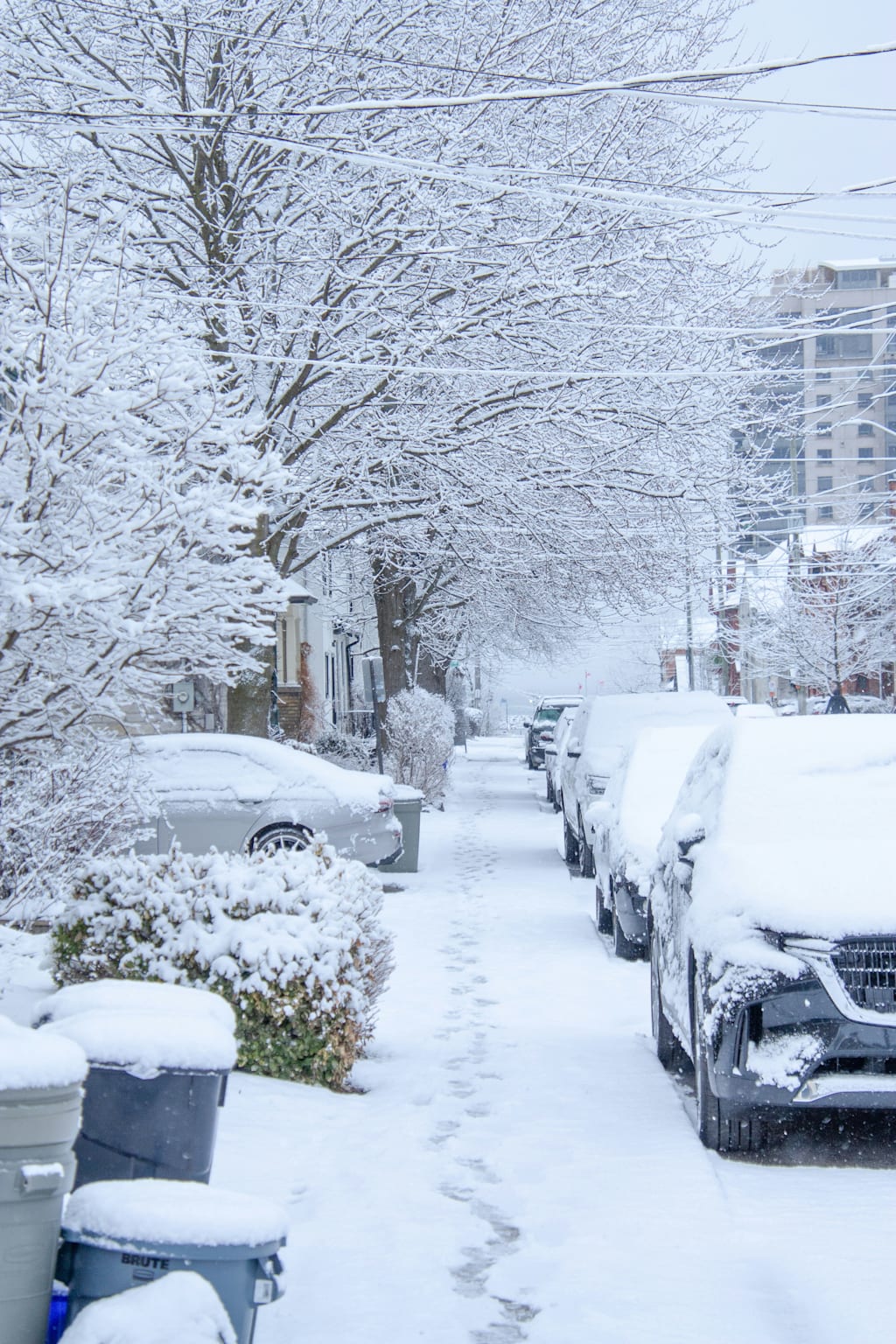
It is 4:18 in the morning of December 23, 2022, in a 1948 stucco house on the Saint Paul side of the river, and a man stands in his kitchen in sweatpants and snow boots watching water come down through the recessed light fixture above the sink. The temperature outside is −12°F, the official low at MSP that morning per NWS, and the wind has been blowing 30 to 45 miles an hour for the past 18 hours. The man is me. I have been awake since 3:47, when my daughter — she is eight, a slight and careful child who almost never wakes up at night — came into our bedroom holding her ear and whispered, "There's a sound under the floor." The number I dial at 4:18 belongs to the overnight dispatcher at Priority Water Damage Minneapolis, a Twin Cities outfit that does water damage restoration in Minneapolis, MN in every season but spends most of its January and February nights on the phone with people like me. The woman who picks up, a careful voice, audibly tired, does not say hello. She says, "When did the water start?"
About forty minutes ago, I tell her. Maybe an hour. I had not been timing it.
She says, all right, three things. Shut the main, which will be on the south wall of the basement next to the meter. Throw a bath towel at the base of the kitchen wall and weight it. And do not, no matter what, drive to a hardware store at four in the morning in this weather.
I tell her we are not driving anywhere.
She says: We will be at your house in about ninety minutes. The truck is in Roseville now.
The basement of a 1948 Saint Paul house is not, on a normal December morning, a place I think much about. There is a furnace, an old laundry tub from the second owner, two milk crates of paperbacks I have meant for years to donate, a model airplane my son did not finish, a length of galvanized half-inch supply line bolted to the joist along the south wall. The galvanized line is the same iron my grandfather installed for his father in this house in 1948. I know this because my own father — born in this house in 1949, raised in it, and the keeper of the title until 2009, when he sold it to me at 27 percent below appraisal — told me the year and the man. The line has carried water under that joist for seventy-four years.
What I learn at 4:32, standing in the basement in those snow boots with a flashlight, is that the rupture is not where the pipe is frozen. The freeze is at the elbow under the kitchen sink upstairs. The geyser, a 6-inch longitudinal split that looks like a small open mouth, is in the basement, 8 feet downstream of the elbow, on a section of pipe that had probably been weeping at the joint for some indeterminate number of years and just hadn't pushed itself into a crisis until the trapped water between the ice plug and the closed faucet rose to several hundred pounds per square inch and gave up at the weakest place it could find.
You have to read this twice. The freeze is in the wall. The break is in the basement. Water that you cannot see going through the wall in the kitchen is, in fact, mostly going through the basement. The puddle on the kitchen floor is the small fraction that has come back up the wall cavity through a gap in the lath. The bigger problem is the basement.
I find the main shutoff. The valve is a quarter-turn ball type the previous owner installed in 2014, which is the only modern thing in the room. I shut it. The geyser does not stop. I watch it pulse, weakening, for forty more seconds, until the pressure in the line drains down through itself and the geyser becomes a small cone, then a stream, then a drip, then nothing.
I sit down on a milk crate. I notice that I have been holding my breath.
The crew that comes through the back door at 5:51 a.m. is two men and a woman in work pants and Carhartt jackets, with hard hats and a big white truck whose lights I had watched coming up the alley. The crew chief, a man of maybe 35 with gray at his temples and steady hands, introduces himself as Gus. The woman, Renata, is the moisture-meter tech. The third man is Henry, who is 23, who has been with Priority for about eight months, and who is, I will learn, sleeping at his cousin's place out in Coon Rapids because his own apartment in Brooklyn Center had its furnace go out three days earlier. Gus walks the basement first. He puts the back of his hand on the pipe at the rupture. He says, to nobody, "Thirty-eight years of this." Then he sets up.
What they do, in roughly the next hour, is what the Institute of Inspection, Cleaning and Restoration Certification — the body whose ANSI document, S500, is the legal standard for residential water-damage work — calls primary mitigation. Renata runs a moisture meter along the joists, the sill plate, the plywood subfloor, and the bottom of the kitchen cabinets, and she calls out numbers to Henry, who writes them on a clipboard. Gus pulls out the section of galvanized pipe with a sawzall, caps both ends, and plumbs in a temporary length of PEX so we can have water at the kitchen and bathroom by mid-morning if we want it. The temporary line is bright blue. It looks, against the gray of the basement, like a piece of a swimming pool. They run six air movers along the basement wall and one larger low-grain-refrigerant dehumidifier the size of a dorm fridge. The whole machine sounds like the inside of a small airplane.
Gus tells me the basement will be dry to standard in five days. He says the kitchen ceiling will be dry by Tuesday. He says, when my wife walks in with two cups of coffee for them, that they had taken six other calls since two a.m. and that one of those had been a vacant rental over in Highland whose owner had turned the heat down to 50 to save money on the gas bill, which he says without judgment, with the small sadness of seeing waste. Some carriers spell out a minimum, he says. Most just say "reasonable." You leave the heat at 60, you can survive almost anything. Drop into the 40s, and the carrier has its argument to deny.
It is 7:14 by the time the equipment is running and they are gone. The light is just starting to come up in the windows. There is a foot of snow on the deck. The thermometer on the porch reads −9°F. My son is downstairs in the basement now, in his pajamas and his winter boots, watching the air movers turn. My daughter has gone back to sleep in her bedroom on the warmer side of the house with the door cracked open. I make a fresh pot of coffee, which I drink standing up at the counter, looking at the wet ring around the recessed light fixture above the sink. The fixture is a hand-me-down from my mother — bronze-colored, about the size of a saucer — that she put in in 1998. I see, watching it dry, that the burst sent a precise tide of water around its rim that has left a faint coppery stain.
It will be there for years. I will see it every morning when I make breakfast. My son, who is six, will be older when it finally goes away. The line my grandfather installed for his father in 1948 held for 74 years. It held, almost, until Christmas Eve.
About the Creator
Eric Halberg
I live with my family in Saint Paul, Minnesota, in a 1948 stucco house on the south side of the river. I write occasionally about Twin Cities winters, old houses, and the people who fix them.
Enjoyed the story? Support the Creator.
Subscribe for free to receive all their stories in your feed.
Comments
There are no comments for this story
Be the first to respond and start the conversation.