
"Time to Say No" – Ben Gvir's Challenge and the Growing Netanyahu–Trump Divide
Could Political Differences Reshape Israel's Future and Impact Global Politics?

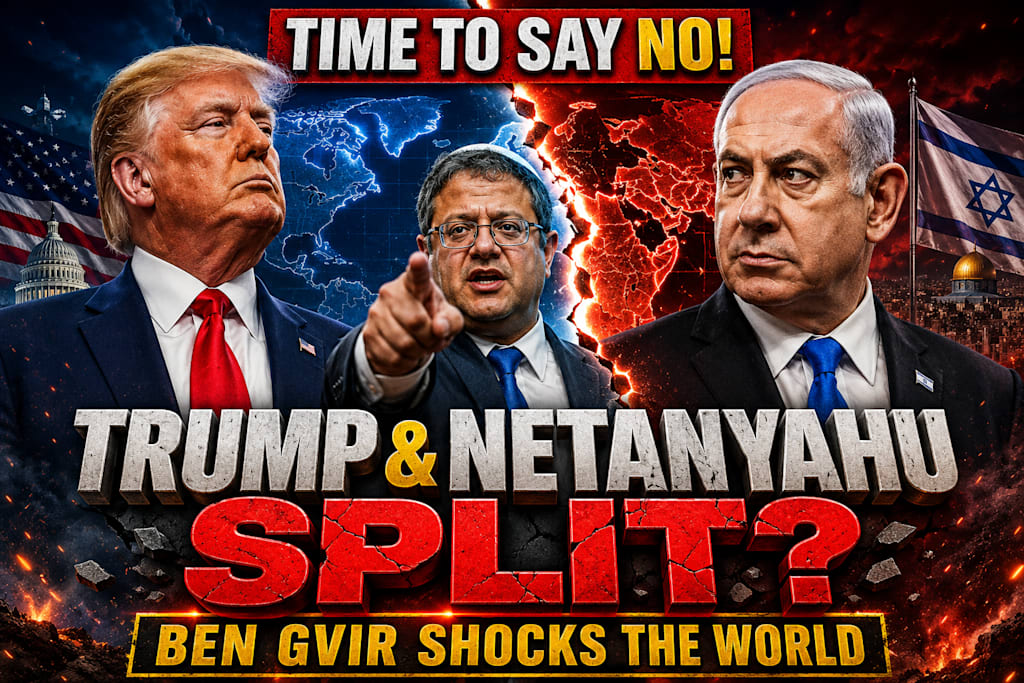
"Time to Say No" – Ben Gvir's Challenge and the Growing Netanyahu–Trump Divide
The political landscape of the Middle East has always been complex, but recent developments have sparked fresh debates among analysts and observers worldwide. A statement widely associated with Israeli politician Itamar Ben Gvir—"Time to Say No"—has fueled discussions about the future direction of Israeli politics, the leadership of Prime Minister Benjamin Netanyahu, and the evolving relationship between Netanyahu and former U.S. President Donald Trump.
For many years, Netanyahu and Trump were viewed as close political allies. During Trump's presidency, relations between the United States and Israel reached a new level of cooperation. Major decisions, including the recognition of Jerusalem as Israel's capital and the Abraham Accords, strengthened the perception of a strong partnership between the two leaders. However, politics is rarely static, and alliances often change as circumstances evolve.
In recent years, political observers have noticed signs of disagreement and growing distance between Netanyahu and Trump. While both figures continue to have significant influence among their supporters, differences in strategy, priorities, and political messaging have occasionally become visible. These developments have led commentators to question whether the once-powerful alliance is facing its greatest challenge.
The phrase "Time to Say No" has become symbolic of a broader debate within Israeli politics. Some political voices argue that Israel must adopt new approaches to security, governance, and international relations. Others believe that maintaining traditional policies remains essential for national stability. The discussion reflects the diverse perspectives that exist within Israeli society and highlights the difficulties faced by leaders attempting to balance domestic concerns with international pressures.
At the same time, global events have placed additional strain on political relationships. The Middle East remains one of the world's most strategically important regions. Decisions made in Jerusalem, Washington, and other capitals can have far-reaching consequences for regional security, economic stability, and diplomatic cooperation. As a result, even small shifts in political alliances often attract international attention.
The relationship between Netanyahu and Trump is particularly significant because of its symbolic value. Their partnership represented a period of strong cooperation between certain political movements in both countries. If that relationship continues to weaken, it could signal broader changes in political alignments, not only in Israel and the United States but across the international stage.
However, it is important to approach such developments with caution. Political disagreements do not necessarily mean permanent separation. Throughout history, leaders have disagreed on major issues while continuing to work together when shared interests required cooperation. Politics often involves negotiation, compromise, and strategic adjustments rather than simple alliances or rivalries.
The broader question is what these developments mean for the future. Some analysts believe that new political realities could emerge, leading to shifts in policy priorities and international partnerships. Others argue that existing alliances remain strong enough to withstand temporary disagreements. The outcome will depend on elections, public opinion, regional developments, and decisions made by key political figures in the coming years.
For ordinary citizens, the most important concern is stability. Political tensions can influence economic conditions, investment, international relations, and security policies. Whether in the Middle East, North America, Europe, or elsewhere, people often hope that political leaders will find solutions that reduce conflict and promote cooperation.
As discussions continue, one thing remains certain: the world is watching closely. Statements such as "Time to Say No" have become more than political slogans; they represent larger questions about leadership, alliances, and the future direction of international politics. Whether these developments mark a temporary disagreement or the beginning of a significant political transformation remains to be seen.
The coming months and years may reveal whether the Netanyahu–Trump relationship can adapt to changing circumstances or whether a new chapter in Middle Eastern and global politics is about to begin. Whatever the outcome, the decisions made today could influence international relations for years to come.
About the Creator
Wings of Time
I'm Wings of Time—a storyteller from Swat, Pakistan. I write immersive, researched tales of war, aviation, and history that bring the past roaring back to life
Enjoyed the story? Support the Creator.
Subscribe for free to receive all their stories in your feed.
Comments
There are no comments for this story
Be the first to respond and start the conversation.