cartel
In the vast criminal underworld, cartels reign supreme; get the full scope of global drug trafficking networks from notorious kingpins down to lowly street pushers.
The jury's options in Lindsay Clancy's murder trial
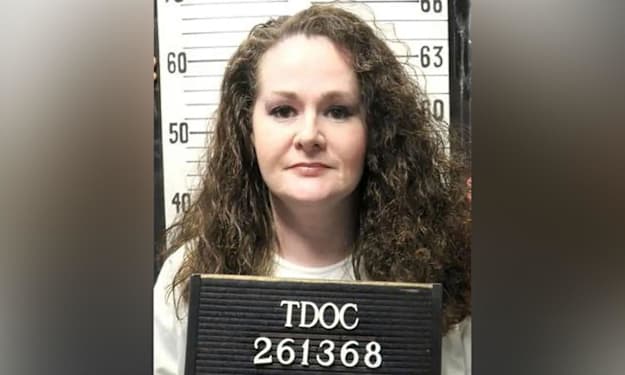
The Lindsay Clancy murder trial has reached one of its most consequential stages, with a Massachusetts jury considering the possible verdicts in the deaths of her three young children. After weeks of testimony, prosecutors and defense attorneys have presented sharply different explanations of what happened inside the Clancy family home in Duxbury in January 2023.
By Sagheen Khan15 days ago in Criminal
Proper Channels
At St. Brigid’s Municipal Crematorium Chapel, we have a form for everything except embarrassment. Detective Elias Mercer arrived at eleven forty-three in the morning inside a walnut-colored coffin with brass handles, accompanied by six police officers, three municipal administrators, one former wife, and a sealed envelope marked PERSONAL EFFECTS — DO NOT INVENTORY . Naturally, I inventoried it.
By Jesse Shelleyabout a month ago in Criminal
Dolya: The Pakhan wears heals. AI-Generated.
“_Privet_, Rodger. Did the shipment clear?” Clementine’s voice was ice over silk. She adjusted the cuff of her Dior blazer with her free hand, watching Bangkok traffic crawl 30 floors below. No one in the fashion house beneath her knew their CEO was on the phone with a container yard full of illegal AKs.
By Bianca Holder3 months ago in Criminal
"Time to Say No" – Ben Gvir's Challenge and the Growing Netanyahu–Trump Divide
"Time to Say No" – Ben Gvir's Challenge and the Growing Netanyahu–Trump Divide The political landscape of the Middle East has always been complex, but recent developments have sparked fresh debates among analysts and observers worldwide. A statement widely associated with Israeli politician Itamar Ben Gvir—"Time to Say No"—has fueled discussions about the future direction of Israeli politics, the leadership of Prime Minister Benjamin Netanyahu, and the evolving relationship between Netanyahu and former U.S. President Donald Trump.
By Wings of Time 3 months ago in Criminal
The Last Train Out
M Mehran The clock on the station wall read 11:47 PM when Detective Sarah Chen realized she'd made a terrible mistake. She'd been tracking Marcus Webb for eighteen months—a man so careful, so calculated, that following him felt like chasing smoke. But tonight, on this abandoned platform at the edge of the city, everything had finally come together. Except nothing was going according to plan. Sarah's radio crackled. "Units approaching from the north," dispatch confirmed. Good. Backup was minutes away. She just needed to keep Webb talking until then. "You know what I figured out about you?" Marcus said, his voice echoing through the concrete tunnel. He stood near the tracks, impeccably dressed despite the late hour—tailored coat, polished shoes, hair swept back with precision. Everything about him suggested control. Everything about him screamed danger. Sarah kept her hand near her service weapon. "What's that?" "You think you understand criminals. You read our files, profile us, predict our moves. But you don't really understand the why. You only understand the what." He smiled, and it sent a chill down her spine. "You found the missing girls?" Her stomach tightened. The missing girls. Three teenagers vanished from the city in the past two years. Parents had plastered the neighborhoods with photos. Vigils had been held. Sarah had spent countless nights reviewing traffic cameras and witness statements, and every trail led back to Marcus Webb—but she could never prove it. Never find the girls. "Where are they?" Sarah demanded. "That's the question that's been eating at you, isn't it?" Marcus took a step toward her. "You're lying awake at night, imagining their mothers' faces. You're carrying the weight of failure like a stone in your chest." "I'm warning you—" "I'm giving you something far more valuable." He reached into his coat, and Sarah drew her weapon. "Easy. Just a phone." He pulled it out slowly, deliberately, and tossed it at her feet. "Everything you need is on there. Every location, every transaction, every person who helped me. Names, dates, times. Enough to prosecute me and everyone in my organization ten times over." Sarah stared at the phone, every instinct screaming that this was a trap. But when she looked up at Marcus, she saw something in his eyes she hadn't expected: exhaustion. "Why?" she asked. "Because I'm tired," he said simply. "And because my daughter asked me to be." The wind howled through the station tunnel, carrying with it the sound of an approaching train. Marcus glanced at the tracks, then back at Sarah. "My daughter—Emma, she's eight years old. Smart kid. Last month, she came home from school and asked me what I did for work. My wife had always handled that conversation, but she was out of town. So I told her. Not everything, but enough." He paused, his jaw tightening. "You know what she said? She said that when the police came to talk at school about staying safe, the officer told them that bad people usually have to go to prison because they hurt other people. Then Emma looked at me and asked if I was a bad person." Sarah waited, sensing there was more. "I realized," Marcus continued, "that I could spend my life running, hiding, building empires built on suffering. I could spend eighteen more years doing exactly what you've been trying to stop me from doing. Or I could choose something different. For her. For myself." He took another step toward the tracks. "I'm going to make this very simple for you, Detective. You pick up that phone. You use everything on it to shut down my operation and save those girls. And in about ninety seconds, that train is going to arrive." Understanding crashed over Sarah like ice water. "No. Don't do this." "It's the only way," Marcus said quietly. "If I stand trial, my people will protect me. I'll spend decades in court, and the case against me will be questioned, challenged, appealed. But this way? This way, there's no corruption angle. No one can say justice was corrupted because I'm just... gone." "That's murder," Sarah whispered. "It's redemption," he replied. "Emma won't have a father in prison. She won't have to visit me on Saturdays and pretend she doesn't know what I've done. She'll have a story—a sad one, yes, but a simple one. An accident. A tragedy. But not a legacy of shame." The sound of the train grew louder, the distant light appearing at the tunnel's mouth like an approaching star. "Where are the girls?" Sarah asked desperately. "Tell me where they are—I can save them right now. You don't have to do this." "They're at the coordinates marked on that phone. They're alive, Detective. They're scared, they're hurt, but they're alive. That's something, isn't it?" Sarah moved toward him, but Marcus stepped closer to the edge of the platform. The train's headlight blazed brighter, filling the tunnel with harsh white light. "Thank you," Marcus said, and for the first time, his careful composure cracked. Tears streamed down his face. "For finding me. For giving me a reason to stop." The train's horn screamed through the station. Sarah lunged, reaching for his coat, but her fingers found only air. She watched, helpless, as the train's massive frame filled her vision and Marcus Webb simply... disappeared. Everything after that became a blur of sounds and chaos. The emergency stop. The screaming of metal against metal. Officers rushing onto the platform. Paramedics arriving, though there was nothing they could do. Sarah stood in the center of it all, shaking, still holding Marcus's phone in her trembling hand. The coordinates led them to an abandoned warehouse six blocks away. The three girls were found in an underground room—malnourished, traumatized, but alive. Their rescue made headlines across the state. News anchors called it a breakthrough. Parents rejoiced. Sarah became the face of justice, the detective who solved the city's most haunting mystery. But alone in her apartment, long after the celebrations ended and the media moved on to other stories, Sarah sat with the full file Marcus had left her. She saw the web of corruption he'd built—city officials, judges, even two of her own colleagues whose names appeared in his detailed records. She saw the scope of his operation, the careful manipulation, the ruthlessness. And she also saw his last entry, a video file dated the night he died. Sarah almost didn't watch it. But her fingers moved across the screen almost of their own accord. Marcus's face appeared, calm and controlled, his daughter Emma visible behind him, playing with dolls in the background. "Detective Chen," he said, "if you're watching this, then I got what I wanted. Emma gets a chance at a normal life. The girls get to go home. And you—you get to know that one criminal, at least, understood that the damage he'd caused had to stop. Not all wrongs can be made right. But some can. And that has to be enough." The video ended, and Sarah sat in the darkness of her apartment, wondering if she'd just witnessed a man's redemption or a perfectly executed escape from justice. She wondered if Marcus Webb had engineered his own death not out of remorse, but out of defiance—one final move that left her and everyone else questioning everything they thought they knew about guilt, redemption, and the cost of justice. Outside her window, the city hummed with its nightly rhythms, indifferent to the moral questions that kept her awake. Somewhere in those streets, Marcus's organization had already begun reorganizing under new leadership. Some of his people were still out there. But the girls were home. That, at least, was something. And in the end, maybe that's all any of us can ask for—that we do something good before we go.
By Muhammad Mehran4 months ago in Criminal
The Criminal Who Never Stole Anything
M Mehran The city never slept—but it always whispered. They called him a criminal. A ghost. A myth stitched together by fear and late-night rumors. No one knew his real name, and yet everyone spoke about him like he lived next door. What made him different wasn’t what he took. It was what he left behind. Every crime scene was clean. No fingerprints. No forced entry. No missing valuables. But on every table, every desk, every cold marble surface—there was always something. A letter. Short. Handwritten. Personal. “I know what you did.” At first, the police dismissed it as a prank. Then the letters started revealing truths—hidden affairs, illegal deals, buried secrets. Things no outsider should know. One night, Detective Harris received one. He hadn’t even reported a crime. The envelope appeared on his desk sometime between midnight and dawn. Inside, a single sentence: “You arrested the wrong man in 2012.” Harris felt his throat tighten. That case had haunted him for years. A young boy, barely 19, convicted on weak evidence. Harris had convinced himself it was justice. Now, doubt clawed its way back. This “criminal” wasn’t stealing money. He was stealing peace. Days turned into chaos as the city unraveled. Politicians resigned overnight. CEOs vanished. Families broke apart under truths that had been buried for decades. People started locking their doors earlier. Not because they feared being robbed—but because they feared being exposed. Then something strange happened. Crime rates dropped. Why risk doing something illegal… when someone out there already knew? The media exploded with theories. Was he a hacker? A former detective? A vigilante? But no one ever saw him. Except one person. A street kid named Lian claimed he saw the man one night sitting on a rooftop, writing by the dim glow of a streetlight. “He looked… calm,” Lian said. “Not like a bad guy. More like someone tired of lies.” Weeks later, Harris reopened the 2012 case. And for the first time, he admitted it publicly: “I was wrong.” The city froze. That confession triggered something powerful. Others followed. Truths surfaced—not forced, but chosen. And just like that… The letters stopped. No goodbye. No explanation. No final message. Only silence. Years later, people still talk about him. Not as a criminal—but as something else. A mirror. Because in the end, he didn’t break into homes. He broke into conscience.
By Muhammad Mehran4 months ago in Criminal
A Night That Changed Everything
M Mehran The call came at 2:47 in the morning. Detective Mara Voss had learned, after sixteen years on the force, that nothing good ever arrived at that hour. She sat up in the dark of her apartment, heart already moving faster than her thoughts, and pressed the phone to her ear. "We've got one at the Eastside Motel," said the dispatcher. "Room 9. Manager found the door open." She was in the car within four minutes. The Eastside Motel was the kind of place that didn't ask questions — the kind that rented rooms by the hour and kept the blinds permanently closed. When Mara pulled into the parking lot, she counted three police cruisers already on scene, their red and blue lights painting the wet asphalt like a crime painting come to life. She ducked under the yellow tape. Room 9 smelled like cigarettes and something older, something chemical underneath the carpet. On the bed, fully clothed, lay a man in his late fifties. No visible wounds. No signs of a struggle. His hands were folded across his chest with an almost theatrical neatness, and beside him on the nightstand sat a single sealed envelope with two words written on the front in careful block letters: FOR MARA. She stopped breathing for a moment. She had never met this man. She was certain of it. And yet her name — her first name — was written in that careful, deliberate hand, as if whoever had placed it there knew exactly who would find it. She pulled on her gloves. She opened the envelope. The letter inside was six pages long, handwritten on motel stationery. It began simply: My name is Gerald Fitch. I am sixty-one years old. And I have been carrying a crime for thirty-four years. What followed was a confession — detailed, exhausting, and devastating. In the summer of 1991, Gerald Fitch had been a twenty-seven-year-old mechanic living in the small town of Creel Falls. He was broke, angry, and in love with a woman who didn't love him back. On the night of July 14th, he had followed a man named Dennis Holt from a bar on Route 9 to a gas station on the edge of town. Dennis had money. Gerald had a wrench in his jacket pocket and a decision he hadn't fully made yet. The decision made itself. Dennis Holt died on the gravel behind the gas station. Gerald Fitch took his wallet, drove thirty miles away, and threw the wrench into a river. He had never been questioned. He had never been suspected. A drifter named Calvin Reyes had been arrested three months later based on circumstantial evidence and a single eyewitness who later admitted she hadn't been sure. Calvin Reyes spent twenty-two years in prison. He was released in 2013. He died in 2019, alone, in a rented room not unlike this one. Mara sat on the edge of the bed and kept reading. The letter explained that Gerald had found her name through a newspaper article — she had been quoted in a feature about cold cases and wrongful convictions. Something in the article, he wrote, had broken something loose inside him. He had lived long enough to see what his crime had truly cost: not just Dennis Holt's life, but Calvin Reyes's life, and his family's, and the ripple of damage that moved outward through decades like a stone dropped in still water. I cannot undo what I did, he wrote near the end. But I can stop pretending it didn't happen. I want the record to say the truth. Calvin was innocent. I did it. I am sorry. I am sorry. I am sorry. The words "I am sorry" appeared eleven times in the final page. Mara counted. The coroner's report came back three days later: cardiac arrest, natural causes. Gerald Fitch had checked into the motel knowing he was dying, and he had spent his final hours writing the truth. The case was officially reopened. Calvin Reyes's conviction was posthumously overturned. His sister, a woman named Dorothea, came to the police station on a Tuesday morning in October, and Mara handed her a certified copy of the exoneration document. Dorothea didn't cry. She simply pressed her hand flat against the paper, the way you might press your hand to a warm surface just to feel the heat. "He knew," she said quietly. "He always knew they had the wrong man." Mara didn't have the right words. She never did, in moments like this. "I know," she said instead. Criminal cases are built on evidence — fingerprints, timelines, witnesses, forensics. But they live and die on something less tangible: the human need to confess, to be known, to stop carrying the weight of a thing alone. Gerald Fitch had carried his crime for thirty-four years. It had not made him free. It had only made him smaller, year by year, until he was just an old man in a motel room with six pages of motel stationery and a name he had never spoken aloud. Some people spend their whole lives running from the truth. The truth, it turns out, is faster.
By Muhammad Mehran4 months ago in Criminal