travel
True crime tourism; travel to infamous crime scenes and questionable locales from throughout history.
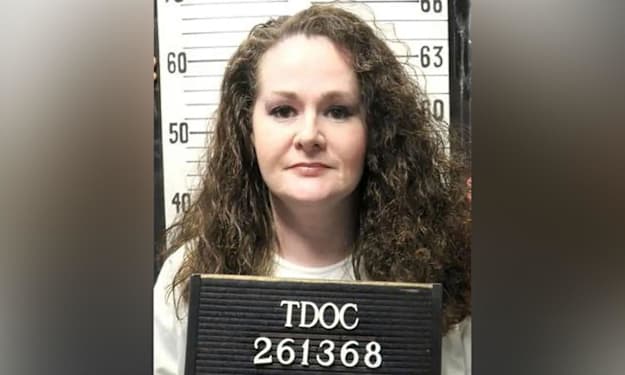
Christa Pike Latest: What Happened at Her Execution and What Happens Next
Tennessee officials attempted to execute Christa Gail Pike on Wednesday 30 September 2026, but the execution failed. As of 1 October 2026, she is alive and receiving care at an off site medical facility following two doses of pentobarbital, according to court filings submitted by her attorneys. A death penalty expert described the event as an unprecedented failure. Readers should check for ongoing developments as the situation unfolds.
By Dadson Wanjohi 25 days ago in Criminal
Fatal Bus Crash Survivor —An Open Letter to the NT
Note to reader: This letter was first published in 2024 and was lost due to a technical fault with Vocal and AWS. It is republished here, edited, with an update written on 15 July 2026 at the end. Criminal proceedings arising from the crash are before the courts; the allegations described below are drawn from the charges publicly announced by NT WorkSafe and remain to be tested at trial.
By Josh Clements3 months ago in Criminal
"Time to Say No" – Ben Gvir's Challenge and the Growing Netanyahu–Trump Divide
"Time to Say No" – Ben Gvir's Challenge and the Growing Netanyahu–Trump Divide The political landscape of the Middle East has always been complex, but recent developments have sparked fresh debates among analysts and observers worldwide. A statement widely associated with Israeli politician Itamar Ben Gvir—"Time to Say No"—has fueled discussions about the future direction of Israeli politics, the leadership of Prime Minister Benjamin Netanyahu, and the evolving relationship between Netanyahu and former U.S. President Donald Trump.
By Wings of Time 5 months ago in Criminal
The Last Train Out
M Mehran The clock on the station wall read 11:47 PM when Detective Sarah Chen realized she'd made a terrible mistake. She'd been tracking Marcus Webb for eighteen months—a man so careful, so calculated, that following him felt like chasing smoke. But tonight, on this abandoned platform at the edge of the city, everything had finally come together. Except nothing was going according to plan. Sarah's radio crackled. "Units approaching from the north," dispatch confirmed. Good. Backup was minutes away. She just needed to keep Webb talking until then. "You know what I figured out about you?" Marcus said, his voice echoing through the concrete tunnel. He stood near the tracks, impeccably dressed despite the late hour—tailored coat, polished shoes, hair swept back with precision. Everything about him suggested control. Everything about him screamed danger. Sarah kept her hand near her service weapon. "What's that?" "You think you understand criminals. You read our files, profile us, predict our moves. But you don't really understand the why. You only understand the what." He smiled, and it sent a chill down her spine. "You found the missing girls?" Her stomach tightened. The missing girls. Three teenagers vanished from the city in the past two years. Parents had plastered the neighborhoods with photos. Vigils had been held. Sarah had spent countless nights reviewing traffic cameras and witness statements, and every trail led back to Marcus Webb—but she could never prove it. Never find the girls. "Where are they?" Sarah demanded. "That's the question that's been eating at you, isn't it?" Marcus took a step toward her. "You're lying awake at night, imagining their mothers' faces. You're carrying the weight of failure like a stone in your chest." "I'm warning you—" "I'm giving you something far more valuable." He reached into his coat, and Sarah drew her weapon. "Easy. Just a phone." He pulled it out slowly, deliberately, and tossed it at her feet. "Everything you need is on there. Every location, every transaction, every person who helped me. Names, dates, times. Enough to prosecute me and everyone in my organization ten times over." Sarah stared at the phone, every instinct screaming that this was a trap. But when she looked up at Marcus, she saw something in his eyes she hadn't expected: exhaustion. "Why?" she asked. "Because I'm tired," he said simply. "And because my daughter asked me to be." The wind howled through the station tunnel, carrying with it the sound of an approaching train. Marcus glanced at the tracks, then back at Sarah. "My daughter—Emma, she's eight years old. Smart kid. Last month, she came home from school and asked me what I did for work. My wife had always handled that conversation, but she was out of town. So I told her. Not everything, but enough." He paused, his jaw tightening. "You know what she said? She said that when the police came to talk at school about staying safe, the officer told them that bad people usually have to go to prison because they hurt other people. Then Emma looked at me and asked if I was a bad person." Sarah waited, sensing there was more. "I realized," Marcus continued, "that I could spend my life running, hiding, building empires built on suffering. I could spend eighteen more years doing exactly what you've been trying to stop me from doing. Or I could choose something different. For her. For myself." He took another step toward the tracks. "I'm going to make this very simple for you, Detective. You pick up that phone. You use everything on it to shut down my operation and save those girls. And in about ninety seconds, that train is going to arrive." Understanding crashed over Sarah like ice water. "No. Don't do this." "It's the only way," Marcus said quietly. "If I stand trial, my people will protect me. I'll spend decades in court, and the case against me will be questioned, challenged, appealed. But this way? This way, there's no corruption angle. No one can say justice was corrupted because I'm just... gone." "That's murder," Sarah whispered. "It's redemption," he replied. "Emma won't have a father in prison. She won't have to visit me on Saturdays and pretend she doesn't know what I've done. She'll have a story—a sad one, yes, but a simple one. An accident. A tragedy. But not a legacy of shame." The sound of the train grew louder, the distant light appearing at the tunnel's mouth like an approaching star. "Where are the girls?" Sarah asked desperately. "Tell me where they are—I can save them right now. You don't have to do this." "They're at the coordinates marked on that phone. They're alive, Detective. They're scared, they're hurt, but they're alive. That's something, isn't it?" Sarah moved toward him, but Marcus stepped closer to the edge of the platform. The train's headlight blazed brighter, filling the tunnel with harsh white light. "Thank you," Marcus said, and for the first time, his careful composure cracked. Tears streamed down his face. "For finding me. For giving me a reason to stop." The train's horn screamed through the station. Sarah lunged, reaching for his coat, but her fingers found only air. She watched, helpless, as the train's massive frame filled her vision and Marcus Webb simply... disappeared. Everything after that became a blur of sounds and chaos. The emergency stop. The screaming of metal against metal. Officers rushing onto the platform. Paramedics arriving, though there was nothing they could do. Sarah stood in the center of it all, shaking, still holding Marcus's phone in her trembling hand. The coordinates led them to an abandoned warehouse six blocks away. The three girls were found in an underground room—malnourished, traumatized, but alive. Their rescue made headlines across the state. News anchors called it a breakthrough. Parents rejoiced. Sarah became the face of justice, the detective who solved the city's most haunting mystery. But alone in her apartment, long after the celebrations ended and the media moved on to other stories, Sarah sat with the full file Marcus had left her. She saw the web of corruption he'd built—city officials, judges, even two of her own colleagues whose names appeared in his detailed records. She saw the scope of his operation, the careful manipulation, the ruthlessness. And she also saw his last entry, a video file dated the night he died. Sarah almost didn't watch it. But her fingers moved across the screen almost of their own accord. Marcus's face appeared, calm and controlled, his daughter Emma visible behind him, playing with dolls in the background. "Detective Chen," he said, "if you're watching this, then I got what I wanted. Emma gets a chance at a normal life. The girls get to go home. And you—you get to know that one criminal, at least, understood that the damage he'd caused had to stop. Not all wrongs can be made right. But some can. And that has to be enough." The video ended, and Sarah sat in the darkness of her apartment, wondering if she'd just witnessed a man's redemption or a perfectly executed escape from justice. She wondered if Marcus Webb had engineered his own death not out of remorse, but out of defiance—one final move that left her and everyone else questioning everything they thought they knew about guilt, redemption, and the cost of justice. Outside her window, the city hummed with its nightly rhythms, indifferent to the moral questions that kept her awake. Somewhere in those streets, Marcus's organization had already begun reorganizing under new leadership. Some of his people were still out there. But the girls were home. That, at least, was something. And in the end, maybe that's all any of us can ask for—that we do something good before we go.
By Muhammad Mehran5 months ago in Criminal
A Night That Changed Everything
M Mehran The call came at 2:47 in the morning. Detective Mara Voss had learned, after sixteen years on the force, that nothing good ever arrived at that hour. She sat up in the dark of her apartment, heart already moving faster than her thoughts, and pressed the phone to her ear. "We've got one at the Eastside Motel," said the dispatcher. "Room 9. Manager found the door open." She was in the car within four minutes. The Eastside Motel was the kind of place that didn't ask questions — the kind that rented rooms by the hour and kept the blinds permanently closed. When Mara pulled into the parking lot, she counted three police cruisers already on scene, their red and blue lights painting the wet asphalt like a crime painting come to life. She ducked under the yellow tape. Room 9 smelled like cigarettes and something older, something chemical underneath the carpet. On the bed, fully clothed, lay a man in his late fifties. No visible wounds. No signs of a struggle. His hands were folded across his chest with an almost theatrical neatness, and beside him on the nightstand sat a single sealed envelope with two words written on the front in careful block letters: FOR MARA. She stopped breathing for a moment. She had never met this man. She was certain of it. And yet her name — her first name — was written in that careful, deliberate hand, as if whoever had placed it there knew exactly who would find it. She pulled on her gloves. She opened the envelope. The letter inside was six pages long, handwritten on motel stationery. It began simply: My name is Gerald Fitch. I am sixty-one years old. And I have been carrying a crime for thirty-four years. What followed was a confession — detailed, exhausting, and devastating. In the summer of 1991, Gerald Fitch had been a twenty-seven-year-old mechanic living in the small town of Creel Falls. He was broke, angry, and in love with a woman who didn't love him back. On the night of July 14th, he had followed a man named Dennis Holt from a bar on Route 9 to a gas station on the edge of town. Dennis had money. Gerald had a wrench in his jacket pocket and a decision he hadn't fully made yet. The decision made itself. Dennis Holt died on the gravel behind the gas station. Gerald Fitch took his wallet, drove thirty miles away, and threw the wrench into a river. He had never been questioned. He had never been suspected. A drifter named Calvin Reyes had been arrested three months later based on circumstantial evidence and a single eyewitness who later admitted she hadn't been sure. Calvin Reyes spent twenty-two years in prison. He was released in 2013. He died in 2019, alone, in a rented room not unlike this one. Mara sat on the edge of the bed and kept reading. The letter explained that Gerald had found her name through a newspaper article — she had been quoted in a feature about cold cases and wrongful convictions. Something in the article, he wrote, had broken something loose inside him. He had lived long enough to see what his crime had truly cost: not just Dennis Holt's life, but Calvin Reyes's life, and his family's, and the ripple of damage that moved outward through decades like a stone dropped in still water. I cannot undo what I did, he wrote near the end. But I can stop pretending it didn't happen. I want the record to say the truth. Calvin was innocent. I did it. I am sorry. I am sorry. I am sorry. The words "I am sorry" appeared eleven times in the final page. Mara counted. The coroner's report came back three days later: cardiac arrest, natural causes. Gerald Fitch had checked into the motel knowing he was dying, and he had spent his final hours writing the truth. The case was officially reopened. Calvin Reyes's conviction was posthumously overturned. His sister, a woman named Dorothea, came to the police station on a Tuesday morning in October, and Mara handed her a certified copy of the exoneration document. Dorothea didn't cry. She simply pressed her hand flat against the paper, the way you might press your hand to a warm surface just to feel the heat. "He knew," she said quietly. "He always knew they had the wrong man." Mara didn't have the right words. She never did, in moments like this. "I know," she said instead. Criminal cases are built on evidence — fingerprints, timelines, witnesses, forensics. But they live and die on something less tangible: the human need to confess, to be known, to stop carrying the weight of a thing alone. Gerald Fitch had carried his crime for thirty-four years. It had not made him free. It had only made him smaller, year by year, until he was just an old man in a motel room with six pages of motel stationery and a name he had never spoken aloud. Some people spend their whole lives running from the truth. The truth, it turns out, is faster.
By Muhammad Mehran5 months ago in Criminal
The Collector
M Mehran A Thief Who Stole for Love, Not Money The painting disappeared from the Metropolitan Museum of Art on a Tuesday night, and nobody noticed for three days. It wasn't a Vermeer or a Van Gogh—nothing mainstream enough to trigger immediate alarms. It was a seventeenth-century portrait of a woman whose name had been lost to history, painted by an artist whose work rarely commanded attention in the modern art world. To most people, its theft would have been meaningless. To the person who stole it, it was everything. Her name was Elena Vasquez, and she'd been planning this heist for five years. The Obsession Begins Elena worked as a conservator at the museum, a quiet woman in her late thirties who spent her days restoring damaged paintings and preserving artistic legacies. She had access most people would never dream of—keys to restricted areas, knowledge of security systems, expertise in handling priceless artifacts. But more importantly, Elena had something that made her unique: an all-consuming obsession with a single painting. She'd discovered the portrait during her third year at the museum. It hung in a corner of Gallery 47, a space that few visitors explored. The painting depicted a woman with haunting eyes, her expression caught between melancholy and defiance. The nameplate identified her only as "Unknown Woman," painted in 1647. There was no documentation about who she was, why she'd been painted, or where she'd come from. She was a ghost in oil and canvas, and Elena couldn't stop thinking about her. "Every painting tells a story," Elena had told her supervisor once. "But this one—this one is screaming, and nobody's listening." Over the years, Elena became obsessed with uncovering the woman's identity. She researched records from 1647, studied the artist's other works, examined the materials and techniques used. She spent nights in archives, weekends in libraries, countless hours piecing together fragments of history. But the woman remained elusive—a mystery locked in brushstrokes and pigment. The Dark Turn Obsession, Elena learned, is a slow poison that transforms logic into justification. It began with small things. She'd rearrange the painting's position slightly so more light would hit it. She'd spend her lunch breaks sitting in front of it, speaking to the portrait as though the woman could answer. She'd photograph it from every angle, filling entire hard drives with images. Her colleagues noticed the change. Elena stopped socializing. She declined promotions that would move her away from restoration work. She lived frugally, saving every penny for something nobody could quite understand. She became thin, pale, as though the obsession was consuming her physically. Then came the moment that changed everything. Elena discovered a fragment of documentation in a private collection—a handwritten note from the artist's estate mentioning "the portrait of the lady of sorrows." The note suggested the woman had been someone of significance, possibly nobility, possibly forbidden, possibly tragic. But the rest of the story was lost, destroyed, erased from history. That's when Elena made her decision. If the museum wouldn't care for the painting properly, if historians wouldn't research the woman's story, if the world had forgotten her, then Elena would steal her away and dedicate herself to solving the mystery. The painting would belong to someone who actually loved it. Planning the Perfect Theft Elena spent two years planning every detail. She studied the museum's security protocols intimately, understanding every camera angle, every guard rotation, every locked door. She researched art theft cases, learning from both successful heists and spectacular failures. She consulted restoration techniques to understand how to properly transport the painting without damage. What made Elena's plan unique was its simplicity. She didn't need an elaborate scheme involving explosives or rappel lines. She had something better: legitimate access and the knowledge of how things worked. On the night of the theft, she simply entered through the employee entrance during her scheduled shift, walked to Gallery 47 with a custom-built frame hidden beneath restoration materials, carefully removed the painting from the wall, substituted an exact replica she'd spent eighteen months perfecting, and walked out carrying it like she was bringing it to the conservation lab. The replica was so perfect that curators didn't notice the switch for seventy-two hours. The Obsession Displayed The FBI found Elena four months later in a remote farmhouse in upstate New York. The property was sparse except for one room—a shrine to the portrait. Elena had built a climate-controlled gallery within the house, and the painting hung at its center, illuminated by carefully positioned lighting she'd salvaged from the museum. The walls were covered with Elena's research: genealogical charts, historical documents, artistic analyses, photographs, sketches, and handwritten notes spanning decades. Elena had documented every theory about the woman's identity, every historical connection, every artistic insight. She'd created an obsessive archaeological dig into a single human being frozen in time. When FBI agents entered the room, they found Elena sitting in a chair facing the painting, tears streaming down her face. She wasn't violent or evasive. She simply looked at the agents with empty eyes and gestured toward her research. "Her name was Magdalena," Elena whispered. "She was the daughter of an illegitimate nobleman and a chambermaid. She was painted in secret. That's why there are no records. That's why nobody knows about her. But I found her. I finally found her." The Trial and Reckoning The trial was brief. Elena pled guilty to theft, conspiracy, and fraud. She showed no remorse, no interest in defending herself. During sentencing, the judge struggled with her case because Elena wasn't a criminal in the traditional sense. She hadn't stolen for greed or thrill-seeking. She'd stolen because love—or perhaps its twisted version—had completely consumed her ability to distinguish right from wrong. Elena received a nine-year sentence. The painting was returned to the museum, where it now hangs in a slightly different location, with more detailed documentation about its mysterious subject—documentation that Elena's research had made possible. The Question That Remains What fascinates criminologists about Elena Vasquez isn't that she committed a crime, but how obsession can transform an educated, talented person into someone willing to destroy her own life for an abstraction. She'd sacrificed career, freedom, reputation, and years of her life for a woman who'd been dead for three hundred years. Some argue Elena was mentally ill. Others suggest she was an artist in her own right, crafting an elaborate narrative around her muse. What's undeniable is this: love and obsession exist on the same spectrum, separated only by reasonableness and restraint.
By Muhammad Mehran5 months ago in Criminal
Borrowed Name
M Mehran Nora Finch found out she didn't exist on a Tuesday afternoon in a bank she had banked at for eleven years. The teller was polite about it. Professionally calm, the way people are trained to be when delivering news that makes no sense. She slid the paper across the counter and said there was a flag on the account. A discrepancy. Would Nora mind waiting while someone from the back came to speak with her? Nora minded. But she waited. What she learned in the next forty minutes dismantled everything she thought she knew about her own life. There was another Nora Finch. Same name. Same date of birth. Same Social Security number. This other Nora had a credit history stretching back six years — loans, cards, a leased vehicle, a rented apartment in Phoenix she had never visited — all of it immaculate on paper, all of it completely fraudulent. Someone had not just stolen her identity. Someone had built a life inside it. Identity Theft Has a New Face Most people picture identity theft as a faceless crime — a hacker in a dark room, a data breach, a skimmed card number moving through digital channels too fast to trace. Clean. Abstract. Distant. What happened to Nora Finch was something investigators call full identity assumption — a far rarer, far more devastating form of criminal fraud in which a perpetrator doesn't simply use someone's financial details, but constructs and inhabits an entirely parallel life under their name. It requires patience. Research. And a criminal willing to commit to a character the way an actor commits to a long-running role. "This category of crime sits at the intersection of identity fraud and psychological manipulation," said Dr. Alecia Strand, a cybercrime researcher who has studied full identity assumption cases for over a decade. "The perpetrator isn't just exploiting a number. They are, in a very real sense, becoming someone. That requires a particular kind of detachment from conventional identity — and a particular kind of obsession." The Woman Behind the Name The investigation that followed Nora's bank visit took fourteen months. It crossed three states. It involved seventeen separate financial institutions, two federal agencies, and a paper trail so meticulously constructed that investigators initially struggled to determine which Nora Finch was real. That was, of course, the point. The woman living as Nora Finch — her real name, investigators eventually established, was Sandra Cho, 38, originally from Tucson — had not chosen her victim randomly. She had chosen Nora with precision. The two women were the same age, similar in appearance, both without social media presence, both living in mid-sized cities without extensive local news coverage. Sandra had spent months observing from a distance before she moved. She obtained documents through a combination of dark web purchases and in-person social engineering — convincing institutions that she was correcting errors, updating records, reclaiming accounts that had been compromised. She was, by every account from people who encountered her as Nora, completely convincing. "The landlord in Phoenix said she was a wonderful tenant," Detective Marcus Webb recalled. "Quiet, paid early, remembered his wife's birthday. He was genuinely upset when we told him who she really was. He didn't believe us at first." The Damage That Doesn't Show on Credit Reports When people think about the cost of identity theft, they think in numbers. Fraudulent charges. Damaged credit scores. Hours spent on the phone with institutions that require you to prove you are yourself. That damage is real. For Nora Finch, it amounted to over $340,000 in fraudulent debt bearing her name and three years of legal and financial remediation. But investigators who work identity cases consistently describe a second layer of harm that statistics don't capture — the existential disorientation of discovering that your name, your history, your documented self has been occupied by someone else. Nora described it in terms that stayed with the detectives working her case. "I kept thinking about her waking up every morning as me," she said. "Signing my name. Answering to my name. What does it feel like to do that? To just — step into someone else's life and walk around in it? I couldn't understand it. I still can't." Criminal psychologists note that victims of full identity assumption often experience symptoms similar to those documented in stalking cases — a violation of personal boundaries so complete that the psychological recovery outlasts the legal and financial one by years. How Sandra Cho Was Found The thread that unraveled Sandra's parallel life was, in the end, a small one. A nurse at a medical clinic in Phoenix had flagged an inconsistency — a patient's recorded blood type didn't match what was in her file from a previous visit. The discrepancy was minor enough to dismiss as a data entry error. The nurse flagged it anyway. That flag reached a supervisor. The supervisor pulled both records. The records didn't match in ways that a data entry error couldn't explain. A quiet inquiry became a police report. A police report became a federal referral. And fourteen months after Nora Finch stood at a bank counter being told she didn't exist, Sandra Cho was arrested in a Phoenix grocery store, carrying identification that bore Nora's name, Nora's photograph, and Nora's signature — all of it perfect, all of it fake. She was convicted on twenty-three counts of fraud and identity theft. She received an eleven-year sentence. At no point did she explain why she had chosen Nora Finch specifically. Investigators believe she may not have had a reason beyond the operational — Nora was available, unguarded, and easy to become. Which is, perhaps, the most unsettling part of all. Protecting the Person You Are on Paper Full identity assumption cases remain rare — but the conditions that enable them are becoming more common, not less. Personal data is easier to obtain, institutional verification easier to manipulate, and the digital footprints most of us leave behind have become detailed enough to reconstruct a life from the outside. Experts recommend regular monitoring of credit reports across all three bureaus, alerts on all financial accounts, and immediate investigation of any unfamiliar inquiry or account. A credit freeze, while inconvenient, is currently the most effective tool available against this category of crime. Your name is not just a word. On paper, in systems, in the institutions that govern daily life — it is you. It deserves the same protection you would give anything irreplaceable. Because replacing it, as Nora Finch learned, is possible. But it takes years. And it takes something out of you that no court order can fully restore.
By Muhammad Mehran6 months ago in Criminal
The Quiet Son
M Mehran In Garrett Falls, Oregon, the Alderman house sat at the end of Birch Road like a period at the end of a long sentence. White siding. Green shutters. A vegetable garden in the back that Eleanor Alderman had kept for forty years. Neighbors remembered her kneeling in the soil every spring, hands dark with earth, humming something nobody could ever quite identify. She was 74 years old, recently widowed, and by all accounts completely devoted to the son who had moved back in to take care of her. "Daniel was so good to her," said Ruth Henley, who lived two houses down and had watched the Aldermans for decades. "He gave up everything to come home. We all said so. We all said what a good son." Eleanor Alderman died on a November morning, quietly, in her own bed. The death certificate read natural causes. Her doctor signed it without hesitation. It would be sixteen months before anyone looked closer. When Grief Becomes a Cover Story The case that unraveled around Daniel Alderman is what criminal investigators quietly call a perfect proximity crime — an offense committed so close to the victim, so wrapped inside a legitimate relationship, that the crime itself is camouflaged by love. Or what looks like love. Daniel had returned to Garrett Falls two years before his mother's death. He told people he'd left his accounting job in Seattle voluntarily, that family came first, that he couldn't live with himself leaving her alone. The town admired him for it. Casseroles appeared on the porch. People stopped him at the grocery store to say his father would have been proud. What the town didn't know was that Daniel had not left his job voluntarily. He had been terminated for financial irregularities — a fact his employer had chosen to handle quietly rather than pursue legally. He arrived in Garrett Falls carrying debt, a damaged professional record, and a mother whose estate, modest but real, represented the only financial lifeline he had left. The Slow Architecture of Elder Exploitation Elder financial abuse is one of the most underreported crimes in the United States. Estimates suggest that billions of dollars are taken from elderly Americans every year — and that in the majority of cases, the perpetrator is a family member. The reasons it goes unreported are the same reasons it succeeds. Victims often don't recognize what is happening. They trust the person involved. They fear family conflict, or losing the caregiver they depend on. And when cognitive decline is present — even mild, early-stage decline — the vulnerability multiplies. Eleanor Alderman had shown early signs of memory difficulty in the year before her death. Nothing dramatic. Repeated questions. Misplaced items. The kind of changes families absorb slowly, normalize gradually, and rarely document. Daniel documented them differently. He began accompanying his mother to every medical appointment. He became the sole point of contact for her bank. He had her sign documents she didn't fully read, in moments she wouldn't fully remember. "This is a pattern we see consistently," said Dr. Miriam Osei, a geriatric care specialist who later reviewed Eleanor's records. "The caregiver inserts themselves between the elder and every outside relationship — medical, financial, social. Isolation is not incidental to this kind of abuse. It is the method." The Detail That Opened Everything It was Eleanor's pharmacist who first raised a flag. Not a dramatic flag. Just a question, quietly passed to a social services intake worker during a routine check-in program the county had started the previous year. The question was simple: Eleanor's prescriptions had changed significantly in her final six months. Dosages adjusted. New medications added. All authorized, all signed — but the pharmacist had known Eleanor for twenty years, and something felt uneven. The intake worker passed the note along. A social worker made a call. An investigator pulled a thread. What unraveled was not a mystery novel. It was something slower and sadder — a financial record that showed Eleanor's savings account had been drawn down by $187,000 in the eighteen months before her death. Property documents bearing her signature that transferred a rental property she owned into a joint account. A will, revised eleven months before she died, that an attorney would later testify Eleanor had seemed confused about during signing. Daniel had not acted in a single dramatic moment. He had acted in a hundred small ones, each individually explainable, collectively devastating. The Town That Had to Reckon With Its Own Story Garrett Falls didn't take the investigation well. There were people — good people, reasonable people — who defended Daniel well into the evidence phase. Who remembered the casseroles he'd received, the compliments they'd given him, the narrative they'd all participated in building around a devoted son and a peaceful death. Releasing that narrative felt, to some, like losing Eleanor all over again. Like learning that something they'd believed was beautiful had been, underneath, something else entirely. "That's what makes these cases so psychologically complex for communities," said Detective Cara Lim, who led the investigation. "People aren't just processing a crime. They're processing their own role in it. Every person who called Daniel a good son is now sitting with that. That's a heavy thing to carry." Daniel Alderman was convicted of elder financial abuse and fraud. He served four years of a seven-year sentence. Eleanor's vegetable garden grew over the spring after her death, untended, full of things she had planted that nobody harvested. What We Owe the People We Love to Watch Elder exploitation is not a distant crime. It lives inside families, inside caregiving, inside the intimacy of people who need help and people who offer it. The warning signs exist. Sudden changes in financial documents. Increasing isolation from outside contact. A caregiver who speaks for the elder rather than with them. Confusion about recent transactions or signings. These signs don't prove guilt. But they are worth noticing. Worth asking about. Worth the discomfort of a hard conversation before it becomes an irreversible one. Eleanor Alderman deserved someone who noticed sooner. So do the millions of elderly people living inside the care of others, trusting completely, watched — or not — by the communities that surround them.
By Muhammad Mehran6 months ago in Criminal
She Smiled at Every Camera
M Mehran The security footage was only eleven seconds long. A woman in a beige coat, dark hair pulled back neatly, walks through the lobby of the Meridian Hotel in downtown Cleveland. She smiles at the front desk attendant. She adjusts the strap of her handbag. She steps into the elevator and presses a button. Eleven seconds. And in those eleven seconds, Detective Ray Okafor saw everything he needed to see — not evidence of guilt, not yet, but something more unsettling. She looked completely at ease. "That's what got me," Okafor said years later. "Not that she was hiding. It's that she wasn't. She looked like someone who belonged everywhere." Her name was Claire Voss. And by the time investigators figured out who she really was, she had lived fourteen different lives across nine states — and left a financial wreckage that destroyed the savings, retirement funds, and trust of over sixty people who had called her a friend. The Architecture of a Long Con Criminal fraud at Claire's level doesn't happen overnight. It's constructed — brick by brick, relationship by relationship — with the patience of someone who has studied human need the way architects study load-bearing walls. Claire was what forensic investigators classify as a long-con operator: a criminal whose entire methodology depends on becoming indispensable before becoming dangerous. She never rushed. She never pushed. She listened. That was her real weapon. "People are starving to be heard," said Dr. Jerome Atta, a behavioral criminologist who consulted on the case. "A skilled fraudster learns to feed that hunger. They make you feel seen. Then, slowly, they make you feel grateful. And gratitude is the most exploitable emotion there is." Claire had no formal psychology degree, no criminal training manual. What she had was a gift — the ability to read a room, identify the loneliest person in it, and make that person feel like the most important one. In Columbus, she was a grief counselor who helped a widow manage her late husband's estate. In Nashville, she was a financial advisor who attended her clients' children's birthday parties. In Pittsburgh, she was a life coach, a church volunteer, and the person everyone called when things went wrong. In every city, she was beloved. In every city, she was stealing. How Trust Becomes a Transaction The question investigators always get asked about cases like Claire's is the same: How did nobody notice? The answer, uncomfortable as it is, says more about human psychology than it does about criminal genius. We are wired to trust people who reflect our own values back at us. Claire didn't just learn her victims' financial situations — she learned their belief systems, their fears, their family histories. She attended the same church. She used the same phrases. She cried at the right moments. Criminal psychologists call this mirroring, and while most people do it unconsciously in normal social interaction, predatory con artists weaponize it with surgical precision. One victim, a 68-year-old retired teacher from Columbus named Shirley, described meeting Claire as feeling like running into an old friend she'd never had. "She remembered everything I told her," Shirley said. "My daughter's name. My late husband's favorite baseball team. The name of my cat. You don't think to distrust someone who remembers your cat's name." Shirley lost $94,000. The Trail She Left Behind What ultimately unraveled Claire Voss wasn't a dramatic investigation breakthrough. It was a spreadsheet. A forensic accountant in Cleveland — brought in after three separate complaints landed on the same desk in the same week — began cross-referencing names, dates, and transaction patterns. What emerged was a map of movement that stretched back eleven years and crossed state lines in a pattern too deliberate to be coincidence. Claire had been careful. But careful isn't the same as invisible. Every city she entered, she followed the same timeline: three to four months building social trust, two months of gradual financial involvement, one month of maximum extraction, then a quiet exit before anyone compared notes. The mistake that caught her wasn't greed. It was sentiment. In Cleveland, she stayed two months longer than her pattern suggested — because, investigators believe, she had genuinely grown fond of someone. A small deviation. But in criminal behavioral analysis, deviations are doorways. "She broke her own rules," Okafor said. "And the moment she did, the pattern became visible." She was arrested on a Wednesday morning at a coffee shop, sitting across from a woman she had been cultivating for six weeks. Her coffee was still hot. She hadn't run. Some investigators found that chilling. Okafor found it clarifying. "Running is what guilty people do when they're afraid of getting caught," he said. "She didn't run because she still believed she could talk her way out of it. Even at the end, she was working the con." What Claire Voss Teaches Us About Trust Financial fraud devastates in ways that go beyond money. Victims of long-con criminals frequently describe feelings of shame, self-doubt, and a profound disruption of their ability to trust — not just strangers, but friends, family, and their own judgment. The damage is psychological as much as financial. And it lingers. Criminal justice advocates argue that white-collar fraud cases like Claire's deserve the same cultural attention as violent crime — because the wounds, while invisible, are just as real. Sixty-three people trusted Claire Voss with their money and their hearts. She took both. The beige coat, the neat hair, the eleven-second smile — none of it was an accident. It was a costume she had spent a decade perfecting. And it nearly worked forever.
By Muhammad Mehran6 months ago in Criminal
The Shadow That Never Left
M Mehran The night Marcus Hale disappeared from Hollow Creek, Indiana, the air smelled like burnt wood and something else — something the locals couldn't name but would never forget. It was August 14th, a Tuesday. Corn stood tall on both sides of Route 9, and the town's one stoplight blinked yellow after midnight, the way it always did when nobody was watching. Nobody, except a criminal who had spent years learning exactly how to become invisible. A Town That Trusted Too Much Hollow Creek had 4,200 residents. Everyone knew everyone. That's the kind of detail people say like it's a comfort — small town, safe town — but criminal investigators will tell you the truth: familiarity is its own kind of blindness. Detective Lena Marsh had transferred from Indianapolis three years earlier, burned out from the city's relentless pace. She wanted quiet. She got something else entirely. "When Marcus went missing," she later told journalists, "people kept saying, nothing like this happens here. That sentence. That sentence is exactly what criminals count on." Marcus Hale, 34, was a high school history teacher. Coached junior varsity baseball on the side. Never missed a Sunday at his mother's house for dinner. He had no known enemies, no gambling debts, no secret life — or so the town believed. His truck was found three miles from his home, engine still running, door swung open like he'd stepped out for a moment and simply ceased to exist. The Psychology Behind the Crime What followed Marcus's disappearance was a masterclass in criminal methodology — not the Hollywood kind, with dramatic chases and shootouts, but the real kind. Quiet. Patient. Deliberate. Criminal psychologists who later reviewed the case described the perpetrator as a methodical offender — someone who studied routines, identified vulnerabilities, and exploited the trust of a community designed to look inward, not outward. "The most dangerous criminals are not the impulsive ones," explained Dr. Patricia Holm, a forensic psychologist who consulted on the case. "The most dangerous are the ones who understand human nature better than their victims do. They weaponize kindness. They exploit routine. They hide in plain sight." Marcus, it turned out, had been watched for weeks. His Tuesday evening ritual — a solo drive out to the old Pearson land to clear his head — had been observed, catalogued, memorized. The criminal wasn't some stranger passing through. That revelation would tear Hollow Creek apart. When the Familiar Becomes Threatening Six weeks into the investigation, Lena Marsh started noticing inconsistencies in witness statements — small things that didn't align. A neighbor who claimed to have been home all evening but whose trash cans were on the curb before 7 p.m. A coworker whose alibi depended on a phone call that cell tower data couldn't confirm. Criminal investigations, real ones, aren't about dramatic breakthroughs. They're about patience and precision. Lena reread every statement fourteen times. She drove Route 9 at night, window down, listening to the silence. It was the silence that told her something. The cornfields had ears that August. Someone had known exactly when Marcus would be alone. That kind of knowledge doesn't come from strangers — it comes from neighbors, from coworkers, from people who attend the same church and wave from driveways. When investigators finally pieced together the evidence — surveillance footage from a gas station four miles away, a tire impression in soft earth off the highway shoulder, and one critical phone record — the name that emerged shattered the community's image of itself. Daniel Pryce. 41 years old. Youth league baseball coach. Volunteer fire department. Man of the year, 2019. The Illusion We Build Around Evil The hardest part of any criminal case involving a trusted community member isn't the legal process. It's the collective reckoning. How did no one see it? How do you coach children on Saturdays and plan something unspeakable on Tuesdays? How does evil wear such an ordinary face for so long? Criminal behavior researchers call this mask integration — the process by which certain offenders build genuine social capital, not as a conscious strategy, but as a psychological necessity. They need the community's trust. It validates them. It also protects them. "We want criminals to look like criminals," Dr. Holm said. "We want the warning signs to be obvious. The tragedy is that the most harmful people among us often look the most normal." What Hollow Creek Learned Marcus Hale's case was resolved seventeen months after his disappearance. The legal proceedings were long. The community's grief was longer. But Hollow Creek changed in ways that matter. The police department implemented new missing persons protocols. Schools began incorporating awareness education. And Lena Marsh, who had come seeking quiet, found purpose instead. "Every town thinks it's immune," she said during a 2024 community forum. "Every town is wrong. The question isn't whether something like this can happen here. The question is whether you're paying attention before it does."
By Muhammad Mehran6 months ago in Criminal