
The Judge Who Broke the Law
She sentenced hundreds of criminals in thirty years. Nobody saw her coming.
M Mehran
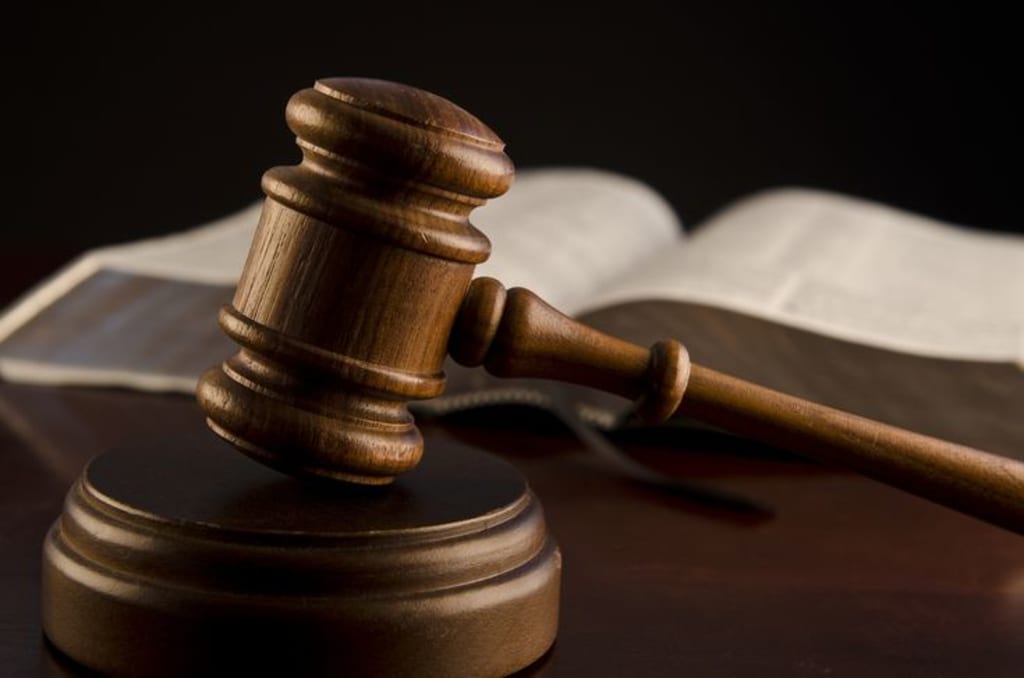
Margaret Calloway had a reputation for being unmovable. In thirty-one years on the federal bench, she had sentenced cartel lieutenants, corporate fraudsters, a sitting city councilman, and one genuinely remorseful former child actor who had made a spectacular series of choices involving counterfeit currency and a rental car in Baton Rouge. She had heard every story. Every excuse dressed up as context. Every lawyer's careful architecture of sympathy built around a client who had, at some fundamental level, chosen wrong. She was not cruel. Cruelty, she believed, was the refuge of judges who confused severity with justice. But she was precise. Consistent. Constitutionally unmoved by tears, by character witnesses, by the particular performance of regret that defense attorneys rehearsed with their clients in the days before sentencing. The courthouse staff called her the Glacier behind her back. Margaret knew. She didn't mind. What the courthouse staff didn't know — what nobody knew, for almost two years — was that the Glacier had been moving the whole time. It started with a number. Not a dramatic number. Not millions. Just $34,000, transferred in careful increments from a account that shouldn't have existed into one that absolutely did not. Her brother, Paul, had called her on a Tuesday evening in November — the same Tuesday evening she'd sentenced a thirty-four-year-old man to eight years for wire fraud, a sentence she'd delivered without hesitation because the law was the law and her feelings about it were irrelevant. Paul was crying, which he hadn't done since their mother's funeral. He owed money to people who collected it in ways that didn't involve courts or payment plans or any of the civilized machinery Margaret had devoted her life to. He had made bad investments, worse friends, and one catastrophic decision involving a private loan from an organization that the FBI had been building a case against for six years. "How much time do I have?" he asked. Margaret, who knew exactly how these organizations operated — had read the case files, had sentenced three of their mid-level members — understood that time was not the variable Paul needed to be asking about. "How much?" she said. He told her. She was quiet for eleven seconds. She counted them later, trying to remember the exact moment she stepped over the line she'd built her entire identity around. "Don't call me from this number again," she said. "I'll handle it." What followed was the most precise criminal act Margaret Calloway had ever witnessed — and she had witnessed many. She didn't touch her own accounts. Didn't move money in patterns that matched anything in the financial crime profiles she'd studied across three decades. She used her knowledge of how investigators traced funds the way a locksmith uses knowledge of locks — not to appreciate the security, but to understand exactly where it failed. She was, it turned out, extraordinarily good at breaking the law. This did not surprise her as much as it probably should have. What surprised her was how calm she felt. Not the brittle calm of denial — the genuine, clear-eyed calm of someone who has made a decision and accepted its full weight. She knew, with the same certainty she brought to every sentence she'd ever handed down, that what she was doing was wrong. She knew the precise statutes she was violating. She could have written the indictment herself. She did it anyway. Because Paul was her brother. Because their mother had made her promise, at an age when promises felt like permanent architecture, to look after him. Because thirty-one years of dispensing justice had not made her inhuman, no matter what the courthouse staff believed. The FBI agent who knocked on her door was twenty-nine years old and visibly terrified. His name was Agent Colton Marsh, and he had spent six weeks building what he believed was an airtight case against a federal judge — a category of investigation that required four levels of internal approval and generated the kind of institutional anxiety that made careers or ended them depending entirely on how the next hour went. Margaret opened the door before he finished knocking. "I've been expecting you," she said. "Come in. I'll make coffee." Marsh stood in her doorway for a moment, recalibrating. "Judge Calloway—" "Agent." She said it the way she said everything from the bench — not unkindly, but with a finality that closed the door on alternative interpretations. "I know why you're here. I'm not going to make this difficult. Let me get my attorney on the phone, and then I'll tell you everything." She paused. "The coffee offer stands, though. It's going to be a long night." She told them everything. Not because she'd been caught — the evidence, she noted during her debriefing, had two significant gaps that a competent defense attorney could have exploited. She told them everything because thirty-one years of demanding truth from other people had made anything less feel like a desecration of the only thing she'd ever truly believed in. She told them about Paul's call. About the eleven seconds. About every transfer, every decision, every moment she'd stood on the wrong side of the law she'd sworn to uphold and felt the full, clear-eyed weight of it. She did not cry. She did not perform remorse. She simply described, in precise and accurate detail, exactly what she had done and exactly why. Marsh, who had prepared for denial, deflection, the full arsenal of a legally sophisticated defendant, sat across from her with his notebook and said very little. At one point, almost involuntarily, he said: "You knew we'd find you." "Of course," Margaret said. "Then why—" "Because he's my brother." She said it simply, without decoration. "And I'd do it again. That's not defiance, Agent Marsh. That's just the truth. You deserve an honest answer, and so does whatever court handles my case." She looked at him steadily. "I've always believed the truth matters more than the outcome. It would be rather embarrassing to stop believing that now." Margaret Calloway pleaded guilty to four federal charges. She was sentenced — by a judge who had clerked for her twenty years earlier and spent the entirety of the proceedings visibly struggling to maintain composure — to thirty months in a federal facility and three years of supervised release. She served twenty-two months. She did not appeal. Paul Calloway cooperated with the FBI's broader investigation into the organization that had lent him money, an investigation that resulted in fourteen arrests and the dissolution of a criminal network that had operated for eleven years. He visited Margaret every week she was incarcerated. Every single week, without exception, in the particular way of someone who understands that some debts cannot be paid but must be carried faithfully regardless. Margaret used her time to write — not a memoir, not a justification, but a long and careful essay about the nature of justice. About the difference between the law and what is right. About the moments, rare and genuine, when those two things point in opposite directions and a person must decide, without ceremony, who they actually are. The essay was published in a law review. It was assigned reading in seventeen law schools by the following year.
About the Creator
Enjoyed the story? Support the Creator.
Subscribe for free to receive all their stories in your feed.
Comments
There are no comments for this story
Be the first to respond and start the conversation.