guilty
Don’t do the crime if you can’t do the time; a look into all aspects of a guilty verdict from the burden of proof to conviction to the judge’s sentence and more.
All Four Of Foolio's Convicted Murderers Receive Life In Prison
For their vicious actions, the four men who slayed Foolio should have received the death penalty. Their brazen, horrific style of dispatching this young man made it impossible for him to live. That should’ve been the outcome for them as well.
By Skyler Saunders4 months ago in Criminal
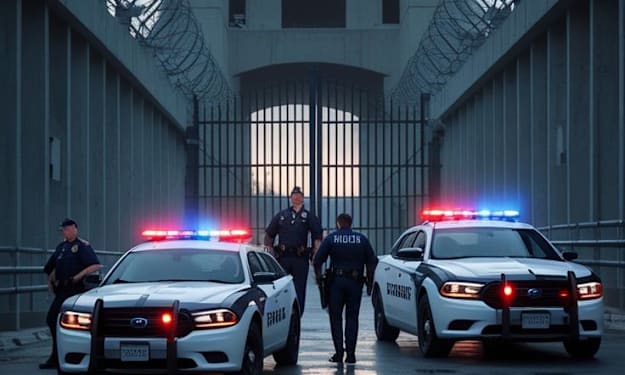
The FBI Stopped a Planned Attack on a White House Event
Date: June 22, 2026 This article discusses events reported by authorities in mid-June 2026. The FBI Stopped a Planned Attack on a White House Event In June 2026, a shocking event caught the attention of people across the United States. Federal authorities announced that they had stopped a planned attack targeting a major event near the White House. According to investigators, the attack could have put many lives at risk if it had not been discovered in time. The case quickly became one of the most talked-about security stories of the year. The investigation began when law enforcement agencies received information about suspicious online activities. Officials noticed discussions that suggested a group of individuals might be planning a violent act. As investigators looked deeper into the matter, they found evidence that the suspects were communicating through private online channels and discussing ways to carry out an attack. The planned target was a large public event connected to celebrations taking place in Washington, D.C. Such events often attract thousands of visitors, government officials, media representatives, and security personnel. Because of the high-profile nature of the gathering, authorities treated the threat with extreme seriousness. Federal agents worked quietly for several days while collecting evidence. They monitored communications, followed leads, and coordinated with local law enforcement agencies in multiple states. The goal was to learn as much as possible about the suspects and their plans before taking action. According to officials, investigators discovered that the group allegedly intended to use drones and other weapons during the attack. Drones have become increasingly common in recent years, and while many people use them for photography, recreation, or business purposes, authorities have also expressed concerns about how such technology could be misused. The possibility of drones being used in a violent attack raised significant alarm among security experts. After gathering enough evidence, the FBI and its partners launched a coordinated operation. Law enforcement officers carried out arrests in several states. The operation involved careful planning to ensure public safety and prevent any suspects from carrying out their alleged plans. Officials reported that multiple individuals were taken into custody without the attack ever taking place. News of the arrests spread rapidly. Many Americans expressed relief that authorities had acted before anyone was harmed. Security experts praised the cooperation between federal and local agencies, noting that complex investigations often require teamwork across different jurisdictions. The incident also sparked discussions about online radicalization and the challenges faced by law enforcement in the digital age. Experts pointed out that people can now communicate instantly across great distances, making it easier for dangerous ideas to spread. At the same time, investigators have developed new tools and techniques to identify potential threats before they become reality. Government officials emphasized that the case demonstrated the importance of vigilance. They encouraged citizens to report suspicious activities when they encounter them. In many cases, tips from the public can help investigators uncover threats that might otherwise go unnoticed. The FBI stated that the investigation remains ongoing. Authorities continue to examine evidence, interview witnesses, and determine whether additional individuals may have been involved. Officials have not ruled out the possibility of further arrests as the case develops. For many people, the story serves as a reminder that security threats can emerge in unexpected ways. It also highlights the difficult work performed by law enforcement agencies behind the scenes. While most investigations never become public, countless hours are often spent gathering information, analyzing evidence, and preventing potential crimes. The successful prevention of the alleged attack demonstrates how modern security operations rely on intelligence, technology, and cooperation. By identifying the threat early and acting quickly, authorities were able to stop a dangerous situation before it unfolded. As the investigation continues, many Americans will be watching closely for updates. The case has already become an important example of how law enforcement agencies respond to modern security challenges. Most importantly, it serves as a reminder that preventing violence before it occurs can save lives and protect communities. The events of June 2026 will likely be remembered as a case in which careful investigation and timely action helped prevent what could have been a tragic incident. For now, authorities remain focused on completing their investigation and ensuring that public safety remains their highest priority.
By Hafiz afridi4 months ago in Criminal
She Was Missing For 30 Years. Then She Told The Cops She Didn't Want To Come Home.
The detective’s pen hung over the form as if waiting for me to admit to a crime I wasn’t sure I’d committed. ‘Do you want to go home?’ Slow and gentle, as if talking to a wild animal.
By write with shan4 months ago in Criminal
The True Case of the UK’s Stephen Lawrence Murder Investigation. AI-Generated.
The True Case of the UK’s Stephen Lawrence Murder Investigation Introduction The case of Stephen Lawrence is one of the most significant criminal cases in modern British history. It is not just about a murder, but also about justice, failure, and reform in the legal system of the United Kingdom. The case exposed deep problems within the police system and changed public understanding of racism and fairness in law enforcement. Stephen Lawrence was a young man whose life was taken in a violent racist attack in London in 1993. His death led to decades of investigation, public pressure, and legal reform that reshaped the country. Who Was Stephen Lawrence? Stephen Lawrence was born on 13 September 1974 in London, United Kingdom. He was a Black British teenager with strong dreams of becoming an architect. He was studying hard and doing well in school. Teachers described him as polite, intelligent, disciplined, and focused on his future. He had strong family support and a clear vision for his life. His parents believed he would build a successful future. Sadly, his life ended at just 18 years old before he could achieve his dreams. The Night of the Attack On the evening of 22 April 1993, Stephen Lawrence was waiting at a bus stop in Eltham, South East London, with his close friend Duwayne Brooks. It was a normal evening, but everything changed in seconds. A group of young men approached them suddenly and without warning. The group launched a violent and brutal attack on both teenagers. Stephen was stabbed multiple times during the assault. His friend Duwayne managed to escape and ran for help. Emergency services arrived quickly, and Stephen was taken to hospital, but he sadly died from his injuries shortly after arrival. The Shock and Public Reaction Stephen’s murder shocked the local community and the entire country. Many people believed the attack was racially motivated, which increased fear and anger. The case received national attention, and people demanded justice. However, what made the case even more controversial was how the investigation was handled in the early stages. The First Investigation Problems The initial police investigation into Stephen Lawrence’s murder faced serious criticism. Although there were witnesses and possible leads, the investigation was slow and poorly managed. Many witnesses claimed they were not properly interviewed or taken seriously. Important evidence was not followed up effectively. Several suspects were identified early, but the case did not progress to successful prosecution. Over time, public confidence in the investigation decreased. Many believed that institutional bias played a role in the failure to solve the case quickly. The Family’s Fight for Justice Stephen’s parents, Neville Lawrence and Doreen Lawrence, became the strongest voice for justice in this case. They refused to accept that their son’s murder would remain unsolved. They launched a long and determined campaign for truth and accountability. They spoke to the media, met government officials, and demanded a full public inquiry into how the investigation was handled. Their courage and persistence kept the case alive in public discussion for years. Despite emotional pain and frustration, they never gave up. The Macpherson Inquiry Due to growing public pressure, the British government launched a public inquiry in 1997 led by Sir William Macpherson. This inquiry carefully examined the original police investigation. After years of review, the final report was published in 1999. The report made a historic and shocking conclusion: the Metropolitan Police was “institutionally racist.” This finding caused national debate and became a turning point in British policing history. The report also recommended major reforms in police training, procedures, and accountability. Legal and System Changes After the Macpherson Report, many changes were introduced in the UK justice system. Police training programs were improved to address racial bias. New procedures were introduced to ensure better handling of witness statements and hate crime investigations. Laws related to racial discrimination and hate crimes were strengthened. The case became a major example of how a single investigation could expose deep structural problems and lead to national reform. Breakthrough in the Case For many years, the murder case remained unsolved. However, advances in forensic science and renewed investigation efforts brought new hope. In 2012, two of the original suspects, Gary Dobson and David Norris, were finally brought to trial. Modern forensic techniques helped link them to the crime scene through microscopic evidence. Both men were convicted of the murder of Stephen Lawrence and sentenced to life imprisonment. This marked a major milestone in the case, although not all suspects were ever convicted. Impact on British Society The Stephen Lawrence case had a lasting impact on British society. It changed the way police investigations are conducted and improved awareness of racism in public institutions. The case led to better training for police officers and stronger accountability systems. It also influenced hate crime legislation and improved treatment of victims and witnesses. The case became a symbol of justice reform and highlighted the importance of equality under the law. Legacy of Stephen Lawrence Today, Stephen Lawrence is remembered as more than a victim of crime. He is a symbol of justice, change, and reform. His name is used in educational programs, scholarships, and equality initiatives. Law schools and human rights organizations study his case as an example of both failure and progress. His legacy continues to inspire efforts to fight racism and improve justice systems around the world. Conclusion The murder of Stephen Lawrence was a tragic event that changed the United Kingdom forever. While justice was delayed for many years, the determination of his family and supporters led to major reforms in policing and law. The case exposed serious weaknesses in the justice system but also created lasting improvements. Stephen Lawrence’s legacy remains a powerful reminder that truth, justice, and equality must always be protected.
By Hafiz afridi4 months ago in Criminal
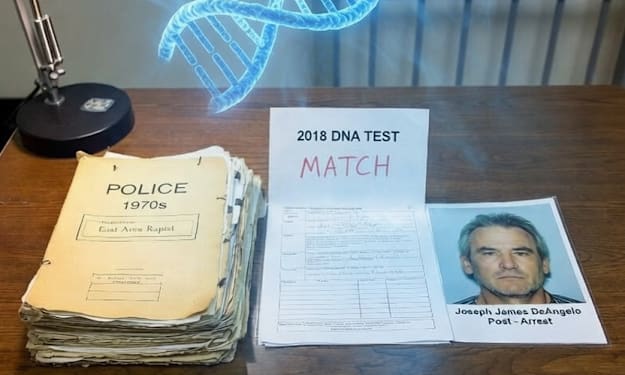
The Killer Caught After 40 Years by DNA. AI-Generated.
The Killer Caught After 40 Years by DNA In the 1970s and 1980s, a man brought fear to many homes in California. He moved quietly at night. He watched families for weeks before he struck. People called him different names over the years – the East Area Rapist, the Original Night Stalker, and later the Golden State Killer. He broke into houses, tied up couples, and did terrible things. He killed 13 people and hurt many more. For over 40 years, no one knew who he was. Then, one simple new idea with DNA changed everything. It started in small towns and cities across California. First, he was known as the Visalia Ransacker. He broke into homes in the daytime when people were out. He stole small things like photos, jewelry, and coins. In 1975, he shot and killed a man named Claude Snelling right in front of his young daughter. That was the start of worse things to come. By 1976, the crimes got much scarier. In the Sacramento area, a man started attacking women and couples at night. He would sneak into a house after watching it for days. He carried a gun and a knife. He tied up the man with special knots and put plates or cups on the man's back. If the man moved, the dishes would fall and make noise. Then he would attack the woman. He often stayed for hours, eating food from the fridge and talking in a strange, low voice. He said things like "I have to do this" or "I'm sorry." After he left, he sometimes called the victims later to scare them more. Police worked hard but could not catch him. He was smart. He wore gloves and a mask. He left very few clues. Sometimes he took bikes or cars to get away fast. The attacks moved from north to south in California. By the early 1980s, he had killed several couples in their homes. One night in 1986, he killed a young woman named Janelle Cruz. That was his last known crime. After that, he just stopped. Many people thought he died or went to jail for something else. Years passed. Families of the victims waited for answers. Detectives kept the files open. Old evidence like blood, hair, and other body samples sat in police storage. In the past, testing DNA was hard and slow. It did not always work well. But by 2018, things changed. A new way called genetic genealogy appeared. It used DNA from crime scenes and matched it with family trees on big websites like GEDmatch. A smart detective team tried this idea. They took DNA from one of the old crime scenes. They put it into the genealogy site. It found some distant family members. Then, they built a family tree step by step. They looked at old records, school photos, and addresses. It pointed to one man: Joseph James DeAngelo. He was 72 years old and lived a quiet life in Citrus Heights, near Sacramento. DeAngelo had been a police officer in the 1970s. He worked in places where some attacks happened. Later, he worked in a store selling tools. He had a wife and daughters. To neighbors, he seemed like a normal older man who kept to himself. He liked to ride his bike and fix things. On April 24, 2018, police watched his house. They picked up a trash can he left out. They tested DNA from something inside. It matched the DNA from the crimes perfectly. They arrested him that same day. The news spread fast. "Golden State Killer Caught!" headlines said. People who lived through the fear years ago could not believe it. In court, DeAngelo looked small and old. He did not fight the charges much. In 2020, he agreed to tell the truth about his crimes to avoid the death penalty. He pleaded guilty to 13 murders and other bad acts. He admitted to hurting dozens more people. The judge gave him life in prison with no chance to get out. Ever. Why did he do it? No one knows for sure. Some said he had anger inside from his past. He was in the Navy and worked as a cop, but he lost his police job after he stole a hammer and dog repellant from a store. Maybe that started his anger. In his house, police found many stolen items from old crimes – rings, coins, and other small things he kept for years. The DNA method that caught him was new. Before, police needed a direct match in their criminal database. But this killer was never in that system for these crimes. Genetic genealogy looked at family DNA instead. It helped solve many old cases after this one. Now, police use it more carefully with rules to protect privacy. For the victims and their families, it brought some peace. One survivor said it felt like the monster finally had a face. People who lost moms, dads, sisters, and brothers could close a painful chapter. But the pain never fully goes away. Many still remember the fear in California towns. Doors stayed locked. Lights stayed on at night. This story shows that bad people can hide for a long time, but truth can come out. Science and hard police work finally won after 40 years. Joseph DeAngelo died in prison later, but his name lives as a warning. One man caused so much hurt. Yet, the bravery of survivors and the work of detectives gave justice in the end. Today, if you walk in quiet California neighborhoods, some older people still talk about those dark years. They remember the phone calls, the strange noises at night, and the man who seemed to disappear like a ghost. But thanks to a small bit of DNA and smart thinking, the ghost got caught. The case changed how police hunt old criminals. It gave hope to families with unsolved cases. "Never give up," many say now. Even after 40 years, the answer can come. (Word count: about 1020)
By Hafiz afridi4 months ago in Criminal
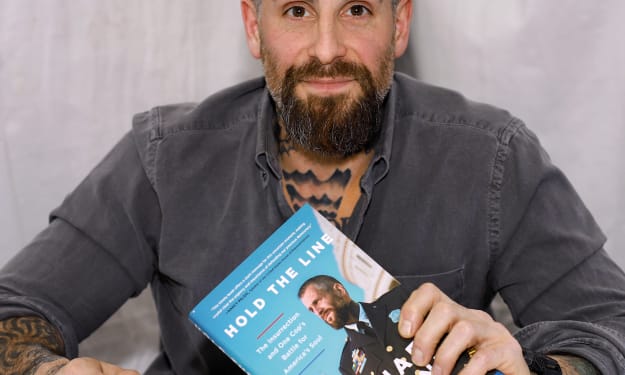
Michael Fanone: D.C. Police Officer Who Nearly Died During The January 6 Insurrection
Michael Fanone joined the D.C. Metropolitan Police Department shortly after the 9/11 terror attacks on America. For more than 20 years, Fanone fulfilled his dream of serving the community. He worked narcotics, often going undercover to catch criminals polluting the area.
By Criminal Matters4 months ago in Criminal
Mystikal sentenced to 20 years in prison over rape case
Michael “Mystikal” Tyler should be castrated chemically. He should give life in prison and no chance for parole. His crime of rape which he had already served time for a similar case, shows a male wilding outvand preying on young women.
By Skyler Saunders4 months ago in Criminal
Woman Convicted of Murdering Infant Son Complains Inmates in Prison "Bully Her". Content Warning.
When inmates at the Correctional Institute for Women in Iowa learned why Cheyanne Harris was incarcerated, they took action. In an interview for a docu-series titled “Locked Up With Lifers,” Cheyanne says inmates at the prison make her life “a living hell.”
By Criminal Matters4 months ago in Criminal