The Vocal+ Fiction Awards
View DetailsThe Winners!
Pareidolia. V+ Fiction Award Winner.
Someone should help her. Not that it will make a difference if anyone does. On this lonely stretch of mountain highway, during the early stages of a snowstorm, there are likely no witnesses that will stumble upon this scene anytime soon.
By Conor Marko5 years ago in Fiction
Lifted. V+ Fiction Award Winner.
Jenny twirls a long, brown curl between her fingers as she gazes through the dusty glass. The sign over the door reads “Curious” and makes her skin itch. In a good way. Chances are the place behind the dirty windows, with the thick curtains holding back the light and the half-peeled name sticker above eye level is the perfect place to alleviate her crushing boredom.
By Patti Larsen5 years ago in Fiction
The Blonde. V+ Fiction Award Winner.
Emma Bates scraped a last mouthful of pea soup from her bowl, then hobbled to the window and yanked the ragged curtain aside. She didn’t bother to scrub her bowl or sponge the vinyl tablecloth. That could wait. Right now, it was time for the girl.
By Bebe King Nicholson5 years ago in Fiction
Libellule. V+ Fiction Award Winner.
You’ve always been a dancer. You started when you were three. It was your mother’s idea. She’d always wanted to dance when she was little, but her asshole of a father never let her. Realize she’s been living vicariously through you this whole time, that she still tries to, but you’re too different now. She doesn’t recognize you. It’s a weird feeling.
By Elodie Hollant5 years ago in Fiction
Path of Least Resistance. V+ Fiction Award Winner.
In the morning, I took the little stone with me into the living room, where Keith was on the sofa, watching television. At the time, Keith and I lived in a downtown two bedroom, under the constant press of traffic, working factory and service jobs to pay the rent and buy the beer and all that lazy nothingness. A couple of college dropouts waiting for something to happen to us.
By Bernard Bleske5 years ago in Fiction
Fresh Off The Boat. V+ Fiction Award Winner.
LA RIOUX, LEGIOLE LA RIOUX, LEGIOLE 21 June 4E93 Andrzej Mlynár could hear the Legiolien border agents from where he hid alongside the cargo in the back of the lorry as they inspected the truck driver’s papers. Everyone remained totally still and silent where they were as the border agents conducted their routine inspection; they were stowed away with a band of gypsies travelling from Alvaria, finally nearing the end of their long journey. Taking refuge within the back of a lorry, the group had initially been travelling from the city of Český-Trenčianske, though they’d switched lorries several times across their journey. They’d spent the greater part of the last week hidden with the cargo-holds of whatever unsupervised lorries they could find between the rest stops on their route to Bree. The back of their current transport was filled up mostly with boxes of various sizes of what they assumed to be furniture, though there was no way of truly knowing as they were labelled in Svanean writing.
By Kelson Hayes5 years ago in Fiction
The Envious Flood. V+ Fiction Award Winner.
I spent most of the drive thinking about the whale. Highway 1 North isn’t as busy as I remember. I have my window down just a crack—enough for a breeze, however chilly. The thermometer on the dash reads 54. I assume that’s Fahrenheit. It strikes me as a bit cold for California, even the central coast. Maybe I’m just remembering things being warmer than they actually were. The rain’s been light but constant. Fog hovers over the mountains and drifts in thin meshes across the highway. That much I remember, at least.
By Steve Hanson5 years ago in Fiction
Mistress of the House of Books. V+ Fiction Award Winner.
On the east side of the John Adams Building, facing Third Street, was an entrance. It used to feature three pairs of bronze doors. Sculpted upon these doors were the names and standing forms of heroes and gods. The same six figures for the pairs on either side, with a different half-dozen for the middle pair. Twelve unique figures in all. Hope, perhaps, in an astrological nod?
By Matthew Daniels6 years ago in Fiction
Heat Stress. V+ Fiction Award Winner.
It was an Indian summer almost as hot as that record-breaking year when coyotes came out of the wilderness in droves looking for reprieve. The animals went crazy from the heat, and in some cases gnawed their way through screen doors and broke windows to get indoors. Others ran in front of moving cars to end their misery.
By Claire Ibarra5 years ago in Fiction
Apartment Complex. V+ Fiction Award Winner.
Mom was not happy about the move. I promised her she wouldn’t have to pack or carry a thing. She didn’t. I slung her suitcase-sized brown purse over my right shoulder and was struggling to balance two cardboard boxes of cheap glassware in the elevator when we ran into Rachel from 17C. I made introductions between floors.
By Vivian R McInerny5 years ago in Fiction
The Not-Deer. V+ Fiction Award Winner.
The mountains are flush with color as we make the drive north. Frost creeps across the glass. I turn on the heat, but the old RV takes time to warm. From the passenger’s seat, Jude huddles in a blanket. Andy sleeps quietly in the back.
By Chelsea Catherine5 years ago in Fiction
The Kneeler. V+ Fiction Award Winner.
10:30 PM and James Morse is at the bar of the Mohegan Sun Resort and Casino sipping a glass of scotch that would have been far too expensive for him even if he wasn’t 200,000 in debt. That’s no problem, though. The debt was from out west, built up on the Strip of Vegas and then, when Vegas got too expensive, Reno. Now he is back east, casting bets at Reservation casinos under the name ‘Morton Quailey.’ His bookies gave up chasing him months ago. Last time they got close was at the Kansas Star Casino in Mulvane, where James had paid off the valet to send them after the wrong car. The time before that was in a speakeasy in Billings, Montana, where James had paid an unsuspecting rube half a grand to swap clothes with him. Before that, Salt Lake City, where James had mussed up his hair and convinced a cop that the guys after him were muggers. That one wasn’t even a lie.
By George Murray5 years ago in Fiction
Destination. V+ Fiction Award Winner.
They say it will be Paradise. Time stops, but it also runs. It's beautiful. It's horrible. It’s the worst place you could ever imagine. People are shredded between the teeth of giants and the poor are enslaved by the color green. They are just bones–stuck–screaming from the deepest chasms of the earth. No one can hear them. But the green is beautiful from the clouds. Dirty. White. Hot. Cold. Paradise. Soft women. Rolling hills. Barren deserts and endless ocean blue. Red skies. Rats in gutters and warm bread baskets on tables. Every kind of animal, land and sea. Children's laughter. All of the fish you can eat, blessed by the hand of a man in white. Vomit on walls and hearts on sleeves. Paradise.
By Kallista Kusumanegara5 years ago in Fiction
Twenty Miles South of Macon. V+ Fiction Award Winner.
One night Mabel kept driving. Her arms hung heavy on the wheel. Her mind was blank. The fork in the road passed, and with it the turnoff to Harveys Supermarket where she would buy three cans of boiled chicken, a bag of reduced-fat Wheat Thins, a loaf of bread, and a pound of tomato-shaped objects to last her the week. Tillary called them tomato-shaped objects because she used to work at the Macon farmers market and felt the new job was beneath her. A tomato, she said, should taste like something. Trailing vines. Summer rain. These things taste like the tears of the Mexican kid that picked them, and life is not worth living when you’ve reached the point of eating like this.
By Melissa Wozniak5 years ago in Fiction
SEARCHER. V+ Fiction Award Winner.
Adam couldn’t breathe. His mobility was also limited, and the laminate film that was usually in the process of receding when he woke was still wrapped tightly around his body. He could see however, and slowly realized his predicament. Adam had reactivated in this metal and glass tube countless times, systematically roused to either conduct his assigned assessments or address whatever conundrum the ships automatons couldn’t handle.
By Daniel D'Agustino5 years ago in Fiction
Going Fishing. V+ Fiction Award Winner.
Johntee never would have taken Curtis if it hadn’t been for Uncle Joseph mentioning their dad’s fishing stories. It all came out one night when Uncle Joseph got so drunk he forgot to hold back his memories, and Johntee and Curtis both got to hear about their dad in a way they had never heard before. As he guided Curtis onto the nearly empty pre-dawn bus, Johntee knew that Curtis would never have got it into his head to want to go fishing. Curtis was just a kid. He didn’t know anything. He wanted to see where their father used to fish. He wanted to fish there. What could he do, Johntee asked himself as he held the rods he’d purchased after three months of cutting grass. He’d had to get them without his mother knowing or she would’ve had his behind for it.
By Lucas Díaz-Medina5 years ago in Fiction
Girl Wants a Cigarette. V+ Fiction Award Winner.
That morning, Emma had stopped at the smoke shop on the corner of her block and impulsively bought a pack of cigarettes— a brand she’d never tried, since they had discontinued Nat Sherman’s that summer, and she’d been trying to figure out what she liked ever since. Nat’s, these were called. Close enough. She had wanted to try one as soon as she bought them— the cashier, after glancing at the clock, 8:13AM, had even offered her matches, she declined— but she had realized too late that she had forgotten her lighter at home, and so could only break open the plastic wrap and peek into the metal lining at the twenty neatly-rolled menthol cigarettes. Stepping outside, so entranced by the packaging that she tripped over the uneven concrete just outside the shop, she plucked one from its box. As Emma rolled the cigarette between her thumb and forefinger, Emma asked God to grant her a passerby with a lighter as she walked towards the subway station. The prayer was left ungranted.
By Sophia D'Urso5 years ago in Fiction
Waiting Room. V+ Fiction Award Winner.
Sitting in yet another waiting room, I learn that Adam Sandler is the director and producer of The Price is Right. Not that Adam Sandler, silly. Not the Big Daddy, ultra-rich but casually dressed Adam Sandler we all know and love.
By Erin Latham Shea5 years ago in Fiction




































All the great Submissions
I'll Be There, No Questions Asked
Anyone who knows her schedule knows you don't call late at night unless it's something serious. She didn't talk to her sister for two weeks when her sister drunk-dialed her one night. Any other night, Clare would've ignored the phone as she closed her eyes for the night.
By Alfie Jane5 years ago in Fiction
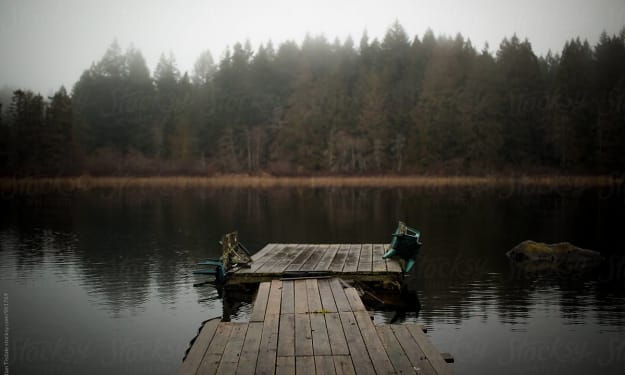
Lonely Lake
It was a red boat and it attacked people at Lonely Lake. People would be swimming in the alcoves of the lake, and the boat would attack. It ran over people anytime it wanted to. If there was a waterskier and he fell down into the water of Lonely Lake or there was a woman waterskier who fell, the red boat would run over them, and its propeller would chop them up until they were hard to look at, and their stories were hard to hear. If there was a fisherman just wading in the shallow parts of Lonely Lake, the boat would attack. It would go by as if just boating and then it would attack the fisherman. It attacked boats sometimes and ran into them and cut them in half, and when the people spilled into the water of Lonely Lake, the red boat would turn in determined circles until it had run over all of the people even if they were screaming for help. If they were calling, the boat still ran over them. It attacked at night or in the daytime. In the evening people listened. It was scary at night on Lonely Lake, but the days were just as dangerous. It attacked canoes and rowboats and it attacked the old scout troop in their inner tubes. The red boat was the worst thing about Lonely Lake. If someone mentioned Lonely Lake, then someone also said red boat. Once a year the search party went out to try to find the red boat and destroy it so it would stop attacking people in Lonely Lake. It was always a methodical search and went around the whole lake, from the earthen dam at the north end all the way to the swampy sloughs at the south end. They looked into all the boat houses, private ones and the big club boathouse and they looked into the abandoned boathouses and under the old Sycamore Bridge, which is also abandoned. They searched under the great willow shelf on the west side and the sandy beaches on the east side. They always found a lot of lost gear and some dinghies which had floated off and canoes, but they never found the red boat which attacked people on Lonely Lake. We tried to figure out why it was attacking. We had a town meeting in the lodge at Lonely Lake, and Mr. Blister stood at the blackboard and printed out the reasons. Mrs. Abletable stood and said, “The boat attacks because it is evil.” In the lighted lodge under the great stuffed moose, this made sense and everyone in the room nodded and agreed, and we made a sound together of agreement. Mr. Blister wrote “EVIL.” Mr. Bakertaker raised his hand and said, “Maybe it is the Devil’s Boat.” That really hit a chord of agreement in the room, and we all spoke to each other and said That is so true. I agree, and like that, and Mr. Blister wrote “Devil’s Boat” on the blackboard. It was the blackboard from the Mercantile which occupies the front of the Lonely Lake Lodge and it usually had the produce specials on it in Mr. Blister’s loopy printing. We all liked his printing. You could trust it. Then Mrs. Candlewandle said, “I think that boat is out for revenge. It attacks everything because of something that happened a long time ago. That’s the way these things work. Something terrible happened in the long lost history of Lonely Lake, and that red boat continues to seek its revenge.” The logic of this comment made us gasp. Mr. Blister wrote on the board: “Revenge.” Mr. Dordlenordle stood up and said, “I think the boat isn’t the Devil’s Boat, but some lesser demon here to terrify Lonely Lake. I think the devil himself is too busy for an old small place like this.” The reasoning here was outstanding, and we all hummed approval. Mr. Blister wrote down “Demon” on the board. The meeting was just getting started, and there was a sense of accomplishment already. You get a man in the clean well-lighted lodge writing on the blackboard in big letters, and it feels like you’re finally getting somewhere. In an hour the blackboard was full of ideas, good ideas, including some scientific theories which included physics and chemistry. We had refreshments of cool punch and oatmeal cookies and talked until almost ten o’clock. It was the whole town, everybody taking a turn, Mrs. Hindlebindle and Mr. Markennarken and Mr. Stoppermopper and Mrs. Vankerlanker, and I mean everybody with their stupid names and their passionate theories and all of us humming our agreement after every ardent remark until you could see it in every eye in the old room, hatred, and the deep dark hope that the red boat would find Mr. OckleFockle and Mrs. FerdyHerty, any of these people, and chop them into little bloody wicklenickles. Our esteem for the red boat was gigantic. Finally, Mr. Zarcolnarcol raised his hand. He stood up and said to us all, “I think the red boat is attacking people in Lonely Lake because we need it to. We’ve made up this story about this horrible red boat driven by the devil. . . .” “Or demons,” Mr. Dordlenordle said. “Or demons,” Mr. Zarcolnarcol said. “And we have to have this legend or Lonely Lake would dry up and allow Walmart to come in here and put in that Supercenter they’ve been talking about for twenty five years.” It was hard to tell when he sat down if there was agreement or not, because the entire lodge was silent for the first time in four hours. He stood up again. “For example,” he went on. “Has anyone seen any of the attacks?” “I heard there was an attack yesterday at rocky pinion,” someone said. “I did too,” someone added. “Some kid on a float board was cut all to ribbons. He looked like a pink slinky.” “And there was blood everywhere,” someone else called out. “All the way to the old bridge.” People weren’t standing and waiting to be identified now; they were just calling out. “And it killed sixteen people in that church group of Goomberg,” someone else called. “The red boat cut their houseboat in two and chewed them all up one by one.” “Presbyterians, someone said. “The youth group,” someone else added. “And part of the choir. I heard it was a retreat.” “Did you see it, any of the bodies or the ambulance?” Mr. Zarcolnarcol said. “I heard they had trouble putting the bodies back together,” someone said. “Legs and arms.” “It’s the devil’s boat!” Mr. Bakertaker said again, but now he almost screamed. “There’s no red boat,” Mr. Zarcolnarcol said. “It’s just Lonely Lake. It’s always been Lonely Lake. Sometimes the wind blows from Forlorn Pass, and you can smell the pine forest there and in the evening if the clouds are low, the light turns pink reflected off Mount Lost and Lonely Lake glows too, the water so purple it seems like wine. And in the middle of the summer, like tonight, if you go to gold beach where the sandbar reaches out you can walk into the water so that your ankles tingle. Wade in. You will hear the steady motor of the cicadas. You will feel the memory of winter ice, and you will feel the melting snow of yesteryear, and the blood in your body will go down into your legs almost on a dare to feel the chill, the purple glowing chill of Lonely Lake.”
By Brianna Mansker5 years ago in Horror
A Brief History Of The Steelers Turning Their Season Around
This week, with the whole world seemingly convinced that the Steelers are a sinking ship, I’ve been thinking about seasons in which the team started in one direction (bad or good), and wound up somewhere very different.In so many of those years, the only thing we remember is the end result, as though the results were inevitable and obvious all year long. The 1972 Immaculate Reception Steelers feel like the beginning of a dynasty, but four games into the season, they were 2-2 and looked a lot like the previous season’s 6-8 squad. The 1995 Super Bowl team feels like a disappointment because they came so close to winning a Lombardi, but they were 3-4 heading into week 8, and were not even leading their division.
By Brianna Mansker5 years ago in Unbalanced
Silly Pet Costumes
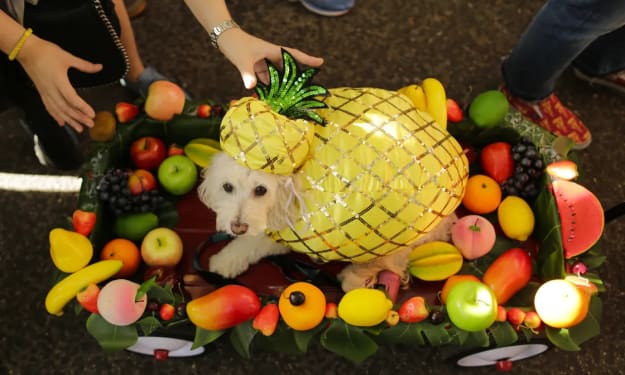
This year for Halloween, I will be dressing up my dog up as a pineapple in a fruit basket . Last year, I put her in a bandana and cowboy hat and said she was her namesake. My first dog, who passed away last year, had been a queen, a mermaid, a dinosaur, and Superman. She didn’t much like being dressed in costumes, but the pictures were cute, and got all those likes on Facebook and Instagram. This all feels a bit silly, but I’m far from the only person to put stuff on her dog for as long as she tolerates it. Of the $9 billion Americans are expected to spend on Halloween this year, $480 million of that is on our pets, according to the National Retail Foundation. That’s up from $5.8 billion total and $220 million on pets in 2010. Unlike Christmas or Valentine’s Day or even Mother’s and Father’s Day, Halloween doesn’t have the stress of gift giving, so shopping for the holiday is a lot less about pressure and a lot more about joy. “With Halloween, it’s less about the want and more about the fun,” confirms Ana Serafin Smith, director of media relations for the National Retail Federation (her miniature pinscher Apollo will be a skeleton this Halloween). “When it comes to pet costumes, people find it fun and funny to dress up their cat as a dog or dog as a hot dog or cat like a lion,” she says. It’s easy to lay this trend at the feet of millennials. (Because we’re not having kids so we sub in dogs! Or we spend our money on stupid things! Or it’s another thing we’re responsible for, just like killing the real estate market or Hooters because we just don’t understand!) But dressing up dogs isn’t exactly new, says Jody Miller-Young, a dog fashion designer who wrote about the history of canine couture on her website Bark & Swagger. (Her four dogs will have multiple costume changes.) “I thought that the beginning of dog fashion would have begun somewhere in the 20th century — maybe in the teens or ’20s,” she says. “But it goes back far more than that.” Way back. During the excavation of the tomb of King Cuo of Zhongshan, who was king of China from 327 to 309 BC, archeologists found two large dogs buried in jeweled collars. The greyhound of Louis XI, king of France from 1423 to 1483, wore a red velvet collar with 20 pearls and 11 rubies, and Louis’s successor, Charles VIII, had robes made for his dog and marmot, according to Medieval Pets. Queen Victoria dressed her dog in a “scarlet jacket and blue trousers,” as she wrote in her diaries, right around the time that dog couture shops became a thing in Paris. Here in the US, the first pet cemetery was founded in Westchester, New York, in 1896 and is now on the National Register of Historic Places. The first of the eight-part “Dogs Playing Poker” was painted in 1903. (And the artist Cassius Marcellus Coolidge painted “Laying Down the Law,” featuring a dog as a lawyer, in 1840.) In the 1910s, Harry Whittier Frees took pictures of cats getting married, cats at a picnic, a dog watering flowers, and a dog sewing pants that were used in postcards, kids’ books, and magazines. From 1929 to 1931, MGM made “All Barkie” Dogville Comedies that featured dogs doing very human things like dancing and going to war (a studio itself that had a real lion in its logo). How we’ve treated our pets has changed then. Where my grandfather’s childhood dog would have always lived outside (and even Snoopy lived in a dog house), today state and local governments are passing laws that make such a thing illegal in extreme temperatures. Tish Derry, director of design and trend at Petco, says that pet costumes have “always been there as an undercurrent, over the last 10 years, it’s really been an astronomical rise in popularity and in spend.” A lot more of us own dogs too. According to the American Pet Products Association, 68 percent of US households own a pet, which comes to about 85 million households. Of those 85 million households, 60.2 million own a dog. We spend a lot on our pets too: an estimated $72.13 billion in 2018, the highest number since the American Pet Products Association started tracking the statistic. “We get health insurance for our dogs that in some cases is better than health insurance for ourselves,” says Kim Kavin, author of The Dog Merchants: Inside the Big Business of Breeders, Pet Stores, and Rescuers. “The logical outlet for this is when you take your kids out for trick or treating, you take the dog out too, and you want him to be part of the family and have a good costume.” This growth in pet ownership dovetailed with the rise of social media — and social media kicked Halloween spending into high gear, says Serafin Smith of the National Retail Federation. “We started seeing an increase in Halloween spending about 10 years ago, and this was right around the time that social media started picking up,” says Smith. Instagram launched in 2010; now dogs like Marnie and Tuna have millions of followers. “Everybody loves a cute dog or cat picture, but also you have the dog stars of Instagram pushing this massive trend to dress your dogs,” says Miller-Young.
By Brianna Mansker5 years ago in Petlife
The Black Cat Of The Night
She was lost. Deliberately lost. Rain pelted her face, and a chill night breeze pierced her thin coat of fur. Persephone shivered. Feet passed to and fro on the broad pedestrian walkway, and she huddled into the bushes that bordered the walk, only to start away as raucous laughter rang through an open window and a glass bottle sailed out, too close. The bottle smelled like the bottles he drank from, the bottles that changed him into another person, the person who had She ran. Sheeting rain pursued her, and Persephone paused to look around, panting with fear. Before her, another broad walkway intersected with the first. Beyond it, trees and grass: a park. Too much open space here, where could she go? The lives within her belly clamored for birth; she had to hurry. There. A solid looking building some ways ahead on the main walk’s opposite side. An old building, with little niches here and there that would provide shelter from the rain and wind. Shelter, and a hiding place, too. Gathering her courage, Persephone dashed across the broad walk, skirting the melee of moving feet, shifting her sinuous body to dodge boots and shoes. The passing students didn’t see her, a small cat black as the rainy night, though a few of them felt her passage, invisible as the wind.Another border of hedge. Persephone skittered into the concealing branches, belly heavy, pinpricked with pain. Almost there. In drier weather, the hedge would do, but in this rain the building would be better. With her last scrap of energy, she darted across autumn-withered grass and up broad stone steps to the tall red doors. The doorway was deeply recessed, with roomy niches on either side that would deflect most of the chill wind and an overhang above that kept out the worst of the rain. Persephone curled into the driest corner, and her body gave a great heave as waves of pain surged through her belly. She yowled through the pain and flopped onto her side, resting a moment, then rose to her feet and squatted down. Fluid poured out, and then the kittens, one at a time, tiny, mewling, slick-covered things. She licked each of the five dry as it appeared, and each kitten then took its place at a teat. As soon as the last kitten was settled and nursing, Persephone lay down her head, feeling safe at last. Sunlight woke her, and the sound of feet coming up the stone steps. The little cat tensed. As the kittens stirred, nuzzling against her belly, memories of yesterday came flooding back. Her person’s face, contorted by rage, his hands lashing out with a sharp silver something. Her frantic race away from the house into the unfamiliar, rain-slicked streets. Finding this doorway. Feeling safe. Giving birth.But now a new threat appeared. The man wasn’t tall, but he made up for that in bulk. Round, not angular like he had been. A long beard of brown, speckled with gray, and blue eyes that peered down at her from beneath little bits of clear glass in small wire frames. He hadn’t had those, neither beard nor bits of glass in front of his eyes. More important, this man’s breath smelled of fresh mint, not the odor that came from the little glass bottles that had turned him from her person, the person she’d loved, into a predator who sought only to hurt. The differences were reassuring, but Persephone cowered back all the same. “Aw, you poor little thing.” The stranger crouched down, and Persephone shrank further back into the stone recess, shielding the kittens with her body as best she could. “I won’t hurt you, kitty.” The man seemed to read her thoughts. “Here.” He whipped off a red scarf that had been wound around his neck and settled it over her and the litter. “But you need something better, don’t you?” The stranger’s voice was deep, but soothing, unlike his high-pitched tones, which grew shrill and shriller with every bottle he drank. The round, bearded man rose to his feet and took something out of his pocket, stuck it in one of the red doors. Then, gently, he swung open the far door, propped it with a stone, and went inside. Persephone stared at the open doorway, half wanting, half fearing to go inside. Inside would be warmth and shelter from rain. The drops had stopped during the night, but she knew they would come again, sometime. And this doorway wouldn’t always be safe. Doors were for humans to go in and out—and what if he were to come through? She hadn’t run that far, after all. “Today of all days, on the Feast of Saint Francis.” The round, bearded man reappeared in the doorway, holding a cardboard box. “He preached to the birds, you know, and if he was here today, he’d preach to you cats. He loved all creatures, all living things. I reckon the saint himself led you and your little ones here. Just in time for the Blessing of the Animals. The man crouched by her side again and set down the box, then removed the red scarf covering her and the kittens, placed it inside, and backed away to stand by the open door. Without the red scarf, Persephone shivered in the sudden chill. The kittens were starting to shiver, too. She glanced back at the bearded man. She had no choice; she had to trust him if the kittens were to live. Hesitant, she rose to her feet and approached the box. Sniffing, she investigated it thoroughly. Human smells—but something reminiscent of the glass bottles, too. Stiffening, Persephone arched her back, hairs standing out. Behind her, the kittens began to mew anxiously. Still blind, they were helpless. She smelled the box again. Like, but not like. What if this man drank, too, and turned into another creature? He, after all, had also been gentle at first. But the kittens were shivering. They would die without shelter. One by one, she took each by the scruff of its neck and set it into the warm, fuzzy red nest the bearded man had made, then jumped inside and began licking them. The bearded man approached, crouched down again, and then Persephone felt herself rise, the box lifting, pressed against the man’s chest. His beard smelled of soap, no trace of that other smell, and Persephone began to relax and enjoy the warmth. They went inside. The bearded man set the box carefully down against a wall and then shut the door. The chill wind ceased, and Persephone took a long sniff, wanting to know more about this place, since it would be her new home. Clanking sounds met her ears, and a puff of warm air. A distinctive smell that she recognized: water and mineral and heat. It was a welcome scent, and yet the familiarity made her uneasy, too. All the same, it was good to be inside and warm again. She licked the kittens one more time and then sank into sleep. Persephone woke again as the man returned with a bowl of water and a dish that smelled of lovely, water-dwelling things. Suddenly ravenous, she lifted her head and leaped out of the box. “Never knew a cat to refuse tuna.” Her rescuer grinned. A draft and a creak. The door opened and a woman came in. She was dressed all in black with a little white collar. “Laurie!” The bearded man rose and went over to give her a hug. “Hey, Nick.” The woman thumped him on the back. “Look what Saint Francis has brought.” Nick led her over. Persephone didn’t raise her head. There was still more tuna to eat. Women posed no threat, in her experience, and she didn’t know when she’d be able to eat again. “That’s perfect.” The woman named Laurie knelt down with a big smile. “Kittens, too! Oh, Nick, where did you find them?” “On the church steps when I came to open up this morning.” “And on the Feast of Saint Francis. Can you believe that?” she marveled. “You should stay here with them till the service is over. They can be our grand finale.” Suddenly a great, low sound rumbled through the building. Persephone could feel the vibrations rise from the stone floor beneath her paws clear through to her bones, but unlike most human sound, it was a pleasant sensation. Higher tones joined the low rumble, as if all creatures of fur and feather were crying out with joy. Persephone stopped eating to savor the sound. It went on and on, then stopped abruptly. All right, you lot,” a man’s voice said in the distance. “Let’s start with the hymns.” Human voices joined the rumbling sound, but they were different from any voices Persephone had ever heard. It was the difference between a sparrow’s chirp and a cardinal’s liquid song. Finishing off the tuna, she jumped back into the box and licked the kittens again. Then the joyful noise ceased, and footsteps clattered in. Anxious, Persephone peered out of the box as people began coming through the doors. But it wasn’t just people. She could smell dog, and hear a disquieting yip, yip, yip. It was joined by other animal smells and sounds. Birds—Persephone twitched and flicked out her tongue; the chittering of rodents; another couple of cats; then a stronger smell, and there appeared an animal she’d never laid eyes on before, something the size of a large dog, but smelling completely different. It had shaggy white fur, hooves instead of paws, and a long, thin face topped by floppy ears and short, curving horns. Even a little beard at its chin like a human’s. Looking around, it uttered a shrill bleat. Persephone stared. Nick stayed by her side, a reassuring presence. She settled back down to licking the kittens. Then the great rumble began again, and Nick picked up her box. Nervous, the little cat hunkered down. A strong, overpowering odor assaulted her senses and she began to sneeze. When she dared to look up again, she saw the other animals, each accompanied by a human, all in a row. She, Nick, and the kittens were at the far end, next to the strange-looking horned beast. Persephone sniffed at it more thoroughly, and was reassured by the smell. It was a beast you’d have to watch, what with the horns and its size, but the smell was nothing like that of a predator. Then the human birdsong began again, carrying with it a sense of safety and peace. Persephone rubbed her head against Nick’s chest and began to purr. Weeks had passed since that awful night when she’d fled for her life. Snug in Nick’s little house next to the church, Persephone almost forgot to feel afraid. The kittens grew teeth and began to play. Nick continued to feed her tuna, and she even got chicken livers every so often as a special treat. Dusk had fallen when a knock came at Nick’s door. When he opened it, a group of people stood outside, dressed in strange clothing. “Trick or treat!” they cried. Persephone heard the words, but didn’t understand what they meant. She still didn’t like strangers, and hurried under the couch, poking her head out to see what was going on. Nick laughed at the strangely dressed group and took out a big orange bowl that he’d placed on a table by the door. Persephone could smell what was in it—interesting odor, but not at all like meat. Nick held out the bowl to the group, and they reached inside. “I’ve got plenty,” he said. “You can take two a piece.” “Thank you!” The strangers waved and departed. Perhaps to humans, those things in the bowl were “treats.” Despite the interesting smell, Persephone still preferred her chicken livers and fish. All evening, the scenario was repeated over and over, until at last Nick turned out the porch light and locked the door. As he settled on the couch with a book, Persephone came out and jumped on Nick’s lap. The kittens jumped in and out of the empty bowl, which fell on its side, then started batting it around. It didn’t seem to weigh much, and started rolling away, increasing their excitement.But it didn’t take long before they wore themselves out and collapsed on the floor. Nick rose and put away the bowl, then brought out the big basket where she and the kittens slept at night. Gently, he nestled each kitten into the familiar nest of his old red scarf and took the basket back into the kitchen, where it was warmer, before resuming his place on the couch. Nick was just shutting his book when there was another knock at the door—accompanied by a low, whimpering cry. Persephone sat up, ears twitching. The cry was horribly familiar. She hissed and stood up, arching her back, fear making her fur stand on end. But Nick was already opening the door and heading out into the night. No, no. What should she do? Her worst nightmare came through the door. Nick guided the man inside with a supportive hand. Persephone leaped off the cushion and dove back under the couch, trembling with horror. It was him. “What’s that?” Cautiously, Persephone crept forward to peek out. Her person pointed—no, he wasn’t her person any more, but a predator, a creature worse than a street full of dogs. “Just a cat.” Nick’s voice was calm, but Persephone could see his eyes narrow with concern.“It looks like my cat. She ran away four weeks ago. Four weeks ago this very night. That’s why I came to see you. Heard some kids say there was a black cat here in your house by the church, that it came just about the time mine went missing.” Persephone’s heart raced. He’d come to claim her. To claim her, and then—an image of the sharp, shiny steel blade aiming for her eye flashed into her mind. Nick said nothing, but his jaw clenched. His gaze became wary. “Why don’t you sit down, Mr.—?” He gestured to a chair on the far side of the room, away from her hiding place. Maybe Nick wasn’t going to hand her over after all. “Alan,” her old owner said. He followed Nick to the far corner of the room and sat in the chair, but his eyes never left the couch. He was watching for her. Persephone backed up as far as she could, until she was against the wall. She could no longer see their faces, but she could still see their feet, Nick’s clad in plush red slippers, his in scuffed brown loafers and old socks that sagged at the ankles. “That cat,” Alan said, his voice slurred as it always was when he’d been drinking from the little glass bottles. “Loathsome brute, stealing my slumber.” “Sounds like you need some coffee,” Nick said. “I’ll just pop into the kitchen. You need it right away and I’ve drunk the last of the pot. ‘Afraid instant will have to do.” Sounds of water and the smell of gas as Nick lit the burner. Then Persephone heard something else. Sounds too faint for a human to pick up from the next room. The click, click, click of buttons being pressed.“Here you are.” Nick set down a mug next to Alan’s chair and retreated back to the couch. Emboldened by the barricade of his red-slippered feet, Persephone crept forward again to see what her old owner was up to. What if he turned on Nick the way he’d turned on— Memories of red-splattered terror welled up. No. She didn’t want to remember. “Hideous beast,” Alan went on,”whose craft seduced me into . . .” He covered his mouth with a start. “I’m . . . I was starting to fall asleep. Been having these nightmares.” He took a glass bottle from his jacket pocket, a hideously familiar bottle, and took a long drink, then put the bottle back. But his hand stayed in the pocket, just a little too long. The gleam of silver blazed into Persephone’s eyes as Alan’s hand snaked out, clutching a sharp, shiny blade. She had to do something. She couldn’t let Nick die the way Madeleine had With a full-throated yowl, Persephone bounded out from under the couch. Nick had been good to her, he’d rescued her, she had to protect him. Nick would get away—and take care of the kittens. He’d be good to them after she was gone. Claws out, back arched, she sprang at Alan’s legs and dug her claws in. Alan shrieked and started up, knocking over the coffee from the side table. At that moment, a knock sounded on the door. Nick sprang from the sofa to open it, and a man dressed in blue hurtled into the room. “Demon! Infernal fiend!” Alan raised the knife over Persephone’s head. But the man in blue grabbed his arm. Alan dropped the knife—but Persephone was back under the couch again. “Well, if it isn’t Professor Edgarson,” the man in blue said. “You know him?” Nick asked. “Edgarson lost his bid for tenure, took to drink,” the blue man said. “We’ve picked him up for drunk and disorderly more than once. Rumor is, he took it out on his wife, too.” He gave the professor a look of disgust. “Then she disappeared four weeks ago, under suspicious circumstances. Was supposed to meet her book club group on the evening of October third, but never showed up.” “The walls of our cellar are solid,” Alan babbled, locking eyes with Persephone as she huddled beneath the couch. “So that’s where you hid your wife’s body,” the man in blue said. He took out a metal thing with loops and put it on Alan’s hands. “No, no!” Alan shrieked, attempting to twist out of the other man’s grip. “It’s that creature, that fiend!” Raising his linked arms, he pointed at Persephone under the couch. Shivering, she cowered.black cat But the blue-coated man just rolled his eyes. He didn’t even look in her direction. “Thanks, Nick,” he said with a nod, and led Persephone’s old owner out. Nick closed the door and locked it. Persephone crawled out from under the couch and jumped back onto its cushions. Soft mews came from the kitchen as the kittens scampered back into the front room. “You won’t have to fear him again, little girl,” Nick said, stroking her back. “He’s going away for good.” Persephone stopped trembling and rubbed against Nick’s chest. The fur from his long beard tickled. Deep in her chest, a rumbling started. The kittens clambered onto Nick’s shoulders, and Persephone fell asleep, still purring.
By Brianna Mansker5 years ago in Fiction
The Secrets Of Ghostly Lake
The river boys camped along the low bank when the weather was on their side. On summer nights they sat by the fire, passed the bottle and cooked a feed, a couple of tins of baked beans or bacon bones in steaming water and bread toasted on an old stove rack. If one of them got lucky with the throwing arm and landed a kill with a fistful of rock, they shared a rabbit on the coals. Most nights there'd be four or five boys round the campfire, Big Tiny Watkins, Cold Can, the Doctor, Tallboy and Moses, the undisputed boss. They once had regular names, like you and me, but ditched them and took up with identities that appeared in no public record. The river kept them off the streets and brought them some peace, away from the eyes of the police, who also loved the drink and were notorious for kicking the winos round the streets. The river boys would end a night's drinking with a tune. They sang to the stars, the moon and, naturally, the river. On warm nights the wind travelled from the north. It swept through the valley, off the water and ran up the hill and carried the river with it. I'd pick up their drunken choir from my open window, where I perched of a night smoking cigarettes and looking up at the same stretch of sky. The scent of the water, sweet and damp, floated on the warm air. It circled the room, teasing me. I'd take a good sniff and wish I were down on the water with them. Each of the river boys carried the story of his life; where he'd come from, how he'd sunk low and how he was going to fight his way back to the top, which was nothing more than the drink talking. They spoke one part truth, two parts trickster and, as my father liked to say, "a truckload of bullshit". Moses was in charge of the campfire, and made the rules on when to light up and when to dampen the coals. He also led the cook-up and the singing. He could play the spoons and the gum leaf and sang country and western as good as a singer on a record album. He was a man from another time, marching round in his cowboy boots, woollen pants and jacket, and a hat cocked back on his head with a blackbird feather sticking out of the band. I headed for the river whenever I could, sometimes on my own, but mostly with my closest friend, Sonny, who lived next door, and like me expected to grow up to be an outlaw. We knew the best spots to swim and the death holes to steer away from, where the skeleton tree snags lurked beneath the water, waiting to snatch hold of a foot and never let go. We knew the bridges and trees that were safe to jump from without hitting a submerged rock or a stolen car wreck dumped in the water. The river had been poisoned over the years, because of all the rubbish and shit dumped in it. Signs had been put up round the waterholes warning swimmers off with skull-and-crossbones markers, frightening off most kids, but not us. Neither of us ever got sick taking in river water and we only ended up with sores full of pus if I went into the water with an open cut. Any time we heard an animal running through the bush we went chasing after it, whether it was a rabbit, a snake or a wild cat. I never caught one of them cats, and maybe I was lucky I didn't. Tallboy had once worked as a rabbit trapper along the river and told us that a river cat could wipe out a team of ferrets in a morning and take down a hunting dog if there was a pair of them working together. ''We trapped one of them fellas one night, in a crate we kept to grab the rabbits when they came running out of the burrow with a ferret up the arse. We had this big old Tom in the cage, fangs like a tiger and nuts like bowling balls. The old trapper I worked with back then roped a snare round the cat's neck. Growling and spitting at us, it was. Would have gone us on the spot if we'd freed him. We dropped the cat in a hessian sack along with a rock and tied it up with wire. 'Watch this,' my old mate said and flung the sack in the water. There was a mighty splash and the sack sunk. We waited a bit. And then, bugger me, a couple of minutes went by and I spotted bubbles on the surface of the water. And then the cat, he comes to the top. He swam to the bank and snuck off into the scrub, giving us an all mighty growl.'' Eventually we knew the river as well as anyone. I could lie on my bed at night with pencil and paper and draw maps of the river, marking every bend and water hole, the bridges and jumping trees, the empty factories and car wrecks, and the old pontoon floating on forty-fours roped to a wooden landing down river from the campsite. Moses knew the river better than anybody, and he didn't need no map. He carried every inch of the river in his head. He was also a champion storyteller and we loved listening to him weave a tale. The only story I never got was the one he told over and over again about the river. The more times I heard it the less I understood it. When he was about to begin the river story Moses would stamp at the ground with the heel of his boot and call out to the birds in the trees, ''Listen hard now.'' He'd clap his hands together a couple of times, make a clicking noise with his tongue and the birds would lift off from the trees in the distance and move a little closer, to the wattles lining the riverbank. ''Back in the old time, before the humans,'' he would begin, ''this girl, the river, she didn't stop her life where she does now, at the mouth at bay there. There is no bay in the time I'm talking with.'' He'd stop and turn in a circle, flapping his arm about like a bird, and click his tongue again. The birds in the trees would whistle as if he was talking to them. ''All the land was full up.'' He stuck his stomach out like he was a pregnant woman. ''The river, she went on. She went on and she didn't stop 'til she touched the ocean.'' He'd pick a stick up from the ground, snap it in two and draw a map in the sand, of a secret river he was sure lived beneath the sea. He'd stamp his foot again and stare everyone around the campfire in the eye. Moses didn't look like any helpless wino when he did that. He was fearsome. He'd slap his thigh as he went on. ''Here's the first lesson. You find yourself out on the bay there, you get yourself in trouble,'' he'd slap his leg again, ''you must be thinking with a sharp eye, search for the quiet water. The still water. Your mother.'' He'd draw another swirl in the sand and spear it with the stick. ''She is calm right there. In her heart. The Ghost River, she's there waiting for you. You find yourself in trouble, you look out for her.'' The first time I heard the story a shiver went through my body and I was forced to swallow spit before I could talk. ''A ghost river?'' ''The Ghost River,'' he nodded. ''All she is. You believe in her, she's there to take care of you. If you're no believer that girl will take you down and teach you a rock-hard lesson. Don't expect her be spitting you back neither. You fuck up on her, you never be coming back.'' With the story over Moses would be sweating and shaking. He'd go quiet, sit by the fire and wait for the old Moses to return. I never understood the story the first time he told it, and over the years it only got spookier. I put it down to the drink digging holes in his brain and crippling his body. He slowed down round the fire, could hardly sing a note and ended up blind in one eye. * * * The next winter was the wettest in years and Moses and the boys were forced to take shelter in the old pumping station downriver. The building was over a hundred years old. In the old days it took water from the river and pumped it up the hill through a pipe for the machines in a woollen mill. The station had shut down long ago along with the mill. The pumps had stopped running and rusted up. The wooden floor and foundations of the building had rotted away and it had sunk into the riverbed. From the far bank the station looked like a red brick boat somehow floating on the water. The cellar was flooded out and home to river rats and snakes. They went at each other for a feed, day and night, thrashing about in the oily water. The iron roof had blown off in the wind and the upstairs floor was covered in bird shit half a foot deep. Bats flew into the station on sundown and wrapped themselves in their leather wings and hung from the ceiling rafters until the morning. The only spot dry enough for the boys to bed down was in the storehouse on the ground floor. They bunked on tables and shelves, under blankets stinking of piss and the grog. They came to of a morning, around the same time as the bats, with their blankets hugging their stooped shoulders, reciting a graveyard cough to get the lungs going. Over the months of that dark winter the river boys turned grey and mouldy. Eventually the cold and rain and the flooded river got the better of them. Big Tiny was the first of the boys to go. He slipped over and rolled down the muddy bank one night, whacked his head on a rock and split it open. He tried getting to his feet, fell a second time and rolled into the river. Tiny's bloated body was found a little over a week later. It was wedged in the branches of a big old tree that had toppled over earlier in the winter and been left to rest half-in-half-out of the water. With his arms outstretched he looked like a man who'd been crucified. The yabbies had eaten his stomach away, the hawks had swooped down and taken off with his eyes, and his skin hung in shreds from his bones. Moses was quick to pick up how bad his death had upset the rest of the mob. He put his hands together for Tiny and declared that we had to understand that there was good in Tiny's death. In explaining himself he added something more to his Ghost River story. ''When a fella has a clean soul the river takes hold of his body before it's lost, lifts it up and tells it to float along there until it finds a home. Tiny found a home in that old tree. That's why it fell over in the first place, back then, in the wet. That tree was waiting for him to come by.'' He gave us the stare and slapped his thigh before going on. ''Now, if a man's soul is dark and dirty, the ghost river drags that body to the bottom and buries it in the mud. The body is trapped there, like in old Purgatory there, for Mr Lucifer to come up through the earth and claim that fella for his own self.'' He walked round and touched everyone on the forehead, even Sonny and me. ''So don't any of you be sad for old Tiny. He had a pure soul, that old boy. All them other fellas feeding on his body after he's gone, the crabs and the birds flying off with his eyes, he'll be seeing us through them. This don't do no harm at all. Not for Tiny.'' Cold Can was the next to leave us. He'd never spoken a word any time we'd been down the camp. He always sat close to Moses and nodded in agreement at anything Moses said, even when he was drunk and cursing the world. Cold Can was crossing the street from the wine shop one night and was knocked down by a truck. He died on the spot. He had no family and no money and was given a pauper's burial. Moses had a shave and a wash for the funeral. Later that night, when they were sitting round the fire drinking he told the rest of the mob that at the gravesite he'd clammed his eyes shut and willed Cold Can's body out of that coffin and set him free before they could bury him in the ground. ''Where's he now?'' Tallboy asked as Moses passed him the flagon. ''If he's not in the ground, where the fuck is he?'' ''Where would you reckon,'' Moses shouted, as if the answer was obvious to all of them. ''He's gone with Big Tiny, on the ghost river. I put him there. Myself. Be there too, one day. All of us mob.'' ''Hope so,'' the Doctor mumbled. ''Don't want the Devil getting hold of me. I'm gonna fly with that river,'' he cackled. ''Damn sure you will, Doc,' Moses assured him. Tallboy inspected the flagon, checking how much they'd drunk, in no doubt that the grog had got them for good. The Doctor disappeared a week later and was never seen again. Moses had no doubt where he'd gone and said the time had come for the ghost river to call each of them home. Poor old Tallboy fell apart, hearing those words. He felt the river turning against him and wasn't ready to die. The next morning he hiked the track to the streets above, picked up a decent house brick, lobbed it through the front window of an electrical store and waited for the police to come and arrest him. It was Tallboy's lucky day. The judge gave him four months inside with a clean blanket and three meals a day. * * * In the end, Moses was left alone, by his fire. He got lonely and sad and angry. He said we weren't to hang round the river any longer. ''How long you been sitting by the fire here, boys?'' ''A couple of years,'' I answered as Sonny tried adding up on his fingers. ''You spent two years wasting your time with a bunch of no-good drunks? It's time for you to piss off and grow up.'' I'd never heard Moses sound so mean. And we didn't want to go anywhere. We were happy on the river. ''I like the fire,'' Sonny protested. "And your stories. Even the ones that aren't clear. You still tell them good.'' Moses huffed and puffed and took a swig from his bottle. ''Listening days is over. I'm telling the two of you to piss off. Anyhow, I'm going and won't be back. There won't be any stories to listen to.'' ''Where you going to?'' I asked, not really believing what Moses was saying. ''We want to be here with you, and be outlaws like you, and Big Tiny and Cold Can.'' ''No outlaws,'' he laughed. ''You don't need to be like us. We're gone.'' I couldn't work out why he was laughing now. I was angry with him, and screaming. ''We come to this campfire every chance we get, don't we Sonny?'' He was holding his chin in his hands and had tears in his eyes. He tried saying something but couldn't talk. Moses struggled to his feet, shuffled through the dirt to where I was sitting, in an old car seat. He waved at me to stand up. When I refused to move he grabbed hold of me under the arms and hugged me tight against his bag-of-bones body. He stunk of the grog and dirt and sweat. But I didn't care. I didn't want him to let go of me. Not ever. He rocked me from side to side as he spoke. ''It's time for old Moses to go with the water, back with my people. Before this river is killed off proper.'' ''What people?'' Sonny called out. ''You said you had no people but the river boys.'' He kept hold of me. ''Oh, I have them, all right. From way back. The Doc and Cold can too. Even Tallboy. He'll find his way back.'' With his palms resting on my chest, he pushed me away. ''But not you. Not yet. You got to leave the river. Go away. Time for you to grow. Come back when you men. She'll need you then.'' I cannot remember exactly what I said to Moses after that, but I know I told him I hated him, and that he knew nothing and that he was crazy with grog. I couldn't sleep on account of what I'd said to him and headed for the river the next morning to tell him I was sorry. Moses was nowhere to be seen. He wasn't at his campsite the next day, or the following night after school. It was months before Sonny and me accepted that Moses was not coming back. On the first warm day of the summer we went for a swim at one of our waterholes and made our way across the public golf course to Phoenix Bridge, our favourite jumping spot. I always liked to jump first. The drop never frightened me, until I'd leapt from one of the wooden pylons supporting the bridge. As I fell through the air I'd suddenly be gripped by the craziness that I would never find the river and would fall through the sky forever. But I did hit the water. But not like I always had. Soon as I went in and plunged beneath the surface a shock of cold clawed at my lungs. I knew there was something wrong. I couldn't breathe, in or out. I was sinking into darkness and swallowing poison water. I was afraid and knew I didn't want to be with the river boys and I didn't want to be an outlaw. But I couldn't help myself. My body was stiff with cold. And then I heard him, Moses, clicking his tongue, stamping his foot and calling to the Ghost River, not to take me but set me free. Sonny said he'd never seen nothing like it. ''I'm looking down from the bridge for you, thinking you'd done your last jump, and then, fuck me, you bob up on the side of the bank like one of them wild cats Tallboy used to speak about. The water lifted you on the bank. How crazy's that?'' I coughed up water all the way home. I felt sick the next morning and told Sonny I wouldn't be going for a swim. I was lying on the couch watching daytime television. ''What about tomorrow?'' ''Dunno. I'll see how I'm feeling.'' ''That'll be two days away from the river. And it's holidays. We haven't done that before. So when we going again?'' ''Like Moses said, when it's our time.''
By Brianna Mansker5 years ago in Horror
Missing in Time
Friday morning, April 9, 2021, two weeks since you went missing. My life has been rotting to its core since you left. No matter what I do or where I look there is no trace of you. Where have you gone? Why did you leave me? Will I ever see you again? These are only half the questions running through my brain since that afternoon I went to our lunch spot only to wait two hours for you to never show up. We always have lunch on Fridays to celebrate the upcoming weekend. The last time I actually talked to you was the night before around 8 p.m. to make sure we were still on for lunch. Nothing from our conversation made me think you weren’t going to show up. After waiting two hours I decided to go to your apartment to see what was going on, but you weren’t anywhere to be found. Your phone was still on the nightstand charging. It is as if you vanished into thin air.
By Larissa Tomlinson5 years ago in Fiction
Faces of Future
The screens flashed at midnight as they sat in the dimmed room. “Happy New Year!” The girls of Iota Delta Iota Omicron Tau raised their glasses of sparkling cider as they celebrated the arrival of 2069. Banti77, 4Donna4, and Kar3n stayed in a room at their sacred sorority house on the campus of The University of Mid Southwest Coastal Florida. As part of this sisterhood, they shared holidays and many conversations about the past and the future.
By Barb Dukeman5 years ago in Fiction
Don’t Make Eye Contact!
“Don‘t make eye contact” she screamed! It was a chilly, cloudy, ominous sort of day on the prairies. We thought we would venture out, going for a long drive way back into the park. The road is long lined with aspen and birch trees, casting shadows onto the dirt. We double check that the gas tank is full, learning from past mistakes. The journey will be exciting, with high hopes of spotting various wildlife!
By Holly Allison-Kay5 years ago in Fiction
It’s Torture
I’m working up the guts to ask him to marry me. I’m so in love with him, I can’t even think straight. He’s so poetic and funny and wonderful and sweet, and someone I never thought I’d be with, but now that I’m with him, he is someone I can’t imagine my life without.
By Melissa Ingoldsby5 years ago in Fiction
The Funeral
The old man was superbly dressed. Fit for his age and with eyes as piercingly blue as the day he'd been born, he wore a well cut black suit, with a black shirt and tie to match. While in his youth his hair was just as dark as his garments, now it was a tired faded gray, as was his close cropped beard. He stood at the back of the church with an unreadable face and thanked people for coming as they left the funeral service. When his wife's friends and family had all gone he thanked the preacher for kind words and for the comfort he had provided the old man's wife throughout her last days in the hospital. With that done he took the urn that contained his wife's ashes and left.
By Vicente Vasquez5 years ago in Fiction