History Would’ve Burned This Page
View DetailsThe Winners!
to be Black in america. Second Place in History Would’ve Burned This Page Challenge. Content Warning.
to be Black in america is to have the police ravage your body with bullets as you sleep in your own home to be Black in america is to have an officer's knee on your neck for 8 minutes and 46 seconds
By Jada Fergusonabout a year ago in History
Going Steady. Runner-Up in History Would’ve Burned This Page Challenge.
Mama grips my chin and tilts my face left and right, examining me from different angles. “You have it backwards, Mina: red lipstick, cheeks as pale as a harlot who never sees the sun because she’s entertaining soldiers all night. It is supposed to be a demure lip and a rouged cheek.”
By Deanna Grey2 years ago in History
Where the Sun Meets the Earth. Runner-Up in History Would’ve Burned This Page Challenge.
The red Nebraska sun had dipped down to kiss the tops of the corn stalk sentinels, silhouetting them against the burnt orange sky as they marched off to the horizon. Howard slowly meandered back to the farm house, a rivulet of sweat slipped down his neck under the collar of his work shirt and his muscles ached from a long day of working the fields with his brother. As he neared the rickety old porch he spotted his sister bent over a bucket shucking fresh picked ears of corn. A soft breeze floated past, carrying the sound of Lorna Belle’s gentle voice.
By A. J. Schoenfeldabout a year ago in History
Forged for Freedoms . Runner-Up in History Would’ve Burned This Page Challenge.
Unlike what I knew to be true in the U.S, in South Africa, there are twelve official languages. Local sitcoms and soaps like Isidingo and Muvhango have mastered their representation of what it looks like to have twelve languages spoken organically from coast to coast: in a single scene at a cafe, one character will initiate a conversation in Zulu, their companion will answer in Afrikaans, and the waitress will pen their orders down in English. All the while, English subtitles glide across the screen, just in case you can't keep up.
By Jessica Flayserabout a year ago in History
The Missing Blunt Boy. Runner-Up in History Would’ve Burned This Page Challenge.
“George, it is your turn now” called Mr. Bourassa, beckoning George to come forward. George rose from the wooden chair. The eyes of the two younger boys who were also waiting followed him until Mr. Bourassa ushered him into Superintendent Henderson’s office.
By D.K. Shepardabout a year ago in History
The Fisherman. Runner-Up in History Would’ve Burned This Page Challenge.
Un, Deux, Trois, Quatre, Cinq… The Fisherman felt the cold water of the channel still clinging to his catch’s smooth scales. It was healthy, meaty—a good day's catch. His little woven carrying basket sat full when the Fisherman carved his path back to his humble home through the sandy beaches of the Norman shore like he did every day when the sea lay calm.
By Matthew J. Frommabout a year ago in History
Chevalière D’Eon. Runner-Up in History Would’ve Burned This Page Challenge.
History can make myths, provide heroes, take control of our collective memories. History has a powerful hold on the stories we tell. And just as importantly, the stories we don’t or can’t tell. History is a memory, a shared past, made concrete in the words of books. And books can be burned. Burning a book is an attempt to cover the footpath that got us to here. It is a way of shutting down lives that appear out of context, peculiar, not like “us”. It leaves some lives, nameless.
By Rachel Robbinsabout a year ago in History
Preventable. Runner-Up in History Would’ve Burned This Page Challenge. Content Warning.
“Mary, where are you scurrying off to?” Mama stood at the stove stirring a stock pot of soup with a wooden spoon, resigned to the chaos of the younger children racing a toy car back and forth across the kitchen table to cheers and gasps. Her shoulders were slumped. If not for the rain, she‘d have sent them outside.
By Becca Shaleyabout a year ago in History
"Janet Horne" — The Last Witch Executed in Scotland. Runner-Up in History Would’ve Burned This Page Challenge.
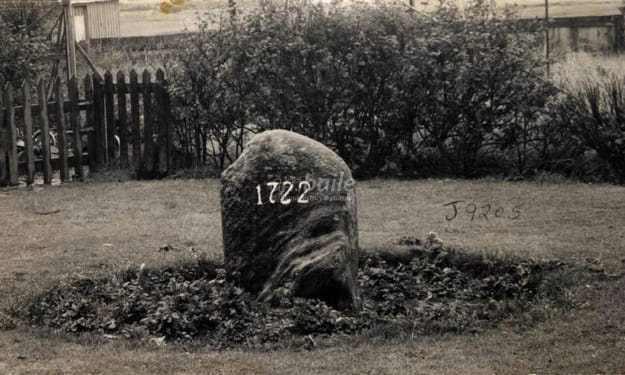
Imagine you're Janet Horne, an elderly woman living in Dornoch, a quaint little seaside town in the Sutherland county of Scotland's Highlands. It’s 1727, and you lead a modest life — not unusual for that time or place — with your daughter. Life isn’t easy, but it’s yours. You have the love of your daughter and the duty of caring for her to keep you going, despite the creeping onset of an illness we’d now recognise as senility.
By Paul Stewartabout a year ago in History
A Big Bang. Runner-Up in History Would’ve Burned This Page Challenge.
One has messy white hair, a bushy moustache, suit jacket and tie, and looks off-camera. The other has dark combed hair, wears glasses, is clean-shaven, clothed in clerical attire, and looks to his counterpart.
By Joe O’Connorabout a year ago in History
In The 6ix: A Black Baker Rises to the Top. Runner-Up in History Would’ve Burned This Page Challenge.
The man made good cakes. And following an apprenticeship, he got a job as a baker. It was 1861, he was nineteen years old. It wasn’t his first job - he’d been working since he was a kid to pay for school supplies - and it wouldn’t be his last. For the next sixteen years he kneaded dough, decorated cakes, baked pies. Then, he started driving horse-drawn cabs for his uncle’s livery stable. Years later, at the age of fifty-two, he became Toronto’s first Black elected politician.
By Marie Wilson6 years ago in History
Schicksals. Honorable Mention in History Would’ve Burned This Page Challenge.
Da-Da-Da-Dum Ludwig van Beethoven’s Symphony No.5 in C minor, Op.67, is an iconic composition of classical music. It resounds as the keystone in the wide arch of Western musical classics. It was written when Beethoven was already hard of hearing and suffered tinnitus. His hearing had begun deteriorating in 1798 and within 16 years he was totally deaf. In 1802, he wrote to a friend, "I want to grasp fate at the throat — it shouldn't bring me down completely."
By Gerard DiLeo3 years ago in History
מָשִׁיחַ/Μεσσίας/Χριστός. Honorable Mention in History Would’ve Burned This Page Challenge.
He considers the place across the valley before him with quiet solemnity. “The Garden of Eden, paradise, is never more than a moment away. A simple choice, a willingness to see & enter in.”
By Randy Wayne Jellison-Knockabout a year ago in History
Voted Out. Honorable Mention in History Would’ve Burned This Page Challenge.
The pounding on the Shibata family’s door at 8am didn’t sound like a neighbor. And, whoever it was wasn't leaving. Henry, 16, watched as his father opened the door to four stocky men holding stern looks on their faces. Their red uniforms, wet with Vancouver’s drizzle, showed they were with the Royal Canadian Mounted Police.
By Scott Christenson🌴about a year ago in History
The Story of Our History... . Honorable Mention in History Would’ve Burned This Page Challenge. Content Warning.
A day re-written in history, extremely historical lyrics but intentionally forgotten. You ask me to just pick one instance, but how can you when there are so many.
By J.W. Bairdabout a year ago in History
The First to Stand. Honorable Mention in History Would’ve Burned This Page Challenge.
Washington, D.C. — November 20, 1862 The fire in the grate had long since surrendered to embers. Lincoln hadn’t noticed. He sat motionless at the table, coat off, sleeves rolled, ink-stained fingers drumming on the edge of a worn dispatch. Silence reigned, save for the sound of a mouse scratching within the wall and the clock ticking. Slow, almost spiteful.
By Jason B. Bakerabout a year ago in History
“A Horse, A Horse, My Kingdom for a Horse!”. Honorable Mention in History Would’ve Burned This Page Challenge.
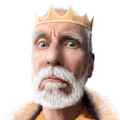
Finding his kingly remains, buried under a car park, seemed an ironic way to find him. For centuries, a king scorn from society. A king known for his wacky appearance and horrific acts. Stories simply passed down from generation to generation. Known now as a joke rather than the King of England.
By Elizabeth Butlerabout a year ago in History



























































All the great Submissions
Where the Spirit Horses Drink. Content Warning.
This story contains sensitive content Where The Spirit Horses Drink By Johanna Lor Rain Parry ---- this story is based on true events, and real experiences. It includes historical trauma from indigenous genocide.
By Johanna Parryabout a year ago in History
The Boston Witch Trials . Content Warning.
Boston, 1962 Crimson leaves crunched under Margaret's boots as she shuffled across Boston’s great lawn, wondering what she was doing traveling at this hour. Well, she knew what she was doing, but the real question remained: Was it worth it? The eerie atmosphere of Fenway Park stripped of its blinding lights and mix of hoots and hollers made her feel as if she was really stepping into a different reality. A reality she didn't much care for.
By Lora Colemanabout a year ago in History
The other Pankhurst girl
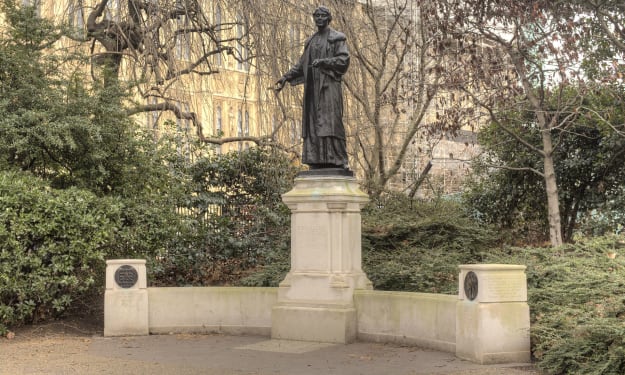
If you know the name Pankhurst, you will probably know about Emmeline Pankhurst, founder of the Women's Social and Political Union (WSPU), an all-women organisation that campaigned for the right to vote in the United Kingdom. You may even know of her daughter, Christabel, both being honored by the Pankhurst memorial in Victoria Palace Gardens, London, right next to the UK Parliament buildings, shown in the above featured image.
By Raymond G Taylor3 months ago in History
Canek and Kandiaronk
It is said that the American is the perfect mean between the European and the Indian. Moreau de St. Méry . Amerindian voices were starting to raise in 2XXX and it came to their ears two names from far away but aligned in vision: from the Huron tribe in the north, the Wendat, Kandiaronk (1625-1701), from the Maya in the south, Canek (1731-1731). Both of them regarded as heroes by their peoples. What would it be like to bring them back together from the dead? Fortunately AI now could make it possible, so by means of rescuing both their consciousness (their thoughts, their words plus all the history of humanity that went after their death), they were able to make them talk with one another, having as the only topic in mind their cultural shock when facing the Westerner people. They did have a Westerner interlocutor, McKone, to query further about their perceptions. In what follows, I reproduce a little fragment of their enlightening and fictitious conversation. To these days, 5025, they remain part of the Earth-Human Heritage (which aims to rescue the very best of our species), so-called our gift to the Universe.
By Laura Rodbenabout a year ago in History
An Unsettling Confrontation.
The terrifying incident of being nearly run over while peacefully protesting is far more than a personal affront; it represents a deeply unsettling challenge to the very foundation of democratic society. To experience such a blatant act of aggression—a vehicle used as a weapon against a civilian exercising their constitutional rights—is to witness a profound betrayal of the ideals this nation purports to uphold. This experience forces a confrontation with the bewildering truth that some individuals are willing to resort to monstrous tactics, directly contradicting the solemn military oaths sworn to defend the country against fascism.
By Sai Marie Johnsonabout a year ago in History
Keep Following The River
The sun's bright rays expanded over the rushing river, a testament to the resilience of Mary Draper Ingles. The river's mighty force in this settled wilderness. Mary, a beacon of strength, rested on the bank, always keeping an eye on everything. The luxury of civilization was far gone, with so many awful memories. Everything was an enemy out in this expanse, including the crazy Dutchwoman. Mary felt a little more rested but as can be trying to traverse these woods. It was only a dream to get away from the Shawnee. They were just living peacefully in their village in Draper Meadow, Virginia. The many memories of growing up on the frontier with her parents. The new world seemed exciting, as it offered the opportunity to start a whole new chapter in history. Too many nights were the nightmares of the Draper Meadow Massacre. They dragged her and her children along with others to the unforgiving wilderness. Mary focused on her goal to return to her loving husband, William. Her thoughts never did lose the memory of her son, who was taken to another village, and her baby, who would never have survived this escape. The miles turned long as just surviving was the goal.
By Sarah Danaherabout a year ago in History
The Mysterious Agent 355
In the fall of 1776, General Washington received grievous news. One of his chief espionage officers, Nathan Hale, had just been captured and executed by the British. Frankly he wasn't too terribly surprised; Hale was a good man, but a horrendous spy. Nor was he the first of Washington's spies to be found out and killed before they could deliver their hard-sought information about the enemy. After receiving news of Hale's execution by hanging without a trial, Washington was most aggrieved and probably more than a little frustrated.
By Natalie Grayabout a year ago in History
The Facts of the "Freedom Floatilla"
I'll be honest, I held off on commenting on this particular "Historic Event" mostly because I knew that it was never going to be a historic event. This was always going to be a non-starter, a pointless propaganda exercise to give a handful of people fifteen days of fame by linking themselves toa current popular cause without actually doing anything useful.
By Natasja Roseabout a year ago in History
"Janet Horne" — The Last Witch Executed in Scotland. Runner-Up in History Would’ve Burned This Page Challenge.
Imagine you're Janet Horne, an elderly woman living in Dornoch, a quaint little seaside town in the Sutherland county of Scotland's Highlands. It’s 1727, and you lead a modest life — not unusual for that time or place — with your daughter. Life isn’t easy, but it’s yours. You have the love of your daughter and the duty of caring for her to keep you going, despite the creeping onset of an illness we’d now recognise as senility.
By Paul Stewartabout a year ago in History