
"Janet Horne" — The Last Witch Executed in Scotland
Which witch? For the History Would’ve Burned This Page Challenge

Imagine you're Janet Horne, an elderly woman living in Dornoch, a quaint little seaside town in the Sutherland county of Scotland's Highlands. It’s 1727, and you lead a modest life — not unusual for that time or place — with your daughter. Life isn’t easy, but it’s yours. You have the love of your daughter and the duty of caring for her to keep you going, despite the creeping onset of an illness we’d now recognise as senility.
Your daughter is a lovely wee lassie, though she has her issues. But you have a life together — quiet, fragile, decent.
Then comes the knock.
The angry voice of the local law enforcement. Dornoch’s sheriff-depute and his men are at the door.
You open it.
They barge in.
You are arrested.
Charged.
On what grounds?
Witchcraft.
Yes, that’s right.
As most reading this will know, witch hunts and trials are a real, ugly part of our shared history — no matter where you’re from.
Was Janet Horne a witch?
As we now understand, the vast majority of those accused — especially women — never practiced any form of witchcraft. So, no. Janet Horne was not a witch. She was just an elderly single mother with a daughter trying to make her way through the meagre but peaceful existence life had handed them both.
But you have been arrested. Charged. Locked in a cell — likely separated from your daughter — for something you didn’t do.
Why?
You're told it was the neighbours. They gossiped. They whispered about your daughter’s hands and feet — said they looked like hooves. So, if they looked like hooves, they must be hooves. Strange logic, but what can you do if the prevailing attitude of the time is dictated by that logic? They claimed you’d turned her into a pony. That you used her to ride across the Sutherland countryside, carrying out your witchcraft. You know — the witchcraft you never practiced?
Captain David Ross believed it, though. So there was not a lot you could do. Her deformities, he claimed, were proof. You’d tried to reverse the spell but failed to turn her fully back into a girl. Not only were you a witch, you were not very good at witchcraft, it seems.
No one cared about the truth or about asking and trying to listen to you. Your dementia may or may not have played a part in that, but that is not a good enough excuse.
It didn’t matter that the “hooves” were simply congenital deformities. It didn’t matter that there was no witchcraft. It didn’t matter that you loved your daughter.
Maybe you'll get a fair hearing, you think. Maybe someone will see reason.
I wish I could say that’s what happened. That you got to go home. That you lived out your days in peace.
But Captain Ross rushed the trial. Found both you and your daughter guilty. It was part of his crusade to protect the good and the pure of the area under his watchful protection, of course. Even if that meant you, innocent, and your daughter, innocent, were not protected.
You were to be executed the very next day.
Burnt alive at the stake.
For being a witch — when you were not a witch.
For being a woman who lived alone with her disabled daughter. For growing old. For being sick.
Let that sink in.
Your daughter escaped. She ran away. Records are not clear about what happened to her afterward. We can hope that maybe she found another so-called "witch" who took her in, but that's mere speculation.
You were not so lucky. Dementia had taken hold. You were confused, vulnerable.
A crowd tarred and feathered you — likely at Ross’s command — and paraded you around Dornoch in a barrel so everyone could mock and jeer. Everyone loves a scapegoat, don't they?
Then they dragged you to the place of execution.
As the flames rose and licked your body, you smiled — or so the legend says — because of the warmth.
And if all that wasn't cruel enough. As if you hadn't been through enough. Maybe, just maybe you'd have been given back your dignity in death.
Unfortunately, not, as your name was erased from any known records. You were called “Janet Horne” only after your death — a generic name, like Jenny, given to supposed witches in the Highlands.
Talk about insult to injury.
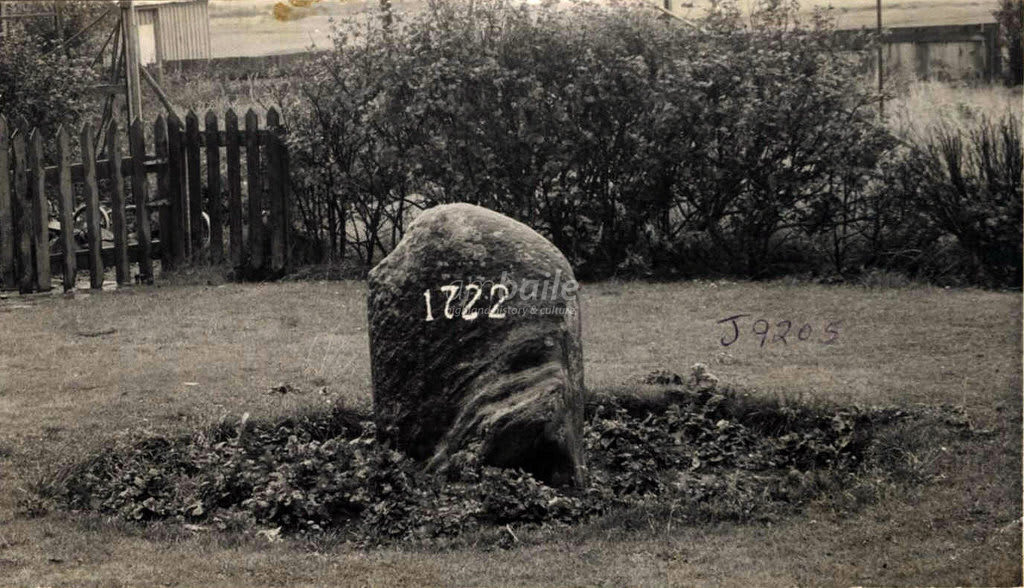
Today, there is a small, unimpressive monument in your name, called The Witch’s Stone, Littletown, Dornoch. (Unflattering, don't you think?)
Which Witch?
I’ve always seen witch hunts and witch trials as a perfect example of how quickly we let fear of the unknown spiral into hatred — and how easily hatred becomes violence. Unjust. Irreversible.
My first issue is with the names themselves. “Witch hunts” and "witch trials" sound like some noble crusade to root out danger and protect the god-fearing. As if something wicked was genuinely being pursued.
But as I’ve already said, the people — particularly women — accused of witchcraft were not witches.
So why were they targeted?
Superstition. Religious hysteria. The Devil’s name on everyone’s lips. A lack of understanding about natural phenomena and human difference.
It was always the marginalised who bore the brunt. Women who didn’t conform. Poor women. Old women. Disabled people. Unmarried. Unafraid to speak.
As in the case of “Janet Horne,” the accusations were based on nothing but rumour, fear, and ignorance.
Once arrested, torture was common. Confessions were extracted by force. Most “admitted” guilt just to end the pain — and that coerced confession sealed their fate. I'm not sure I blame them. The pain, the suffering, the shame and the knowledge that all of this would have spread like wildfire just as quick as the rumours of you being a witch did in the first place.
It’s worth remembering: witchcraft was outlawed in Scotland under the 1563 Witchcraft Act. Even into the 18th century, belief in witches remained strong — and dangerous.
This is another part that really makes me angry about the whole affair. Even if they had been witches — which they weren’t — these trials would still have been cruel. Most people who practice any form of witchcraft do so for spiritual, personal, or naturalistic reasons. Not harm.
They follow their own path. Their own rituals. Just like anyone else.
Why Does This Matter Now?
Because if we don’t learn from the past, we’ll keep repeating it.
There are still parts of the world where women and other marginalised people are being persecuted — tortured, put through unfair justice systems and trials they have no chance of winning, imprisoned, and even murdered.
The witch trials never truly ended.
They just changed names. Think, the disabled, the queer, the faithful of other paths, the ones with different skin.
So the question remains—
Which witch?
*
Thanks for reading!
Author's Notes: The sources used to put together this piece are linked below. Sadly, there is not much information to go on and while there are some books and a small Wikipedia entry, I still felt it worth highlighting through this challenge.
Sources: https://www.nls.uk/learning-zone/literature-and-language/themes-in-focus/witches/source-6/
https://en.wikipedia.org/wiki/Janet_Horne#cite_note-:0-3
https://www.scotlands-enchanting-kingdom.com/scotlands-lesser-known-historical-figures/
Here are a couple of other things you might like to read:
About the Creator
Paul Stewart
Award-Winning Writer, Poet, Scottish-Italian, Subversive.
The Accidental Poet - Poetry Collection out now!
Streams and Scratches in My Mind coming soon!
Enjoyed the story? Support the Creator.
Subscribe for free to receive all their stories in your feed. You could also become a paid subscriber, letting them know you appreciate their work.
Comments
There are no comments for this story
Be the first to respond and start the conversation.