Book of the Year
7 Life-Changing Books That Will Help You Find Your True Path. AI-Generated.
At some point in life, we all pause and ask ourselves a powerful question: “Am I on the right path?” Whether it happens after a career setback, a personal transition, or a quiet moment of reflection, this question often signals the beginning of a deeper journey.
By Diana Meresc5 months ago in BookClub
7 Books for Quiet Nights and Deep Thoughts. AI-Generated.
There are nights when entertainment feels too loud, distractions seem hollow, and we crave something deeper than another episode or endless scrolling. Quiet evenings have a unique power. They create space for reflection, imagination, and growth. In those moments, the right book can feel like a conversation with a wise friend—one who challenges our assumptions, expands our perspective, and helps us understand ourselves a little better.
By Diana Meresc5 months ago in BookClub
7 Books That Make You See Life for What It Truly Is. AI-Generated.
There are books we read for entertainment, and then there are books that quietly reshape the way we understand life itself. These are not just stories or theories; they are mirrors that reflect human nature, society, fear, purpose, and truth back at us. Sometimes gently, sometimes uncomfortably.
By Diana Meresc5 months ago in BookClub
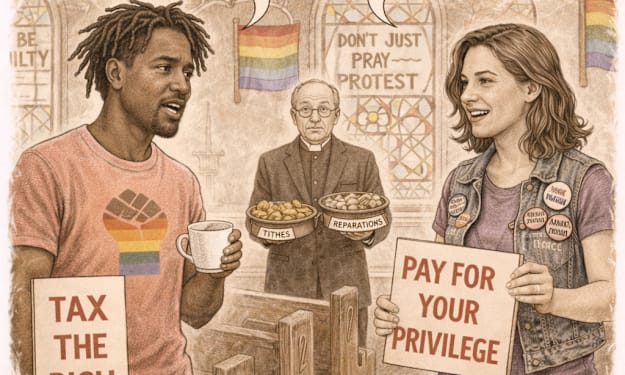
The Unsocial Justice Gospel, THE MISCOMMUNICATION TRILOGY, “The Tower OF Babble, Vol. III”, Part 7
The Gospel of Babel: How Language Became the Battlefield of Modern Society The Rise of a New Linguistic Faith The Unsocial Justice Gospel, the seventh installment of The Tower of Babble and the third volume of The Miscommunication Trilogy, is an ambitious exploration of one of the most significant yet least understood transformations of contemporary society: the conversion of language from a medium of communication into a mechanism of political identity, moral authority, and social control. The book begins from a simple but unsettling observation. Modern societies speak constantly about justice, inclusion, diversity, recognition, representation, equality, rights, and empowerment, yet the proliferation of these moral vocabularies has coincided with growing social fragmentation, ideological polarization, and communicative breakdown. Rather than producing greater understanding between people, the expansion of politically charged language often appears to intensify conflict. The author approaches this contradiction not as a partisan critic of social justice movements nor as a defender of traditional hierarchies, but as an investigator of language itself. Drawing from sociolinguistics, anthropology, political theory, discourse analysis, cultural studies, and historical examples from around the world, the book examines how language becomes invested with extraordinary symbolic power. Throughout its chapters, language emerges not merely as a neutral instrument for transmitting information but as a political technology capable of shaping social reality, distributing status, defining legitimacy, and organizing collective identities. The book’s greatest strength lies in its ability to connect seemingly unrelated phenomena into a coherent narrative. Debates over pronouns, bilingual education, linguistic rights, language planning, political correctness, nationalism, colonialism, social activism, and discourse reform are presented not as isolated controversies but as manifestations of a deeper transformation in the relationship between language and power. The reader encounters examples ranging from transgender language activism and social justice linguistics to Soviet language policy, Breton nationalism, anti-apartheid discourse, linguistic anthropology, language revival movements, and contemporary debates over multilingualism. What unites these diverse subjects is the recognition that language functions simultaneously as a resource, a weapon, an institution, and a symbol. The book argues that modern societies increasingly treat linguistic practices as moral indicators, transforming speech into a measure of political virtue and social legitimacy. This shift creates a new environment in which linguistic conformity often becomes more important than substantive dialogue. The author repeatedly returns to the central metaphor of Babel, suggesting that the multiplication of linguistic identities and ideological vocabularies risks undermining the shared communicative foundations necessary for democratic life. Yet the analysis remains nuanced, acknowledging the legitimate grievances and historical injustices that motivate many contemporary language reforms. Rather than dismissing these movements, the book seeks to understand how their linguistic strategies simultaneously challenge existing power structures while creating new forms of symbolic authority. In doing so, The Unsocial Justice Gospel establishes itself as a provocative and intellectually ambitious contribution to contemporary debates about language, politics, and identity.
By Peter Ayolov5 months ago in BookClub
7 Books That Make You Lose Track Of Time While Reading Them. AI-Generated.
Have you ever picked up a book “just for a few pages,” only to realize hours have passed, the room has gone quiet, and you’ve completely lost track of time? That immersive feeling—where reality fades and the story takes over—is what separates a good book from an unforgettable one.
By Diana Meresc5 months ago in BookClub
The New Religions Spell, THE MISCOMMUNICATION TRILOGY, “The Tower OF Babble, Vol. III”, Part 6
The Marketplace of Faith: Belief, Power, and the New Sacred Order The Return of Enchantment in a Secular Age The New Religions Spell is one of the most ambitious and intellectually provocative volumes in The Tower of Babble, the third installment of The Miscommunication Trilogy. At its core, the book challenges one of the defining assumptions of modern civilization: the belief that religion is disappearing. Contrary to the familiar narrative of secular progress, this work argues that faith has not vanished from contemporary society. Instead, it has migrated into new institutions, new ideologies, and new cultural practices. The result is not a post-religious world but a world saturated with alternative forms of belief, many of which operate beneath the threshold of conscious recognition. The book begins by examining religion not as a specific institution but as a broader human impulse toward meaning, order, and transcendence. Through an extensive exploration of historical and contemporary sources, it demonstrates that modern societies continue to generate myths, prophets, rituals, sacred symbols, and systems of salvation. What has changed is not the existence of faith but its object. Where earlier generations sought redemption through traditional churches, modern individuals increasingly seek fulfillment through markets, politics, self-help movements, prosperity theology, technological innovation, and therapeutic cultures. The sacred has not disappeared; it has simply assumed new disguises.
By Peter Ayolov5 months ago in BookClub
Obscenity and Hate Speech, THE MISCOMMUNICATION TRILOGY, “The Tower OF Babble, Vol. III”, Part 5
The War of Words: Language, Power and the Architecture of Offense A JOURNEY INTO THE DARKEST REGIONS OF COMMUNICATION Obscenity and Hate Speech, the fifth volume of The Tower of Babble and a key installment in Peter Ayolov’s Miscommunication Trilogy, is an ambitious and intellectually provocative examination of one of the most contentious subjects in modern society: the relationship between language, violence, censorship, identity, and power. While many books approach profanity, hate speech, or offensive language as isolated social problems, this volume situates them within a much larger framework. It argues that obscenity and hate speech are not merely linguistic curiosities or legal dilemmas but symptoms of a deeper communicative crisis that affects contemporary civilization. The book’s central contribution lies in its ability to connect seemingly unrelated phenomena—swearing, cyberbullying, terrorism, propaganda, political euphemisms, workplace harassment, online outrage, and censorship—into a coherent narrative about the deterioration of meaningful communication.
By Peter Ayolov5 months ago in BookClub
8 Must-Read Books in 2026 for Personal Growth and Success . AI-Generated.
In 2026, we are living in an era shaped by rapid technological advancements, evolving career demands, and constant digital distractions that compete for our attention every second. In this environment, success is no longer defined only by talent or opportunity, but by mindset, discipline, adaptability, and the ability to continuously learn and improve.
By Diana Meresc5 months ago in BookClub
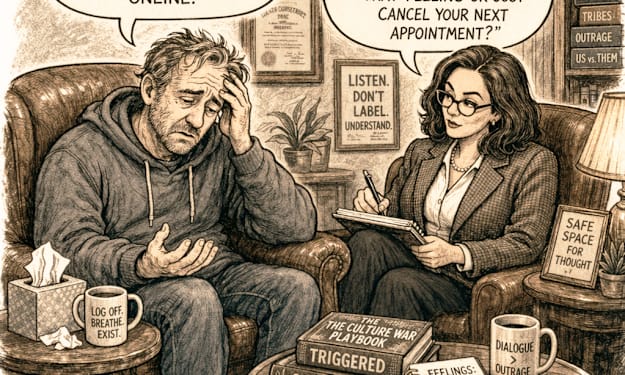
The Language of Culture Wars, THE MISCOMMUNICATION TRILOGY, “The Tower OF Babble, Vol. III”, Part 4
The Babel of Meanings: A Review of The Language of Culture Wars Communication as Conflict The Language of Culture Wars is one of the most ambitious contributions to The Tower of Babble, Vol. III and perhaps one of the most relevant examinations of contemporary public life within The Miscommunication Trilogy. While many books explore political polarization, media manipulation, ideological radicalization, or identity conflicts as separate phenomena, this volume approaches them as manifestations of a deeper process: the transformation of language from a medium of communication into a medium of conflict. The central insight of the book is deceptively simple yet profoundly important. Human societies are held together not merely by institutions, laws, economies, or technologies but by shared systems of meaning. When those systems begin to fracture, society does not merely experience disagreement; it experiences a crisis of communication itself.
By Peter Ayolov5 months ago in BookClub
8 Books That Hit Different When You Read Them at the Right Time . AI-Generated.
Have you ever read a book and wondered why everyone else seemed to love it while it left you completely unimpressed? Then, years later, you picked it up again and suddenly every page felt profound. The story hadn't changed—but you had.
By Diana Meresc5 months ago in BookClub
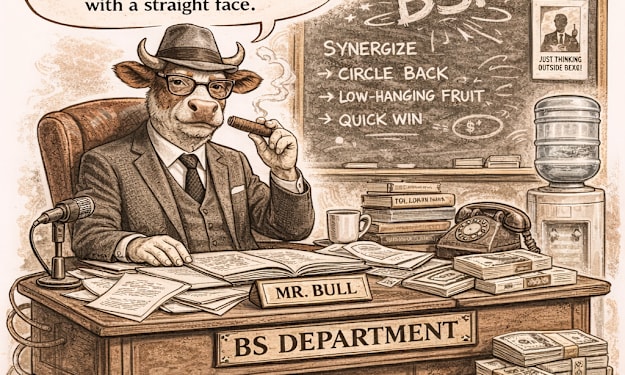
The Bullshit Language, THE MISCOMMUNICATION TRILOGY, “The Tower OF Babble, Vol. III”, Part 3
The Babel of Nonsense: A Review of The Bullshit Language The Triumph of Empty Speech The Bullshit Language stands as one of the most original and provocative contributions to The Tower of Babble, the third volume of The Miscommunication Trilogy. At first glance, the subject appears almost humorous. The term “bullshit” is often associated with vulgarity, casual speech, or everyday complaints about politics and business. Yet this book demonstrates that bullshit is not merely a colloquial expression but one of the defining communicative conditions of contemporary civilization. Through a broad exploration of philosophy, sociology, economics, organizational studies, political rhetoric, and linguistics, the work argues that modern societies increasingly operate through forms of communication that are detached from truth while remaining highly effective in shaping perception. The central distinction around which the book revolves is the difference between lying and bullshit. The liar still acknowledges the authority of truth because deception requires awareness of reality. Bullshit, by contrast, reflects indifference toward truth itself. The producer of bullshit is not primarily concerned with whether statements correspond to facts. Instead, communication becomes a tool for impression management, identity construction, status enhancement, and symbolic performance. This seemingly simple distinction opens a profound investigation into the structure of contemporary communication.
By Peter Ayolov5 months ago in BookClub