
Trump’s Record in Full Context (Part 4)
False Claims, Misleading Narratives, Overextended Accusations, and Negative Coverage That Did Not Match the Record

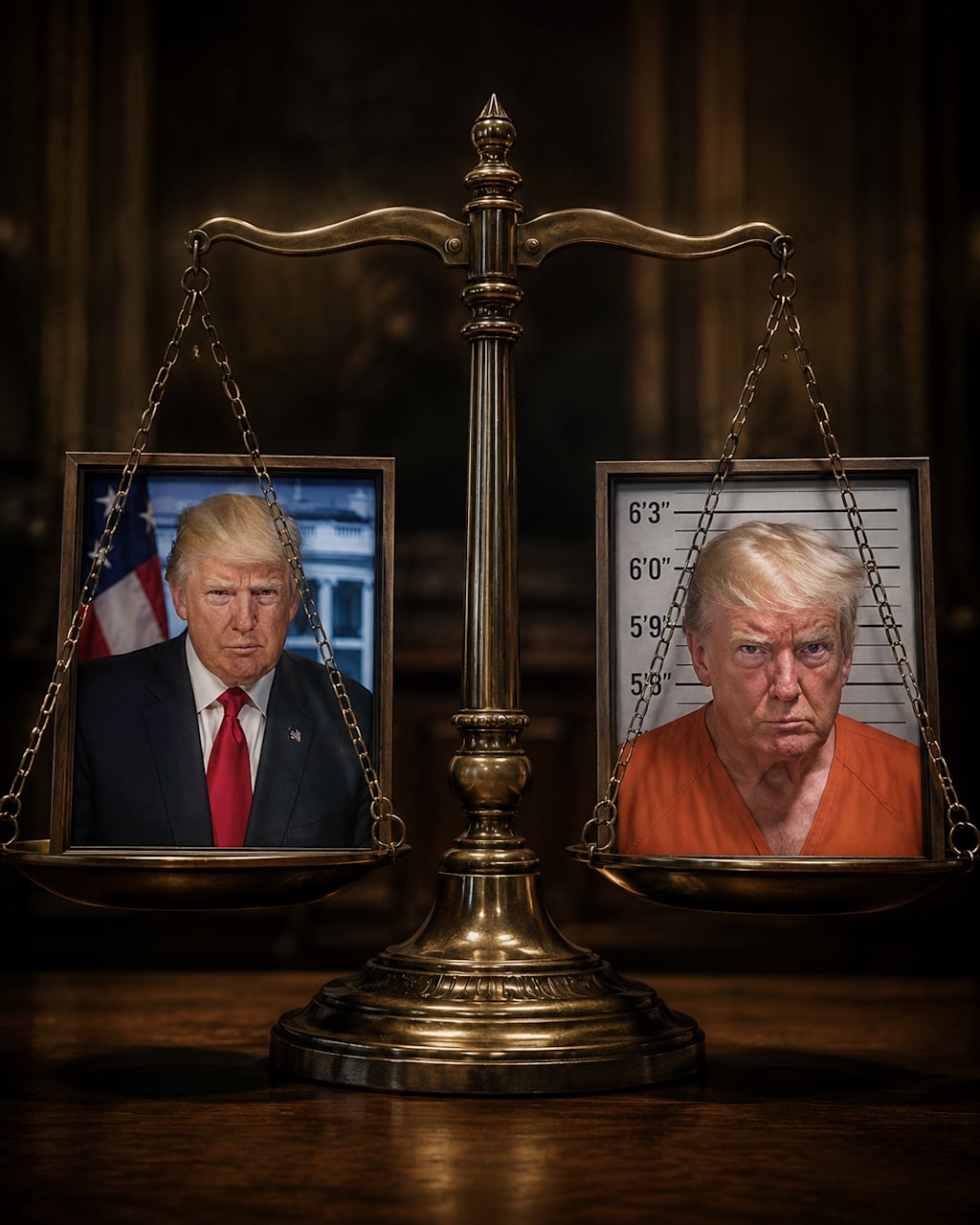
(Continued from Part 3...)
---
Parts 1 and 2 documented what Donald Trump objectively did. Part 3 documented what he did not fully deliver, what was blocked, what became legally complicated, and what should be judged with broader context. Part 4 addresses a different category: claims made about Trump that were false, misleading, overreaching, unproven, selectively framed, or materially incomplete.
This section does not claim that every criticism of Trump was false. Many criticisms were based on real statements, real actions, real controversies, real legal disputes, and real consequences. But negative coverage often went beyond what the evidence supported. Sometimes a quote was shortened. Sometimes a disputed intelligence claim was treated as established fact. Sometimes a theory was called dangerous misinformation before later becoming plausible. Sometimes an event was framed in the most damaging possible way before later records complicated or contradicted the original narrative.
The purpose of this part is to separate reality from exaggeration. A claim can be based on something real and still become false by overstatement. A claim can be politically useful and still be unproven. A claim can be emotionally persuasive and still be missing necessary context. This part focuses on those cases.
---
Russia Collusion and Related Claims
The claim that Trump or his campaign conspired with Russia to steal the 2016 election was not established.
The Russia investigation found that Russia interfered in the 2016 election, and it documented contacts between people connected to Trump and Russians. That is real. But the central public claim that Trump or his campaign criminally conspired or coordinated with the Russian government was not established by the Mueller investigation. The Mueller report stated that the investigation “did not establish” that members of the Trump campaign conspired or coordinated with Russia in its election-interference activities. That does not mean every concern was imaginary. It does mean the strongest version of “Trump was a Russian collusion agent who stole the election with Russia” went beyond what the investigation established.
The Steele dossier was treated with far more certainty than it deserved.
The Steele dossier became a major part of the Trump-Russia narrative, especially in media and political conversation. Many of its most explosive allegations were unverified, disputed, or later discredited. Later investigations and reporting showed serious problems with the dossier’s sourcing, reliability, and use in parts of the Russia investigation. At most, it was opposition research containing raw and unverified claims, some of which became politically powerful despite lacking proof.
The “pee tape” allegation was never confirmed.
The alleged Moscow “pee tape” became one of the most memorable claims from the Steele dossier era. It was repeated, joked about, referenced in public commentary, and used as part of the broader insinuation that Russia possessed compromising sexual material on Trump. It was never confirmed. Because the claim was lurid and memorable, it shaped public perception far beyond the evidence. This belongs in Part 4 because it is an example of an unproven allegation becoming culturally powerful through repetition rather than verification.
The Alfa Bank-Trump secret communications theory did not hold up as publicly implied.
Claims circulated that unusual internet traffic between a Trump Organization server and Russia’s Alfa Bank suggested covert communications. That theory became part of the broader Trump-Russia atmosphere. Later investigations did not establish that it showed a covert Trump-Russia communication channel. The broader lesson is the same as with the dossier: technical or intelligence-adjacent claims can sound powerful in headlines, but unless the evidence establishes the conclusion, the headline can outrun the facts.
The Carter Page FISA process involved serious errors and omissions.
The claim that scrutiny of Trump-world surveillance concerns was merely paranoia did not hold up. The Justice Department inspector general found significant problems in the Carter Page FISA applications, including errors and omissions. That does not prove every Trump claim about spying was true, but it does mean the surveillance process was not clean, neutral, or error-free in the way many defenders initially suggested. The public narrative that concerns about FISA abuse was baseless was itself misleading.
The Durham investigation did not prove every Trump claim, but it undermined the clean origin story of the Russia investigation.
The Durham report did not produce the sweeping criminal accountability some expected. Still, it criticized the FBI’s handling of the Russia investigation and concluded that the bureau moved forward without sufficient rigor, caution, or equal treatment. The result did not vindicate every counterclaim. It did undermine the idea that the investigation’s opening and development were beyond serious criticism.
The Russian bounty story was treated more strongly than the intelligence supported.
During the first term, reports claimed Russia offered bounties to Taliban-linked militants for killing U.S. troops and that Trump failed to respond properly. Later, U.S. intelligence described the claim with only low to moderate confidence, meaning it was plausible but not strongly established. That does not prove the allegation was false. It means the strongest public framing treated an uncertain intelligence claim as more settled than it was.
Claims that Trump was a Russian asset were never proven.
Some critics went beyond alleging bad judgment, flattery toward Putin, suspicious contacts, or insufficient hostility toward Russia. They claimed or implied that Trump was a Russian asset. That claim was never proven. It was more extreme than the evidence established. The accurate criticism is that Trump’s Russia posture and rhetoric often created concern and confusion. The unsupported version is that he was proven to be an agent or asset of Russia.
---
COVID Claims and Public-Health Narratives
The Wuhan lab-leak theory was wrongly treated by many as a fringe or racist conspiracy before later becoming a plausible official theory.
Early in the pandemic, the idea that COVID-19 may have emerged from a Wuhan lab was often dismissed as a conspiracy theory, misinformation, or xenophobic speculation. Later, U.S. agencies including the FBI and Department of Energy assessed that a lab-related origin was plausible, while the intelligence community remained divided and did not reach a single definitive conclusion. The point is not that the lab-leak theory was proven beyond dispute. The point is that the earlier certainty used to dismiss it was unjustified. A theory can be unproven and still legitimate enough to investigate.
Criticism of Trump’s China travel restrictions was often overconfident or politically framed.
Trump restricted travel from China early in 2020. Critics framed the move as xenophobic or racially motivated, while supporters later treated it as obviously correct. The factual record is more specific. Biden used language about “hysteria and xenophobia” on the day the restrictions were announced, but fact-checkers noted he did not explicitly say in that statement that the travel restriction itself was xenophobic. The broad claim that the travel restrictions were merely racist or irrational was overreaching, while Trump’s later claim that Biden directly and clearly opposed the travel restrictions also overstated the record.
The claim that Trump called the coronavirus itself a “hoax” was misleading.
Trump used the word “hoax” in connection with Democratic attacks over his handling of COVID-19. Many ads and political claims framed that as Trump calling the virus itself a hoax. FactCheck.org found that a Democratic ad spliced quotes together and that Trump’s fuller comments indicated he was referring to Democratic criticism, not denying the virus existed. Trump’s COVID messaging can still be criticized, but the specific claim that he simply called the coronavirus itself a hoax was misleading.
The claim that Trump told Americans to inject or drink bleach was false as stated.
Trump made confusing and medically irresponsible remarks during an April 2020 COVID briefing about disinfectant, light, and whether something could be done internally. Those remarks deserved criticism. But the repeated claim that he directly told Americans to inject bleach or drink bleach was false as stated. The accurate version is that Trump speculated dangerously and unclearly about disinfectant and internal treatment. The inaccurate version is that he gave Americans an instruction to inject or drink bleach.
The “Trump is uniquely responsible for all pandemic misinformation” framing was incomplete.
Trump made unclear, wrong, or harmful statements during COVID, and those deserve criticism. But pandemic misinformation and institutional failure were not uniquely Trump phenomena. Public-health authorities changed positions, social-media platforms suppressed some claims that later became debatable or plausible, state governments imposed inconsistent rules, and media coverage sometimes treated uncertain scientific questions as settled. Trump played a role in the trust crisis, but he was not the sole source of it.
Trump was often blamed for every COVID outcome as if governors, agencies, China, public-health officials, hospitals, schools, and later administrations had no role.
Trump made serious errors during COVID, and Part 3 already addressed COVID as both an administrative achievement and a trust crisis. But blaming him for every death, every school closure, every mandate, every supply-chain problem, every nursing-home failure, and every later institutional decision is overreach. COVID policy was shaped by the virus, China’s early handling, the CDC, FDA, NIH, state governors, local school systems, hospitals, private employers, Congress, courts, media platforms, and later administrations. A president has responsibility. A president does not have sole authorship of every pandemic outcome.
---
Race, Charlottesville, and Immigration Narratives
The claim that Trump called neo-Nazis and white supremacists “very fine people” was false.
After Charlottesville, Trump said there were “very fine people on both sides,” but in the same exchange he explicitly said he was not talking about neo-Nazis and white nationalists and said they should be condemned totally. That does not erase criticism of his broader Charlottesville response. It does mean the specific repeated claim was false. This became one of the clearest examples of a real controversy being turned into a cleaner accusation than the transcript supports.
The claim that Trump called immigrants generally “animals” was misleading.
Trump used the word “animals” in an immigration discussion, and critics framed it as referring to immigrants or asylum seekers generally. The fuller context concerned MS-13 and violent criminal gang members. Trump’s immigration rhetoric can still be criticized as harsh, but the claim that he simply called immigrants as a class “animals” was not accurate.
The claim that Trump called all Mexican immigrants rapists was an overstatement.
Trump’s 2015 campaign-launch remarks about Mexico sending people who were bringing drugs, crime, and rapists were inflammatory and broadly condemned. But the claim that he literally called all Mexican immigrants rapists goes beyond the wording because he also said, “some, I assume, are good people.” The accurate criticism is that his language painted illegal immigration from Mexico in an ugly and sweeping way. The inaccurate version is that he explicitly said every Mexican immigrant was a rapist.
The “Muslim ban” label was politically powerful but legally imprecise.
Trump campaigned in 2015 on a “total and complete shutdown of Muslims entering the United States,” so criticism of the underlying intent had a real basis. But the policy that eventually reached the Supreme Court was not a literal ban on all Muslims. It applied to nationals of specific countries, had exceptions and waivers, and later versions included non-Muslim-majority countries. The Court upheld the third version of the policy. The fair conclusion is that the phrase “Muslim ban” captured a real political controversy around Trump’s rhetoric and intent, but it was legally imprecise when used to describe the final policy as a ban on all Muslims.
The “bloodbath” claim was misleading when framed as a direct threat of political violence.
In 2024, Trump said there would be a “bloodbath” if he lost, and critics quickly framed it as a threat of political violence. The context was discussion of the auto industry and economic damage from foreign competition. The word was inflammatory, but the claim that it was plainly a call for violence stripped away the economic context.
The “dictator on Day One” claim was often repeated without the limiting context.
Trump did say he would be a dictator on “Day One” in response to a question about whether he would abuse power or seek retribution. That statement was politically damaging and fair game for criticism. But the fuller context was that he framed the “Day One” actions as closing the border and drilling. Critics often repeated the quote as if it were a direct promise to rule as a permanent dictator. The accurate criticism is that he used authoritarian-sounding language carelessly. The overreach is omitting the border-and-drilling context and treating the line as a literal, unlimited dictatorship pledge.
---
Media Errors, Viral Framing, and Selective Context
The claim that Trump removed the Martin Luther King Jr. bust from the Oval Office was false.
A TIME reporter mistakenly reported that the MLK bust had been removed from the Oval Office. The report was corrected, and TIME apologized. The bust had not been removed; it was obscured from view. This belongs in Part 4 because the false report fit an immediate narrative that Trump was racially hostile in symbolic ways before the fact had been verified.
The koi fish feeding story was misleading.
During Trump’s 2017 visit to Japan, some media and social media coverage made it appear that Trump impatiently dumped fish food into a koi pond while Prime Minister Shinzo Abe fed the fish properly. Fuller video showed Abe dumped his box first and Trump followed. The story became a small example of how visual editing or selective framing can turn a harmless moment into a character attack.
The Lafayette Square “cleared for a Trump photo-op” narrative was more complicated than early coverage suggested.
The clearing of Lafayette Square before Trump’s walk to St. John’s Church became one of the most intense media narratives of 2020. Critics said peaceful protesters were cleared for a Trump photo-op. The Interior Department Inspector General later found that U.S. Park Police had planned to clear the area earlier for security fencing, not specifically for Trump’s visit. That does not mean the event was handled well. Chemical irritants were used, coordination was poor, and the optics were severe. But the simpler claim that protesters were cleared solely so Trump could take a photo was not supported by the watchdog’s findings.
The “kids in cages” narrative often omitted that the detention structures predated Trump.
Images of children in chain-link detention enclosures were used heavily against Trump, and the family separation policy under Trump was real and controversial. But some viral photos used to attack Trump dated from 2014, during the Obama administration, and the detention infrastructure itself predated Trump. The accurate criticism is that Trump’s immigration policies, especially family separation, intensified the issue and made it politically explosive. The misleading claim was that the visual infrastructure itself began with Trump.
The claim that Trump’s tax cuts only helped the rich was overstated.
The 2017 Tax Cuts and Jobs Act benefited higher-income households in larger dollar terms, and critics can fairly argue that the law favored corporations and wealthier taxpayers. But the claim that it only benefited the rich was false. Middle-income and lower-income taxpayers also received tax cuts, especially through rate changes, the doubled standard deduction, and the expanded child tax credit. The accurate critique is about distribution and long-term fiscal cost, not that nobody outside the wealthy benefited.
---
Claims Around Censorship, Disinformation, and Election Narratives
The Hunter Biden laptop story was wrongly dismissed as Russian disinformation.
The Hunter Biden laptop story affected Trump because it was treated as a suspicious Trump-aligned attack or Russian disinformation operation during the 2020 campaign. The story did have messy sourcing and legitimate verification questions at the time. But later reporting and investigations established that the laptop was genuinely Hunter Biden’s, and no public evidence established the laptop story itself as a Russian disinformation scheme. The original intelligence-officials letter said the story had the “classic earmarks” of a Russian information operation, but public and media shorthand often hardened that into “it is Russian disinformation.” That was misleading and politically consequential.
The idea that social-media suppression around the laptop was simply neutral content moderation became harder to defend later.
Twitter and other platforms limited or restricted circulation of the New York Post laptop story in 2020. At the time, this was defended as caution around hacked materials or possible foreign disinformation. Later confirmation that the laptop was authentic made the suppression look far more politically consequential. The strongest conclusion is not that every moderator knew the truth. It is that a major story damaging to Trump’s opponent was restricted under a rationale that was never proven.
The “Trump colluded with Russia but Hunter laptop was Russian disinformation” contrast became a major trust problem.
The public was told for years to treat Trump-Russia collusion as a live, serious scandal, even though conspiracy was never established by Mueller. At the same time, the Hunter Biden laptop was suppressed or discounted under a Russian-disinformation cloud that later weakened. This contrast became a major institutional-trust problem. The issue is not that every laptop-related claim was true. The issue is that the confidence levels applied to the two narratives were not even-handed.
---
Intelligence, Lawfare, and Selective Certainty
The idea that the FBI handled Trump-Russia matters with clean neutrality was undermined by later reviews.
The Russia investigation was not invented from nothing, and Russian election interference was real. But later reviews exposed serious problems in how parts of the investigation were handled, especially around FISA applications and reliance on unverified or flawed information. Durham criticized the FBI’s lack of analytical rigor, and the inspector general identified major errors in the Carter Page FISA process. That means the claim that Trump’s complaints about investigative abuse were pure fantasy was itself false or overstated.
Claims that every legal case against Trump was obviously neutral accountability were overstated.
Some legal actions against Trump produced real rulings, civil judgments, and criminal convictions. Those belong in the record. But the broader claim that the legal environment around Trump was purely neutral and not politically shaped is not credible as a blanket statement. The volume, timing, novelty, jurisdictional choices, campaign context, fundraising use, and public messaging around some cases made lawfare concerns reasonable to discuss. The fair conclusion is not that every case was fake. It is that “all of it was just normal accountability” is as overreaching as “all of it was fake.”
Trump’s legal exposure was often described in ways that blurred civil liability, criminal guilt, accusation, indictment, conviction, and settlement.
Trump faced real legal consequences, including the New York felony convictions and the Carroll civil verdicts. But public discussion often blurred distinct legal categories: being sued is not being convicted, being found civilly liable is not being criminally found guilty, being indicted is not being proven guilty, and settling is not the same thing as a jury finding. Those distinctions matter if the goal is truth rather than narrative.
The E. Jean Carroll case did not result in Trump being criminally found guilty of rape.
The E. Jean Carroll litigation is often misstated. Trump was not criminally tried or found guilty of rape. A civil jury found him liable for sexual abuse and defamation and awarded damages. The jury did not find him liable for rape under New York’s narrow legal definition at the time, though the judge later said the conduct found by the jury could be described as rape in common usage. The accurate statement is that Trump was civilly found liable for sexual abuse and defamation, not criminally found guilty of rape. Also, this was not merely a settlement in the sense of no finding; there was a civil jury verdict.
Trump was not criminally convicted of insurrection.
January 6 was violent, damaging, and politically consequential, as Part 3 already addressed. But Trump was not criminally convicted of insurrection. He was impeached by the House and acquitted by the Senate. Some states and litigants attempted to use the Fourteenth Amendment to remove him from ballots, but the Supreme Court rejected state-level efforts to disqualify him in that manner. The accurate statement is that January 6 became a major political and legal controversy around Trump. The inaccurate overreach is treating him as judicially or criminally convicted of insurrection when that did not occur.
Claims from the right that Trump was secretly controlled by Israel, blackmailed by Epstein, or knowingly protecting pedophiles were not proven.
Not every false or overreaching negative claim came from the left or mainstream media. Some came from the right. Claims that Trump was secretly controlled by Israel, blackmailed through Epstein, or knowingly protecting Epstein-linked pedophiles were not proven by public evidence. Trump’s pro-Israel policy, Epstein-related associations, and dissatisfaction with file releases can be criticized or investigated. But accusations of knowing protection, blackmail, or hidden control require proof. Without proof, they belong in the category of unconfirmed negative claims.
Claims that Epstein files proved Trump was a pedophile were not established.
Trump’s name appeared in Epstein-related records, and his past social association with Epstein was real. But appearing in records, knowing Epstein, or being mentioned in files is not the same as proof of child sexual abuse. The correct standard is evidence of specific criminal conduct. As of the public record discussed here, the strongest versions of “the Epstein files prove Trump was a pedophile” were not established. That does not end scrutiny of the Epstein matter; it simply separates association from proof.
---
Disputed Allegations and Intent-Based Claims
Trump’s military “suckers and losers” allegation remains disputed rather than proven as settled fact.
The Atlantic reported that Trump called fallen U.S. service members “suckers” and “losers.” Trump denied it, some officials disputed it, and later accounts from some former officials were used to support parts of the story. This belongs in Part 4 not because it has been disproven, but because it is often repeated as settled fact despite depending heavily on contested sourcing and anonymous or disputed recollections. The accurate category is disputed allegation, not proven quote.
The “Trump mocked a disabled reporter” claim remains more contested than most presentations admit.
Trump’s gestures while discussing reporter Serge Kovaleski were widely interpreted as mocking Kovaleski’s physical disability. Trump denied that intent and argued he used similar gestures when mocking other people. The public can judge the video for itself, and many found it damning. But the claim depends partly on intent and interpretation, not only the existence of the gesture. The accurate statement is that Trump appeared to mock Kovaleski in a way many interpreted as mocking his disability. The overreach is stating as proven inner intent that he was specifically imitating the disability rather than using a general mocking gesture.
Trump was often blamed for the existence of political violence while political violence and unrest came from multiple sources.
Trump’s rhetoric sometimes inflamed political conflict, and January 6 belongs in his record as a major crisis. But treating all political violence in the era as Trump’s personal creation is false. The period included riots, protests, extremist violence, Antifa-related violence, lone actors, online radicalization, assassination attempts, threats against public officials, and mass distrust across institutions. Trump contributed to the climate in some ways. He did not create every source of political violence.
Trump was accused of being uniquely responsible for inflation without enough attention to COVID spending, Federal Reserve policy, global supply chains, energy, Congress, and Biden-era policy.
Inflation became one of the central economic issues after COVID. Trump-era spending contributed to the fiscal environment, so he cannot be removed from the discussion. But blaming inflation solely on Trump or solely on Biden is misleading. Inflation involved COVID relief across two administrations, Federal Reserve decisions, supply-chain shocks, energy policy, labor-market disruptions, global demand, war, and congressional spending. Any claim that reduces the entire inflationary period to one man’s fault is too simplistic.
The compressed smear narrative turned several context-dependent controversies into cleaner claims than the record supports.
Several phrases became shorthand for a larger moral indictment: “Muslim ban,” “Mexicans are rapists,” “immigrants are animals,” “very fine people,” and “inject bleach.” Each phrase has a real origin. Each also loses necessary context when repeated as shorthand. The travel-ban claim ignores the final policy structure. The Mexican-rapists claim expands a harsh border statement into “all Mexicans.” The animals claim often erases the MS-13 context. The Nazi claim erases the explicit condemnation. The bleach claim turns reckless speculation into a direct instruction. This is how political smears often work: they begin with something real, then harden into a simpler claim the record does not fully support.
---
What Part 4 Establishes
Part 4 does not require pretending Trump was harmless, careful, or never deserving of criticism. Many controversies began because Trump spoke loosely, chose inflammatory language, trusted conflict as a strategy, or gave opponents material to weaponize. That does belong in the record.
But it is also true that many negative claims about Trump became stronger in public retelling than the facts allowed. Some were false. Some were misleading. Some were never proven. Some were disputed but repeated as settled. Some were based on partial quotes. Some depended on imputing motives that could not be proven. Some converted a real controversy into a cleaner, more damaging accusation.
The pattern matters because public judgment is shaped not only by what a president does, but by what people are told he did. When claims are inflated, stripped of context, or repeated after correction, the historical record becomes distorted. Part 4 restores the necessary distinction between legitimate criticism and claims that went beyond the evidence.
A fair record of Trump must include four categories: what he accomplished, what he failed to deliver, what became legally or culturally complicated, and what was falsely or misleadingly claimed about him. Without Part 4, the record is incomplete.
---
Works Cited
- “Addressing Trump’s Claims About Ending Multiple Wars.” FactCheck.org, 29 Aug. 2025, www.factcheck.org/2025/08/addressing-trumps-claims-about-ending-multiple-wars/.
- “Biden Exaggerates Trump’s Pandemic Comments About Disinfectants.” PolitiFact, 28 Mar. 2024, www.politifact.com/factchecks/2024/mar/28/joe-biden/biden-exaggerates-trumps-pandemic-comments-about-d/.
- “Both Sides Spin Who Would Benefit from Extending Trump Tax Cuts.” FactCheck.org, 12 Mar. 2025, www.factcheck.org/2025/03/both-sides-spin-who-would-benefit-from-extending-trump-tax-cuts/.
- “Democratic Ad Twists Trump’s ‘Hoax’ Comment.” FactCheck.org, 14 Apr. 2020, www.factcheck.org/2020/04/democratic-ad-twists-trumps-hoax-comment/.
- “Did Trump Remove a MLK Bust from the Oval Office?” Snopes, 20 Jan. 2017, www.snopes.com/fact-check/mlk-bust-oval-office/.
- “Federal Court Blocks Trump Birthright Citizenship Executive Order.” ACLU of Massachusetts, 10 Feb. 2025, www.aclum.org/press-releases/federal-court-blocks-trump-birthright-citizenship-executive-order/.
- “Hunter Biden Laptop Letter.” Wikipedia, Wikimedia Foundation, en.wikipedia.org/wiki/Hunter_Biden_laptop_letter.
- “Lab Leak: The True Origins of COVID-19.” The White House, www.whitehouse.gov/lab-leak-true-origins-of-covid-19/.
- “No, Trump Did Not Call Neo-Nazis and White Supremacists ‘Very Fine People.’” Snopes, 20 June 2024, www.snopes.com/fact-check/trump-very-fine-people/.
- “President Trump Called Violent MS-13 Gang Members ‘Animals.’” The American Presidency Project, www.presidency.ucsb.edu/documents/trump-campaign-press-release-fact-check-president-trump-called-violent-ms-13-gang-members.
- “Report on Matters Related to Intelligence Activities and Investigations Arising Out of the 2016 Presidential Campaigns.” United States Department of Justice, 12 May 2023, www.justice.gov/storage/durhamreport.pdf.
- Robertson, Lori. “The Possible Source of Trump’s False $2 Gasoline Claim.” FactCheck.org, 8 May 2025, www.factcheck.org/2025/05/the-possible-source-of-trumps-false-2-gasoline-claim/.
- “Trump and the ‘New Hoax.’” FactCheck.org, 3 Mar. 2020, www.factcheck.org/2020/03/trump-and-the-new-hoax/.
- “Trump Called American War Dead ‘Suckers’ and ‘Losers,’ Report Claims.” The Guardian, 3 Sept. 2020, www.theguardian.com/us-news/2020/sep/03/trump-american-war-dead-losers-suckers-report.
- “Trump’s ‘Bloodbath’ Comment.” FactCheck.org, 18 Mar. 2024, www.factcheck.org/2024/03/trumps-bloodbath-comment/.
- “Trump’s and Pelosi’s Immigration Spat.” FactCheck.org, 24 May 2018, www.factcheck.org/2018/05/trumps-and-pelosis-immigration-spat/.
- “Trump, Biden Spin China Travel Restrictions.” FactCheck.org, 6 Apr. 2020, www.factcheck.org/2020/04/trump-biden-spin-china-travel-restrictions/.
- “U.S. Has ‘Low to Moderate Confidence’ in Reports of Russian Bounties on Troops.” The Guardian, 15 Apr. 2021, www.theguardian.com/world/2021/apr/15/russian-bounty-us-troops-afghanistan.
- “Watchdog: Police Did Not Clear Lafayette Park Last Year for Trump Photo-Op.” Axios, 9 June 2021, www.axios.com/2021/06/09/lafayette-park-protests-police-unauthorized-gas.
About the Creator
Peter Thwing - Host of the FST Podcast
Peter unites intellect, wisdom, curiosity, and empathy —
Writing at the crossroads of faith, philosophy, and freedom —
Confronting confusion with clarity —
Guiding readers toward courage, conviction, and renewal —
With love, grace, and truth.
Enjoyed the story? Support the Creator.
Subscribe for free to receive all their stories in your feed.
Comments