controversies
It seems every time one racially-charged incident ends, a gender or religious controversy takes its place; Ruminate on the issues dividing our nation and world.
The Bondi Stabbings: how misogyny motivated a psychotic attack. Content Warning.
The Sydney Bondi Westfield shopping mall is one I know extremely well as I live ten minutes away. I would end up in there for an hour or two each week because my physiotherapist is nearby. Since my partner and I sustained life-changing injuries in a fatal tour bus crash, I would, after physio, as my partner had her treatment, walk slowly and cautiously around the mall. I suffer PTSD from the crash; so, crowds and crowded places, loud noise, are enough to cause a panic attack. Slowly, unknowingly, this shopping mall became a safe space for me. I would shuffle around, buy Pokémon cards, Squishmallows to rest my broken back on, and the occasional coffee and cookie combination. I made friends with a few of the store workers. The injuries from the crash left me socially isolated, I can’t do what I did before, I have chronic pain: the crash was life-changing. It is odd to say, but on reflection, the shopping mall became a haven for me; a place to get a little treat after painful physio sessions. On Saturday, 13 April 2024, when I heard the news of the murders, I had a devastating panic attack.
By Josh Clementsabout a year ago in The Swamp
Trump & KSA: Power, Oil, and Politics
Trump & KSA: Power, Oil, and Politics Few alliances in modern geopolitics have generated as much intrigue, criticism, and speculation as that between former U.S. President Donald J. Trump and the Kingdom of Saudi Arabia. It is a relationship built not merely on diplomacy, but on towering stakes: oil, arms, influence, and ideology. From lavish state receptions in Riyadh to controversial arms deals and mutual interests in regional security, the Trump-KSA connection became one of the defining features of his foreign policy. As Trump reenters the global stage with renewed political ambitions, the echoes of his engagement with Saudi Arabia continue to shape the narrative of U.S. involvement in the Middle East—and may once again become central in his potential return to power. During his presidency, Trump made Saudi Arabia the destination of his first official foreign trip in 2017—an unprecedented move that signaled how central the kingdom would be to his foreign strategy. This decision wasn’t just symbolic; it underlined a transactional, interest-first approach that marked his administration’s broader international policy. Trump emphasized strong economic ties, counterterrorism cooperation, and containing Iran’s influence in the region. His warm relationship with Saudi Crown Prince Mohammed bin Salman (MBS) was seen as a departure from the more cautious stance of previous administrations. One of the cornerstones of the Trump-KSA alliance was oil. As the world’s largest oil exporter, Saudi Arabia plays a pivotal role in global energy markets. Trump's administration worked closely with Riyadh to maintain stable oil prices, especially during times of crisis, such as the COVID-19 pandemic's impact on global demand. In return, Trump supported Saudi Arabia’s position within OPEC and often acted as a mediator in oil production negotiations between the Kingdom and Russia. But the Trump-KSA dynamic wasn’t limited to energy. Arms sales to Saudi Arabia skyrocketed under Trump’s presidency, with deals worth over $110 billion announced in 2017 alone. While critics accused the administration of enabling human rights abuses and contributing to the humanitarian crisis in Yemen, Trump defended the deals as essential for American jobs and strategic alliances. He repeatedly emphasized the economic benefits of maintaining strong ties with Riyadh, calling the Kingdom a “tremendous purchaser” of U.S. weapons and technology. The relationship wasn’t without controversy. The assassination of journalist Jamal Khashoggi in the Saudi consulate in Istanbul in 2018 triggered global outrage. While U.S. intelligence concluded that MBS had likely approved the operation, Trump stopped short of condemning the crown prince, citing strategic and economic priorities. This decision drew harsh criticism from human rights organizations, members of Congress, and international observers, who saw it as a glaring example of putting politics and profit over principles. Trump’s handling of the situation, however, highlighted his broader foreign policy philosophy: prioritize national interest, avoid unnecessary conflicts, and deal with partners on a transactional basis. To many in Washington, this was a cynical approach; to others, it was refreshingly pragmatic. As Trump teases a political comeback, observers are once again analyzing his past foreign policy moves for clues to his future intentions. Will he seek to rekindle the same level of engagement with Saudi Arabia? Will the dynamics of oil markets, now increasingly shaped by renewable energy debates and climate policy, alter that relationship? How will the shifting balance of power in the Middle East—from normalization deals with Israel to growing Chinese influence—affect a future Trump-KSA equation? One thing remains clear: Trump’s legacy in the Middle East is deeply entwined with his rapport with Saudi Arabia. For Riyadh, the Trump years represented a period of unparalleled access and influence in Washington. For Trump, Saudi Arabia offered a bold stage to project strength, strike deals, and redefine America’s role in the region. As the global geopolitical landscape continues to evolve, the partnership between Trump and the Saudi leadership remains a powerful case study in how personal diplomacy, strategic interests, and economic pragmatism can converge to reshape international relations. Whether viewed as a model of realpolitik or a troubling example of unchecked power dynamics, the Trump-KSA relationship will remain a subject of debate—and possibly a blueprint for his next chapter in global affairs.
By World politics about a year ago in The Swamp
Gladys Wanga: Husband, Age, Biography, Family, Education, Net Worth & More
Gladys Wanga has never been one to follow the crowd. A trailblazer from Homabay, she’s gone from grassroots activism to becoming one of Kenya’s most influential female leaders. Her journey is marked by courage, conviction, and a commitment to public service that’s earned her admiration far beyond her county borders. So who is the woman behind the title? Let’s take a closer look at her life — from her family and education to her rise in politics and the legacy she’s building.
By Marveline Merababout a year ago in The Swamp
Millie Odhiambo: Husband, Biography, Family, Age, Net Worth, Education & More
Not many politicians speak their minds quite like Millie Odhiambo. Known for her fearless stance on tough issues, she’s become a powerful voice in Kenyan politics. But beyond the public eye, there’s a story of resilience, family, and a deep commitment to justice that shapes who she is today. Let’s dive into her journey and what makes Millie tick.
By Marveline Merababout a year ago in The Swamp
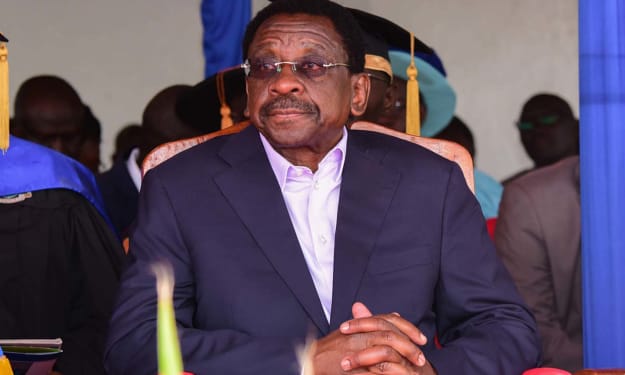
James Orengo: Age, Wife, Biography, Net Worth & More
You’ve probably heard his name in courtrooms, rallies, or late-night political debates. James Orengo has been everywhere — fighting for democracy, challenging power, and rewriting the rules of the game. But beyond the sharp suits and courtroom drama, there's a whole other side to him. Who really is James Orengo when the cameras are off? Let’s pull back the curtain on the man who’s been called Kenya’s legal brain and political enigma.
By Marveline Merababout a year ago in The Swamp
"The 2025 Indo-Pak War"
In early 2025, the long-standing tensions between India and Pakistan escalated into one of the most significant military confrontations of the 21st century. Though brief, the conflict shook the South Asian region, drawing global attention due to the nuclear capabilities of both nations. The Indo-Pak War of 2025 lasted only two weeks, but its impact on regional politics, economy, and international relations remains profound. Origins of the Conflict The roots of the 2025 conflict can be traced to a series of skirmishes in Kashmir throughout 2024, which saw increased cross-border shelling and militant incursions. Diplomatic efforts led by the United Nations and regional powers failed to de-escalate tensions. A deadly attack on an Indian Army convoy in January 2025, allegedly orchestrated by Pakistan-based militants, became the flashpoint. India responded swiftly with “Operation Trishul,” a large-scale surgical strike across the Line of Control (LoC), targeting what it claimed were terrorist launch pads and supply routes. Pakistan condemned the strikes as an act of aggression, retaliating with air raids on Indian military positions in Kashmir. This tit-for-tat exchange rapidly spiraled into full-scale conventional warfare. The Course of the War The war officially began on February 10, 2025, when Pakistan launched coordinated artillery and air strikes along the LoC and into Ladakh. India responded by mobilizing troops in Jammu, Punjab, and Rajasthan, leading to battles on multiple fronts. Northern Front (Kashmir and Ladakh): Intense mountain warfare dominated this theater. India deployed its elite high-altitude troops to counter Pakistani advances in the Dras and Kupwara sectors. Indian forces gained the upper hand by capturing key outposts by the seventh day of the war. Western Front (Punjab and Rajasthan): This front saw rapid tank battles and air raids. India’s armored divisions pushed into Pakistan’s Sialkot sector, while Pakistan counterattacked in the Fazilka and Barmer regions. Heavy casualties on both sides marked this phase, but neither side achieved a decisive breakthrough. Naval Engagements: The Indian Navy blockaded Karachi Port temporarily and intercepted Pakistani vessels in the Arabian Sea. Pakistan responded with the deployment of submarines near the western Indian coast, creating tension in vital sea lanes. Though the war remained conventional, both nations issued subtle nuclear warnings through media and diplomatic channels. The threat of escalation prompted urgent international mediation. International Response The global community watched with growing alarm. The United States, China, Russia, and the United Nations called for an immediate ceasefire. Fearing a nuclear confrontation, back-channel diplomacy intensified, with the UAE and Saudi Arabia playing key mediatory roles. On February 24, under mounting pressure and facing economic strain, both countries agreed to a ceasefire brokered by the UN Security Council. The ceasefire restored pre-war territorial boundaries, with both nations claiming strategic and moral victories. Aftermath and Impact Despite the limited duration, the 2025 war had several long-lasting consequences: Human and Economic Cost: Over 5,000 soldiers and an estimated 1,200 civilians were killed on both sides. The conflict displaced tens of thousands, especially in border regions. Economically, both countries suffered a sharp GDP contraction in the first quarter of 2025, with markets plummeting and trade disrupted. Geopolitical Shifts: The war led to renewed calls for Kashmir resolution from the international community. China remained largely neutral but reinforced its border presence in Ladakh, signaling strategic interest. The U.S. and Russia, while advocating peace, used the situation to bolster arms sales and influence in South Asia. Domestic Ramifications: In India, nationalistic fervor surged, strengthening the ruling party’s political hold. In Pakistan, civil-military relations became more strained, with public protests demanding better governance and questioning the cost of perpetual conflict. Cyber and Information Warfare: The conflict also featured unprecedented levels of cyberattacks and disinformation campaigns. Both nations targeted each other’s infrastructure and media, leading to widespread misinformation and paranoia. Lessons Learned The 2025 Indo-Pak War reaffirmed the volatility of South Asia’s security landscape. It highlighted the dangers of unresolved territorial disputes, militant activity, and aggressive nationalism. Though nuclear weapons were not used, the threat hovered perilously close, serving as a reminder of how quickly things can escalate. The war also emphasized the importance of diplomatic engagement, regional cooperation, and conflict resolution mechanisms. While the guns may have fallen silent, the underlying issues—particularly the Kashmir dispute—remain unresolved. Conclusion The Indo-Pak War of 2025 was a sobering event that showcased the fragility of peace in South Asia. Both India and Pakistan walked away with heavy losses and hard-earned lessons. The need for sustained peace efforts, mutual trust-building, and international mediation has never been more critical. As the region looks toward the future, one can only hope that the scars of 2025 will guide its leaders toward dialogue rather than destruction
By Kaleem Ullahabout a year ago in The Swamp
Trump in KSA and Ignoring Israel.. Content Warning.
Donald Trump, speaking to a packed room in KSA, was waxing lyrical about the new 'Golden Age of the US". Also, praising Mohammed Bin Salman, the Crown Prince, saying "What progress has been made in the Kingdom". Such as women now being allowed to drive, the opening of cinemas, glass towers springing up like weeds, and Saudi Arabia hosting peace conferences. Trump praised MBS's progress on limiting Wahabism, the strict code of Islam, liberalising some of the edicts. Trump also said he made a massive financial deal with MBS, selling US weapons to the KSA. He praised KSA and other Arab nations for stability and peace based on their traditions. With no Western interventions, no forever wars, no Western lectures on how they should do government.
By Nicholas Bishopabout a year ago in The Swamp
Male 'Heroes' Are Just Janitors Cleaning Up Other Men's Messes.
Name one war started because a woman was "too emotional." Go ahead, I'll wait. You can't name a single one. But you could easily list dozens started by men's wounded pride, fragile egos, and emotional outbursts disguised as political strategy - from World War I (sparked by wounded male honor after an assassination) to the genocide in Rwanda (fueled by male leaders' tribal insecurities). The pattern is undeniable: when men's emotions run hot, people die. When women get emotional, we're told to calm down.
By Amanda Ngcoboabout a year ago in The Swamp