controversies
It seems every time one racially-charged incident ends, a gender or religious controversy takes its place; Ruminate on the issues dividing our nation and world.
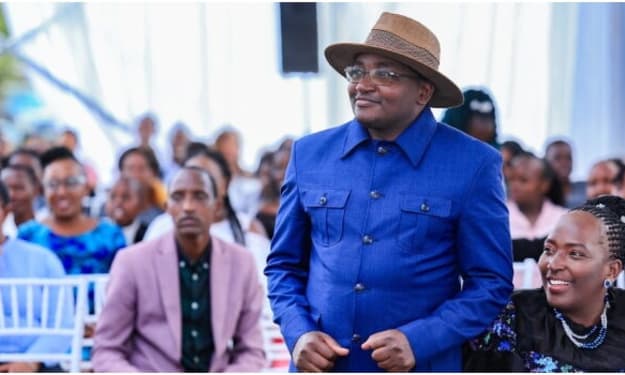
George Koimburi: Age, Wife, Biography, Career & More
George Koimburi is no stranger to controversy—or courage. The Juja Member of Parliament shot into national spotlight not just for his political grit, but for a harrowing moment that blurred the lines between power, danger, and devotion.
By Marveline Merababout a year ago in The Swamp
When You Cherry-Pick Facts and Poll Numbers…
It is being reported by Newsweek that Donald Trump is experiencing a popularity surge based on the results of a single poll (Quantas Insights). Making hay from those results may put you on less solid footing than you think.
By Lanny Newvilleabout a year ago in The Swamp
The Rise in Political Toxicity: Democracy at a Breaking Point?
The Rise in Political Toxicity: Democracy at a Breaking Point? In an age defined by rapid communication and algorithm-driven discourse, the global political landscape is growing darker, sharper, and more divisive. What once were platforms for robust debate and thoughtful governance are now often battlegrounds of vitriol, misinformation, and calculated outrage. The rise in political toxicity—fueled by social media, populist rhetoric, and growing ideological extremism—is not just a symptom of modern politics; it is becoming the central feature. Across democracies old and new, from the chambers of Western parliaments to the streets of developing nations, toxic political culture is eroding trust, silencing moderate voices, and threatening the very foundations of civil society. A Global Phenomenon with Local Consequences Political toxicity is no longer confined to the fringe. A recent large-scale study that analyzed nearly 18 million social media posts from elected officials in 17 democracies revealed a disturbing trend: the language of politics is becoming increasingly hostile, combative, and emotionally charged. Radical-right parties and opposition groups are especially prone to using inflammatory rhetoric—often attacking institutions, marginalized communities, or democratic processes themselves. While each country faces unique circumstances, the pattern is clear. In the United States, bipartisan dialogue has become almost nonexistent, replaced by a toxic blend of partisan media, election denialism, and legislative gridlock. In India, political debate often spills into online harassment, sometimes targeting journalists, activists, or religious minorities. In Europe, rising far-right movements capitalize on fear and nationalism, frequently using scapegoating and conspiracy theories to galvanize support. The Role of Social Media: Amplifier or Arsonist? Social media has revolutionized how we communicate—but also how we polarize. Platforms like X (formerly Twitter), Facebook, and TikTok reward engagement, and engagement is most often driven by outrage. Politicians who use aggressive, divisive language are not punished; they’re promoted—by algorithms, by audiences, and by media coverage. A toxic tweet spreads farther than a measured one. This creates an incentive structure where moderates are drowned out and extremists dominate the conversation. The result? An environment where disinformation thrives, nuance dies, and citizens become increasingly disillusioned with the democratic process. Populism and the Politicization of Truth At the heart of rising political toxicity lies the rise of populist leaders who thrive on division. These figures often frame politics as a battle between “the people” and “the elite,” blurring facts, rejecting expertise, and fueling anti-institutional sentiment. In such narratives, political opponents are not just wrong—they are enemies of the state, traitors, or threats to the nation. This rhetoric doesn't just damage political discourse; it undermines institutions themselves. Courts are delegitimized, elections are called fraudulent without evidence, and the press is labeled “the enemy of the people.” When truth becomes negotiable, democracy becomes vulnerable. The Psychological Toll and Civic Consequences Political toxicity isn’t just a media issue—it’s a public health issue. Constant exposure to hostile rhetoric and polarizing debates leads to increased stress, anxiety, and political burnout. Studies show that young people, in particular, are disengaging from politics due to the hostility they witness online. The civic implications are just as troubling. Voter turnout declines when people feel their voice doesn’t matter or fear conflict. Trust in government erodes. Polarization becomes entrenched, making coalition-building and compromise virtually impossible. The cycle is self-perpetuating: toxic politics begets dysfunctional governance, which in turn fuels more frustration and toxicity. Can Democracy Detox? Despite the bleak landscape, hope is not lost. There are emerging efforts across the globe to reclaim civility and restore trust in democratic discourse. Civic education programs are being updated to teach digital literacy, empathy, and the importance of civil dialogue. Social media regulation is being debated more seriously than ever, with governments exploring ways to hold platforms accountable for toxic content amplification. Cross-party initiatives in countries like Germany, Canada, and New Zealand aim to build consensus on fundamental democratic values, even amid ideological differences. Moreover, a growing number of citizens are demanding change. Movements that promote fact-based journalism, constructive political engagement, and grassroots dialogue are slowly gaining traction. Conclusion: The Urgency of Now The rise in political toxicity is not just a passing trend—it’s a defining challenge of our time. If left unchecked, it threatens to corrode democracies from within, replacing reason with rage and compromise with contempt. But if recognized and confronted, it also offers an opportunity: to rebuild a political culture grounded in respect, evidence, and shared purpose. The choice is ours. We can allow toxicity to define our political future—or we can choose to detoxify, reconnect, and recommit to the ideals that make democracy worth defending.
By World politics about a year ago in The Swamp
How Britain Creates Mental Illness: Racial Inequity, Misdiagnosis and a System that Won’t Change
Note: These problems are not unique to the UK. Across Western nations, Black populations face similar issues. Society’s tendency to blame the victim has always made me indignant, especially the pathologization of ethnic minorities. In the early 2000s, I became aware of the high rates of severe mental illness among Black people in the UK, often framed as individual pathology. This prompted me to research the issue, leading to a 2008 article, Racializing Mental Illness.
By Clare Xanthosabout a year ago in The Swamp
Comparative Analysis: Which Party Caused Greater Harm?. AI-Generated.
✍️I have been working on this for some time because I keep hearing from Trump supporters how the Democrats have destroyed/ruined the country. In my recollection, all 6+ decades of it, I have not come up with anything to support the assertion, so I spent a few days chatting with three readily available AI engines, ChatGPT, Google Gemini, and Microsoft Copilot. I was unsure how to define ruined, so I tossed in factors related to loss of life and economic impact.
By Lanny Newvilleabout a year ago in The Swamp
Justin Muturi: Age, Biography, Wife, Net Worth, Education, Daughter & More
Justin Muturi is a prominent figure in Kenyan politics, widely recognized for his influential role as the former Speaker of the National Assembly. Beyond his political achievements, Muturi’s life story encompasses a rich blend of education, family, and personal milestones that have shaped his journey.
By Marveline Merababout a year ago in The Swamp
Mithika Linturi: Biography, Wife, Age, Net Worth & More
Mithika Linturi is a prominent figure in Kenyan politics, known for his bold approach and dedication to public service. Beyond his political career, his life story includes rich experiences in education, family, and business. This article dives into his biography, educational background, personal life, net worth, and more to give you a complete picture of who he is.
By Marveline Merababout a year ago in The Swamp
Cecily Mbarire: Husband, Daughter, Age, Biography, Net Worth & More
Cecily Mbarire is one of Kenya’s most influential politicians and businesswomen, known for her vibrant leadership and dedication to public service. From her family life to her impressive career and financial achievements, Cecily has built a reputation that commands respect across the country.
By Marveline Merababout a year ago in The Swamp
Trump’s 'White Refuge' Gamble: Inside Ramaphosa’s High-Stakes US Visit & the Afrikaner Exodus—Why Elon Musk’s Whispers Could Reshape Global Politics. AI-Generated.
Introduction: A Diplomatic Minefield South African President Cyril Ramaphosa’s arrival in Washington this week is no ordinary state visit. It’s a geopolitical chess match where the stakes include trade wars, apartheid legacies, and a surreal refugee crisis involving white Afrikaners—all while Elon Musk looms as Trump’s shadow advisor. With memories of Trump’s humiliation of Ukraine’s Zelensky fresh in mind, Ramaphosa walks into a White House primed for confrontation. But this time, the drama is laced with irony: Trump is resettling white South Africans as “refugees” while slashing aid to Black-majority nations. Here’s the untold story behind the headlines.
By David Snamabout a year ago in The Swamp