
Caps, Wait-Lists, and District Stability
How to Prevent Ideological Districts From Being Hijacked

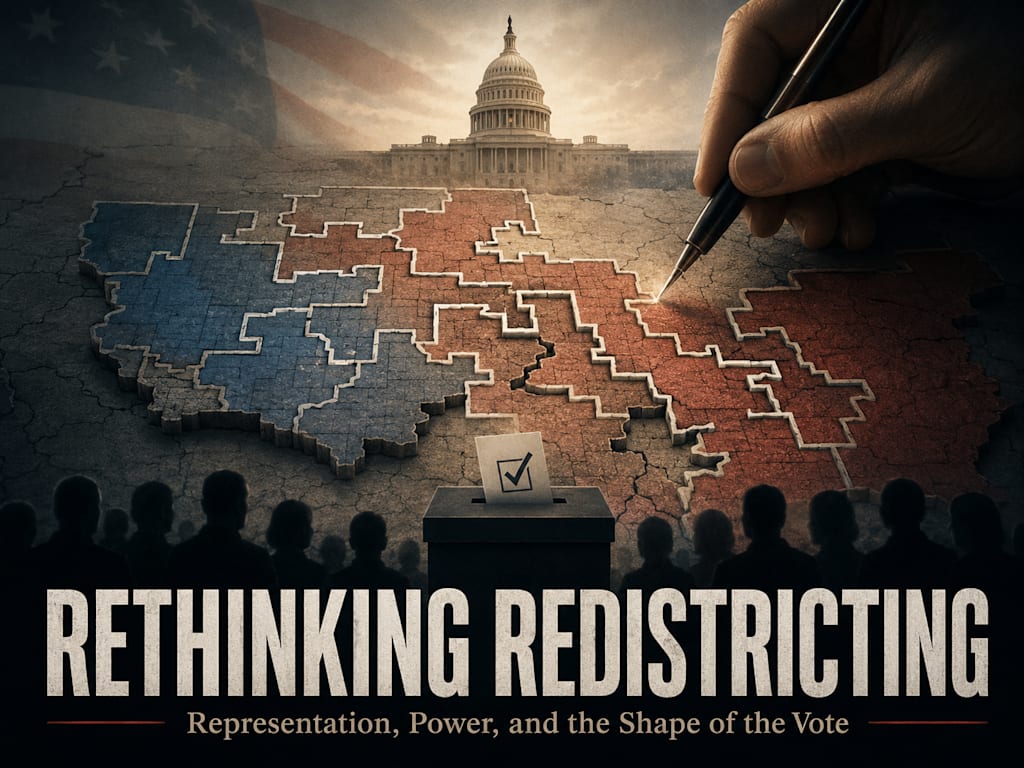
A New Districting System Needs a New Kind of Guardrail
Any system of representation can be abused. Geographic districts can be packed, cracked, stretched, sliced, and attached in ways that serve the mapmaker rather than the voter. Ideological districts can be manipulated through labels, categories, assignment rules, or organized attempts to enter and flip an opposing constituency. Voter-selected districts can be gamed if groups coordinate movement without limits. Randomized districts can be abused if the randomization process is hidden. No system escapes the need for guardrails.
That is why caps and wait-lists are not minor administrative details. They are the structure that makes voter-selected or ideological districts workable. If voters are allowed to choose the constituency that represents them, there must still be equal population limits. A district cannot be allowed to grow without restraint. If one district becomes too large, voting power becomes unequal. If one ideological group can flood another district all at once, representation becomes unstable. If district switching is immediate and unlimited, organized groups can turn elections into raids rather than representation.
A cap changes the logic. It says each district may contain only a certain number of voters or residents. Once that number is reached, the district closes to new entrants until space opens. A wait-list changes the timing. It says a voter may request a district change, but entry happens only when there is room and only according to transparent rules. Together, these mechanisms protect equal population, preserve district identity, reduce hostile takeover, and force voters to choose representation honestly.
The Cap Protects Equal Population
The first purpose of a cap is numerical fairness. If a state has ten districts, each district should contain roughly one-tenth of the represented population. That principle should remain true even if districts are no longer drawn only by geography. A value-based district, voter-selected district, party-affinity district, or ideological district still needs equal weight. Each representative should speak for a similar number of people.
Without a cap, voter-selected districts could collapse into imbalance. The most attractive district might fill with too many voters. A popular ideological label might draw far more people than expected. A broad “constitutional,” “progressive,” “libertarian,” “populist,” “center,” or “anti-war” district could absorb voters beyond its fair share. That would create unequal representation. Some representatives would speak for huge constituencies while others would speak for smaller ones. The system would no longer be fair.
The cap prevents that problem. It replaces the geographic boundary with a population boundary. In an ordinary map, the line says, “This district ends here.” In a capped constituency model, the cap says, “This district ends when it reaches this number.” The method is different, but the equal-population principle remains. The district is not allowed to swallow the system simply because more voters prefer it.
The Cap Protects District Identity
The second purpose of a cap is identity. A district should not be so fluid that its representative purpose disappears. If a district is meant to represent constitutionalist voters, libertarian voters, progressive voters, labor voters, rural voters, anti-war voters, religious conservatives, nonaligned centrists, or any other constituency, that identity needs stability. Otherwise the district becomes a temporary crowd rather than a representative body.
A cap helps preserve that identity because it limits sudden changes in membership. Once the district fills, new voters cannot simply enter at will. They must wait for space or choose another district. That gives the existing constituency time to remain itself. It prevents the district from being instantly overwhelmed by a coordinated outside movement. The majority that formed the district generally remains the majority unless change occurs gradually over time.
This matters because representation requires continuity. A representative should know the constituency being served. Voters should know what kind of district they belong to. Candidates should know what values, priorities, and concerns they are appealing to. If membership can swing wildly every cycle, the district loses meaning. The cap makes the district more like a stable constituency and less like an open battlefield.
Hostile Takeover Becomes Harder
The most obvious fear with ideological or voter-selected districts is organized takeover. A group of voters might try to enter an opposing district in order to flip it. For example, voters from one side might attempt to join a district dominated by the other side, not because they want representation there, but because they want to change the election outcome. If entry is unlimited, this is a serious weakness.
The cap directly reduces that risk. Once a district is full, no large group can enter all at once. Any attempted takeover must happen slowly, through vacancies. If only a small number of openings appear each cycle, then only a small number of new voters can enter. The existing majority remains difficult to overturn. Strategic entry becomes a long, uncertain process rather than an immediate tactic.
This changes incentives. A voter who enters an opposing district before enough similar voters arrive is likely to lose representation. A red voter entering a blue district does not gain power unless many other red voters enter too. A blue voter entering a red district faces the same problem. A libertarian entering an authoritarian district weakens the voter’s own representation. A progressive entering a constitutionalist district does the same. The cap makes dishonest sorting costly because a voter cannot assume a mass wave will follow.
The Wait-List Creates Order
A cap alone is not enough. A full district needs a way to handle future voters who want to enter. That is the purpose of the wait-list. When a district reaches capacity, voters can request entry and wait for an opening. Openings occur when people move, die, become ineligible, change districts, or otherwise leave the voter pool. When a vacancy appears, someone from the wait-list may enter according to clear rules.
This creates order. Voters know whether they are inside the district, waiting for it, or assigned elsewhere. Administrators know how to fill vacancies. Candidates know the district cannot be suddenly flooded. The public knows that district membership is not being manipulated behind closed doors. A transparent wait-list turns movement into a visible process rather than a chaotic one.
The wait-list also gives voters a meaningful choice without promising instant satisfaction. A voter may prefer a full district and be willing to wait. Another voter may choose a second-best district with immediate availability. Another may submit ranked preferences and allow the system to assign the closest available match. These options preserve agency while respecting population equality. The voter is not trapped permanently, but the district is not destabilized instantly.
Switching Must Have Rules
District switching should be allowed, but not constantly. A voter’s views can change. A voter may leave a party, adopt new priorities, become more moderate, become more conservative, become more progressive, become more libertarian, become more religious, become more skeptical of war, or decide that another constituency better represents them. A system that never allows reassignment would freeze representation in place. That would be unfair and unrealistic.
But switching cannot be unlimited in timing. If voters can change districts at any moment, especially right before an election, the system becomes vulnerable to manipulation. Campaigns could encourage last-minute moves. Activist groups could coordinate tactical switching. Parties could flood wait-lists or exploit timing rules. The district would become unstable when stability matters most.
The cleaner rule is to allow switching during defined registration windows. Those windows could happen annually, every two years, or before a fixed election cutoff. Once the window closes, district membership is locked for that election cycle. This gives voters real flexibility while preventing last-minute raids. It also gives candidates and election administrators a stable electorate to work with.
Ranked Preferences Reduce Frustration
A wait-list system becomes stronger when paired with ranked preferences. Instead of forcing voters to choose one district and wait indefinitely, the voter can rank several acceptable districts. The system then assigns the voter to the highest-ranked district with available space. If the first-choice district is full, the voter may enter the second choice. If the second is full, the voter may enter the third. The voter can also decide whether to accept a lower choice or remain on the wait-list for a preferred district.
This matters because ideological identity is often layered. A voter may be constitutionalist first, libertarian second, conservative third, and populist fourth. Another may be progressive first, labor second, anti-war third, and nonaligned fourth. Another may be localist first, anti-war second, religious conservative third, and populist fourth. Ranked preferences allow voters to express these layers without being forced into a single crude label.
Ranked assignment also helps prevent overflow chaos. If one district fills quickly, voters do not all become unassigned. They move into their next best available district. That keeps the system functional. It also encourages honesty because voters know their rankings matter. Instead of trying to guess which district will be most strategic, voters can list the constituencies that actually reflect them.
First-Come, First-Served Is Simple but Imperfect
One possible wait-list method is first-come, first-served. The earliest voter to request entry gets the next vacancy. This is easy to understand and simple to administer. It avoids complicated formulas. It creates a clear order. It may be useful in a basic version of the system.
But first-come, first-served has weaknesses. It may reward people with more time, better information, faster internet access, or greater political organization. A well-organized group could flood the wait-list early. People who learn about the system later may be locked out. A purely time-based method can appear neutral while favoring those with better coordination.
A better system may combine first-come rules with ranked preference, residency status, registration timing, or periodic lottery among wait-listed voters. Another option is to open district selection during a fixed window and then allocate seats through a transparent algorithm after all preferences are submitted. The best method depends on the goal. If simplicity matters most, first-come is attractive. If fairness matters more, a ranked allocation process may be stronger.
Privacy Must Be Protected
A voter-selected or ideological district system raises privacy concerns. If districts are openly labeled, then district membership may reveal something about a voter’s political values. A person assigned to a Libertarian District, Progressive District, Constitutionalist District, Religious Conservative District, or Anti-War District may be publicly associated with that label. That could create pressure, retaliation, social stigma, employment concerns, or family conflict.
The system would need privacy protections. Aggregate district identity can be public because voters need to know what each district represents. Individual assignment may be necessary for election administration, but it should not become a public ideological registry unless the law already treats party registration that way and voters knowingly accept that structure. Even then, caution is necessary. The state should not create a detailed public file of a citizen’s political beliefs.
A safer version would allow public district totals, public district labels, public candidate lists, and private voter-level assignment. Campaigns may need to communicate with voters, but that can be handled through controlled election systems rather than unrestricted public exposure. The principle is simple: the district’s identity may be public, but the citizen’s deeper reasoning should remain private.
The District Labels Must Not Be Rewritten Casually
Caps and wait-lists protect against voter-side manipulation, but category manipulation is another danger. If politicians can rename districts, redefine labels, merge categories, split categories, or change the meaning of a constituency whenever they gain power, then the system becomes ideological gerrymandering. The map is gone, but the manipulation remains.
For example, a “Constitutionalist District” could be redefined to include voters who do not share that orientation. A “Progressive District” could be split into multiple categories to weaken it. A “Nonaligned District” could be turned into an overflow container that hides unwanted voters. A “Libertarian District” could be renamed or reframed to manipulate perception. If district identity is controlled by partisan actors, the district can be abused without changing a single boundary line.
The safeguard is stability. District categories should be established by public rule, not partisan convenience. Changes should require a high threshold, public explanation, independent review, and enough lead time that voters are not ambushed. No mid-cycle reclassification should be allowed. A district’s label and function must be stable enough for voters to know what they are choosing.
The Majority Should Generally Remain the Majority
One of the strongest features of the cap is that it helps preserve the majority character of a district. If a district fills with voters who chose it because it reflects their values, the district’s majority should not be easily displaced. That is not a flaw. It is the point. The district exists to represent that constituency. If a majority formed around a set of values, the system should not let an outside group instantly overturn it through tactical entry.
This does not mean the district is frozen forever. Views change. People move. New voters register. Some voters leave. Others enter through vacancies. Over time, the district can evolve. But evolution is different from hijacking. Evolution happens through gradual change in the constituency. Hijacking happens through coordinated manipulation of the entry rules. Caps and wait-lists allow the first while making the second harder.
This is similar to how physical communities change. A town may change over time as people move in and out. But it is not the same as outsiders redrawing the town’s boundary overnight to change who controls it. A capped district protects the continuity of the constituency while still allowing change through real membership movement.
The System Should Penalize Dishonest Sorting Naturally
The best safeguard is one that does not require constant enforcement. Caps and wait-lists create a natural penalty for dishonest sorting. If a voter chooses a district that does not represent them, that voter loses representational alignment. If enough voters cannot enter to change the majority, the voter has weakened their own political voice. This discourages tactical misplacement.
That incentive is important because no election system can perfectly read motives. The state should not be in the business of judging whether a voter “really belongs” in a district based on hidden intent. That would be dangerous and intrusive. The system should instead be designed so honest behavior is usually the rational behavior. Join the district that best represents the voter’s values. If it is full, choose the next closest fit. If a voter chooses an opposing district, that voter accepts the cost.
This is cleaner than trying to police belief. A mandatory values test could attempt to sort people by answers, but tests can be gamed and abused. A voter-choice model with caps lets the incentive structure do much of the work. People are free to choose, but choices have representational consequences.
Abuse Cannot Be Eliminated, Only Relocated and Reduced
The honest standard is not perfection. Every political system relocates abuse risk. Geographic districting puts the abuse risk in map-drawing. Voter-selected districts put the abuse risk in district labels, caps, wait-lists, switching rules, and organized voter behavior. Political compass districts put the abuse risk in test design and scoring. Lottery districts put the abuse risk in randomization integrity. Party-affiliation systems put the abuse risk in party labels and primary rules.
The question is not whether a system can be abused. The question is whether the abuse is harder, more visible, more constrained, and less damaging than the abuse it replaces. Caps and wait-lists help answer that question. They do not make voter-selected or ideological districts immune to manipulation, but they make the most obvious form of manipulation much harder. A district cannot be instantly flooded. A majority cannot be easily displaced. Equal population cannot be ignored. Voter movement becomes orderly and observable.
That is a meaningful improvement over a mapmaking process where voters may not realize they have been diluted until the lines are already approved. In a capped constituency system, the rules of entry are at least visible. The public can inspect the caps, wait-lists, assignment formulas, and district totals. Abuse may still occur, but it has fewer shadows to hide in.
The Practical Rule Set
A serious cap-and-wait-list system would need several basic rules. Each district must have an equal population cap. Once the cap is reached, no new voters may enter except through vacancies. Voters may submit ranked preferences. Full districts maintain wait-lists. Wait-list rules must be public. District switching occurs only during registration windows. District membership locks before elections. District labels cannot be changed casually. Individual voter privacy must be protected. Assignment data must be auditable in aggregate. No officeholder should be allowed to rewrite the system for immediate partisan advantage.
These rules are not decorative. They are the difference between a serious reform and a vulnerable experiment. Without caps, the system becomes unequal. Without wait-lists, it becomes disorderly. Without registration windows, it becomes unstable. Without privacy, it becomes dangerous. Without stable labels, it becomes ideological gerrymandering. Without audits, it loses trust.
A voter-selected or ideological district system can work only if the mechanics are stronger than the incentives to corrupt them. The structure must assume that parties, campaigns, activists, and interest groups will try to gain advantage. The rules must be designed accordingly.
Stability Makes Representation Possible
Representation requires more than a vote. It requires a stable relationship between a constituency and the person elected to speak for it. If the constituency is constantly shifting, the representative cannot be accountable to a real body of voters. If the district can be flooded, renamed, reweighted, or reorganized at will, representation becomes unstable. Caps and wait-lists exist to prevent that.
A stable district does not mean a frozen district. People should be able to change their minds. New voters should be able to enter. Old voters should be able to leave. Districts should be able to evolve over time. But the process must be gradual, transparent, and equal. Stability gives the constituency meaning. Meaning gives the representative accountability.
That is why caps and wait-lists are central to the larger reform framework. They make voluntary or ideological representation possible without turning it into chaos. They preserve equal population while allowing voter agency. They reduce hostile takeover while allowing real change. They protect district identity without requiring the state to police belief. If representation is going to move beyond geography, it needs guardrails strong enough to replace the boundary lines on the map.
About the Creator
Peter Thwing - Host of the FST Podcast
Peter unites intellect, wisdom, curiosity, and empathy —
Writing at the crossroads of faith, philosophy, and freedom —
Confronting confusion with clarity —
Guiding readers toward courage, conviction, and renewal —
With love, grace, and truth.
Enjoyed the story? Support the Creator.
Subscribe for free to receive all their stories in your feed.
Comments
There are no comments for this story
Be the first to respond and start the conversation.