treatments
The past, present and future of psychiatric diagnosis and beliefs about treatment in every culture and pocket of society.
The Complex Role of Dopamine in Our Lives: Understanding the Science Behind Pleasure and Motivation
*The Complex Role of Dopamine in Our Lives: Understanding the Science Behind Pleasure and Motivation* Dopamine is a neurotransmitter that plays a crucial role in our brain's reward and pleasure centers. It is often referred to as the "feel-good" hormone, and for good reason. Dopamine is released in response to pleasurable activities, such as eating, exercise, or social interactions, and it helps to motivate us to repeat those behaviors. However, when dopamine is released in excess or in response to artificial stimuli, such as social media or pornography, it can have negative consequences for our mental and physical health. *The Science Behind Dopamine* Dopamine is a chemical messenger that transmits signals between neurons in the brain. When we experience something pleasurable, dopamine is released, and it binds to dopamine receptors in the brain, producing a feeling of pleasure and satisfaction. This process is known as the brain's reward system, and it is essential for motivating us to engage in behaviors that are necessary for survival, such as eating and reproduction. However, the brain's reward system can be hijacked by artificial stimuli, such as social media, video games, or pornography. These stimuli can cause a rapid release of dopamine, leading to feelings of pleasure and addiction. Over time, the brain becomes accustomed to these artificial stimuli, and it requires more and more dopamine to feel the same level of pleasure. This can lead to a vicious cycle of addiction, where individuals become increasingly dependent on these stimuli to feel good. *The Consequences of Excessive Dopamine Release* Excessive dopamine release can have negative consequences for our mental and physical health. Some of the potential consequences include: - Addiction: Excessive dopamine release can lead to addiction, as individuals become dependent on the pleasurable feelings associated with dopamine release. - Decreased motivation: When dopamine is released in response to artificial stimuli, it can decrease motivation and interest in activities that do not provide a rapid dopamine release. - Decreased pleasure: Over time, the brain becomes accustomed to the artificial stimuli, and it requires more and more dopamine to feel the same level of pleasure. - Negative impact on mental health: Excessive dopamine release can contribute to mental health issues, such as depression, anxiety, and obsessive-compulsive disorder. *How to Manage Dopamine Levels* Fortunately, there are ways to manage dopamine levels and reduce the negative consequences of excessive dopamine release. Some strategies include: - *Dopamine detox*: Taking a break from artificial stimuli, such as social media or video games, can help to reset the brain's dopamine system. - *Engage in natural pleasures*: Engaging in natural pleasures, such as exercise, reading, or spending time with friends and family, can help to increase dopamine levels in a healthy way. - *Set clear goals*: Setting clear goals and working towards them can help to increase motivation and provide a sense of purpose. - *Practice self-care*: Practicing self-care, such as getting enough sleep, eating a healthy diet, and engaging in regular exercise, can help to support overall brain health. *The Importance of Self-Awareness* Self-awareness is critical in managing dopamine levels and reducing the negative consequences of excessive dopamine release. By being aware of our own behaviors and motivations, we can take steps to manage our dopamine levels and reduce our dependence on artificial stimuli. *Conclusion* Dopamine is a complex neurotransmitter that plays a crucial role in our brain's reward and pleasure centers. While dopamine is essential for motivating us to engage in behaviors that are necessary for survival, excessive dopamine release can have negative consequences for our mental and physical health. By understanding the science behind dopamine and taking steps to manage our dopamine levels, we can reduce the negative consequences of excessive dopamine release and improve our overall health and well-being. *The Role of Dopamine in Motivation* Dopamine plays a critical role in motivation, as it helps to reinforce behaviors that are necessary for survival. However, when dopamine is released in response to artificial stimuli, it can decrease motivation and interest in activities that do not provide a rapid dopamine release. *The Impact of Dopamine on Mental Health* Dopamine has a significant impact on mental health, and excessive dopamine release can contribute to mental health issues, such as depression, anxiety, and obsessive-compulsive disorder. By understanding the role of dopamine in mental health, we can take steps to manage our dopamine levels and reduce the risk of mental health issues. *The Importance of Balance* Balance is critical in managing dopamine levels and reducing the negative consequences of excessive dopamine release. By finding a balance between artificial stimuli and natural pleasures, we can reduce our dependence on artificial stimuli and improve our overall health and well-being. *Conclusion* In conclusion, dopamine is a complex neurotransmitter that plays a crucial role in our brain's reward and pleasure centers. By understanding the science behind dopamine and taking steps to manage our dopamine levels, we can reduce the negative consequences of excessive dopamine release and improve our overall health and well-being. By finding a balance between artificial stimuli and natural pleasures, we can reduce
By Ikram Ullahabout a year ago in Psyche
When the Light Fades: Understanding Seasonal Affective Disorder (SAD)
Introduction As the days grow shorter and the sunlight fades, a familiar heaviness creeps into the lives of many. It's more than a dislike for cold weather or fewer daylight hours—it’s a recurring emotional and physiological pattern that returns each year with almost uncanny precision. For those affected, this pattern isn't simply a matter of winter blues; it's a recognized psychological condition known as Seasonal Affective Disorder, or SAD.
By Siria De Simoneabout a year ago in Psyche
To Dissociate or Not? Low‑Dose vs Full State Ketamine Infusions Explained
The Spectrum of Ketamine Therapy In the realm of mental health and chronic pain management, ketamine has carved out a profound reputation. Once known primarily as an anesthetic and party drug, it’s now respected for its fast-acting relief in treatment-resistant depression, PTSD, anxiety, and other hard-to-treat conditions.
By Richard Baileyabout a year ago in Psyche
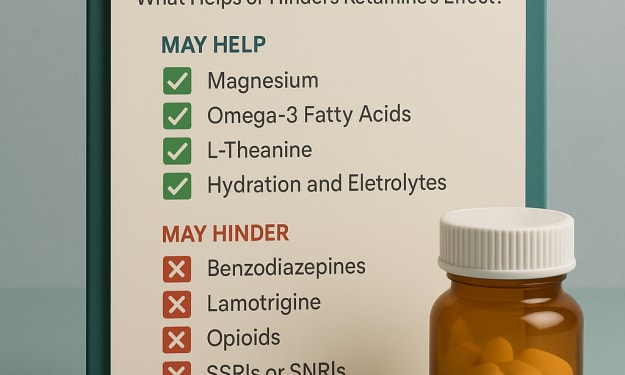
Beyond the Infusion: Integration Tools That Solidify Ketamine’s Benefits
Ketamine infusions are not a cure. They are a powerful beginning. For many, ketamine offers rapid relief, especially from depression, PTSD, anxiety, or chronic pain, when traditional treatments fall short.
By Richard Baileyabout a year ago in Psyche
The Complexities of Co-Dependency
Have you ever met a person who couldn't do the simplest of tasks on their own? That person might even be you. There is always a deeper understanding of things like introverts, extroverts, the ego, etc., within society. The idea that someone doesn't like to be surrounded by noise isn't too uncommon. Just like the idea that an individual is their best drowning in a sea of people. Sometimes, you can struggle with an entirely different aspect of self. One that might even make you lose your own. Co-dependency.
By The Darkest Sunriseabout a year ago in Psyche
"The Interpretation of Dreams" by Sigmund Freud: A Journey into the Unconscious Mind
"The Interpretation of Dreams" by Sigmund Freud: A Journey into the Unconscious Mind "The Interpretation of Dreams" is not just a book; it is the foundation of modern psychology and a journey into the mysterious world of the unconscious. First published in 1899, this book revolutionized our understanding of dreams. Dreams are no longer seen as random or meaningless images; instead, they are glimpses into our hidden desires, fears, and experiences. Freud's writing is a blend of science, philosophy, and personal discovery. This book explains how dreams are formed, their connection to the unconscious mind, and how they reveal hidden truths through symbols. Although it can be challenging, for those interested in understanding the human mind, it is a feast for the intellect.
By Ikram Ullahabout a year ago in Psyche
The Peace Within Accountability
There is peace in accountability. If you’d met me several years ago, you couldn’t have paid me to admit that. The truth is, several years ago, I myself was oblivious to this notion. I’d been in conflict after conflict and not one time had I come out on the bottom of it, even if I truly had. If I said it was so, you couldn’t convince me otherwise. And oh, honey I would die on that hill. There was something powerful about lacking any control for much of my life, eventually learning that I can build my own narrative beautifully crafted in any way that I want. What did I want? Control. How did I get it? By being right. Ultimately, I spent over twenty seven of the twenty-eight years on this Earth failing at what I now know as gaslighting. Crafting weak fairytales in a vain attempt to keep what little control I had over my life.
By The Darkest Sunriseabout a year ago in Psyche