treatments
The past, present and future of psychiatric diagnosis and beliefs about treatment in every culture and pocket of society.
My Thoughts Were Holding Me Captive—Until a Prayer Set Me Free. AI-Generated.
I didn’t even notice when the noise inside my head got louder than the world outside. It began subtly. I would lie awake in bed, rehearsing conversations that never happened. I’d think about things I said ten years ago, wondering if people still remembered them. I’d feel ashamed of my mistakes, terrified of my future, and unsure about who I was becoming. Every day, I smiled for the world—but inside, I was battling a storm of thoughts I couldn’t control. --- The Invisible Battle I was 22, healthy, and surrounded by people. Yet, I felt utterly alone. Nobody saw the war raging inside me. I could be in a crowd and still feel lost. Simple tasks became exhausting. Decisions made me anxious. My mind became my enemy, whispering doubts, guilt, and fears—on repeat. "You're not enough." "You’ll fail again." "What's the point of trying?" These whispers weren’t voices, but they felt just as real. I tried distracting myself—music, social media, TV—but the silence always returned. And with it, the thoughts came back louder, sharper. I didn’t realize it then, but I was slipping into a mental prison—brick by brick, thought by thought. --- The Breaking Point One night, something inside me cracked. I sat in the dark corner of my room, knees pressed against my chest. My breathing was heavy, heart racing, mind spiraling. I wanted peace. Not the kind of peace people post quotes about. I wanted the kind of peace that silences screaming thoughts and fills you with warmth again. I remember whispering, "God, if You're there… please help me. I’m tired." And then, out of nowhere, I felt this strange pull—toward the dusty bookshelf in the corner of my room. It had been months since I touched the Qur’an. Not because I didn't care, but because I was afraid. Afraid that I was too broken to be spiritual. But that night, something changed. --- A Light in the Darkness I opened the Qur’an randomly. My eyes fell on a verse—one I had heard as a child, but never truly understood: "رَبِّ اشْرَحْ لِي صَدْرِي" “O my Lord, expand my chest.” (Surah Taha, 20:25) Just a few words. But they echoed through me like thunder. I whispered them. Once. Twice. Then again. "O my Lord, expand my chest..." What did it mean? I looked it up. It was the prayer of Prophet Musa (Moses) when he felt afraid and overwhelmed. He asked Allah to expand his heart—to give him clarity, strength, and calmness to face what lay ahead. That’s exactly what I needed. I began repeating it daily. --- The Healing Begins Nothing magical happened overnight. But slowly—almost invisibly—things began to shift. That verse became my anchor. Whenever my thoughts spiraled, I paused and whispered: "Rabbishrah li sadri..." And slowly, I noticed changes. I began journaling my thoughts, separating reality from fear. I started talking to Allah honestly, not formally. No fancy words—just raw, broken truth. I also reached out to a therapist, something I once thought was “too much.” But faith and therapy went hand in hand. My healing wasn’t either/or—it was both. Some days were still hard. But I no longer felt alone. I no longer believed the lie that I was beyond repair. --- Reflection: The Power of Faith in Mental Health Mental health struggles are real. They’re not a sign of weak faith. In fact, some of the strongest believers—like Prophet Musa—felt fear and overwhelm. And yet, they turned to Allah with honest, simple prayers. "Rabbishrah li sadri" isn’t just a verse—it’s a lifeline. Sometimes, all it takes is one sincere prayer to open a locked heart. Sometimes, all you need is a reminder that your thoughts don’t define you—and you’re not stuck. We all carry invisible wounds. But we’re also all given tools to heal. Prayer, reflection, therapy, connection—they work together. If you're reading this and you’re struggling: You’re not alone. You’re not weak. And you’re definitely not hopeless. Maybe, like me, you just need a verse to hold on to. So say it with me, one more time: "O my Lord, expand my chest..."
By Kaleem Ullahabout a year ago in Psyche
I’m the One Who Never Falls Apart—Until I Did
By Nadeem Shah I’ve always been “the strong one.” You know the type—the person who listens at 2 a.m. when someone needs to vent, who holds space for tears that aren’t their own, who never seems to crack no matter how heavy the storm gets. That was me.
By Nadeem Shah about a year ago in Psyche
Reiki Training
Two hours are not enough time to teach three levels of Reiki. An overview? Yes. We had 17 participants. I attuned 10 participants for level one and 7 for level two. One Reiki Master had co-workers attending the class, and she gave 7 level one attunements, and was going to give most of them level two and three attunements on the job.
By Denise E Lindquistabout a year ago in Psyche
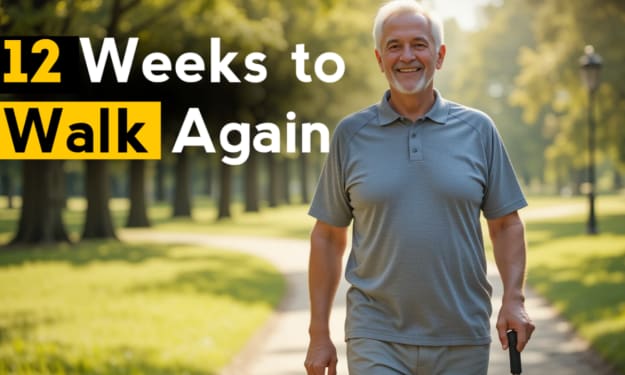
How I Dodged Knee Surgery—And Walked Pain-Free Again After 12 Weeks
How I Dodged Knee Surgery—And Walked Pain-Free Again After 12 Weeks Written by Raza Iqbal I still remember the way my right knee throbbed every time I tried to climb stairs. The pain was deep, stubborn, and had grown from a nagging discomfort to a full-blown problem that interrupted every part of my daily life. At 49, I wasn't ready to accept that knee surgery might be in my near future. But that’s exactly what the orthopedic specialist suggested: arthroscopic surgery, followed by six months of recovery. I walked out of that clinic both terrified and determined to find another way. Spoiler alert: I did. And today, twelve weeks later, I walk without pain, hike with my son again, and even jog occasionally. Here’s how I got there. Week 1-2: Facing the Diagnosis and Doing My Research After my doctor told me that my knee showed signs of early osteoarthritis and a torn meniscus, I went home and cried. For years I’d prided myself on staying active—walking, biking, gardening. The thought of surgery, and losing my independence even temporarily, was terrifying. So I did what I always do when I’m afraid: I researched. I looked into success rates for knee surgeries, and found that while many people recover well, complications and long recovery times are common. I also discovered countless stories of people who had delayed or even avoided surgery with physical therapy, diet changes, supplements, and alternative treatments. I decided to give myself three months to try a completely natural and non-invasive approach. If I didn’t see any improvement, I’d reconsider surgery. But I wanted to try. Week 3-4: Physical Therapy and the Power of Movement I scheduled a session with a physical therapist who specialized in joint rehab. She told me something I’ll never forget: "Movement is medicine. The right kind of movement can heal." For someone who had been limping and sitting for days, those words gave me hope. We focused on strengthening the muscles around my knee—specifically the quads, hamstrings, and glutes. I started with basic exercises: clamshells, leg lifts, step-ups, and wall sits. Every rep felt difficult. But by the end of Week 4, something changed: I could walk up the stairs without wincing. I began daily stretching routines as well, especially focusing on hamstrings and calves, to relieve pressure on my knee joint. Week 5-6: Nutrition and Supplements After diving deep into the connection between inflammation and joint pain, I started adjusting my diet. I cut out processed sugar, refined carbs, and most dairy. Instead, I filled my plate with anti-inflammatory foods: salmon, leafy greens, turmeric, ginger, blueberries, olive oil, and walnuts. I also started taking supplements: Glucosamine and chondroitin Collagen peptides Turmeric with black pepper extract Omega-3 fish oil
By Moonlit Lettersabout a year ago in Psyche
The Silence Between Us
By Nadeem Shah It had been 472 days since we last spoke. Not that I was counting—at least, not anymore. In the beginning, I counted everything. The days since the argument. The hours since I thought about calling. The number of messages I typed and never sent. The seconds I stood outside your door that one night… and turned away.
By Nadeem Shah about a year ago in Psyche
Forgiveness in the Counseling Profession
Forgiveness is the process of, first, acknowledging that you were wronged by someone, whether it was a small, or a more grievous offense, secondly, surrendering the wrong that was committed by the offender, and then thirdly, working toward processing any residual triggers caused from the offense. Depending on the individual and situation, sometimes forgiveness can occur instantaneously or sometimes it can be a lifelong process. Jesus emulates forgiveness perfectly for humanity based on people’s need for forgiveness from their sin committed against a perfect and holy Creator. Forgiveness leads to holistic freedom: spiritually, mentally, emotionally, and also, physically, regardless of a person’s level of proclivity toward Christianity or not.
By Rowan Finley about a year ago in Psyche
Ask Why. Show How. Tell Do.
It started with a single conversation—one that left me both humbled and inspired. I was giving instructions to a junior colleague at work, explaining how to handle a client presentation. I spoke quickly, gave her a checklist, and moved on. Hours later, she approached me with a hesitant look and said:
By Hamza Habibabout a year ago in Psyche